
In This Article
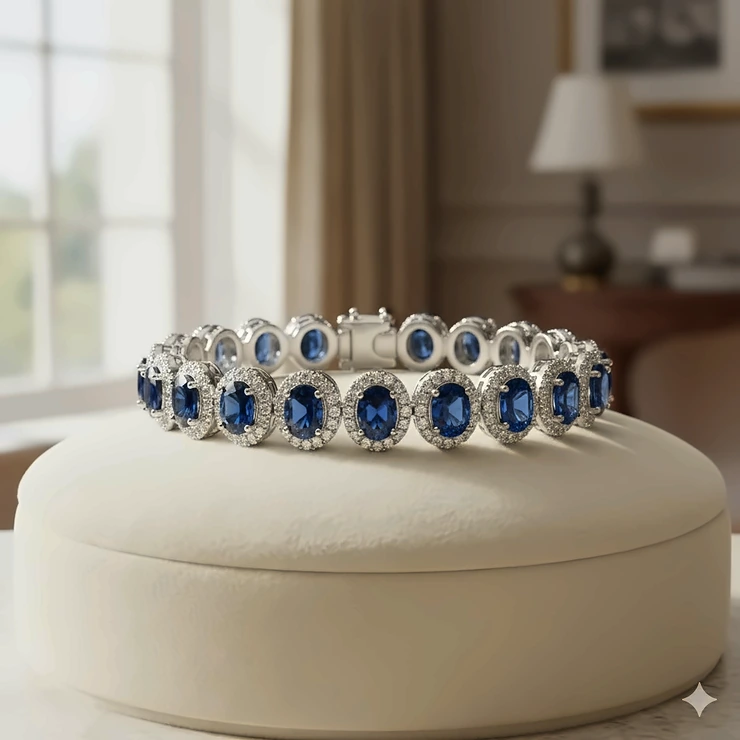
A sapphire tennis bracelet is a slim, flexible line of matched sapphires, set edge to edge in sterling silver or gold and closed with a secure clasp. It’s the classic diamond tennis bracelet’s more colorful cousin: the same effortless sparkle, but with a deep blue, soft pink, or icy white personality of its own.
Here’s the part that surprises people. Sapphire is a variety of corundum, and it scores 9 on the Mohs scale, behind only diamond and moissanite. That matters because a bracelet takes more abuse than a ring or earring. Keyboards, door handles, and handbag zippers all take a swing at it. So a sapphire tennis bracelet isn’t just pretty. It’s one of the few colored-gem designs genuinely built to be worn rather than babied.
The catch? The market is a minefield. Listings blur “sapphire” with “created sapphire,” “simulated sapphire,” and stones whose color comes from treatment. Prices swing from the cost of a nice dinner to the cost of a used car.
This guide sorts seven real options, from roughly $100 sterling silver to low-$3,000s natural-sapphire gold, and translates every spec into what it means on your wrist. All prices are ranges from the time of research, so check current price before you buy.
One bit of trivia for dinner parties: the name “tennis bracelet” is usually credited to Chris Evert and a diamond line bracelet that flew off mid-match. But Merriam-Webster’s etymology note says it finds no print evidence of the phrase before 1985. The legend is a little wobblier than the jewelry.
Sapphire Tennis Bracelet Comparison: 7 Picks at a Glance
Here’s the whole lineup in one scannable table, ordered from budget to premium.
| Pick | Stone & Metal | Typical Price Range | Best For |
|---|---|---|---|
| Ice Gems | Black sapphire, sterling silver | Around $100 | Moody, budget-friendly stacking |
| Gem And Harmony | Lab-created white sapphire, sterling silver | Check current price | Diamond-style sparkle on a budget |
| Gem Stone King | Lab-created blue sapphire, sterling silver | Around $120 | A first blue sapphire gift |
| Peora | Lab-created blue sapphire, rhodium-finished sterling | Around $170 | Bold, statement-size wrists |
| Mejuri Zadie | Lab-grown sapphire, bezel-set sterling | $500 and up | Daily wear with a warranty |
| Pompeii3 | Blue sapphires, solid 14K white gold | Mid-$900s to about $1,000 | A real-gold step up |
| Klenota | Natural blue sapphire, 14k white gold | Low $3,000s | Heirloom-minded buyers |
Reading across the rows, Gem Stone King is the cleanest entry point for a first blue sapphire tennis bracelet. Mejuri Zadie is where you stop paying for stones and start paying for design and warranty. The real jump in materials happens at Pompeii3, where solid 14K white gold replaces plated sterling. Klenota is the only pick here that clearly states natural sapphires, so it’s the one to consider if long-term value matters.
💬 Just one click — help others make better buying decisions too!😊
Top 7 Sapphire Tennis Bracelet Picks: Expert Analysis
I’ve ordered these from budget to premium. “Review sentiment” below means only what real, citable review data shows. Where I couldn’t verify reviews for a model, I say so instead of guessing.
1. Ice Gems Black Sapphire 4mm Tennis Bracelet — moody black stones on a budget
Black stones flip the usual icy-white formula, giving this sapphire tennis bracelet a goes-with-everything edge. The listing describes 4mm round black sapphires in 925 sterling silver, prong-set, about 0.16 inches wide. It closes with a box-and-tongue clasp plus a safety latch. A stated minimum total gem weight of 14 carats sounds dramatic, but carats measure weight, not size. At 4mm each stone reads bold without shouting.
The safety latch matters more than it sounds, because the clasp is a classic failure point on any tennis bracelet. The listing also advertises nickel-free metal, which is helpful for sensitive skin. It’s also a reminder to verify the length, since the listing text mentions 7.25 inches in one place and 7.5 in another.
Based on the specs, this suits shoppers who want dark, dramatic color for about the price of a dinner out. One flag: the listing doesn’t clearly say whether the black stones are natural, treated, or lab-created. A large share of sapphire on the market is enhanced (per GIA), so assume enhancement unless the seller says otherwise.
Review sentiment: the Amazon listing shows 3.5 out of 5 stars across just 17 ratings. That’s small and mixed, so call it promising but unproven.
Pros:
- ✅ Dramatic black-stone look for everyday outfits
- ✅ Safety latch backs up the box clasp
- ✅ Entry-level price for 4mm stones
Cons:
- ❌ Small rating pool with a mixed 3.5 average
- ❌ Stone origin and treatment aren’t clearly stated
Price: around $100. That’s fair for the look, but confirm origin and returns first.
2. Gem And Harmony 14.24 Carat Lab-Created White Sapphire Tennis Bracelet — a ribbon of icy sparkle
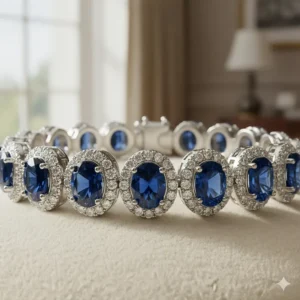
This one chases the classic diamond-line look with 42 lab-created white sapphires totaling 14.24 carats, set in polished sterling silver with a box clasp. Do the math and each stone is roughly a third of a carat. In practice that means small-to-mid stones packed tightly, which creates the unbroken ribbon of light that makes a tennis bracelet read as one.
One honest expectation-setter: sapphire is denser than diamond, so a given carat weight looks slightly smaller. Don’t picture each stone matching a same-weight diamond. White sapphire also glows softer and more silvery than diamond’s rainbow flash, which many buyers prefer for daytime wear.
The analysis here is straightforward. If you want a colorless sapphire tennis bracelet that works with every outfit, the stone count and total weight make this one of the most “full-looking” sterling options in this guide.
Review sentiment: I couldn’t verify review text. The listing I found showed a Best Sellers Rank around #2,790 in Women’s Tennis Bracelets, which suggests steady sales, but rank isn’t a review.
Pros:
- ✅ Dense 42-stone line for continuous sparkle
- ✅ Lab-created stones, clearly labeled
- ✅ Neutral white tone suits any outfit
Cons:
- ❌ Review detail wasn’t verifiable here
- ❌ Sterling silver needs occasional polishing
Price: check current price. Comparable lab-created sterling designs in this research ran around $100 to $170, so use that as a sanity check.
3. Gem Stone King 3.20 Ct Blue Created Sapphire Tennis Bracelet — big-and-small stones for extra pop
Alternating 5x5mm and 2.5×2.5mm round stones is a smart design move. The large stones carry the color, and the small ones fill gaps so the line looks continuous. The listing I found (on the brand’s Walmart page) describes heat-treated blue created sapphires, 3.2 cttw, in 925 sterling silver. “Heat-treated created” is a transparency detail plenty of sellers skip, so I give the brand credit.
The same listing also offered a natural blue sapphire version at roughly $50 more than the created one. That’s a neat way to see how modest the natural premium is at this small scale. The seller also promises a full refund if you’re unsatisfied. Amazon versions can differ, so confirm specs on the live page.
For a first blue sapphire tennis bracelet or a September birthday gift, this is the low-drama choice.
Review sentiment: the product itself had a single 5-star rating at the time, far too thin to judge. The seller averaged 4.3 out of 5 across 1,767 seller reviews. That’s a company-level signal, not a product verdict.
Pros:
- ✅ Two stone sizes add visual depth
- ✅ Heat treatment and lab origin clearly stated
- ✅ Refund promise from the seller
Cons:
- ❌ Only one product-level rating found
- ❌ Smaller total weight than bulkier rivals
Price: around $120. Strong value for a clearly labeled blue sapphire tennis bracelet.
4. Peora Blue Sapphire Vintage Tennis Bracelet (8.5 Carats) — oval stones, real wrist presence
This is the bold one. It uses oval lab-created blue sapphires in .925 sterling with a rhodium finish, and the brand states SI1–SI2 clarity. It measures 7.25 x 0.38 inches and weighs 17.66 grams. That 0.38-inch width, roughly 10mm, makes it the widest and heaviest sterling pick here. You’ll notice it, which is the point, and you’ll want a snug, secure fit.
Rhodium gives that bright white shine, but rhodium finishes can wear with frequent use. Expect an occasional refresh. Peora backs the piece with a gift box, a certificate of authenticity, authenticity guarantee, and 45-day returns, which meaningfully lowers risk when reviews are thin. Peora also lists a 7-inch version on Amazon, so check the live listing’s carat weight.
Review sentiment: I couldn’t find independent review text for this model, so I’m not going to characterize it.
Pros:
- ✅ Oval stones with genuine wrist presence
- ✅ 45-day returns plus certificate
- ✅ Rhodium finish for a bright white look
Cons:
- ❌ Heavy, wide design isn’t minimalist
- ❌ No verified independent reviews found
Price: around $170. Fair for the size, and a good choice if “statement” is the goal.
5. Mejuri Zadie Bezel Lab Grown Sapphire Tennis Bracelet — sleek, snag-free daily wear
Bezel setting wraps each stone in a metal rim instead of prongs. That’s the clever architecture for a bracelet you’ll wear to the office, the airport, and everything between, because there’s nothing to catch on knits or hair. The specs: 2.5mm lab-grown sapphires, a 4.0mm chain width, 2.6mm thickness, and 925 sterling silver. A 2-year warranty comes with it. StyleCaster named it the best sterling silver tennis bracelet in a 2026 roundup.
Here’s the honest analysis. At $500 and up, you’re paying for design, finish, and warranty rather than rarer stones. The sapphires are lab-grown, just like the $100-$170 picks above. That can be money well spent for a piece worn constantly, but go in knowing it.
Review sentiment: reviews I found were for Mejuri‘s sibling lab-grown sapphire tennis bracelet, not this exact model. They averaged around 4.6 and described the bracelet as elegant, dainty, and good quality. That shows brand sentiment, not Zadie-specific proof.
Pros:
- ✅ Bezel setting resists snagging
- ✅ Two-year warranty included
- ✅ Slim profile layers well with watches
Cons:
- ❌ Fine-jewelry pricing for lab-grown stones
- ❌ Tiny 2.5mm stones read subtle, not bold
Price: $500 and up. Worth it if you’ll wear it near-daily and value the warranty.
6. Pompeii3 3 1/2 CT Blue Sapphire Tennis Bracelet (14K White Gold) — solid gold without heirloom pricing
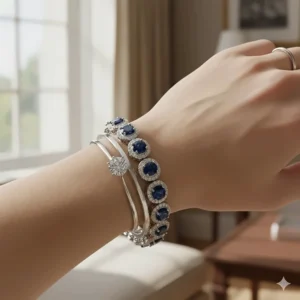
This is where the metal changes. You get 3½ carats of prong-set blue sapphires in solid 14K white gold, 7 inches long, with a double-locking clasp. Solid gold means no plating to wear off and a bracelet a jeweler can repair, resize, and polish for decades. That’s a different ownership equation from sterling.
I saw it listed in the mid-$900s at one retailer and around $1,000 on a marketplace. One important flag: the listing text doesn’t say whether the sapphires are natural or lab-grown, and Pompeii3 sells both. Ask before buying, because that answer changes what “fair price” means.
Review sentiment: I found only one verified-buyer comment, on a marketplace, praising the sapphires as gorgeous with a spread of royal blues. That’s a data point, not a trend. Some tone variation between stones is normal in sapphire, so request close-up photos.
Pros:
- ✅ Solid 14K white gold, no plating to wear
- ✅ Double-locking clasp adds security
- ✅ 3.5 carats of real blue color
Cons:
- ❌ Stone origin isn’t stated in the listing text
- ❌ Review depth is thin
Price: mid-$900s to about $1,000. Strong value if origin is confirmed.
7. Klenota Sapphire Tennis Bracelet in 14k White Gold — natural stones with a certificate
The premium pick states natural blue sapphires: round, 2.15mm, 3.5 carats total, in 585 (14k) white gold. It’s 17 cm long (about 6.7 inches) and weighs 2.9 grams, with an internal locking clasp. The brand says it’s handcrafted in Prague and includes a certificate of authenticity plus 60-day returns.
At 2.9 grams, it’s feather-light. That’s comfortable, but it also signals delicate construction, so treat it as a weekly-to-special-occasion piece rather than a gym companion. Per GIA, color is the most important sapphire quality factor, and treatment status affects value. Ask Klenota whether the stones are heated.
Review sentiment: I couldn’t find independent reviews, so the certificate and return window are your safety net.
Pros:
- ✅ Natural sapphires with certificate of authenticity
- ✅ Lightweight 14k white gold for comfort
- ✅ 60-day return window
Cons:
- ❌ Priciest pick by a wide margin
- ❌ 17 cm length runs short for larger wrists
Price: low-$3,000s. Buy it with heirloom intent, not impulse.
Spec Scorecard: What You Can Actually Verify
| Pick | Stones | Clasp | Verified Review Signal |
|---|---|---|---|
| Ice Gems | 4mm round, prong-set | Box, tongue, safety latch | 3.5/5 across 17 ratings |
| Gem And Harmony | 42 stones, 14.24 ctw | Box clasp | Sales rank only |
| Gem Stone King | 5mm and 2.5mm rounds, 3.2 ctw | Not stated | Seller 4.3/5; item has 1 rating |
| Peora | Ovals, 8.5 ct, 7.25 x 0.38 in | Not stated | None found; 45-day returns |
| Mejuri Zadie | 2.5mm, bezel-set | Not stated | Sibling model rated about 4.6 |
| Pompeii3 | 3½ ct, prong-set, 7 in | Double-locking | One buyer comment |
| Klenota | 2.15mm, 3.5 ct, 17 cm | Internal lock | None found; certificate included |
Notice how uneven the review evidence is. Only Ice Gems has a hard rating number on this exact product, and only 17 people contributed to it. For the others, return windows and warranties from Peora, Mejuri Zadie, and Klenota do more risk-reduction work than reviews can.
✨ Don’t Miss These Exclusive Deals!
🔍 Take your sapphire tennis bracelet search to the next level with these carefully selected picks. Click on any highlighted item to check current pricing and availability. A little comparison now means a bracelet you’ll actually love wearing!
Your First 30 Days with a Sapphire Tennis Bracelet: Fit, Care, and Wear Rules
A good sapphire tennis bracelet can last decades, and the first month sets the habits. Here’s a practical schedule that Amazon listings never give you.
Day 1: Fit and Security Check
Close the clasp and the safety latch, then gently shake your wrist over a bed or soft towel. A bracelet that slides over your hand is too loose. One that bunches your skin is too tight. This is also when a 17 cm piece like Klenota shows whether it suits your wrist.
Week 1: Wear It Short, Watch for Snags
Wear it a few hours at a time indoors. Notice whether sleeves catch, since prong-set bracelets like Ice Gems and Pompeii3 snag knits more than bezel-set Mejuri Zadie.
Weekly to Monthly Care Schedule
- Weekly: wipe with a soft, dry cloth.
- Monthly: soak in warm, soapy water and use a soft brush. GIA’s care guide says warm soapy water is always safe for sapphire.
- Every six months: check prongs and the clasp for looseness.
Be more careful with treated stones. GIA notes that fracture-filled or dyed stones can be harmed by mild acids like lemon juice, and ultrasonic cleaners are only usually safe for untreated, heat-treated, or diffusion-treated stones. When unsure, skip the ultrasonic machine.
Common First-Month Mistakes
Sleeping in it, wearing it in chlorinated pools, and layering lotion over it all dull sterling and gunk up settings. Store it clasped, in a soft pouch, away from other jewelry.
Real-World Scenarios: Which Sapphire Tennis Bracelet Fits Your Life?
Specs only matter in context. Here are three buyer profiles matched to picks.
Scenario 1: The September Birthday Gift
Budget: around $120. Environment: weekend dressing, occasional dinners. Frequency: a few times a month.
Sapphire is September’s birthstone, so a blue stone is a natural fit. Gem Stone King delivers a clearly labeled blue sapphire tennis bracelet with alternating stone sizes and a refund promise, so the gift-giver is covered if the fit or look isn’t right.
Scenario 2: The Desk-to-Dinner Daily Wearer
Budget: around $500. Environment: office, commuting, a gym or travel bag. Frequency: five days a week.
This wearer needs low-snag, low-maintenance design. Mejuri Zadie‘s bezel setting and 2-year warranty are the logic here. At about $1 per wear over five years of 100 wears annually, it’s reasonable math for a daily piece.
Scenario 3: The Milestone Anniversary
Budget: $3,000 or more. Environment: special occasions. Frequency: a few times a month.
Sapphire is the traditional gem for a 45th anniversary, so this is when natural stones make sense. Klenota pairs natural blue sapphires with a certificate. If you want gold but not heirloom pricing, Pompeii3 is the middle path, provided you confirm the stones’ origin. And for a darker, edgier look at the lowest price, Ice Gems is the stacking pick.
Problem → Solution Guide: 5 Sapphire Tennis Bracelet Headaches, Fixed
Problem 1: The bracelet slides to the top of my wrist.
Heavier designs rotate more. If you choose something like Peora at nearly 18 grams, size it snugly and rely on the safety latch.
Problem 2: My silver looks dull.
Sterling tarnishes. Polish gently, keep it dry, and store it sealed. Plating on Ice Gems-style budget pieces can thin over time, so don’t over-scrub.
Problem 3: It snags on sweaters.
Choose a bezel setting. Mejuri Zadie has no prongs to catch.
Problem 4: I can’t tell whether it’s real.
Ask the seller for written origin and treatment disclosure. Klenota and Peora both reference certificates of authenticity, which is the right instinct for any purchase.
Problem 5: My wrist is large (or small).
Measure first. Compare against each listing’s real length, because Klenota at 17 cm is shorter than many 7-inch designs.
How to Choose a Sapphire Tennis Bracelet
Choose by deciding origin, then color, treatment, metal, setting and clasp, and finally fit and returns. Here’s the order that saves the most regret.
- Decide natural or lab-created first. This sets your price ceiling more than any other choice. Lab-created stones deliver the look for far less.
- Judge color before carats. GIA’s sapphire buyer’s guide calls color the most important quality factor, so evenness and saturation across the line matter more than headline weight.
- Ask about treatment. Heating is an accepted practice, but lattice diffusion generally lowers value. Much of the market is treated, so ask.
- Pick metal for your lifestyle. Plated sterling is affordable but needs care. Solid 14K gold costs more and lasts longer.
- Match setting and clasp to your day. Bezel setting resists snags, while prongs show more stone. Look for a safety latch or double lock.
- Verify length and return policy. Measure your wrist, add a comfortable drape, and shop sellers with real return windows.
Lab-Created vs Natural Sapphire Tennis Bracelet: What Actually Changes?
Both are corundum. Brands like Peora and Mejuri say lab-created stones share the physical and chemical properties of natural ones. What differs is origin, rarity, and price.
Price and Rarity
Within the same Gem Stone King design, the natural option cost only about $50 more than the lab-created one at that small scale. But at fine-jewelry scale the gap widens fast. Natural stones from sources like Kashmir, Myanmar, Sri Lanka, and Madagascar earn premiums, per GIA.
Durability
Daily wear is a wash. Both resist scratches and everyday chemicals, apart from treatments like fracture filling.
Resale and Sentiment
Natural stones generally hold more resale value, and “natural” matters emotionally for milestone gifts. Lab-created stones give you more sparkle per dollar and tend to make the most sense when you want color now.
The honest rule: buy lab-created for fashion and daily rotation, and natural when provenance and a certificate are part of the gift.
Sapphire Tennis Bracelet vs Diamond Tennis Bracelet
Both are timeless, but they behave differently on the wrist.
| Factor | Sapphire Tennis Bracelet | Diamond Tennis Bracelet |
|---|---|---|
| Mohs hardness | 9 | 10 |
| Look | Rich color, or soft white sapphire | Maximum fire and sparkle |
| Example price range | Lab sterling: $100-$500; gold picks: $950-$3,300 | Lab-grown 8 TCW in 14k gold (Pompeii3): around $1,900 |
| Best For | Color lovers, birthstone and anniversary gifts | Classic, high-sparkle everyday wear |
Sapphire wins on personality and entry price, while diamond wins on sheer brilliance. In the Pompeii3 lineup, the 8 TCW lab-grown diamond version listed around $1,900 at one boutique, which gives you a sense of how the tiers compare. If you want your wrist to look like a statement, choose sapphire. If you want it to look like light itself, choose diamond.
Features That Actually Matter (And Those That Don’t)
Marketing loves big numbers. Wrists love good engineering.
Features Worth Paying For
- Clasp security. Safety latches or double locks, like those on Ice Gems, Pompeii3, and Klenota‘s internal lock, keep your bracelet on your wrist.
- Setting style. Bezel versus prong changes snagging risk more than most people expect.
- Stone diameter in millimeters. A 2.15mm stone reads delicate, and 4mm reads bold.
- Metal and return policy. Solid gold and generous returns beat decorative extras.
Features You Can Mostly Ignore
- Headline carat totals alone. Fourteen carats of small stones can look less impressive than a well-spaced 3.5-carat design.
- “AAA” and vague quality labels. They’re not a substitute for origin and treatment disclosure.
- Gift boxes. Nice, but rarely a reason to pay more.
Common Mistakes When Buying a Sapphire Tennis Bracelet
A few pitfalls account for most buyer’s remorse.
- ❌ Judging by carats instead of millimeters. Weight doesn’t tell you how a bracelet looks.
- ❌ Assuming “sapphire” means natural. Check for “lab-created” or “lab-grown” wording.
- ❌ Skipping treatment questions. If a seller won’t answer, that’s information.
- ❌ Ignoring length. A 17 cm piece can fit very differently from a 7.25-inch one.
- ❌ Overpaying for brand alone. At Mejuri Zadie‘s level you’re buying design and warranty, so make sure you value them.
Long-Term Cost & Maintenance
Price tags hide ownership costs. Think in cost per wear.
A bracelet around $120 worn 100 times a year for three years is 300 wears, about 40 cents each. Something in the low-$3,000s, like Klenota, worn 100 times a year over ten years is about $3.30 per wear. That’s higher, but the piece can last longer and carries more resale appeal.
Maintenance matters too. One major mall jeweler lists clasp repair around $44 to $85 and prong tightening around $36 to $54. So budget for occasional servicing on prong-set pieces, and note that bezel designs like Mejuri Zadie generally need fewer prong repairs.
Sterling silver needs polishing and sensible storage, while solid gold like Pompeii3 needs mostly cleaning and periodic inspection. Treat the metal as part of the long-term math.
Sapphire Tennis Bracelet Safety, Labeling & Compliance Guide
Labeling rules protect you. In the U.S., the FTC’s Jewelry Guides recognize qualifiers like “laboratory-created” and “laboratory-grown” for man-made gemstones. So a lab-made sapphire tennis bracelet should be clearly identified as such, not just labeled “sapphire.” Imitations are a separate category, and “simulated” means a look-alike, not corundum.
What to check before you buy:
- Origin wording in the title and description, not buried in fine print.
- Treatment disclosure. Retail listings often note that sapphire is commonly heated or diffused.
- Metal claims. Sterling is 925, gold is marked by karat (14k, for example), and plating like rhodium can wear.
- Skin sensitivity. Ice Gems advertises nickel-free metal, which is useful if you react to alloys.
When a listing is vague, pick a seller who answers in writing, like those offering certificates and return windows.
FAQ: Sapphire Tennis Bracelet Questions Answered
❓ Is a sapphire tennis bracelet worth buying instead of a diamond one?
❓ How many carats should a sapphire tennis bracelet have?
❓ Can I wear a sapphire tennis bracelet every day?
❓ Is a lab-created sapphire tennis bracelet real sapphire?
❓ What size sapphire tennis bracelet should I buy?
Conclusion: Which Sapphire Tennis Bracelet Should You Buy?
A great sapphire tennis bracelet isn’t about the biggest carat number. It’s about matching stone, metal, and setting to how you’ll actually wear it.
For budget color and edge, Ice Gems is the low-cost, moody pick, with its mixed 3.5-star sample as the caution. For the most sparkle in sterling, Gem And Harmony brings 42 white sapphires, though its price and reviews need checking. Gem Stone King is the best first blue sapphire tennis bracelet, with clear lab and heat-treatment labeling. Peora is for bigger, bolder wrists, backed by a certificate and 45-day returns. Mejuri Zadie earns its price if you’ll wear it daily and want a warranty. Pompeii3 is the solid-gold step up, as long as you confirm origin. And Klenota is the natural-sapphire heirloom play.
My rule of thumb: spend on clasp security, setting, and return policy first, and on stone size last. Check current price, ask about origin, and wear it often.
✨ Ready to Find Your Perfect Match? 💎
🔍 Browse these seven picks, click through to check current pricing and availability, and choose the sapphire tennis bracelet that fits your wrist, your budget, and your story. A little sparkle goes a long way!
Recommended for You
- Emerald Bracelet: 7 Stunning Picks to Buy in 2026
- Bracelet With Diamond for Men: 7 Best Picks to Buy in 2026
Disclaimer: This article contains affiliate links. As an Amazon Associate, I earn from qualifying purchases. If you purchase products through these links, we may earn a small commission at no additional cost to you.
✨ Found this helpful? Share it with your friends! 💬🤗
