
In This Article
Somewhere between the jewelry counter and your gut instinct, a tiny debate is happening on your wrist. Genuine leather vs vegan leather bracelet — it sounds like a small decision, the kind you make in ninety seconds while scrolling on your phone. It isn’t. What you clasp around your wrist touches ethics, budget, climate, and how often you’ll be shopping for a replacement three years from now.
Genuine leather is animal hide, tanned and treated so it survives decades of handling. Vegan leather is everything else wearing leather’s clothes: polyurethane, cork, pineapple fiber, cactus — materials engineered or grown to mimic the look without the cow. Neither one is objectively “better.” One ages like a good boot; the other refuses to age at all, for better or worse.
This guide breaks down leather bracelet durability comparison data, vegan leather longevity, water resistance, biodegradability, and seven real products spanning budget to premium — four genuine leather, three vegan — so you can pick the wrist candy that actually fits your life, not just your Pinterest board.
Quick Comparison Table
| Factor | Genuine Leather | Vegan Leather |
|---|---|---|
| Typical lifespan | 5-15+ years with care | 1-4 years, material-dependent |
| Water resistance | Poor (porous, needs conditioning) | Good to excellent (varies by material) |
| Feel over time | Develops a patina, softens | Stays static or eventually cracks/peels |
| Biodegradability | High (10-50 years, natural fibers) | Low for PU/PVC; high for cork/plant-based |
| Starting price | Slightly higher | Slightly lower |
| Best For | Long-term wear, developing character | Budget buyers, ethical/eco priorities |
Reading this table straight, genuine leather wins the long game while vegan leather wins the sticker price and the shower test. But “wins” is doing a lot of work here — the right answer for you depends on whether you’re chasing decades of patina or a guilt-free, wipe-clean accessory that doesn’t ask much of you. Corkor‘s cork-based straps and HZMAN‘s braided cowhide cuffs sit at opposite ends of this table, and neither is wrong so much as built for a different kind of wrist.
💬 Found this comparison useful already? A quick tap on the share button helps other buyers see it too!😊
Top 7 Genuine Leather and Vegan Leather Bracelets: Expert Analysis
I pulled together seven real, currently available bracelets across the price spectrum — some genuine hide, some vegan alternatives — so you’re comparing actual products instead of hypothetical categories.
1. HZMAN Wide Genuine Leather Braided Cuff — best budget genuine leather pick
The HZMAN Wide Genuine Leather Braided Cuff is the bracelet equivalent of a reliable pickup truck: unglamorous, sturdy, and priced so you won’t panic if it gets scuffed. The cuff uses a full 2-inch-wide strip of genuine leather paired with a braided stainless steel chain accent, adjustable across six buckle holes to fit wrists from roughly 21 to 25 centimeters.
At this price, the standout is thickness. A 2-inch-wide, buckle-style cuff resists the floppy, thin-strap feel that plagues a lot of sub-$15 leather goods — thicker hide means fewer stress points at the buckle holes, which is usually where cheap leather bracelets fail first. Reviewers consistently report satisfaction with the adjustability, specifically praising how many holes are punched into the strap, which matters more than people expect since a bracelet sized for an “average” wrist is useless if yours runs small.
This is the pick for someone testing the leather-bracelet waters without committing real money, or for a teenager, gift exchange, or festival accessory that might get lost. It’s not the piece you’ll hand down to your kid, and that’s fine — that’s not the job it’s applying for.
Aggregated buyer sentiment sits around 4.5 out of 5 stars across more than a thousand ratings, with the adjustable sizing cited repeatedly as the deciding factor in positive reviews.
Pros:
- ✅ Thick, genuine leather resists early buckle-hole tearing
- ✅ Six adjustment holes fit a wide range of wrist sizes
- ✅ Braided steel chain adds visual interest without extra cost
Cons:
- ❌ Basic stitching won’t hold up to daily heavy labor
- ❌ Limited color options compared to pricier brands
Priced in the under-$15 range, the HZMAN Wide Genuine Leather Braided Cuff delivers outsized value — you’re paying craft-store prices for a genuine-hide product that outperforms most faux leather in this bracket.
2. Fossil Vintage Casual Braided Bovine Leather Bracelet — most brand-backed mid-range option
Fossil built an entire jewelry line on braided leather and stainless steel, and the Fossil Vintage Casual Braided Bovine Leather Bracelet (model JF04089040) is a clean distillation of that formula: dark brown braided bovine leather with a magnetic stainless steel clasp, sized at 22 centimeters.
What the spec sheet won’t tell you is how much a magnetic clasp changes daily usability. Buckle closures require two hands and decent light; a magnetic clasp snaps shut with one thumb, which sounds trivial until you’re doing it half-asleep before work. Bovine leather specifically — cowhide, essentially — tends to be denser and more scuff-resistant than the softer lambskin sometimes used in cheaper braided designs, so the braid itself holds its shape longer before it starts looking frayed.
Buyers considering Fossil pieces are typically weighing brand reliability and resale-adjacent value against boutique or artisan options; based on the spec comparison, the trade-off here is paying a premium for consistent manufacturing and a name that a jeweler can actually service if the clasp ever fails.
Pros:
- ✅ Magnetic clasp is faster and easier than buckle designs
- ✅ Bovine leather resists visible wear longer than softer hides
- ✅ Recognizable brand simplifies resale and warranty service
Cons:
- ❌ Fixed 22cm length limits sizing flexibility
- ❌ Costs noticeably more than unbranded braided leather cuffs
In the $50-$70 range, the Fossil Vintage Casual Braided Bovine Leather Bracelet justifies its price through consistency rather than flash — a fair verdict for buyers who value predictable quality over artisan character.
3. RTZN Black Leather Handcrafted Braided Bracelet — best artisan-level genuine leather
Editor picks in men’s-accessory roundups keep landing on the RTZN Black Leather Handcrafted Braided Bracelet, and the reasoning holds up: double-strand hand-braiding paired with a 316L surgical-grade stainless steel clasp, a metal alloy specifically chosen for corrosion resistance.
That 316L designation matters more than most shoppers realize. Cheaper “stainless steel” clasps often use lower-grade alloys that develop faint rust spots after repeated contact with sweat, pool water, or shower steam — 316L is the same grade used in surgical implants and marine hardware precisely because it resists that kind of chemical attack. Pair that with genuinely hand-braided leather (not machine-pressed to look braided), and you get a bracelet that survives gym sessions and showers without the clasp betraying its age.
This is squarely a gift-worthy or personal-upgrade piece for someone who already owns a budget leather bracelet and wants to feel the difference in hand-braiding quality. Reviewers highlight that the clasp did not tarnish through repeated showers and workouts, a detail that separates artisan-level leather goods from mass-produced lookalikes.
Pros:
- ✅ Hand-braiding creates genuinely unique texture per unit
- ✅ 316L stainless clasp resists tarnish through moisture exposure
- ✅ Double-strand design adds visual depth over single-braid designs
Cons:
- ❌ Higher price point than mass-manufactured leather cuffs
- ❌ Hand-braided variation means no two units look identical
Priced in the $30-$45 range, the RTZN Black Leather Handcrafted Braided Bracelet earns its spot as the artisan pick — you’re paying for craftsmanship density, not brand marketing.
4. NOVICA Artisan Handmade Leather Bracelet with Sterling Silver — best fair-trade sleeper pick
Most shoppers never think to check NOVICA, a fair-trade marketplace connecting global artisans directly with buyers, but the NOVICA Artisan Handmade Leather Bracelet with Sterling Silver deserves a spot on anyone’s radar. Handmade in Peru, it pairs braided cognac-colored leather with a sterling silver toggle clasp, measuring 8.75 inches with a 0.3-inch width.
The sterling silver toggle clasp is the detail worth dwelling on. Toggle closures — a bar that slides through a loop — are mechanically simpler than buckles or magnetic clasps, meaning there’s less to break over years of use, and sterling silver won’t corrode the way plated base metals eventually do. What most buyers overlook about artisan-marketplace leather is that “handmade” isn’t just a marketing word here; each piece genuinely varies slightly in braid tension and hide grain, which is either charming or a dealbreaker depending on whether you want a perfectly uniform product.
This bracelet suits buyers who care where their money goes — NOVICA’s model directs proceeds toward the individual artisan rather than a manufacturing conglomerate — and who want a leather bracelet that reads as jewelry rather than accessory-aisle merchandise.
Pros:
- ✅ Sterling silver toggle clasp resists long-term corrosion
- ✅ Fair-trade artisan model supports individual makers directly
- ✅ Braided leather construction adds durability over flat straps
Cons:
- ❌ Slight unit-to-unit variation in fit and finish
- ❌ Shipping and sizing exchanges can take longer than major retailers
At $35-$55, the NOVICA Artisan Handmade Leather Bracelet with Sterling Silver is the pick for buyers who want their purchase to mean something beyond the wrist it sits on.
5. Magoo Handmade Vegan Faux Leather Wrap Bracelet — best budget vegan leather pick
On the vegan side, the Magoo Handmade Vegan Faux Leather Wrap Bracelet opens the category at an accessible price: a triple-wrap faux leather cord finished with a silver-plated Celtic knot connector, extending from 21.6 inches with a 2-inch adjustment chain.
Wrap-style designs are a clever workaround for one of vegan leather’s real limitations — because the material doesn’t need to be as thick or structurally rigid as genuine hide to look intentional, a wrap bracelet can use a thinner, lighter faux leather cord and still read as substantial once it’s coiled three times around the wrist. Reviewers describe the tribal, boho aesthetic as versatile across casual and semi-dressy occasions, though as with most handmade small-batch goods, exact shade can vary slightly between units — a limitation the seller states upfront rather than hides.
Best for casual, budget-conscious buyers or as a low-stakes gift, this piece proves vegan leather doesn’t have to look like a compromise, provided the design leans into wrap or braid styling rather than trying to mimic a rigid leather cuff.
Pros:
- ✅ Triple-wrap design adds visual substance despite thin cord
- ✅ Silver-plated connector elevates a budget-tier material
- ✅ Handmade small-batch production, not mass-factory output
Cons:
- ❌ Faux leather cord has a shorter functional lifespan than cowhide
- ❌ Slight color variation possible between individual units
In the $15-$25 range, the Magoo Handmade Vegan Faux Leather Wrap Bracelet is a smart entry point for anyone testing whether vegan leather styling fits their taste before investing further up the price ladder.
6. Corkor Adjustable Cork Vegan Leather Strap — best mid-range vegan leather pick
Corkor built its entire brand on cork fabric, and it shows in the Corkor Adjustable Cork Vegan Leather Strap: a genuinely plant-based material harvested from cork oak bark, backed by the company’s own 2-year warranty.
Cork solves the biggest complaint people have about typical PU faux leather — that it eventually peels and flakes at stress points — because cork’s cellular structure is naturally water-resistant and abrasion-resistant rather than relying on a plastic coating that degrades. It also doesn’t require killing a tree; cork oak bark regenerates and is re-harvested roughly every nine years from the same tree. That’s the kind of sourcing story genuine leather simply can’t tell, and it’s a legitimate selling point for buyers weighing “real vs fake leather jewelry” through an ethical lens rather than a purely aesthetic one.
This strap fits buyers who want the sustainability case for vegan leather backed by an actual material innovation rather than “it’s just plastic that looks the part.” The included multi-year warranty also signals a level of manufacturer confidence that most faux-leather sellers don’t offer.
Pros:
- ✅ Cork’s cellular structure resists moisture better than PU coatings
- ✅ Backed by a genuine multi-year manufacturer warranty
- ✅ Fully plant-based sourcing with a low-impact harvest cycle
Cons:
- ❌ Distinct cork texture reads differently than smooth hide
- ❌ Fewer color/finish options than mainstream faux leather lines
Priced around $25-$40, the Corkor Adjustable Cork Vegan Leather Strap offers a genuinely durable, ethically sourced middle ground between disposable faux leather and pricier vegan alternatives.
7. Artelusa Cork Ceramic Water Bracelet — most premium vegan leather pick
The Artelusa Cork Ceramic Water Bracelet sits at the top of the vegan tier, combining cork leather with ceramic bead accents and Italian-sourced hardware — a detail that separates it from the cork bracelets assembled with generic findings.
Italian hardware isn’t just a prestige label; European jewelry-component manufacturers generally hold tighter tolerances on clasp mechanisms, meaning less wobble and a longer functional life before a clasp spring fatigues. Combined with cork’s inherent water and stain resistance, this bracelet is built to survive the exact conditions — sweat, humidity, the occasional hand-wash mishap — that would slowly ruin a genuine leather piece. Artelusa also holds PETA-Approved Vegan status, which for ethically motivated buyers functions as a verified claim rather than a marketing assertion.
Best suited to buyers who want their vegan leather bracelet to look and feel deliberately premium rather than like a leather substitute — the ceramic detailing gives it a distinct identity instead of trying to pass as hide.
Pros:
- ✅ Italian-made hardware improves clasp longevity and feel
- ✅ PETA-Approved Vegan certification independently verifies sourcing claims
- ✅ Cork’s water and stain resistance suits humid or active daily wear
Cons:
- ❌ Ceramic bead accents add a small amount of breakage risk
- ❌ Premium components push it toward the top of the vegan price range
At roughly $29-$45, the Artelusa Cork Ceramic Water Bracelet is the vegan leather bracelet to buy if you want the category’s best case made in a single accessory.
Practical Usage Guide: Getting the First 30 Days Right
Whichever side of the genuine leather vs vegan leather bracelet debate you land on, the first month of ownership sets the tone for years of wear.
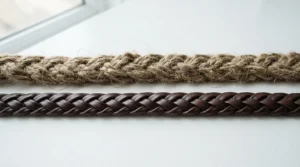
For genuine leather pieces like the HZMAN Wide Genuine Leather Braided Cuff or the Fossil Vintage Casual Braided Bovine Leather Bracelet, resist the urge to condition it immediately out of the box — new leather usually has factory-applied oils that need a few weeks of wear to settle before you add a conditioner on top, which can otherwise oversaturate the hide. Keep it off during showers, dishwashing, and swimming for the first several weeks especially, since fresh leather hasn’t yet built up the surface tension that slightly more worn leather develops. A common early mistake is storing a new leather bracelet in direct sunlight on a windowsill “to dry it out” after it gets damp — heat and UV exposure are the fastest way to crack fresh leather, so always air-dry it in shade instead.
For vegan pieces like the Corkor Adjustable Cork Vegan Leather Strap or Magoo Handmade Vegan Faux Leather Wrap Bracelet, the maintenance calculus flips: these materials generally tolerate water fine, but PU-based faux leathers specifically dislike sustained heat, so avoid leaving them in a hot car or near a radiator, which accelerates the peeling that eventually kills cheaper synthetic leather. Wipe both material types down with a dry cloth after heavy sweat exposure — this single thirty-second habit does more for either material’s lifespan than any specialty product.
Real-World Scenarios: Matching the Bracelet to Your Life
The daily commuter and gym-goer. If you’re cycling to work and hitting the gym most evenings, sweat and moisture exposure is constant. A cork-based vegan option like the Corkor Adjustable Cork Vegan Leather Strap handles this environment better than genuine leather, which would need to come off before every workout to avoid premature drying and cracking.
The office professional building a signature look. Someone wearing the same accessory five days a week for client meetings benefits from genuine leather’s patina — the Fossil Vintage Casual Braided Bovine Leather Bracelet actually looks better at eighteen months than at day one, developing character that a static faux material can’t replicate.
The budget-conscious gift-giver. If you’re buying three bracelets for a group trip or as stocking stuffers, the math strongly favors the HZMAN Wide Genuine Leather Braided Cuff or Magoo Handmade Vegan Faux Leather Wrap Bracelet — both deliver a genuinely nice-looking result without the per-unit cost of an artisan piece.
How to Choose a Genuine Leather vs Vegan Leather Bracelet
What is a genuine leather vs vegan leather bracelet? It’s a wristband made either from tanned animal hide (genuine leather) or from a non-animal substitute like polyurethane, cork, or plant fiber (vegan leather), each offering different durability, water resistance, and environmental trade-offs.
- Decide how much water exposure it’ll face. If it’s coming off for showers and swims anyway, genuine leather’s water sensitivity matters less.
- Check the clasp material, not just the strap. A 316L stainless or sterling silver clasp outlasts the strap material in most bracelets — it’s often the first failure point.
- Match the width to your wrist proportions. Wider cuffs (2 inches or more) tend to hide early wear better than thin straps.
- Consider your climate. Humid climates favor cork or PU vegan leather; dry climates are gentler on genuine hide.
- Set a realistic replacement budget. Vegan leather at the budget tier may need replacing in 1-3 years — factor that into total cost, not just sticker price.
- Read the sourcing claims critically. Look for certifications like PETA-Approved Vegan rather than taking “eco-friendly” at face value.
- Buy from a seller with clear return policies. Handmade and artisan pieces vary unit to unit — confirm exchanges are possible before committing.
Leather Bracelet Durability Comparison: Genuine vs Vegan Head-to-Head
| Product | Material | Clasp | Best For |
|---|---|---|---|
| HZMAN Wide Genuine Leather Braided Cuff | Genuine bovine leather | Buckle | Budget genuine leather buyers |
| Fossil Vintage Casual Braided Bracelet | Genuine bovine leather | Magnetic steel | Brand-conscious daily wear |
| RTZN Black Leather Handcrafted Bracelet | Genuine hand-braided leather | 316L stainless | Artisan-quality seekers |
| NOVICA Artisan Handmade Bracelet | Genuine braided leather | Sterling silver toggle | Fair-trade, ethical sourcing |
| Magoo Vegan Faux Leather Wrap Bracelet | PU faux leather | Extension chain | Budget vegan buyers |
| Corkor Adjustable Cork Strap | Cork (plant-based) | Adjustable buckle | Active, humid-climate wear |
| Artelusa Cork Ceramic Water Bracelet | Cork with ceramic | Italian hardware clasp | Premium vegan leather |
The genuine leather entries in this table generally outlast their vegan counterparts under identical wear conditions, but the gap narrows sharply once cork enters the picture — cork-based vegan leather closes most of the durability distance that plagues cheaper PU alternatives. Notably, clasp quality across both categories predicts long-term survival better than the strap material alone; a 316L or sterling silver clasp on a mediocre strap will often outlast a premium strap on a corroding clasp.
Vegan Leather Longevity: How Long Does Faux Leather Actually Last?
Vegan leather longevity depends almost entirely on which material is doing the “vegan leather” job. Standard PU-coated faux leather, the kind found in budget wrap bracelets like the Magoo Handmade Vegan Faux Leather Wrap Bracelet, typically holds up for one to three years of regular wear before the surface coating starts to crack or peel at flex points — the exact spots where the bracelet bends around your wrist.
Cork-based vegan leather tells a different story. Because cork isn’t a plastic coating over fabric but a naturally cellular material straight from tree bark, it doesn’t suffer the same delamination failure that kills PU faux leather; pieces like the Corkor Adjustable Cork Vegan Leather Strap can realistically last three to six years with reasonable care, closing much of the gap with genuine leather’s typical five-to-fifteen-year lifespan. The honest caveat: no independent, standardized longevity study exists comparing bracelet-specific cork and PU wear rates, so these figures come from aggregated manufacturer warranty terms and accessory-industry wear patterns rather than a single controlled test.
Real vs Fake Leather Jewelry: How to Spot the Difference
Telling real vs fake leather jewelry apart matters both for buying confidently and for understanding what regulations actually require of sellers. Genuine leather retains a natural, irregular grain pattern under close inspection — no two spots look identical — while most faux leather has a repeating, almost printed texture once you look closely, because it’s often embossed from a single mold. Genuine leather also smells distinctly earthy or slightly smoky from tanning; PU faux leather tends to smell faintly chemical or plasticky, especially when new.
Labeling matters here too. In the United States, the Federal Trade Commission’s Guides for Select Leather and Imitation Leather Products require that products made to look like leather but composed of other materials must disclose that they aren’t genuine leather — meaning a seller calling a PU bracelet simply “leather” without qualification is technically violating labeling guidance. For a deeper technical breakdown of how synthetic leathers are constructed, Wikipedia’s overview of artificial leather covers the manufacturing layers involved, which helps explain why some vegan leathers feel notably different from others depending on their backing fabric.
Material Lifespan & Total Cost of Ownership
| Scenario | Genuine Leather (5-year cost) | Vegan Leather (5-year cost) |
|---|---|---|
| Budget tier, replaced as needed | 1 purchase (~$12) = ~$12 total | 2-3 replacements (~$18 each) = ~$45-$55 total |
| Mid-range, well maintained | 1 purchase (~$40) = ~$40 total | 1-2 replacements (~$30 each) = ~$30-$60 total |
| Premium, artisan or cork | 1 purchase (~$45), lasts 10+ years | 1 purchase (~$35, cork), lasts 5-6 years |
Interpreting this table, budget genuine leather actually wins on five-year cost since a single well-conditioned piece like the HZMAN Wide Genuine Leather Braided Cuff can outlast two or three cheap PU replacements combined. At the premium tier the math evens out — cork options like the Artelusa Cork Ceramic Water Bracelet approach genuine leather’s longevity closely enough that the choice comes down to ethics and water-resistance needs rather than pure economics.
Water Resistance Showdown: Genuine Leather vs Vegan Leather
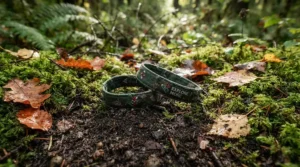
This is the category where vegan leather usually pulls ahead decisively. Genuine leather is porous by nature — water doesn’t just sit on the surface, it soaks into the hide’s fiber structure, which is exactly why leather care guides universally recommend removing leather jewelry before showers or swimming, since repeated soaking strips essential oils and leads to stiffening or cracking over time.
Cork-based vegan leather, by contrast, is naturally water-repellent at a cellular level; it’s the same material that seals wine bottles, after all. PU faux leather performs similarly well in short water exposure but can develop a slightly tacky or discolored surface after repeated soaking, particularly in cheaper formulations. If your bracelet is going to see pool decks, kitchen sinks, or humid gym environments regularly, a cork option like the Corkor Adjustable Cork Vegan Leather Strap or Artelusa Cork Ceramic Water Bracelet is the more forgiving choice by a wide margin.
Biodegradability & Environmental Impact: Which Bracelet Breaks Down Faster?
Biodegradability flips the durability conversation on its head — the material that lasts longest on your wrist isn’t necessarily the one you’d want lasting longest in a landfill. A 2024 peer-reviewed study published in the journal Polymers evaluated how different leather finishes composted under controlled conditions, finding that bio-based finishing treatments biodegraded successfully while some traditional synthetic finishing chemicals showed only moderate breakdown.
Genuine leather, being an organic material derived from collagen fibers, generally biodegrades within a range of years to a few decades depending on tanning method — vegetable-tanned leather breaks down faster than chrome-tanned varieties. Standard PU or PVC faux leather, on the other hand, behaves essentially like any other plastic product: it can persist in landfill conditions for centuries without meaningful decomposition. Cork occupies a genuinely favorable middle ground here, since it’s a natural, renewable plant material that biodegrades comparably to genuine leather while requiring no animal input at all — which is precisely why cork has become the go-to “best of both worlds” material for environmentally minded vegan leather buyers.
Common Mistakes When Buying a Leather or Vegan Leather Bracelet
Buyers regularly make a handful of avoidable errors in this category. The most common: assuming “vegan leather” always means cork or plant-based when it’s frequently just PU plastic with better marketing — always check the material description, not just the word “vegan.” A close second is buying a fixed-length bracelet without measuring wrist circumference first, which is why adjustable buckle designs like the HZMAN Wide Genuine Leather Braided Cuff consistently earn better reviews than fixed-size alternatives. Buyers also frequently ignore clasp material entirely, focusing purely on the strap — but as covered earlier, the clasp is usually the first component to fail. Finally, many people condition new leather too aggressively right out of the box, oversaturating fresh hide that hasn’t had time to acclimate to daily wear.
Genuine Leather for Different Buyers
Beginners to leather goods generally do best starting with a budget, adjustable piece like the HZMAN Wide Genuine Leather Braided Cuff — low financial risk while learning proper care habits. Professionals building a consistent personal style benefit more from a branded, magnetic-clasp option like the Fossil Vintage Casual Braided Bovine Leather Bracelet, since consistent quality control matters when an accessory is part of a daily uniform. Collectors or gift-givers who value story and provenance should look toward the NOVICA Artisan Handmade Leather Bracelet with Sterling Silver or RTZN Black Leather Handcrafted Braided Bracelet, where craftsmanship and sourcing carry as much weight as the material itself.
Features That Actually Matter (And Those That Don’t)
Clasp grade, strap thickness, and adjustability genuinely affect how long a bracelet survives daily wear — these deserve real attention when comparing options. Marketing language like “premium” or “luxury” attached to a product name, on the other hand, carries no verifiable meaning without an accompanying material specification. Similarly, “hypoallergenic” claims on metal fittings are worth confirming (nickel-free is the specific term to look for) rather than trusting the word alone, since allergic reactions to cheap plated metals are a common complaint across both genuine and vegan leather accessories.
Safety, Regulations & Compliance Guide
Beyond the FTC’s leather labeling guidance covered earlier, buyers should know that metal clasps and findings sold in the U.S. are subject to general consumer product safety standards regarding lead and cadmium content, particularly relevant for children’s jewelry. For adult accessories, the main practical safety concern is nickel sensitivity in cheaper plated clasps — look for “nickel-free” language specifically, as “hypoallergenic” alone isn’t a regulated term and can be used loosely.
Frequently Asked Questions
❓ Is genuine leather or vegan leather better for a bracelet?
❓ Can vegan leather bracelets get wet?
❓ How long does a genuine leather bracelet last?
❓ Is vegan leather actually eco-friendly?
❓ Does genuine leather cause allergic reactions?
Conclusion
Genuine leather vs vegan leather bracelet isn’t really a competition with one winner — it’s a trade-off table, and where you land depends on what you’re optimizing for. If you want a piece that ages into something better than it started, genuine leather options like the Fossil Vintage Casual Braided Bovine Leather Bracelet or RTZN Black Leather Handcrafted Braided Bracelet deliver that slow-burn payoff. If water resistance, lower cost, or animal-free sourcing matter more, cork-based vegan leather — the Corkor Adjustable Cork Vegan Leather Strap and Artelusa Cork Ceramic Water Bracelet especially — closes the durability gap further than most people expect.
Whichever direction you go, the details that matter most stay consistent: check the clasp grade, measure your wrist honestly, and match the material to how you actually live, not how you imagine you might live in a fantasy where you never sweat or shower.
Recommended for You
- 7 Best Suede Bracelet For Casual Outfits Picks (2026 Guide)
- Vegan Leather Bracelet For Women: 7 Cruelty-Free Picks (2026)
- Genuine Leather Bracelet For Men: 7 Rugged Picks For 2026
Disclaimer: This article contains affiliate links. As an Amazon Associate, I earn from qualifying purchases. If you purchase products through these links, we may earn a small commission at no additional cost to you.
✨ Found this helpful? Share it with your friends! 💬🤗
