
In This Article
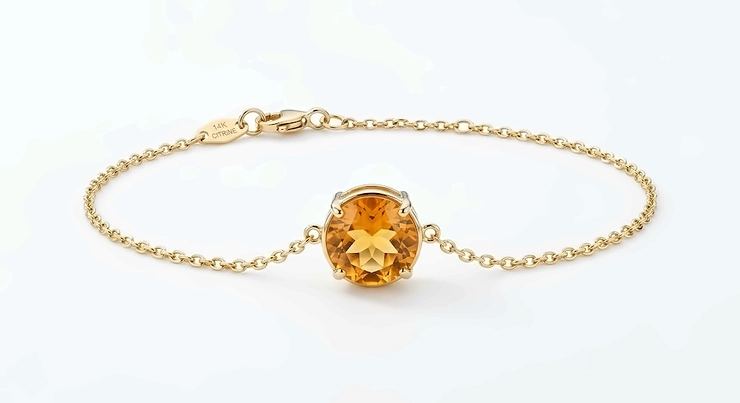
Citrine is the golden-hued quartz gemstone officially recognized for November birthdays, prized for its warm yellow-to-orange color and its status as one of the most affordable, durable gems on the market. If you were born in the eleventh month, or you’re shopping for someone who was, november birthstone citrine bracelets are the easiest way to turn that fact into something you can actually wear every day.
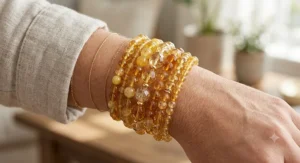
Here’s the thing about November as a birth month: it doesn’t get nearly the jewelry attention that April (diamonds) or May (emeralds) do. Citrine has spent decades playing second fiddle to flashier stones, which is honestly a little unfair, because a well-cut piece of citrine can look like sunlight trapped in a bead. It’s also one of the rare gemstones where “budget-friendly” and “genuinely beautiful” aren’t mutually exclusive — you don’t need a four-figure budget to own something that looks intentional.
Citrine’s spot on the calendar isn’t arbitrary, either — it was added to the official modern birthstone list back in 1952, alongside a handful of other updates that shaped the birthstone chart most jewelers use today. This guide walks through seven real citrine bracelets currently sold on Amazon, spanning raw chip styles under $20 to solid 14K gold pieces with diamond accents. Along the way, we’ll get into sizing, care, the astrology angle (yes, Scorpio and Sagittarius both have a claim to citrine), and how to avoid the common buying mistakes that leave people with a bracelet that snaps in six weeks. We’ll also compare citrine to its lesser-known co-birthstone, topaz, and cover where yellow citrine jewelry shows up beyond bracelets. Whether you’re picking out november birthday bracelets for yourself or hunting for citrine gemstone gifts for someone else, you’ll leave with a shortlist and a reason for each pick.
Quick Comparison Table
Before diving into the full breakdown, here’s a scannable snapshot of how these seven bracelets stack up on price, material, and best-fit buyer.
| Bracelet | Bead/Setting | Price Range | Best For |
|---|---|---|---|
| Thecraftman Natural Citrine Chips Bar | Raw chip beads | Under $20 | First-timers, layering |
| JEWELZ Citrine Bracelet 2mm | Dainty faceted beads | $12-$18 | Minimalists, stacking |
| Citrine Bracelet for Women & Men 8mm | Round polished beads | $18-$28 | Everyday, unisex wear |
| November Birthstone Personalized Initial Bracelet | Citrine station + charm | $35-$50 | Personalized gifting |
| Natural Citrine 14k Rose Gold Filled Maple Leaf | Beaded, gold-filled | $45-$65 | Anniversary, dainty luxe |
| 14K Gold Citrine Bracelet | Solid gold beads | Around $280-$350 | Fine jewelry collectors |
| Round Citrine Bracelet with Real Diamond, 14K Solid Gold | Bezel-set, diamond halo | $450-$650 range | Milestone gifting |
Looking at the spread, the pattern is clear: bead size and metal are what actually drive price here, not some marketing premium. A $15 chip bracelet and a $300 gold-beaded bracelet can both be genuine citrine — the difference is durability, resale value, and how dressed-up the piece looks. If you want something you can wear in the shower and forget about, stay under $30. If you’re buying for a milestone birthday or anniversary, the gold-filled or solid gold options hold their value and their color far better over decades.
💬 Just one click — help others make better buying decisions too!😊
Top 7 Citrine Bracelets: Expert Analysis
1. Thecraftman Natural Citrine Chips Bar Bracelet — most affordable entry point into real citrine
The raw, uneven chip beads on this bracelet are the whole appeal — instead of uniform polished spheres, you get irregular natural citrine fragments strung along a bar-style layout, which reads as more organic and less “mass-produced” than round-bead alternatives. Each chip is genuine citrine rather than dyed glass, and the 8-inch length comes with room to size down, which matters because chip bracelets in one fixed size are notorious for fitting oddly on narrow wrists. Based on the spec comparison with other budget picks in this roundup, this one wins on texture and authenticity-per-dollar, since raw chips are typically priced lower than calibrated round beads despite using an equivalent amount of actual gemstone material.
This is the pick for someone testing whether they even like wearing citrine before committing to a pricier piece, or for stacking with other chip-style birthstone bracelets. Reviewers consistently report that the chips vary noticeably in shade from pale lemon to deeper honey-gold, which is expected with natural, untreated-looking material — some buyers love the variation, while a few wanted more color consistency. It’s a reasonable trade-off for the price point.
Pros:
- ✅ Genuine citrine at one of the lowest price points available
- ✅ Organic, one-of-a-kind chip texture no two bracelets match
- ✅ Lightweight enough for all-day, every-day wear
Cons:
- ❌ Chip edges can feel less polished against sensitive skin
- ❌ Color consistency varies more than faceted round beads
Priced under $20, this is the easiest low-risk way to add real citrine to a birthstone collection.
2. JEWELZ Citrine Bracelet 2mm — most delicate for minimalist stacking
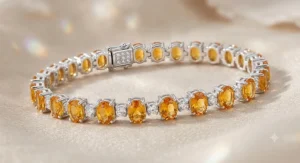
At just 2mm per bead, this JEWELZ bracelet is built for people who want a whisper of citrine rather than a statement. The tiny yellow beads sit close to the wrist and barely add bulk, which is exactly why it shows up so often in “how to stack birthstone bracelets” round-ups — a 2mm strand layers under a watch or alongside three or four other thin bracelets without looking cluttered. What most buyers overlook about micro-bead jewelry is that smaller beads generally mean more beads per inch of elastic, so the piece can actually be more durable under tension than a chunkier single-strand design, since the load is distributed across more contact points.
This bracelet is best suited to buyers who already have a stack going and want to add a citrine accent rather than a focal piece — someone shopping for yellow citrine jewelry november gifting who wants something subtle enough for an office setting. Aggregated customer feedback on similarly sized dainty gemstone bracelets tends to flag stretch-cord longevity as the main variable, with wear patterns showing up around the one-year mark on cords exposed to lotion and hand sanitizer daily.
Pros:
- ✅ Barely-there weight, ideal for daily stacking
- ✅ Subtle enough for conservative workplaces
- ✅ Small beads distribute stretch-cord tension well
Cons:
- ❌ Less visual impact if worn as a standalone piece
- ❌ Thin cord means more frequent restringing over years
In the $12-$18 range, it’s less a centerpiece and more a building block for a bigger stack.
3. Citrine Bracelet for Women & Men – 8mm Healing Beads — best all-around everyday citrine bracelet
This is the closest thing to a “default” citrine bracelet in the lineup — 8mm polished round beads on a 7-inch stretch cord, unisex by design, and priced to be an easy impulse buy. The 8mm bead size is a genuine sweet spot: large enough to actually show the gem’s color from across a room, small enough that it doesn’t read as costume jewelry. Here’s what to weigh if you’re comparing this to the chip or 2mm options above — uniform round beads catch and reflect light more evenly than irregular chips, so on a sunny day this bracelet will visibly sparkle more, which matters if the whole point is showing off november birth month jewelry.
The metal-free, elastic-cord construction makes it a safe pick for anyone with nickel sensitivity, and its unisex framing means it works as a gift without guessing at ring size or bracelet gender norms. Reviewers consistently note that the beads hold their polish well through regular wear, though a handful mention the natural color variation between individual beads on the same strand — again, expected with genuine stone rather than dyed resin.
Pros:
- ✅ 8mm beads balance visibility with everyday wearability
- ✅ Metal-free design is safe for sensitive skin
- ✅ Genuinely unisex, simplifies gift shopping
Cons:
- ❌ Fixed circumference may not suit very small or large wrists
- ❌ Elastic cord requires periodic replacement over time
Sitting in the $18-$28 range, this is the bracelet to recommend when someone just wants “a citrine bracelet,” full stop.
4. November Birthstone Bracelet, Personalized Initial Charm — best for personalized gifting
Where the first three picks are about the stone itself, this one is about the story you attach to it — a round citrine hydro-quartz station paired with a stamped, brushed initial disk, built specifically as a personalized gift piece rather than an everyday stacker. The addition of an initial charm transforms a generic birthstone bracelet into something that reads as chosen for one specific person, which is exactly why this style dominates baby shower, bridesmaid, and new-mom gift searches. Based on the spec comparison with plain beaded styles, the single citrine station (rather than an all-over beaded strand) also means less stone-to-stone friction over time, which can translate to less wear on individual beads.
This is the pick for someone buying for a specific November birthday where the gift needs to feel personal rather than generic — think baby’s first birthstone piece, a bridesmaid thank-you, or a milestone gift where you already know the recipient’s initial. Aggregated reviews on comparable personalized charm bracelets tend to praise the clarity of the stamped lettering and flag turnaround time as the main variable, since custom pieces are typically made to order rather than shipped same-day.
Pros:
- ✅ Personalization makes it feel like a true one-off gift
- ✅ Single citrine station reduces stone-on-stone wear
- ✅ Popular for baby, bridesmaid, and new-mom occasions
Cons:
- ❌ Made-to-order pieces can mean longer shipping windows
- ❌ Initial charm limits restyling versus a plain beaded strand
Typically priced in the $35-$50 range, it earns its premium over plain beaded bracelets through the personalization alone.
5. Natural Citrine 14k Rose Gold Filled Maple Leaf Charm Bracelet — best for dainty luxe styling
This handmade piece pairs small 3.2mm natural citrine beads with 14k rose gold-filled findings and an 18k rose gold vermeil maple leaf charm, landing somewhere between costume jewelry and fine jewelry. Gold-filled construction matters more than most shoppers realize: unlike gold-plated pieces, which wear through in months, gold-filled metal is mechanically bonded in a thick layer, so it tolerates daily wear, water exposure, and years of use without flaking. What the spec sheet won’t tell you, but reviewers of comparable gold-filled birthstone pieces note, is that the rose gold tone specifically flatters citrine’s warm yellow-orange undertones better than white or yellow gold does, creating a cohesive, sunset-like palette on the wrist.
The maple leaf charm and adjustable 7.2″-7.75″ sizing make this a strong pick for November birthdays that double as autumn-themed gifts, or for 13th wedding anniversaries, since citrine is the traditional gem for that milestone. It’s a step up from the pure-stretch-cord picks above without jumping to solid-gold pricing, which makes it a natural middle option for someone who wants “nice enough for the anniversary card” but not “insured separately from the homeowner’s policy.”
Pros:
- ✅ Gold-filled metal resists tarnish far longer than plated pieces
- ✅ Rose gold tone complements citrine’s warm color naturally
- ✅ Adjustable sizing accommodates a range of wrist sizes
Cons:
- ❌ Small 3.2mm beads are less bold than 8mm styles
- ❌ Custom/handmade sourcing means less predictable stock
In the $45-$65 range, it’s the sweet spot between costume and fine jewelry.
6. 14K Gold Citrine Bracelet — best for fine jewelry collectors
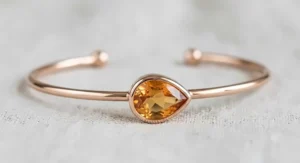
This is where the lineup moves from “affordable birthstone accessory” into genuine fine jewelry — 14K solid yellow gold beads set with small citrine gemstones, handmade, with an adjustable 6.5-8 inch length. Solid gold changes the entire value proposition of a bracelet: it doesn’t tarnish, it can be resized or repaired by any jeweler, and the metal itself carries scrap value independent of the gemstone, which is not true of gold-plated or gold-filled pieces. Based on the spec comparison with the gold-filled option above, the practical difference for most wearers is durability under decades of use rather than day-to-day appearance — both look similarly golden at arm’s length.
This bracelet suits buyers thinking of jewelry as a long-term asset rather than a seasonal accessory — a milestone birthday gift intended to be worn for 20+ years, or a first “real gold” purchase for someone who’s outgrown stretch-cord bracelets. Aggregated reviews of comparable solid-gold birthstone pieces consistently mention the weight and cool, substantial feel against the skin as a signal of authenticity that plated pieces simply can’t replicate.
Pros:
- ✅ Solid 14K gold resists tarnish permanently, unlike plating
- ✅ Can be professionally resized or repaired for life
- ✅ Retains scrap and resale value beyond the gemstone
Cons:
- ❌ Significant price jump versus gold-filled alternatives
- ❌ Small citrine accents, not a large focal stone
Priced around $280-$350, it’s an investment-grade version of the same birthstone concept.
7. Round Citrine Bracelet with Real Diamond, 14K Solid Gold — best premium statement piece
At the top of this lineup sits a round citrine gemstone (1.50 ct) surrounded by genuine diamonds (0.07 ct, G color, VS-SI clarity), set in 14K solid gold available in yellow, rose, or white finishes with a 1-inch extender for sizing flexibility. The diamond halo is the key differentiator here — it reframes the bracelet from “birthstone jewelry” into “occasion jewelry,” the kind of piece that gets worn to a wedding or given for a milestone anniversary rather than tossed on for a Tuesday. Here’s what to weigh: a 1.50 ct citrine center stone is large enough to be a genuine focal point, and according to the Gemological Institute of America’s citrine guide, price per carat doesn’t rise dramatically with size the way it does for diamonds — so this bracelet’s cost is driven almost entirely by the gold and diamond setting, not the citrine itself. That’s actually good news for buyers, since it means you’re getting real carat weight without the exponential pricing curve of larger colored stones.
This is the pick for a milestone November birthday, an engagement-adjacent gift, or anyone who wants their citrine gemstone gifts to read as unmistakably fine jewelry rather than birthstone-themed costume pieces. Made-to-order production means longer lead times, so plan ahead if it’s tied to a specific date.
Pros:
- ✅ Genuine diamond halo elevates it to occasion-worthy jewelry
- ✅ Available in three gold tones for personal preference
- ✅ Sizeable 1.50 ct citrine reads as a real focal stone
Cons:
- ❌ Made-to-order lead times require advance planning
- ❌ Highest price point in this roundup by a wide margin
At roughly $450-$650, it’s the splurge pick for buyers who see citrine as fine jewelry, not just a birthstone token.
Practical Usage Guide: Caring for Your Citrine Bracelet
Citrine sits at a 7 on the Mohs hardness scale, which is genuinely durable as gemstones go, but “durable” doesn’t mean indestructible, and the first 30 days of ownership are when most damage happens simply because people haven’t built new habits yet. The single biggest mistake is showering or swimming in a stretch-cord bracelet — elastic cord degrades faster with repeated water and soap exposure, and that’s true whether the beads are citrine, quartz, or anything else strung the same way. For solid gold or gold-filled pieces like the 14K options above, water is less of a concern, but chlorine specifically can dull gold’s shine over time, so it’s still worth removing before a pool day.
For day-to-day cleaning, warm soapy water and a soft cloth is genuinely all citrine needs — avoid ultrasonic cleaners on beaded stretch bracelets, since the vibration can loosen already-stressed elastic cord faster than normal wear would. Store bracelets flat or hanging rather than tangled in a drawer, since citrine beads knocking against harder gems like diamonds (as in the pick above) can eventually cause micro-scratching on the softer stone. A simple maintenance rhythm — wipe down monthly, check the cord for stretching every few months, restring at the first sign of fraying — will keep a $20 stretch bracelet looking good for years rather than months.
✨ Don’t Miss These Exclusive Deals!
🔍 Take your birthstone jewelry collection to the next level with these carefully selected citrine bracelets. Click on any highlighted item to check current pricing and availability. These pieces make an authentic, meaningful November birthday gift your favorite person will actually wear!
Real-World Scenarios: Who Should Wear Which Citrine Bracelet
Picture three different November birthdays and the bracelet that actually fits each one. First, a college student on a tight budget who wants to celebrate her birth month without dropping real money — the Thecraftman Natural Citrine Chips Bar Bracelet or the JEWELZ Citrine Bracelet 2mm both fit under $20 and layer well with the other stacking bracelets she probably already owns, without looking like she overspent to make a point.
Second, a mom of three shopping for a birthday gift for herself for once, someone who wants something nice enough to notice but practical enough to wear doing school drop-off and grocery runs — the Citrine Bracelet for Women & Men 8mm hits that mark exactly, since it’s metal-free, unisex, and priced low enough that buying it doesn’t feel like an indulgence she has to justify. Third, a couple celebrating a 13th wedding anniversary (citrine’s traditional gem) who want something with real weight and permanence — the 14K Gold Citrine Bracelet or the diamond-accented Round Citrine Bracelet with Real Diamond, 14K Solid Gold both suit that occasion, since solid gold is built to be handed down rather than replaced in a few seasons.
The throughline across all three scenarios is matching the piece to how often and how roughly it’ll actually be worn — stretch-cord citrine for daily, casual use, and solid gold for pieces meant to last decades and get worn to specific occasions.
Problem → Solution: Common Citrine Bracelet Issues, Solved
A few recurring problems come up across citrine bracelet reviews, and nearly all of them have a straightforward fix. Problem: the stretch cord feels loose after a few months. Elastic cord naturally relaxes with wear and heat exposure — the fix is buying slightly snugger than your measured wrist size initially, since a properly-fitted bracelet stretches to comfortable over its first weeks rather than starting loose and only getting looser.
Problem: beads look duller than they did on arrival. This is almost always residue from lotion, sunscreen, or hand sanitizer building up in the tiny gaps between beads — a rinse in warm water with a drop of mild dish soap, then air-drying fully before storage, restores most of the shine. Problem: uncertainty about whether a “citrine” bracelet is real or dyed glass. Genuine citrine typically shows subtle color variation between beads on the same strand, exactly as several reviewers note above; perfectly uniform, saturated color across every bead is actually a small red flag for dyed quartz or glass imitation rather than a reassurance of quality.
Problem: choosing between similar-looking bracelets at wildly different prices. The price difference usually comes down to metal (elastic cord vs. gold-filled vs. solid gold) rather than the citrine itself, so decide your metal budget first, then pick bead style within that tier — that’s exactly how the comparison table above is organized.
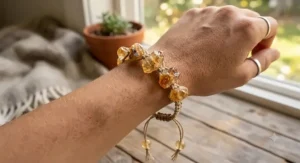
How to Choose November Birthstone Citrine Bracelets
Picking the right piece comes down to a handful of practical criteria rather than guesswork.
- Decide your wear frequency first. Daily-wear pieces should be metal-free or solid gold; occasional-wear pieces can be gold-filled or delicate chip styles.
- Measure your wrist properly. Wrap a string around the narrowest point between hand and wrist bone, then add 0.5″-1″ depending on bead size — larger beads need more added room.
- Match bead size to visibility preference. 2-3mm beads are subtle and stackable; 8mm+ beads are statement pieces visible from across a room.
- Set a metal budget before browsing styles. Elastic cord, gold-filled, and solid gold occupy entirely different price tiers — know which tier you’re shopping before comparing individual bracelets.
- Check for genuine color variation. As noted above, natural november birth month jewelry made with real citrine rarely shows perfectly uniform color across every bead.
- Consider the occasion. Everyday wear favors stretch-cord styles; anniversaries and milestone birthdays favor solid gold or diamond-accented pieces.
- Factor in skin sensitivity. Metal-free stretch bracelets avoid nickel reactions entirely, which matters for buyers with known sensitivities.
Common Mistakes When Buying Citrine Jewelry
The most frequent mistake is confusing “citrine” with “smoky quartz” or “yellow topaz” at checkout — all three can look superficially similar in product photos, but they’re different minerals with different price points and different birthstone associations (topaz is November’s other official birthstone). A second common mistake is buying a fixed-size beaded bracelet without measuring first, then discovering it either slides over the hand loosely or won’t go on at all — adjustable and stretch styles largely sidestep this, which is part of why they dominate the budget end of this list.
A third mistake, according to GIA’s citrine buying guide, is expecting “natural” and “untreated” to mean the same thing — most citrine on the market today is amethyst that’s been heat-treated to achieve its golden color, and that treatment is standard, stable, and doesn’t reduce the stone’s legitimacy or durability. Buyers who go in expecting only untreated citrine will find far fewer options and pay dramatically more for a distinction that barely affects how the bracelet looks or wears day to day.
Citrine vs Topaz: November’s Two Birthstones
November is one of the few birth months with two official birthstones, and the difference matters more than most buyers realize. Citrine is a variety of quartz, generally more affordable, and comes almost exclusively in warm yellow-to-orange tones. Topaz is a different mineral entirely, available in a much wider color range including blue, pink, and colorless varieties, and blue topaz specifically has become so popular it’s sometimes treated as its own separate birthstone in casual use.
For a bracelet specifically meant to celebrate golden yellow gemstones and the traditional warm-toned aesthetic associated with autumn birthdays, citrine is the more historically apt choice — topaz’s blue varieties, while beautiful, don’t carry the same sunlit color association. Citrine also tends to be significantly more budget-friendly than topaz at comparable sizes, since natural citrine (though rare) is more abundant than fine topaz, and heat-treated citrine production keeps supply steady. If color-matching to “golden yellow gemstones” specifically is the goal — say, for a themed gift or outfit — citrine is the safer, more reliably yellow choice between the two.
What to Expect: Real-World Performance
On paper, citrine’s 7 rating on the Mohs hardness scale sounds abstract, but in practice it means the stone resists everyday scratches from keys, countertops, and casual bumps far better than softer gems like opal or pearl, while still being softer than diamond or sapphire, so it shouldn’t be stored loose against harder stones. Expect stretch-cord bracelets to need restringing somewhere between one and three years with daily wear, depending on lotion and water exposure, while gold-filled and solid gold pieces can realistically last decades with basic care.
Color-wise, expect slight fading is essentially a non-issue for citrine under normal wear — unlike some organic gems, citrine’s color comes from trace iron within the crystal structure itself, not a surface treatment that can wear off. The main everyday consideration is honestly just cord integrity on the budget styles, not the gemstone’s durability, which tends to outlast the string it’s threaded on.
Citrine Bracelets for Scorpio and Sagittarius: The Zodiac Connection
November spans two zodiac signs — Scorpio (through November 21) and Sagittarius (November 22 onward) — and the scorpio sagittarius birthstone question comes up constantly for people trying to reconcile their calendar birth month with their star sign. Traditional zodiac gemstone associations actually assign topaz to Sagittarius specifically, which is part of why topaz and citrine ended up sharing the November birthstone slot in the first place — the modern calendar-month system essentially borrowed from the older zodiac-based one.
In practice, most jewelry shoppers today go by birth month rather than strict zodiac gemstone tradition, so a Scorpio or Sagittarius born in November can wear citrine with full legitimacy under the modern birthstone system, regardless of which stone their star sign was historically assigned. For anyone who wants to lean into the astrology angle specifically, pairing a citrine bracelet with a smaller accent stone tied to their individual sign (garnet for Scorpio in some traditions, turquoise for Sagittarius in others) is a popular way to honor both systems at once without picking just one.
Long-Term Cost & Maintenance: What You’re Really Paying For
Breaking down cost-per-year of ownership tells a different story than sticker price alone. A $15 chip bracelet that needs restringing annually and gets replaced every two to three years works out to roughly $5-8 per year of wear. A $300 solid gold bracelet, worn for 20+ years with zero replacement cost and only occasional professional cleaning, works out to $15 or less per year — genuinely comparable to, or cheaper than, the budget option over a long enough horizon.
The math shifts if you factor in resale: solid gold retains scrap value indefinitely, while stretch-cord bracelets have essentially zero resale value once worn. For buyers thinking purely in terms of total cost of ownership, and specifically planning to wear one bracelet for decades rather than cycling through cheaper pieces, the gold tiers in this lineup are the better long-term financial decision, even though they require a larger upfront outlay.
Yellow Citrine Jewelry Beyond Bracelets
While this guide focuses on bracelets, yellow citrine jewelry november shoppers often end up browsing matching pieces too, and it’s worth knowing how the category extends. Citrine pendants and necklaces follow similar sizing logic to the bracelets above — larger stones make bolder statements, smaller stones layer better. Citrine stud earrings tend to be the most affordable entry point into the stone overall, since they require far less material than a full bracelet or necklace.
Citrine rings deserve one specific caution: rings see more daily impact than bracelets (typing, opening jars, general hand use), so the same hardness considerations from the “Real-World Performance” section above apply even more directly — a citrine ring benefits from a protective setting more than a citrine bracelet does. For anyone assembling a full birthstone set rather than a single bracelet, starting with the bracelet (lower risk, lower cost) and adding earrings or a pendant later is a reasonable, budget-friendly sequence.
Citrine Gemstone Gifts for Every November Birthday
Matching citrine gemstone gifts to the recipient matters more than matching them to a generic “birthstone jewelry” category. For a first birthstone gift — a young relative’s first “real” jewelry — the budget stretch-cord options from this roundup work well precisely because there’s less anxiety about loss or damage. For november birthday bracelets meant to mark a specific milestone (30th, 50th, retirement), the gold-filled or solid gold tiers signal more intentional gift-giving.
For a partner or spouse, especially around a 13th wedding anniversary, citrine carries built-in symbolism most other November-adjacent gifts don’t. And for a colleague or acquaintance-level gift where spending too much would feel awkward, the $15-30 tier bracelets from this list hit the right note: clearly a real, thoughtful gift, without the price tag turning it into a bigger gesture than the relationship calls for.
Frequently Asked Questions
❓ Is citrine a real gemstone or is it treated?
❓ What color is real citrine supposed to be?
❓ Can Scorpios wear citrine even though topaz is tied to Sagittarius?
❓ How long does a citrine stretch bracelet typically last?
❓ Is citrine a good gift for a 13th wedding anniversary?
Conclusion
November birthstone citrine bracelets cover an unusually wide range — from $15 raw chip strands to $600 diamond-accented solid gold pieces — which makes this one of the more approachable birthstone categories to shop, whatever the budget. The through-line across all seven picks in this guide is that price differences track metal and construction far more than the citrine itself, so deciding your wear frequency and budget tier first will narrow the field faster than comparing bead-by-bead.
Whether you land on the Thecraftman Natural Citrine Chips Bar Bracelet for a low-risk first purchase or the Round Citrine Bracelet with Real Diamond, 14K Solid Gold for a milestone gift, the underlying gemstone carries the same warm, sunlit symbolism either way. Citrine’s durability, affordability relative to size, and genuine tie to both the calendar and the older zodiac tradition make it one of the more quietly rewarding birthstones to shop for — for yourself or for the November-born person in your life.
Recommended for You
- 7 Best October Birthstone Opal Bracelets to Shop in 2026
- 7 September Birthstone Sapphire Bracelets Worth Buying in 2026
- July Birthstone Ruby Bracelets: 7 Stunning Picks for 2026
Disclaimer: This article contains affiliate links. As an Amazon Associate, I earn from qualifying purchases. If you purchase products through these links, we may earn a small commission at no additional cost to you.
✨ Found this helpful? Share it with your friends! 💬🤗
