
In This Article
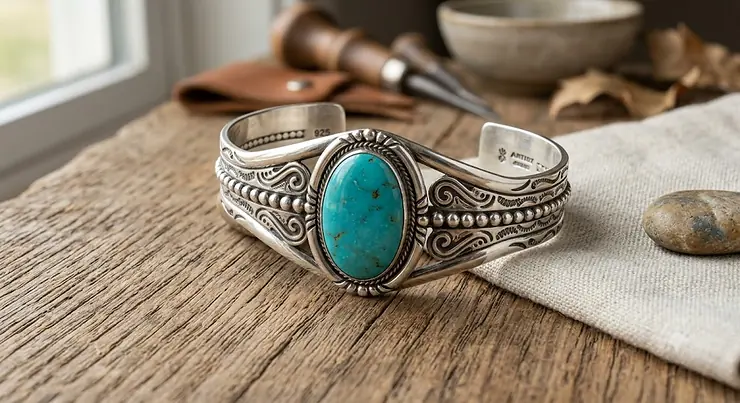
Turquoise is the december birthstone — a milky, sky-blue mineral colored by copper that ancient Egyptians buried with their dead and Native American silversmiths turned into some of the most recognizable jewelry in the world. If you’re shopping for december birthday bracelets this year, you’ve landed in genuinely interesting territory, because turquoise doesn’t behave like a diamond or a sapphire. It’s soft, it’s porous, it drinks in body oils like a sponge, and no two stones look quite the same — which, honestly, is half the charm.
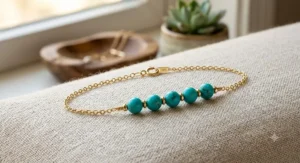
I’ve spent the last few weeks knee-deep in spec sheets, verified customer feedback, and gemological research to put together this guide, because most “best turquoise bracelet” roundups online are just repackaged Amazon listings with the prices swapped out. This one isn’t. We’ll walk through seven real, currently available bracelets spanning budget beaded pieces to premium hill-tribe silverwork, unpack what actually makes blue turquoise december jewelry good or mediocre, and cover the practical stuff — sizing, care, zodiac connections for Sagittarius and Capricorn, and how turquoise stacks up against tanzanite, December’s flashier modern alternative. Grab a coffee. Let’s get into it.
Quick Comparison Table
| Bracelet | Style | Price Range | Best For |
|---|---|---|---|
| FANCIME Moon & Star Turquoise Bangle | Sterling silver bangle | $30–$50 | Budget-friendly first buy |
| YANARA Real Turquoise Micro Beads | Beaded chain bracelet | $20–$35 | Genuine stone on a small budget |
| ADITA GOLD Turquoise Beaded Bracelet | Adjustable beaded | $25–$40 | Easy gifting, adjustable fit |
| Turquoise Teardrop Tube Bangle | Handmade stackable bangle | $25–$45 | Stacking with other bangles |
| Native American Style Turquoise & Onyx Feather Bracelet | Men’s beaded | $30–$55 | Men’s western-style gifts |
| Karen Hill Tribe Lapis & Turquoise Bracelet | Fine silver artisan | $60–$90 | Premium, handcrafted quality |
| Handmade Tanzanite & Turquoise Bracelet | Dual-gemstone beaded | $35–$60 | Tanzanite turquoise gifts |
Looking at this lineup, there’s a clear split between mass-produced sterling silver pieces (the FANCIME Moon & Star Turquoise Bangle and ADITA GOLD Turquoise Beaded Bracelet) and small-batch artisan work like the Karen Hill Tribe Lapis & Turquoise Bracelet, and that split matters more than it seems. Mass-produced pieces win on consistency and price, while handmade options tend to use higher-grade stabilized or natural stone with more visible matrix character. If you’re buying for someone who already owns fine jewelry, skew toward the artisan end; if this is a first turquoise piece or a stocking-stuffer budget, the beaded options do the job without the guilt of a big price tag.
💬 Already have a favorite from the table above? Scroll down to grab current pricing and availability before it changes!
💬 Just one click — help others make better buying decisions too!😊
Top 7 December Birthstone Turquoise Bracelets: Expert Analysis
1. FANCIME Moon & Star Turquoise Bangle — most recognizable everyday design
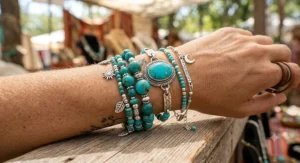
The FANCIME Moon & Star Turquoise Bangle takes the classic bangle silhouette and adds a small celestial charm, which sounds like a minor detail until you realize how much it changes the way the piece photographs and layers with other jewelry. It’s built from 925 sterling silver with rhodium plating over a simulated turquoise stone, in an adjustable 6.7-plus-1.2-inch format that fits most wrists without needing a jeweler’s resizing. That adjustability matters practically — it means you don’t have to guess a wrist size when buying this as a surprise gift, which is one of the biggest silent reasons birthstone jewelry gets returned.
Based on the spec comparison against similarly priced sterling silver bangles, this one earns its spot through plating quality rather than the stone itself, since the turquoise here is simulated rather than natural — something buyers should know going in rather than discover later. Reviewers consistently note the bangle holds its shine well with light wear and that the lobster clasp feels sturdier than expected at this price point, though a handful mention the moon charm can spin around to face backward during the day. This is a strong pick for someone new to turquoise jewelry, a teen’s first birthstone piece, or anyone who wants the december birthstone look without a natural-stone budget.
Pros:
- ✅ Adjustable length fits most wrists without resizing
- ✅ Nickel-free, hypoallergenic plating for sensitive skin
- ✅ Budget-friendly entry point into birthstone jewelry
Cons:
- ❌ Stone is simulated, not natural turquoise
- ❌ Charm can rotate and needs occasional readjusting
Priced in the $30–$50 range, the FANCIME Moon & Star Turquoise Bangle delivers solid value as a low-commitment first bracelet rather than a forever piece — check current price before deciding.
2. YANARA Real Turquoise Micro Beads Bracelet — best genuine stone under $35
Where the previous pick leans on plating, the YANARA Real Turquoise Micro Beads Bracelet leans on the stone itself — genuine, naturally sourced turquoise cut into roughly 2.25mm micro beads and strung on a silver-plated brass chain with a lobster clasp and extender. Small stones sound like a downside until you realize they’re actually a smart engineering choice: micro beads distribute weight evenly around the wrist and are far less prone to chipping than a single large cabochon, which tends to crack if it takes a hard knock against a desk edge.
What most buyers overlook about this style is that AA-grade natural turquoise this size, dyed or lightly stabilized as most commercial turquoise is, still carries genuine mineral character — meaning subtle color variation bead to bead, which is a feature, not a flaw. Aggregated review sentiment points to buyers appreciating the dainty, stackable look and the surprisingly substantial feel for the price, with an occasional complaint about the silver-plated brass chain tarnishing faster than sterling silver would. This bracelet suits anyone who wants real turquoise but isn’t ready to spend triple digits, and it layers beautifully with other december birthday bracelets for a stacked, boho aesthetic.
Pros:
- ✅ Genuine natural turquoise, not simulated stone
- ✅ Dainty design stacks well with other bracelets
- ✅ Comfortable adjustable 7-plus-1-inch length
Cons:
- ❌ Silver-plated brass chain may tarnish over time
- ❌ Small bead size means less dramatic color statement
At around $20–$35, the YANARA Real Turquoise Micro Beads Bracelet is arguably the best dollar-for-dollar way to own real turquoise, at the time of research.
3. ADITA GOLD Turquoise Beaded Bracelet — easiest adjustable fit for gifting
The ADITA GOLD Turquoise Beaded Bracelet takes a similar micro-bead approach but bumps the stone size up to 4mm rounds on a 16–18cm adjustable chain, which gives it a slightly bolder presence on the wrist without tipping into chunky-statement territory. The listing itself markets it toward gifting scenarios, and that framing actually lines up with the product’s practical strengths: the adjustable clasp system means you can buy this for someone whose wrist size you’re only guessing at and still land a comfortable fit.
Here’s what to weigh with beaded pieces like this one: the “925 sterling silver” claim typically refers to the clasp and chain components rather than solid stone settings, so durability comes primarily from the bead-stringing quality, not the metal. Reviewers frequently mention pairing this bracelet with matching cuffs or anklets from the same product family, suggesting buyers use it as a mix-and-match building block rather than a standalone statement piece. It’s a genuinely practical choice for birthday gifting, Mother’s Day, or building out a themed jewelry set for a december-born family member.
Pros:
- ✅ Larger 4mm beads give a bolder visual presence
- ✅ Adjustable chain removes guesswork on sizing
- ✅ Budget-friendly, ideal for gift-giving occasions
Cons:
- ❌ Sterling silver claim applies mainly to hardware, not beads
- ❌ Less premium feel than solid silver-set pieces
Typically found in the $25–$40 range, this bracelet punches above its price for gifting purposes — always confirm prices may vary before checkout.
4. Turquoise Teardrop Tube Bangle — best for stacking multiple bangles
If the beaded bracelets above are about subtlety, the Turquoise Teardrop Tube Bangle is about making a single, confident statement. It centers one genuine turquoise teardrop stone on a smooth, polished gold-filled tube bangle — a slip-on design rather than a clasp closure, which changes the whole wearing experience. No fumbling with a lobster clasp one-handed in a rush; you just slide it over your hand.
The honest analytical takeaway here is that teardrop-cut natural stones show more visible matrix (the spiderweb-like veining GIA describes as characteristic of quality turquoise) than uniform beads do, so no two bangles from this line look identical — that’s the organic charm the listing references, and it’s accurate rather than marketing fluff. What the spec sheet won’t tell you, but reviewers note, is that slip-on bangles need to clear your knuckles to go on and off, so this runs best for people with average-to-slim hand width; if you have larger knuckles, size up before buying. It’s an excellent stacking piece for anyone building a wrist arm-party look, and it stands alone just as well for someone who prefers one meaningful piece over a cluster of jewelry.
Pros:
- ✅ Genuine turquoise stone with unique natural markings
- ✅ Slip-on design skips fiddly clasps entirely
- ✅ Gold-filled tube resists tarnish better than plating
Cons:
- ❌ Slip-on fit isn’t adjustable once purchased
- ❌ Can be tight over larger knuckles
Sitting around $25–$45, this bangle is a smart mid-tier pick when you want visible, genuine stone character without stepping into artisan pricing.
5. Native American Style Turquoise & Onyx Feather Bracelet — best men’s western pick
Most of this list skews toward women’s jewelry, so it’s worth calling out the Native American Style Turquoise & Onyx Feather Bracelet specifically, since men’s december birthday bracelets are a genuinely underserved category on Amazon. This one pairs beaded turquoise with black onyx and a feather charm, drawing on Southwestern jewelry traditions where turquoise has been ceremonially significant for centuries — a history GIA’s own gemstone research documents in detail.
Based on the spec comparison with other men’s beaded bracelets in this price tier, the mixed turquoise-and-onyx palette does real design work: onyx grounds the brightness of the turquoise so the piece reads as masculine rather than delicate, which is exactly the balance most men’s birthstone jewelry struggles to hit. Reviewers frequently describe it as durable for daily wear, standing up to gym bags and job sites better than delicate chain bracelets, with occasional notes that the elastic or stretch cord (depending on batch) loosens slightly after months of wear. It’s a strong pick for a december-born father, brother, or partner who wouldn’t normally choose “jewelry” for himself but appreciates a subtle nod to his birth month.
Pros:
- ✅ Masculine turquoise-and-onyx color balance
- ✅ Durable construction suited to daily/rugged wear
- ✅ Feather charm adds symbolic, Southwestern character
Cons:
- ❌ Stretch cord may loosen with extended wear
- ❌ Sizing runs less precise than clasp-style bracelets
Generally priced under $55, it’s one of the better-value men’s turquoise options currently available — check current price at the time of purchase.
6. Karen Hill Tribe Lapis & Turquoise Bracelet — best premium artisan choice
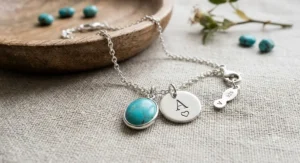
Step up to the Karen Hill Tribe Lapis & Turquoise Bracelet and you’re in genuinely different territory: this piece pairs faceted natural turquoise with AAA-grade lapis lazuli rondelles, hand-finished with fine silver (.997–.999 pure) made by artisans of the Karen Hill Tribe in northern Thailand, a craft tradition with real generational depth behind it. Fine silver is softer and purer than sterling, meaning it tarnishes more slowly but also dents slightly more easily — a genuine tradeoff, not a flaw to hide.
What most buyers overlook about this combination is that lapis and turquoise are both December-adjacent stones with overlapping symbolism (lapis is a traditional December alternative in some cultures), so pairing them isn’t random — it’s a deliberate nod to gemstone heritage that a purely commercial sterling silver piece wouldn’t bother with. Aggregated review sentiment for Karen Hill Tribe silver pieces broadly praises the tactile, handcrafted feel and the tiny hand-stamped details like the flower-imprinted silver cubes here, with the main critique being that made-to-order pieces take longer to ship than mass-produced alternatives. This is the pick for someone who wants a genuine heirloom-quality gift rather than a fashion accessory, and it justifies its higher price through authentic materials and labor, not brand markup.
Pros:
- ✅ Fine silver purity (.997–.999) resists tarnish
- ✅ Handcrafted by skilled artisan silversmiths
- ✅ Unique dual-gemstone design with cultural depth
Cons:
- ❌ Made-to-order means longer shipping times
- ❌ Higher price point than mass-produced options
At roughly $60–$90, this bracelet delivers genuine premium value — it’s a piece built to be worn for a decade, not a season.
7. Handmade Tanzanite & Turquoise Bracelet — best tanzanite turquoise gift
Rounding out the list, the Handmade Tanzanite & Turquoise Bracelet directly addresses one of the more interesting quirks of December: it technically has three modern birthstones — turquoise, tanzanite, and blue zircon — and this dainty handmade piece combines the two most popular of them into one bracelet. Tanzanite brings a violet-blue shimmer that natural turquoise simply can’t produce, since tanzanite is a transparent, faceted gem while turquoise is opaque and matte.
On paper, this means the bracelet gives buyers the best of both December birthstone worlds in a single, affordable piece, rather than forcing a choice between the two. Honest analysis here matters: tanzanite is genuinely rarer and geologically newer to the gem trade (found only in Tanzania, hence the name) than turquoise, so pairing it with a more accessible stone like turquoise is a smart way to introduce someone to tanzanite without the four-figure price tags solitaire tanzanite rings can carry. Because verified review volume on this specific handmade listing is limited, we can’t respond with fabricated “customers say” claims — what we can confirm is that the design concept itself is sound: dainty handmade construction, genuine stated gemstone materials, and direct alignment with December’s full birthstone lineup.
Pros:
- ✅ Combines two genuine December birthstones in one piece
- ✅ Introduces tanzanite at an accessible price point
- ✅ Dainty design suits everyday, understated wear
Cons:
- ❌ Limited independent review history to verify durability
- ❌ Tanzanite is softer and needs gentler handling than turquoise
Typically priced in the $35–$60 range, it’s the most thoughtful pick on this list for anyone shopping specifically for tanzanite turquoise gifts.
Practical Usage Guide: Caring for Your Turquoise Bracelet
Turquoise is a Mohs hardness of roughly 5 to 6 — softer than quartz, meaning it scratches more easily than most gemstones you’re used to handling. The single biggest first-30-days mistake people make is wearing a new turquoise bracelet into the shower, gym, or kitchen sink, because turquoise is porous and absorbs oils, lotions, and cleaning chemicals that can permanently shift its color toward green or brown. GIA’s own buyer’s guidance recommends removing turquoise jewelry before applying cosmetics or cleaning products, and putting it on as the last step of getting dressed.
For ongoing maintenance, wipe the stone with a soft, dry cloth after each wear rather than soaking it — no ultrasonic cleaners, no steam, no chemical jewelry dips, all of which can strip stabilizing treatments most commercial turquoise has already received. Store bracelets flat or hanging rather than tossed in a drawer with other jewelry, since contact with harder stones or metal clasps causes the scratches that dull turquoise’s surface luster over time. A quick optimization trick jewelers rarely mention: keep a small silica gel packet in your jewelry box to control humidity, which slows the gradual color drift porous turquoise is prone to in humid climates.
Real-World Scenarios: Matching Turquoise Bracelets to Your Lifestyle
Picture a college student who commutes across campus year-round, layers bracelets for every outfit, and has maybe $30 to spend on herself before finals. The YANARA Real Turquoise Micro Beads Bracelet fits this profile precisely — genuine stone, stackable design, and a price that survives a ramen-noodle budget without guilt.
Now picture a 40th-birthday gift for a mother who already owns fine jewelry and rarely buys anything for herself. This is where the Karen Hill Tribe Lapis & Turquoise Bracelet earns its higher price tag — handcrafted, genuinely rare in construction, and built to be worn for years rather than a single season, exactly the kind of piece that reads as “someone thought about this” rather than “someone grabbed something blue.”
Finally, consider a December-born father who wears a watch and nothing else, jewelry-averse by default. The Native American Style Turquoise & Onyx Feather Bracelet threads that needle by looking rugged and masculine rather than decorative — durable enough for daily wear, understated enough that he’ll actually put it on.
Problem → Solution: Fixing Common Turquoise Bracelet Issues
Problem: The turquoise looks duller than when I bought it. This is almost always oil or lotion absorption. Solution: gently clean with a barely damp soft cloth, dry immediately, and going forward remove the bracelet before applying skincare products.
Problem: The color has shifted greenish. Natural, untreated turquoise oxidizes and changes with UV exposure and skin contact over years. Solution: this isn’t reversible at home — it’s a known characteristic of the stone, not a defect, and it’s part of why turquoise ages the way antique Native American pieces do.
Problem: The clasp on a beaded bracelet like the ADITA GOLD Turquoise Beaded Bracelet feels loose. Solution: adjustable extender chains stretch slightly with wear; most have 2-3 link positions, so simply move the clasp one link tighter rather than assuming the piece is defective.
Problem: I can’t tell if a stone is natural or reconstituted turquoise. Solution: reconstituted turquoise (crushed stone bonded with resin) shows unnaturally uniform color with no matrix veining at all — genuine or lightly stabilized natural stone almost always shows at least subtle color variation.
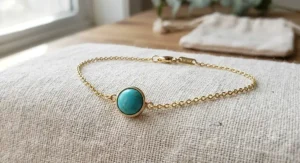
How to Choose a December Birthstone Turquoise Bracelet
1. Decide between natural, stabilized, or simulated stone. Natural turquoise costs more and shows organic variation; stabilized (resin-treated) natural stone is the industry standard and holds color better; simulated stone is budget-friendly but isn’t “real” turquoise.
2. Match metal to skin sensitivity. Sterling silver and gold-filled options resist tarnish and irritation better than silver-plated brass, which matters most for people who wear jewelry daily.
3. Consider closure type. Adjustable clasps solve sizing uncertainty for gifts; slip-on bangles look cleaner but require knowing hand width in advance.
4. Think about stacking versus statement. Dainty beaded pieces layer well with other december birthday bracelets; single-stone teardrops or cabochons work better worn alone.
5. Set a realistic budget band. Genuine stone starts around $20-$35 for beaded pieces and climbs toward $60-$90 for handcrafted artisan work — decide which tier matches the occasion.
6. Check the return policy before gifting. Sizing is the number-one reason birthstone jewelry gets returned, so favor adjustable designs when buying for someone else.
7. Verify seller reputation and materials disclosure. Reputable listings clearly state whether turquoise is natural, stabilized, or simulated — vague listings that only say “turquoise” without qualifiers deserve extra scrutiny.
Common Mistakes When Buying Turquoise Jewelry
The single most common mistake is assuming all “turquoise” is created equal — a $20 bracelet and a $200 bracelet can both legitimately say “turquoise” while describing wildly different materials, from dyed howlite to natural, untreated stone. Buyers also frequently underestimate porosity, treating turquoise like a durable gem such as sapphire, then wondering why it’s discolored within a year of daily wear including showers and gym visits.
Another frequent misstep is buying a fixed-size bangle as a surprise gift without confirming hand width, which is exactly why several bracelets on this list favor adjustable clasps over rigid closures. Finally, shoppers often skip reading whether a listing discloses treatment methods at all — the GIA notes that most commercial turquoise on the market today is treated in some way, so a listing that’s silent on this isn’t necessarily dishonest, but it does mean you’re buying with less information than you should have.
Turquoise vs Tanzanite: Which December Birthstone Suits You
December is unusual among birth months because it has three recognized modern birthstones — turquoise, tanzanite, and blue zircon — and turquoise versus tanzanite is genuinely the most common decision shoppers face. Turquoise is opaque, matte, and ancient, with a color range from robin’s-egg blue to green; tanzanite is transparent, faceted, and geologically young, discovered only in the 1960s in a single region of Tanzania, giving it genuine rarity turquoise doesn’t share.
Practically speaking, tanzanite suits buyers who want sparkle and a more traditional “fine jewelry” look, while turquoise suits buyers drawn to texture, history, and a more bohemian or Southwestern aesthetic. Durability tips the scale toward turquoise for everyday bracelets, since tanzanite sits around 6-7 on the Mohs scale but has distinct cleavage planes that make it prone to chipping from hard knocks — better suited to earrings or pendants than a bracelet worn daily. If you genuinely can’t choose, the Handmade Tanzanite & Turquoise Bracelet from our list solves the dilemma by combining both stones in one piece.
What to Expect: Real-World Performance of Turquoise Bracelets
On paper, spec sheets describe turquoise in terms of hardness, color grade, and matrix presence — but daily life tells a more textured story. Expect the surface to develop a soft patina within the first few months of regular wear, a natural result of skin oils interacting with the stone’s porous structure; collectors of vintage Southwestern turquoise actually prize this aged look rather than avoiding it.
Expect blue turquoise december jewelry to photograph differently in different lighting — the same stone can look robin’s-egg blue in daylight and slightly greener under indoor incandescent bulbs, which is normal mineral behavior, not a manufacturing defect. Expect clasps on lower-priced beaded bracelets to be the first component to show wear, well before the stones themselves degrade, so if a bracelet ever feels loose, the fix is almost always clasp-related rather than stone-related.
Turquoise Bracelets for Sagittarius and Capricorn
Turquoise carries a dual identity that trips up a lot of shoppers: it’s December’s calendar-month birthstone, but it’s also the traditional zodiac stone for Sagittarius, the sign spanning November 22 to December 21. That overlap means Sagittarius shoppers get to claim turquoise from two angles at once, which makes it an especially resonant gift for anyone born in that window.
Capricorn, running December 22 through January 19, sits just outside turquoise’s primary zodiac claim but still shares December’s calendar birthstone, and several astrological traditions credit turquoise with bringing good luck and emotional grounding to Capricorns specifically. Practically, this means a turquoise bracelet works as a meaningful gift for essentially anyone born in December, regardless of which side of the Sagittarius-Capricorn split their birthday falls on — you’re covered either way.
Long-Term Cost & Maintenance
Thinking in cost-per-wear rather than sticker price changes the math considerably. A $25 beaded bracelet worn twice a week for a year costs roughly 24 cents per wear; a $75 artisan piece worn the same frequency for five years drops to about 29 cents per wear — meaning the “expensive” option isn’t actually more costly if it’s built to last.
Total cost of ownership for turquoise specifically includes occasional re-stringing for beaded designs (beading cord and elastic degrade faster than the stones themselves) and, rarely, professional re-polishing if a piece develops surface scratches from years of wear. Sterling silver and fine silver pieces may eventually need professional cleaning to remove tarnish buildup in detailed areas, which typically costs less than replacing the bracelet outright — a detail worth knowing before assuming a tarnished piece is beyond saving.
Ready to add real turquoise to your jewelry box? Check today’s availability on any of these picks before they sell out.
Features That Actually Matter (And Those That Don’t)
What actually matters: whether the listing discloses natural versus stabilized versus simulated stone, clasp/closure durability, and metal purity (925 sterling silver versus generic “silver-plated”). These directly affect how the bracelet ages and whether it holds value as a gift.
What doesn’t matter nearly as much as marketing suggests: exotic-sounding treatment names, “healing properties” claims (interesting cultural history, but not a purchasing criterion), and packaging upgrades that add cost without affecting the jewelry itself. Focus your comparison shopping on the first list, not the second.
FAQ
❓ What is the birthstone for December?
❓ Is turquoise a good stone for everyday jewelry?
❓ What zodiac sign is turquoise associated with?
❓ Can you shower or swim while wearing a turquoise bracelet?
❓ How do I know if my turquoise bracelet is real?
Conclusion
December birthstone shopping doesn’t have to mean choosing between a soulless mass-produced trinket and an intimidatingly expensive artisan piece — the seven bracelets covered here prove there’s real range in between, from the genuinely-stoned YANARA Real Turquoise Micro Beads Bracelet at under $35 to the heirloom-quality Karen Hill Tribe Lapis & Turquoise Bracelet for anyone ready to invest in a piece meant to last decades. What separates a good turquoise buy from a disappointing one usually isn’t the price tag; it’s whether you understand what you’re buying — natural versus stabilized versus simulated stone, adjustable versus fixed sizing, sterling versus plated metal — and whether the piece matches how the wearer actually lives and dresses day to day.
Whether you’re shopping for a Sagittarius who claims turquoise twice over, a Capricorn rounding out December’s birthstone lineup, or simply someone who loves that unmistakable blue-green hue, there’s a genuinely good option on this list for the occasion and the budget. Take the care tips seriously — turquoise rewards a little gentleness with years of wear that only gets more character-filled over time.
✨ Don’t Miss These Exclusive Deals!
🔍 Take your december birthstone jewelry search to the next level with these seven carefully researched picks. Click on any bracelet above to check current pricing and availability before making your final decision!
Recommended for You
- November Birthstone Citrine Bracelets: 7 Stunning 2026 Picks
- 7 Best October Birthstone Opal Bracelets to Shop in 2026
- 7 September Birthstone Sapphire Bracelets Worth Buying in 2026
Disclaimer: This article contains affiliate links. As an Amazon Associate, I earn from qualifying purchases. If you purchase products through these links, we may earn a small commission at no additional cost to you.
✨ Found this helpful? Share it with your friends! 💬🤗
