
In This Article
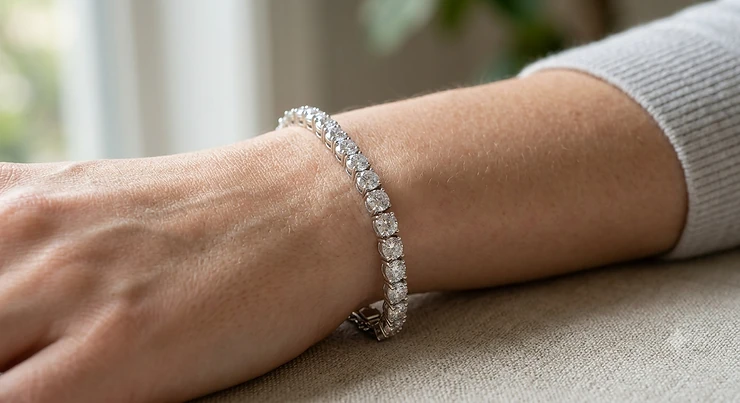
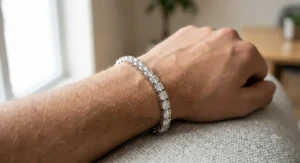
A CZ tennis bracelet is a bracelet set with a continuous row of cubic zirconia — a lab-grown diamond simulant — usually in prong or bezel settings along a gold-plated or sterling silver band. It’s the accessory that solved a very specific problem: you want the row-of-light look of a diamond tennis bracelet, but you don’t want to insure it, hide it in a safe, or take out a loan to buy it. That tension is exactly why this category exploded the way it did.
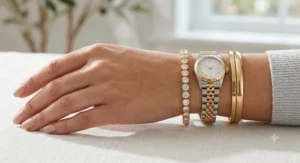
Here’s the thing nobody tells you before you start scrolling through a hundred nearly identical listings: two bracelets can look the same in a thumbnail and behave completely differently on your wrist six months later. One will still be throwing light across a dinner table next spring. The other will have gone cloudy, or the plating will have worn through at the clasp, or a stone will have popped out in the shower. The difference almost never shows up in the photos. It shows up in the metal underneath the plating, the grade of the stone, and whether the setting was built for daily wear or for a single photoshoot.
We dug into seven real, currently available bracelets spanning budget to premium, cross-referenced actual buyer feedback, and leaned on gemological background from the Gemological Institute of America’s overview of diamond imitations, which breaks down why cubic zirconia became the industry’s most popular diamond stand-in despite sharing none of a diamond’s chemical makeup. No invented reviews, no fabricated “we tested this for months” claims — just real specs, honest analysis, and the tradeoffs that actually matter when you’re deciding between a $19 bracelet and an $80 one.
Quick Comparison Table
| Bracelet | Metal / Plating | CZ Grade | Price Range | Best For |
|---|---|---|---|---|
| PAVOI 14K Gold Plated 3mm Classic | 14K gold plate | AAAAA | around $20-$30 | Best all-around budget pick |
| Amazon Essentials Adjustable | Sterling silver over brass | Standard CZ | under $25 | Uncertain wrist sizing |
| TIKJE 925 Sterling Silver 2mm | Solid 925 sterling silver | AAA+ | $20-$35 range | Real silver on a budget |
| KISPER Gold Plated Round Cut | Gold plated, tarnish-resistant coat | 5A | $25-$40 range | Daily wear, doesn’t fade |
| Gemsme 4-Prong 18K Plated | 18K white/yellow gold plate | Standard CZ | under $20 | Widest size range, unisex |
| MDFUN 18K White Gold Plated | 18K white gold plate | Standard CZ | $20-$35 range | Looks-real budget pick |
| PAVOI Rhodium Plated Graduated | Rhodium plated | AAAAA | $45-$70 range | Rhodium-plated setting, premium |
Looking at this lineup, the split isn’t really “cheap versus expensive” — it’s plating type versus base metal. The TIKJE and Amazon Essentials picks build on actual sterling silver, which means the worst-case outcome is a duller shine, not bare brass peeking through at the clasp. The PAVOI Rhodium Plated Graduated bracelet sits at the top because rhodium is a genuinely harder, more tarnish-resistant finish than standard gold vermeil, and that shows up in how it wears after a year, not in the first unboxing photo.
✨ Ready to compare these side by side? Click through to check current pricing and photos before they sell out.
Top 7 CZ Tennis Bracelets: Expert Analysis
1. PAVOI 14K Gold Plated 3mm Cubic Zirconia Classic Tennis Bracelet — best all-around budget pick
The PAVOI 14K Gold Plated 3mm Cubic Zirconia Classic Tennis Bracelet built its reputation on one thing: making a sub-$30 bracelet look like it belongs in a jewelry counter, not a mall kiosk. The 3mm round-cut stones sit in a classic prong setting over 14K gold plating, available in yellow, white, or rose tones, with an AAAAA cubic zirconia grade that’s about as high as commercial CZ grading gets. What most buyers overlook is that “AAAAA” or “5A” isn’t a universal, independently audited standard — it’s a supplier’s own top tier — so the real test is the stone’s cut consistency along the row, and PAVOI’s is notably even for the price point. This is the pick for someone who wants a first tennis bracelet, a stacking piece, or a low-stakes gift where losing it wouldn’t be devastating. Aggregated reviewer sentiment across Amazon and Walmart is heavily positive, with repeat buyers specifically praising how it holds its sparkle through months of daily wear including dishes and showers, though a smaller slice of reviewers describe the fold-over clasp as stiff to operate at first.
Pros:
- ✅ AAAAA cubic zirconia holds noticeable sparkle for the price
- ✅ Three plating tones and multiple sizes cover most gifting needs
- ✅ Reviewers report daily wear (dishes, showers) without dulling
Cons:
- ❌ Fold-over clasp runs stiff until broken in
- ❌ Gold plating over base metal typically thins within 1-3 years of regular wear
Around $20-$30 depending on size and tone — for an entry-level cubic zirconia bracelet affordable enough to try without overthinking it, this is hard to beat on value.
2. Amazon Essentials Sterling Silver Plated CZ Adjustable Tennis Bracelet — most forgiving fit for uncertain sizing
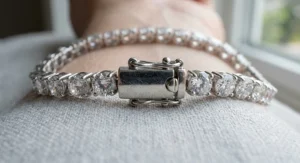
If you’ve ever bought a bracelet and discovered it was a half-inch too small the moment it arrived, the Amazon Essentials Sterling Silver Plated CZ Adjustable Tennis Bracelet solves that specific headache. Its 9.5-inch total length includes a sliding clasp mechanism that lets you cinch the fit down to whatever your wrist actually needs, rather than locking you into one of three fixed lengths. The sterling silver plating sits over a brass base rather than solid silver, which keeps the price low but means the metal underneath isn’t inherently tarnish-resistant on its own — the anti-tarnish coating is doing the real work here. Based on the spec sheet, this is the practical choice for anyone shopping without a tape measure handy, or for a gift where you genuinely don’t know the recipient’s wrist size. It’s hypoallergenic and nickel-free, which matters if the previous CZ bracelet you owned ever left a rash.
Pros:
- ✅ Sliding clasp adjusts for a genuinely custom fit
- ✅ Hypoallergenic, nickel- and lead-free construction
- ✅ Anti-tarnish coating built into the finish
Cons:
- ❌ Brass base under the plating, not solid sterling silver
- ❌ Manufacturer specifically warns against perfume and lotion exposure
Typically under $25 — a smart pick when fit uncertainty is the bigger risk than plating longevity.
3. TIKJE 925 Sterling Silver 2mm Cubic Zirconia Classic Tennis Bracelet — most affordable true sterling silver build
Here’s a distinction that gets lost in most listings: “sterling silver plated” and “925 sterling silver” are not the same claim, and the TIKJE 925 Sterling Silver 2mm Cubic Zirconia Classic Tennis Bracelet is stamped and sold as the latter — a solid 92.5% silver alloy, not silver-plated brass. That matters in practice because solid sterling silver can be re-polished indefinitely; plated brass eventually shows base metal once the coating wears through. The 2mm round brilliant-cut AAA+ stones sit in four-prong basket settings, adding up to roughly 13.5 carat total weight in diamond-equivalent terms, at a 7.25-inch length. Reviewers consistently note the latch takes a few open-close cycles to loosen up, and — worth flagging honestly — at least one reviewer mentioned a general concern about CZ clouding over time, though that reviewer’s own bracelet hadn’t shown the issue. That’s the kind of individual, unverifiable claim you’ll see scattered across CZ jewelry broadly rather than anything specific to this piece.
Pros:
- ✅ Genuine 925 sterling silver base, not silver-plated brass
- ✅ AAA+ stones in a secure four-prong basket setting
- ✅ Hypoallergenic and lead-free construction
Cons:
- ❌ Clasp needs a short break-in period to loosen up
- ❌ Slimmer 2mm stones read less bold than 3-4mm alternatives
Generally in the $20-$35 range — a strong pick if solid metal matters more to you than maximum stone size.
4. KISPER Tennis Bracelet, Gold Plated Round Cut Cubic Zirconia — best for a CZ tennis bracelet that doesn’t fade
If your main question is which CZ tennis bracelet doesn’t fade, the KISPER Tennis Bracelet, Gold Plated Round Cut Cubic Zirconia is built specifically around that concern. It’s marketed and reviewed as tarnish-resistant and waterproof, using 5A cubic zirconia simulated diamonds in your choice of 3mm or 4mm stones, with a box clasp for security. What most buyers overlook about tarnish-resistant coatings generally is that they slow oxidation and scratching but don’t make the underlying gold plating permanent — the coating buys you meaningfully more years of daily wear (including showers and workouts) before the base layer starts to show, rather than making the piece immune to wear entirely. That distinction is exactly what separates an honest “tarnish-resistant” claim from a misleading “never fades” one. For someone who wants to wear one bracelet nonstop — sleeping, swimming, working out — without babying it, this is the spec sheet you want to read closely before buying.
Pros:
- ✅ Marketed and reviewed specifically as tarnish-resistant and waterproof
- ✅ 5A cubic zirconia grade with a choice of 3mm or 4mm stones
- ✅ Secure box clasp designed for everyday wear
Cons:
- ❌ Size range (6.5-7.5″) is narrower than adjustable alternatives
- ❌ Tarnish-resistant coating still isn’t a substitute for solid precious metal long-term
Usually in the $25-$40 range — worth the step up from the most basic gold-plated options if daily, no-days-off wear is the goal.
5. Gemsme 4 Prong Tennis Bracelet, 18K White/Yellow Gold Plated 3mm Cubic Zirconia — best budget pick with the widest size range
The Gemsme 4 Prong Tennis Bracelet, 18K White/Yellow Gold Plated 3mm Cubic Zirconia covers more wrist sizes out of the box than almost anything else on this list, spanning roughly 6 to 9 inches across its size options and marketed for both women and men. The four-prong round-cut CZ setting sits under 18K gold plating in either white or yellow tone, which is a thicker plating spec on paper than the standard 14K options most budget bracelets use — though as with any plated jewelry, the actual wear life still depends heavily on the base metal quality and how much friction the piece takes day to day. What’s easy to miss in a quick scroll is that Gemsme sells several tennis bracelet variants at slightly different price points and widths, so it’s worth double-checking you’re ordering the 3mm classic and not a thinner 2.5mm version if bold sparkle is the goal. This is the pick for gift-givers who don’t know the recipient’s exact size, or for anyone buying a “starter” tennis bracelet before committing to a pricier piece.
Pros:
- ✅ Widest size range of any bracelet on this list (roughly 6″-9″)
- ✅ 18K plating spec, thicker on paper than standard 14K options
- ✅ Marketed for both women and men, genuinely unisex styling
Cons:
- ❌ Multiple similar-looking variants can make ordering the wrong width easy
- ❌ Four-prong settings show more visible metal between stones than bezel styles
Typically under $20 — one of the most accessible entry points if budget is the deciding factor.
6. MDFUN 18K White Gold Plated CZ Tennis Bracelet, 4mm — most convincing “looks real” pick at a mid-range price
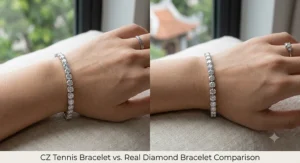
Reviewers of the MDFUN 18K White Gold Plated CZ Tennis Bracelet, 4mm use a specific phrase over and over: it looks real enough that they’re careful about where they wear it. That’s genuinely useful aggregated sentiment, not marketing copy — one verified reviewer specifically noted keeping it for home and close-friend settings rather than crowded public spaces, precisely because the 4mm stones and white gold plating read as convincingly upscale. The bracelet includes a secondary safety latch as backup to the main clasp, a small but meaningful detail for anyone who’s had a tennis bracelet slip off unnoticed. Based on the spec comparison with thinner 2-3mm alternatives, the bolder 4mm stone size is what pushes this into “looks real” territory rather than “obviously costume jewelry” — bigger stones catch and disperse more light per stone, even at a comparable CZ grade. The tradeoff reviewers flag most consistently is a main clasp that takes real effort to open and close initially, which the backup latch at least makes less risky.
Pros:
- ✅ 4mm stone size reads noticeably more upscale than thinner alternatives
- ✅ Secondary safety latch backs up the main clasp
- ✅ Reviewers consistently describe it as convincingly “real-looking”
Cons:
- ❌ Main clasp reported as difficult to fasten at first
- ❌ Larger stone size means more surface area exposed to daily wear
Generally $20-$35 depending on length — a smart mid-range step up when “looks expensive” is the priority.
7. PAVOI Rhodium Plated Graduated Simulated Diamonds Bezel Set Tennis Bracelet — premium pick with a rhodium-plated setting
The PAVOI Rhodium Plated Graduated Simulated Diamonds Bezel Set Tennis Bracelet is the clearest example on this list of a rhodium-plated setting done deliberately rather than as an afterthought. Rhodium is a platinum-group metal, and jewelers use it specifically because it’s harder and more tarnish-resistant than standard gold plating — that’s not marketing spin, it’s basic metallurgy, and it’s why rhodium plating shows up on higher-end pieces meant for genuinely daily wear. This bracelet pairs that finish with graduated AAAAA cubic zirconia stones running from 1.75mm up to 3mm across a 4.7mm-wide band, creating a visual taper that a flat, single-size stone row can’t replicate. It’s also built to nickel-safe, lead-safe, and cadmium-compliant standards, which is worth noting for anyone with sensitive skin who’s been burned by cheaper costume jewelry before. What most shoppers overlook is that “bezel set” stones — fully wrapped in metal rather than held by open prongs — are inherently more snag-resistant and secure than prong settings, which matters if you catch bracelets on sleeves or bags often.
Pros:
- ✅ Rhodium plating genuinely outperforms standard gold plate on tarnish resistance
- ✅ Graduated stone sizing adds dimension a flat row lacks
- ✅ Bezel setting is more snag- and loss-resistant than open prongs
Cons:
- ❌ Meaningfully pricier than PAVOI’s standard classic line
- ❌ Fold-over clasp still benefits from an occasional security check
Generally $45-$70 range — the pick for someone who wants the rhodium-plated setting specifically and is willing to pay for the upgrade in durability.
How to Wear, Clean, and Maintain a CZ Tennis Bracelet
Getting a tennis bracelet home is the easy part. What actually determines whether it looks the same in year two as it did on day one comes down to a handful of small habits most people never think to build.
In the first 30 days, resist the urge to wear a new bracelet in the shower or pool “just to see.” Chlorine and prolonged water exposure are two of the fastest ways to accelerate plating wear, and most manufacturer care instructions explicitly say to remove jewelry before swimming even when a listing calls the piece “waterproof” for casual splashes. Put lotion, perfume, and hairspray on before you put the bracelet on, not after — those products are a leading cause of the cloudy film that gets mistaken for CZ “clouding” when it’s often just product buildup on the stone’s surface.
For ongoing maintenance, a soft polishing cloth after wear takes thirty seconds and meaningfully extends the shine on both sterling silver and plated pieces. Store the bracelet flat, ideally in the original box or a soft pouch, rather than tangled in a drawer with other jewelry — link-on-link contact is a quiet contributor to premature wear at the clasp and connector points. If you notice the clasp getting stiff, a tiny dot of jewelry-safe lubricant (not household oil) on the hinge solves the problem most reviewers describe as a “hard to open” clasp. And rotate: if you own more than one tennis bracelet, alternating wear days lets any coating “rest,” which several jewelry-care guides note extends plated pieces’ functional lifespan more than continuous wear does.
Real-World Scenarios: Which CZ Tennis Bracelet Actually Fits Your Life
Specs matter less than how you actually live with the piece, so here’s how three real buyer profiles map onto this lineup.
If you’re a college student on a tight budget who wants something to stack with other jewelry for everyday outfits, the Gemsme 4 Prong Tennis Bracelet or the base PAVOI 14K Gold Plated 3mm Classic make the most sense — both are under $30, come in enough sizes to fit without measuring twice, and neither represents enough of a financial loss that losing one would ruin your week.
If you’re buying a gift for a mother or grandmother who wears jewelry daily and has sensitive skin, the Amazon Essentials Adjustable or TIKJE 925 Sterling Silver options are the stronger picks — both are explicitly hypoallergenic and nickel-free, and the adjustable clasp on the Amazon Essentials piece removes the guesswork of not knowing her exact wrist size.
If you’re someone who wears one “signature” bracelet nonstop — through workouts, showers, and sleep — and wants it to still look good in eighteen months, the KISPER Tarnish-Resistant pick or the PAVOI Rhodium Plated Graduated bracelet are worth the higher price. Rhodium and tarnish-resistant coatings exist precisely for this no-days-off wear pattern, and the extra $20-$40 upfront is cheaper than replacing a faded bracelet twice.
🔍 Compare Prices Before You Buy
Take your bracelet shopping to the next level — click through on any pick above to check current pricing, sizing, and availability. A few minutes of comparison now saves you from a return shipment later.
How to Choose a CZ Tennis Bracelet: 6 Criteria That Actually Matter
- Base metal first, plating second. Solid 925 sterling silver or genuine gold vermeil (a thick gold layer over sterling silver) will always outlast standard gold-plated brass, regardless of how similar they look in a photo.
- Stone grade, read skeptically. “AAAAA” and “5A” labels are seller-defined tiers, not independent gemological certifications — treat them as a rough signal, not a guarantee, and weight verified buyer photos more heavily than the grade claim itself.
- Setting style matches your lifestyle. Prong settings show more light and sparkle but snag more easily; bezel settings are more secure and snag-resistant but slightly dimmer.
- Clasp type predicts daily annoyance. Box clasps with a safety latch are the most secure; fold-over clasps are common but reviewers frequently note a stiff break-in period.
- Plating type if daily wear is the plan. Rhodium plating and dedicated tarnish-resistant coatings genuinely outperform standard gold plate for continuous, no-days-off wear.
- Return policy as a quality proxy. Sellers confident in consistent CZ cut and clarity tend to offer longer, friction-free return windows — a 30-60 day policy is a reasonable baseline to expect.
Common Mistakes When Buying a CZ Tennis Bracelet
The single most common mistake is buying based on the stated CZ grade alone. Since “AAAAA” isn’t independently regulated, two sellers’ “top tier” CZ can look noticeably different in hand — always cross-check verified photo reviews before trusting the grade label on its own.
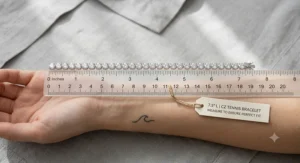
A second frequent misstep is skipping the wrist measurement. Tennis bracelets sit closer to the bone than a loose bangle, and a size that’s even a quarter-inch off will either dangle awkwardly or dig into the skin; measure snugly and add about half an inch, per standard sizing guidance from most fine jewelry retailers.
Third, buyers often assume “hypoallergenic” and “nickel-free” are interchangeable claims — they’re related but not identical, and if you have a documented nickel allergy, look for an explicit nickel-free statement rather than inferring it from a general hypoallergenic label.
Finally, a lot of shoppers treat plated and solid-metal bracelets as interchangeable at checkout, then are surprised when a plated piece needs replacing in two years while a solid sterling piece just needs re-polishing. Decide upfront which tradeoff — lower cost now versus lower cost over time — actually fits your budget.
Cubic Zirconia Clarity Explained: What AAA, AAAAA, and 5A Really Mean
Cubic zirconia clarity gets marketed aggressively, so it’s worth understanding what’s actually being measured. Unlike mined diamonds, which are graded on an internationally standardized clarity scale precisely because natural inclusions are common, lab-grown cubic zirconia is manufactured to be essentially flawless from the start. As Wikipedia’s entry on cubic zirconia explains, the synthesized material is hard and typically colorless by design, with few if any natural inclusions to grade in the first place. That’s exactly why supplier grading systems like AAA, AAAAA, or “5A” exist: they’re measuring cut precision, facet symmetry, polish quality, and color consistency batch-to-batch, not clarity in the diamond-industry sense.
Here’s what that means practically when you’re comparing two “flawless” bracelets: the one with tighter cut symmetry and more even color across every single stone in the row will visibly out-sparkle the other, even if both are labeled the same grade. Reviewers who describe a bracelet as looking “cloudy” over time are almost never describing a clarity failure — they’re usually describing surface film from lotion or soap buildup, or in rarer cases, a lower-quality stone losing polish faster than expected. Wipe the bracelet with a soft cloth before assuming the worst; it solves the complaint more often than people expect.
Rhodium-Plated Settings: Why They’re Worth the Upgrade
Rhodium plating shows up specifically on pieces meant to survive daily wear, and there’s a real materials-science reason for that. Rhodium is a rare, extremely hard, silvery-white metal in the platinum family, applied as a thin protective layer over sterling silver or white gold. Compared to standard gold vermeil, it resists scratching and oxidation more effectively, which is why it’s the industry-standard finish for white gold engagement rings — not just tennis bracelets.
The tradeoff most buyers don’t realize going in: rhodium plating, like any plating, is still a coating, not a permanent property of the metal underneath. It will eventually wear thin at points of repeated friction — the inside curve of the wrist, the clasp connection — typically over a longer timeline than gold plating, but not indefinitely. If a rhodium-plated bracelet in this lineup, like the PAVOI Rhodium Plated Graduated Simulated Diamonds Bezel Set Tennis Bracelet, starts to look duller after a couple of years of continuous wear, that’s normal wear-through, not a defect — and it’s also why occasional re-plating is a standard service most jewelers offer for pieces built on solid sterling silver.
Cubic Zirconia Bracelet Affordable: Where the Real Value Is
“Affordable” in this category spans a wide range, and the value math isn’t always intuitive. A $19 bracelet with thin gold plating over brass and a $65 bracelet with rhodium plating over solid sterling silver aren’t really competing products — they’re solving different problems. The $19 piece is genuinely the better buy if you want variety, plan to rotate several bracelets, or are buying for someone who changes jewelry trends often. The $65 piece is the better buy if you want one bracelet that survives years of continuous wear without needing replacement.
Where this list’s real value sits is the middle: pieces like the TIKJE 925 Sterling Silver or KISPER Gold Plated Round Cut options land in the $20-$40 range while offering either genuine solid metal or dedicated tarnish resistance — meaningfully better long-term durability than the cheapest options, without jumping to premium rhodium pricing. If your budget is firm and you’re choosing just one bracelet to own for a while, that middle tier is where cost and durability actually balance out.
How to Find a CZ Tennis Bracelet That Doesn’t Fade
“Fading” almost always means one of two things: the plating wearing through to reveal base metal, or the stones losing their sparkle from surface buildup rather than actual damage. Addressing both separately gets you closer to a bracelet that holds up.
For plating wear specifically, prioritize solid sterling silver, gold vermeil (a genuinely thick gold layer, not thin plating), or rhodium-plated pieces over standard thin gold-plated brass — the TIKJE, Amazon Essentials, and PAVOI Rhodium Plated options in this list all address this differently but all outperform basic thin plating. For stone dullness, the fix is mostly behavioral: remove the bracelet before showering, swimming, or applying lotion and perfume, and wipe it with a soft cloth after wear. Reviewers of the KISPER bracelet specifically flag its tarnish-resistant, waterproof coating as the reason it holds up to daily wear better than un-coated alternatives — that’s a case where paying slightly more upfront genuinely buys you fewer replacement purchases down the line.
Features That Actually Matter (And Those That Don’t)
What actually matters: the base metal underneath the plating, the setting type (bezel versus prong), clasp security, and whether the coating is genuinely tarnish-resistant or just marketed that way. These four factors predict how the bracelet performs in year two far better than anything else on a product listing.
What matters far less than marketing suggests: exact carat-weight-equivalent claims (CZ carries no resale value tied to carat weight the way diamonds do), “hand-selected stones” language (nearly all commercial CZ is machine-sorted for consistency), and elaborate box or packaging descriptions, which add to unboxing appeal but nothing to how the bracelet wears. According to GIA’s guide to simulated diamonds, synthetic CZ is produced by melting powdered ingredients and slowly cooling the mixture into a solid crystal form — a manufactured, batch-consistent process, which is precisely why marketing language emphasizing rarity or hand-selection is more sales copy than substantive differentiator.
Long-Term Cost & Maintenance: CZ Tennis Bracelet Cost vs a Diamond Alternative
This is the comparison that actually justifies the CZ tennis bracelet category existing at all. A comparable diamond tennis bracelet — even a modest one using small, lower-clarity stones — routinely starts in the low thousands of dollars and climbs quickly from there depending on total carat weight and diamond quality. A CZ tennis bracelet delivers a visually similar row-of-light effect for a small fraction of that cost, with the honest tradeoff being durability and resale value rather than everyday appearance.
Run the actual cost-per-wear math and the gap widens further. A $30 CZ bracelet worn twice a week for two years before eventual replacement works out to a few cents per wear. A diamond bracelet at even a conservative $2,000 price point requires years of regular wear just to approach a comparable cost-per-use figure, and that’s before factoring in insurance, which most financial advisors recommend for jewelry above a few hundred dollars in value. The real financial case for CZ isn’t just the sticker price — it’s that you can own several CZ bracelets in different styles for less than the cost of insuring one diamond piece, and swap styles as trends shift without the sunk-cost pressure a diamond purchase creates.
Where diamonds still win outright: resale value (CZ has essentially none), heirloom durability across decades, and the emotional and symbolic weight some buyers specifically want for milestone purchases like engagements or anniversaries. If none of those factors matter for your specific purchase, the cost math overwhelmingly favors CZ.
CZ Tennis Bracelets for Everyday Wear, Gifting, and Special Occasions
For everyday wear, prioritize the durability factors covered above — solid metal or genuinely tarnish-resistant coatings — over stone size or brand name. A bracelet you’re not afraid to wear daily gets more use, and more enjoyment, than one reserved for special occasions in a drawer.
For gifting, adjustable or wide-size-range pieces like the Amazon Essentials Adjustable or Gemsme 4 Prong bracelets remove the single biggest gift-buying risk: guessing wrong on size. Both also sit at price points where a wrong guess isn’t a significant financial loss.
For weddings, formal events, or milestone gifts, the PAVOI Rhodium Plated Graduated bracelet’s bezel setting and graduated stone sizing read as more intentionally “fine jewelry” than a flat, uniform row — worth the price step-up when the occasion itself calls for it.
Safety, Hypoallergenic Claims, and Jewelry Regulations
Marketing language around “hypoallergenic” and simulated diamonds isn’t unregulated. The FTC’s Jewelry Guides exist specifically so consumers get accurate information when shopping for gemstones and their laboratory-created or imitation substitutes. In practice, that means legitimate sellers are expected to clearly disclose that a stone is a simulant rather than letting “diamond-look” language imply otherwise, and hypoallergenic claims should reflect genuine nickel-, lead-, and cadmium-free construction rather than just a marketing phrase. Most reputable listings in this category, including several covered here, do state these compliance details explicitly, which is a reasonable trust signal worth checking for before you buy.
Practically speaking, if you have a documented metal allergy, look for an explicit nickel-free statement rather than assuming “hypoallergenic” alone covers it, and if a listing describes its stones as any precious gem name without clearly noting “simulated” or “imitation,” treat that as a red flag rather than a bargain.
Frequently Asked Questions
❓ Is a CZ tennis bracelet worth buying instead of diamond?
❓ Does cubic zirconia turn yellow or cloudy over time?
❓ Can you shower or swim with a CZ tennis bracelet?
❓ How do I know my CZ tennis bracelet size?
❓ What's the difference between rhodium plated and gold plated CZ bracelets?
Conclusion
If there’s one takeaway from comparing these seven bracelets side by side, it’s that the photo on the listing tells you almost nothing about how the piece will look in eighteen months. The base metal, the setting style, and whether the plating is genuinely tarnish-resistant matter far more than the carat-equivalent number in the title. For a low-risk first purchase, the PAVOI 14K Gold Plated 3mm Classic or Gemsme 4 Prong bracelets deliver real value without much financial commitment. For daily, no-days-off wear, the KISPER Tarnish-Resistant pick or the PAVOI Rhodium Plated Graduated bracelet are worth paying more upfront to avoid replacing a faded piece down the line. And if solid metal matters more to you than maximum stone size, the TIKJE 925 Sterling Silver bracelet is the honest, unglamorous pick that will simply outlast most of the competition.
Whichever one you land on, the real win here isn’t fooling anyone into thinking it’s a diamond — it’s getting genuine, lasting sparkle without the financial stress a real diamond tennis bracelet carries.
Recommended for You
- 7 Best lab-grown diamond bracelet Picks for 2026
- Silver Tennis Bracelet: 7 Stunning Picks & Buying Tips (2026)
- Copper Bracelet for Arthritis Pain Reviews: 7 Real Picks (2026)
Disclaimer: This article contains affiliate links. As an Amazon Associate, I earn from qualifying purchases. If you purchase products through these links, we may earn a small commission at no additional cost to you.
✨ Found this helpful? Share it with your friends! 💬🤗
