
In This Article
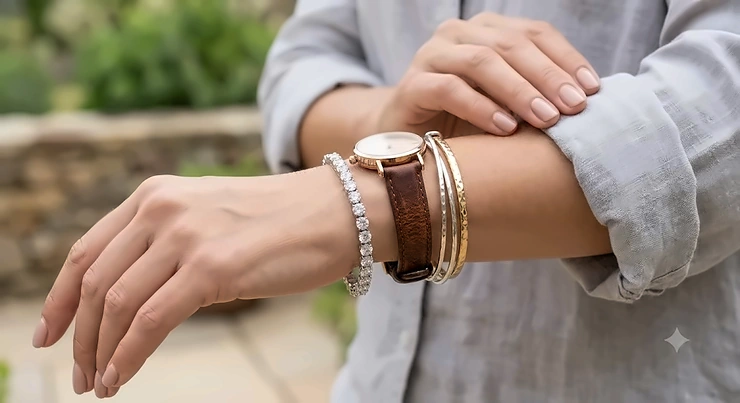
A silver tennis bracelet is that rare accessory that manages to look effortless and deliberate at the same time. One continuous line of stones, one metal, zero fuss — and somehow it reads as “I thought about this” no matter what else you’re wearing. If you’ve started scrolling through options and immediately hit a wall of unfamiliar terms — prong setting, cttw, rhodium plating, box clasp with safety — you’re not alone, and you’re not overthinking it. Those details are exactly what separates a bracelet you’ll wear for a decade from one that goes dull, loose, or missing a stone within a year.
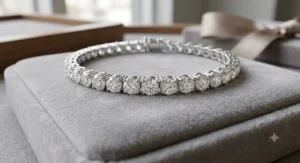
This guide breaks down seven real, currently available silver tennis bracelets spanning budget cubic zirconia pieces to genuine diamond settings, plus the practical knowledge that actually matters at checkout: how prong settings hold up over time, what makes a clasp trustworthy, and how cubic zirconia stacks up against a real diamond accent when you’re weighing sparkle against spend. Whether you want an affordable silver diamond tennis bracelet for everyday stacking or a more considered piece for a milestone gift, you’ll find a fit here — along with the reasoning to back it up, not just a spec sheet copied from a product listing.
Quick Comparison Table
| Bracelet | Metal & Stone | Best For | Price Range |
|---|---|---|---|
| PAVOI 14K White Gold Plated CZ Classic Tennis Bracelet | Rhodium-plated over brass, AAAAA CZ | Budget everyday stacking | Under $35 |
| Diamond Treats Sterling Silver Tennis Bracelet | Solid 925 silver, 4mm AAA CZ | First “real silver” purchase | $40–$60 range |
| CoolStyles Sterling Silver CZ Tennis Bracelet | 925 silver, rhodium finish | Tarnish resistance on a budget | $35–$55 range |
| Gem Stone King Sterling Silver Moissanite Tennis Bracelet | 925 silver, white moissanite | Durability-focused mid-range shoppers | $90–$150 range |
| Gem Stone King Moissanite & Lab Diamond Tennis Bracelet | 925 silver, moissanite + lab diamond | Hybrid sparkle, gift-giving | $150–$250 range |
| Original Classics .925 Sterling Silver Diamond Tennis Bracelet | Solid silver, genuine mined diamonds | Affordable real-diamond entry point | $250–$400 range |
| Ross-Simons Sterling Silver CZ Tennis Bracelet | Polished 925 silver, brilliant-cut CZ | Trusted retailer, safety-first shoppers | $100–$180 range |
Looking at the spread above, the gap between a budget cubic zirconia piece and a genuine diamond setting isn’t as steep as most people assume — you can move from a plated starter bracelet to solid sterling silver for roughly the cost of a nice dinner out. What separates the tiers isn’t just the stone; it’s whether the metal underneath is solid 925 silver stamped for authenticity under FTC guidelines or a plated layer over base metal, which matters more for long-term wear than most listings let on.
💬 Just one click — help others make better buying decisions too!😊
Top 7 Silver Tennis Bracelets: Expert Analysis
1. PAVOI 14K White Gold Plated Cubic Zirconia Classic Tennis Bracelet — best budget silver-look starter piece
The rhodium-over-brass build here is the reason this bracelet keeps showing up on “best budget” roundups — it delivers the silver-white shine buyers want without the sterling silver price tag attached to it. The AAAAA-grade cubic zirconia stones are cut to catch light aggressively, and the adjustable slider design (available in a 9.5-inch chain or fixed 6.5-inch and 7-inch lengths) means you’re not guessing at sizing before you buy. Because the base metal is plated rather than solid, expect the shine to hold up best with light, careful wear rather than daily gym-to-dinner rotation.
Based on the spec comparison against pricier options on this list, this is squarely a “test the style before committing” piece — ideal for someone who wants to see if they actually reach for a tennis bracelet before spending three times as much on solid silver. It’s also a smart pick for teens or younger gift recipients who tend to lose or outgrow jewelry faster than adults do. Reviewers consistently report that it photographs and reads as far more expensive than its price point suggests, with several noting the clasp folds over and snaps securely rather than feeling flimsy. A recurring theme in the feedback is that the clasp mechanism runs stiff at first, which some buyers read as reassuring security and others found mildly annoying during the first few wears.
Pros:
- ✅ Convincing silver-white shine at an entry-level price
- ✅ Adjustable slider removes sizing guesswork
- ✅ Hypoallergenic build avoids nickel irritation
Cons:
- ❌ Plated finish will wear thinner than solid silver over years
- ❌ Clasp feels stiff to operate for the first several uses
At under $35, this is a low-risk way to try the tennis bracelet silhouette, and the value case is strong as long as you treat it as fashion jewelry rather than a forever piece.
2. Diamond Treats Sterling Silver Tennis Bracelet — genuine 925 silver at entry pricing
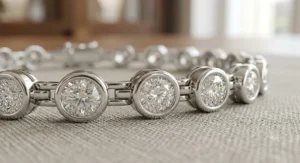
What most buyers overlook about this model is that it clears the actual legal bar for “sterling silver” — solid .925 silver rather than a plated look-alike — while still landing in budget territory. The 4mm AAA-grade cubic zirconia stones run the full 6.5-inch length in a continuous row, and the piece carries a box clasp with a folding safety catch, which is a meaningfully more secure closure than a basic spring-ring clasp on a bracelet this length.
The practical upshot of solid silver over plating is durability: this bracelet can be professionally polished or lightly buffed over the years without stripping away a coating, something plated pieces simply can’t do. Reviewers consistently describe the double safety catch as staying secure through a full week of continuous wear without loosening, and several note that the CZ reads as convincingly diamond-like without tipping into the “too white” look that cheaper simulants sometimes have. A few buyers do flag that sterling silver can react to perfume and lotion contact, which lines up with standard silver-care guidance rather than being a flaw specific to this piece.
Pros:
- ✅ Genuine .925 sterling silver, not a plated substitute
- ✅ Double safety catch adds real security to the clasp
- ✅ AAA CZ stones sparkle without looking artificially bright
Cons:
- ❌ Fixed 6.5-inch length isn’t adjustable for wrist changes
- ❌ Requires standard silver care to avoid tarnish from perfume
For buyers who specifically want the word “sterling” to be true rather than aspirational, this is one of the strongest budget tennis bracelet silver setting options available.
3. CoolStyles Sterling Silver Cubic Zirconia Tennis Bracelet — tarnish-resistant rhodium finish
This piece pairs a solid sterling silver base with a rhodium overlay, which is worth understanding because the rhodium is doing real work here — it’s a harder, whiter metal that slows the natural tarnishing silver undergoes with air and skin oil exposure. The result is a bracelet that mimics white gold’s cool tone rather than silver’s slightly warmer cast, which changes how the cubic zirconia stones read against skin.
Here’s what to weigh: rhodium plating over solid silver is a meaningfully different proposition than rhodium (or gold) plating over base metal, because even after the rhodium layer eventually thins, you’re left with genuine sterling silver underneath rather than a mystery alloy. That’s the kind of distinction Amazon listings rarely spell out clearly. The stone-setting looks continuous and tightly spaced in product photography, which generally corresponds to fewer visible gaps where debris and lotion residue can accumulate. Buyers researching this category should note that rhodium-plated sterling pieces typically need re-plating every few years with daily wear to maintain the brightest white finish, a maintenance detail rarely mentioned upfront.
Pros:
- ✅ Solid sterling silver base under the rhodium layer
- ✅ Cooler, whiter tone than unplated silver
- ✅ Tight stone-to-stone spacing for a continuous sparkle line
Cons:
- ❌ Rhodium layer will eventually need re-plating with heavy wear
- ❌ Limited independent review volume compared to bigger brands
If a bright white finish matters more to you than a traditional silver tone, this is a reasonable mid-budget way to get it without leaving solid silver behind.
4. Gem Stone King 925 Sterling Silver White Moissanite Tennis Bracelet — most durable stone-to-price ratio
This is where the lineup shifts from simulant stones to a genuinely different material. Moissanite is silicon carbide rather than the zirconium dioxide used in cubic zirconia, and it sits at roughly 9.25 on the Mohs hardness scale versus CZ’s 8 to 8.5 — a gap that matters enormously for a bracelet you’re wearing against countertops, car doors, and gym equipment daily. The stones here run 4.5mm round cuts totaling roughly 2.31 to 2.76 carat-total-weight depending on the specific listing, prong-set into a fully adjustable chain up to 9 inches.
On paper this means fewer chipped facets and less dulling over years of contact, and it shows in practice — moissanite resists the microscopic scratching that eventually clouds cheaper simulants. What most buyers overlook is that moissanite’s higher refractive index actually gives it more fire and rainbow flash than a diamond, which some people love and others find slightly less “icy” than they expected from a classic diamond look. The brand has been in the gemstone business for over a century, which shows up in consistent stone quality across their catalog rather than the batch variability you sometimes see from newer sellers. Aggregated buyer sentiment across marketplace listings for this style skews toward praise for the brilliance and the secure prong setting, with the adjustable design frequently singled out as removing the need for professional resizing.
Pros:
- ✅ Moissanite is significantly harder and more scratch-resistant than CZ
- ✅ Fully adjustable up to 9 inches without resizing
- ✅ Century-old gemstone house with consistent quality control
Cons:
- ❌ Moissanite’s fire can look “rainbow” rather than pure white in sunlight
- ❌ Costs more than CZ alternatives at similar carat weight
For buyers who plan to wear their bracelet daily rather than saving it for occasions, the durability trade-up here is genuinely worth the price jump from pure CZ.
5. Gem Stone King 925 Sterling Silver Moissanite and Lab Grown Diamond Tennis Bracelet — hybrid sparkle with real diamond accents
This model splits the difference between “affordable simulant” and “genuine diamond” by combining moissanite’s brilliance with actual E-F color, near-colorless lab-grown diamond accents in the same setting — typically totaling around 1.5 carats across the piece. Both stones sit in a 925 sterling silver setting, and because lab-grown diamonds share identical chemical and optical properties with mined diamonds, you’re getting real diamond content without the mined-diamond price ceiling.
What the spec sheet won’t tell you, but the category data suggests, is that this hybrid approach solves a specific problem: full lab-diamond tennis bracelets get expensive fast once you’re past a carat or two, but a bracelet that’s mostly moissanite with diamond accents keeps costs down while still letting you say “there’s a real diamond in this.” That’s a meaningfully different value proposition than an all-CZ piece, and it’s why this sits firmly in mid-to-premium territory rather than budget. The adjustable chain extends to 9 inches, and the brand backs its jewelry with quality inspection before shipping, which matters more with mixed-stone pieces where setting precision is trickier than a single-stone-type row.
Pros:
- ✅ Genuine lab-grown diamond accents, not simulants
- ✅ Near-colorless E-F diamond grading disclosed upfront
- ✅ Adjustable fit avoids professional resizing costs
Cons:
- ❌ Meaningfully pricier than single-stone-type alternatives
- ❌ Mixed stone types create subtle differences in sparkle character
If you want to be able to honestly say part of your bracelet is a real diamond without stretching into four-figure territory, this hybrid approach is worth serious consideration.
6. Original Classics .925 Sterling Silver Diamond Tennis Bracelet — most affordable route to genuine diamonds
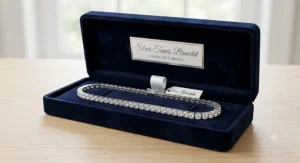
This is the one fully mined-diamond option on the list, and it earns its spot because it proves you don’t need a $940 setting to own real diamonds — this piece uses a miracle-set mounting, where a reflective metal frame surrounds each small diamond to visually amplify its size, set into solid .925 sterling silver in a double-wave link pattern. The diamonds are graded I-J color with I3 clarity, meaning visible inclusions to the naked eye in some stones, which is precisely the trade-off that keeps the price accessible.
Based on the spec comparison, this is an honest value play rather than a compromise dressed up as luxury: I3 clarity diamonds are real, mined diamonds, just not the eye-clean, high-color stones you’d find in a fine jewelry counter setting costing several times as much. The miracle-set mounting does meaningful visual work here, making a modest total carat weight (around half a carat) look considerably more substantial than the raw diamond size alone would suggest. For anyone building toward an affordable silver diamond tennis bracelet without touching four figures, this represents the most direct path available on this list. The brand is a long-running family jewelry operation, and buyers researching this category should expect the diamonds to have visible character rather than laboratory-perfect clarity — which is exactly what the price signals.
Pros:
- ✅ Genuine natural mined diamonds, not lab-grown or simulant
- ✅ Miracle-set mounting visually enlarges the diamond display
- ✅ Solid sterling silver base holds up to years of wear
Cons:
- ❌ I3 clarity means some inclusions may be visible to the eye
- ❌ Lower color grade (I-J) than premium diamond jewelry
If “real diamond” is the priority over “flawless diamond,” this bracelet delivers exactly that at a price point most CZ shoppers wouldn’t expect to see genuine stones at.
7. Ross-Simons Sterling Silver CZ Tennis Bracelet — best safety clasp from a trusted retailer
Ross-Simons has specialized in cubic zirconia and sterling silver jewelry long enough that their tennis bracelet line reads as more considered than most marketplace listings — this particular style sets roughly 50 round brilliant-cut CZ stones, totaling a 5.00 carat diamond-equivalent weight, into polished sterling silver with a double-latch safety clasp layered behind a box clasp closure.
Here’s what to weigh against the other options on this list: that double-latch safety mechanism is a genuinely higher security standard than the single safety catch found on several budget alternatives here, which matters enormously for a piece designed to sit on a moving wrist all day. The stones are diamond-equivalent weighted, meaning the 5.00 ct t.w. figure describes visual size comparable to a 5-carat diamond spread, not the physical weight of the CZ material itself — an important distinction the brand discloses clearly rather than burying in fine print. Reviewers researching this retailer’s jewelry consistently point to accurate sizing and a finish that holds its shine longer than expected for CZ pieces in this price bracket, likely a byproduct of the polished (rather than plated) sterling silver base.
Pros:
- ✅ Double-latch safety clasp exceeds single-catch competitors
- ✅ Polished solid sterling silver, not plated
- ✅ Established retailer with clear diamond-equivalent weight disclosure
Cons:
- ❌ Priced higher than comparable CZ-only alternatives
- ❌ Classic round-cut design offers less variety than newer styles
If clasp security is your top priority — especially for a bracelet you plan to wear without taking it off nightly — this is the strongest pick on the list for that specific concern.
Practical Usage Guide: Setup, Wear, and Maintenance
Getting the most out of a new silver tennis bracelet starts before you even put it on. First, confirm the clasp mechanism by opening and closing it five or six times before wearing it out — a stiff clasp on day one usually loosens slightly with normal use, but a clasp that feels loose immediately is worth returning. Second, size it correctly: a properly fitted tennis bracelet should allow one finger to slide comfortably underneath, not two. Too loose, and the clasp bears constant stress from swinging; too tight, and stones catch on sleeves and gloves.
For the first 30 days, avoid wearing your bracelet in the shower, pool, or while applying lotion, perfume, or hairspray — sterling silver reacts to sulfur compounds in many personal care products, which accelerates tarnish. Store it in a fabric-lined box or a zip-top bag with the air pressed out when you’re not wearing it; open-air jewelry dishes look nice but speed up oxidation. A soft polishing cloth run over the metal every week or two prevents tarnish from building up to the point where you’d need a chemical dip. If stones start looking dull, warm water with a drop of mild dish soap and a soft-bristled toothbrush, worked gently around each prong, restores most of the shine without risking the setting.
Real-World Buyer Scenarios
The everyday stacker: If you’re layering multiple bracelets daily and want low financial risk if one gets lost or tangled, the PAVOI 14K White Gold Plated Cubic Zirconia Classic Tennis Bracelet or CoolStyles Sterling Silver Cubic Zirconia Tennis Bracelet make sense — affordable enough to wear carelessly, styled to blend into a stack rather than stand alone.
The milestone gift-giver: Buying for an anniversary, graduation, or significant birthday calls for something with real substance behind the sparkle. The Original Classics .925 Sterling Silver Diamond Tennis Bracelet delivers genuine diamond content at a price that doesn’t require a second mortgage, while the Gem Stone King Moissanite and Lab Grown Diamond Tennis Bracelet offers a premium-feeling hybrid at a comparable spend.
The daily-wear minimalist: If you want one bracelet that goes on in January and doesn’t come off until December, prioritize durability and clasp security over price. The Gem Stone King Sterling Silver Moissanite Tennis Bracelet and the Ross-Simons Sterling Silver CZ Tennis Bracelet both hold up to that kind of commitment — one through stone hardness, the other through clasp engineering.
Problem → Solution: Common Silver Tennis Bracelet Issues
Problem: The bracelet keeps sliding around and stones face the wrong way. This usually means it’s sized too loosely. Adjustable-slider models like the PAVOI 14K White Gold Plated Cubic Zirconia Classic Tennis Bracelet solve this directly; fixed-length pieces may need a jeweler to remove a link.
Problem: The silver has turned yellow or black in spots. This is standard tarnish from sulfur exposure, not a defect. A silver polishing cloth resolves light tarnish in minutes; for solid sterling pieces like the Diamond Treats Sterling Silver Tennis Bracelet, this is fully reversible indefinitely since there’s no plating to wear through.
Problem: A stone feels loose when you press on it. Stop wearing the bracelet immediately and take it to a jeweler for prong re-tightening — this is common on prong-set pieces after a year or two and is a routine, inexpensive fix if caught early rather than after a stone is lost.
Problem: The clasp popped open unexpectedly. This is the most serious issue on this list. If it happens even once, upgrade to a bracelet with a double-latch safety mechanism, such as the Ross-Simons Sterling Silver CZ Tennis Bracelet, or have a jeweler add a figure-eight safety chain to your existing clasp as a backup.
Problem: You’re not sure if it’s really sterling silver. Check for a “925” stamp near the clasp — FTC rules require this disclosure on any piece marketed as sterling silver. If there’s no stamp and the listing only says “silver” or “silver-tone,” assume it’s plated rather than solid.
How to Choose a Silver Tennis Bracelet
- Confirm solid silver versus plated. Look for a visible “925” stamp; plated pieces will tarnish through to a base metal color over time, while solid silver can be repolished indefinitely.
- Decide on stone type before shopping by price. Cubic zirconia, moissanite, and genuine diamonds occupy very different price tiers, and knowing which one you want narrows the field fast.
- Check the setting style. Prong settings maximize sparkle and light entry; channel or bezel settings sacrifice a little brilliance for extra stone security and a lower snag risk.
- Prioritize clasp security over aesthetics. A double safety catch or double-latch clasp matters more day-to-day than almost any other spec on the listing.
- Measure your wrist, then add for movement. Standard advice is your wrist measurement plus about half an inch, though adjustable styles remove this guesswork entirely.
- Read the fine print on carat weight terminology. “Diamond-equivalent weight” on CZ listings describes visual size, not actual stone mass — don’t compare it directly to real diamond carat weight.
- Factor in maintenance realistically. If you won’t remember to remove jewelry before showering or applying lotion, lean toward solid silver and harder stones that tolerate more daily abuse.
Prong Setting vs. Channel and Bezel Settings
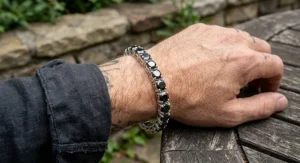
The setting style on a tennis bracelet does more than hold stones in place — it fundamentally changes how much light reaches each stone and how the bracelet holds up to daily knocks. A prong setting uses small metal claws, usually four or six per stone, to grip each stone while leaving most of its surface exposed to light. This is why prong-set bracelets tend to sparkle noticeably more than other setting types: light enters from nearly every angle. The trade-off is exposure — prongs can catch on fabric, snag on hair, and occasionally bend or loosen with years of contact against hard surfaces.
Channel settings run stones in a metal track with no raised prongs, creating a smoother, snag-resistant surface that’s popular for people with active hands-on jobs or hobbies. The cost is a modest reduction in sparkle, since less of each stone’s surface catches light. Bezel settings surround each stone in a full metal rim, offering the highest security of the three but the most muted brilliance, since a meaningful portion of each stone is covered rather than exposed.
Among the seven bracelets featured here, the Gem Stone King 925 Sterling Silver White Moissanite Tennis Bracelet and its lab-diamond hybrid sibling both use prong settings, prioritizing brilliance — appropriate given moissanite’s naturally high fire benefits from maximum light exposure. If you work with your hands constantly or have young children who grab jewelry, a channel-set alternative may hold up better long-term even at a slight sparkle cost.
Tennis Bracelet Clasp Safety: What to Look For
Clasp failure is the single most common reason people lose an expensive bracelet, and it’s almost entirely preventable by understanding what you’re buying before checkout. A basic spring-ring clasp, common on cheap fashion jewelry, relies on spring tension alone and can pop open under pressure from a snagged sleeve or a hard bump. A box clasp with a fold-over tongue is considerably more secure, since it requires deliberate pressure to release rather than accidental tension.
The gold standard for tennis bracelets specifically is a box clasp paired with a secondary safety mechanism — either a folding safety catch or a true double-latch design, where two independent locking points must both fail for the bracelet to come loose. Reviewers consistently report the double safety catch on solid silver models, including the Diamond Treats Sterling Silver Tennis Bracelet, holding through a full week of continuous wear without incident, and the Ross-Simons Sterling Silver CZ Tennis Bracelet‘s double-latch system takes that security a step further with two fully independent locking points.
If you already own a tennis bracelet with a single clasp and no backup, a jeweler can typically add a thin safety chain for a modest fee — cheap insurance against losing a bracelet that cost considerably more to replace.
CZ vs. Diamond Accent: Which Sparkle Is Right for You
This is the comparison most shoppers actually care about, and the honest answer depends on what you’re optimizing for. Cubic zirconia is a lab-made zirconium dioxide crystal, chemically and structurally distinct from diamond, sitting at roughly 8 to 8.5 on the Mohs hardness scale. It’s optically bright, close to diamond in refractive index, and dramatically cheaper — which is exactly why budget and mid-range tennis bracelets lean on it so heavily. The trade-off is longevity: CZ can dull, cloud, or chip with years of daily contact against hard surfaces, and lower-grade CZ sometimes reads as slightly too perfect or too white next to real diamond’s subtler warmth.
A genuine diamond accent, even at modest clarity like the I3-graded stones in the Original Classics .925 Sterling Silver Diamond Tennis Bracelet, brings real diamond hardness — a 10 on the Mohs scale, the hardest natural material on Earth — meaning it simply won’t scratch or dull with normal wear the way CZ eventually can. GIA’s research on diamond simulants confirms diamond outperforms every simulant on hardness and polish retention, which is the practical reason diamond jewelry holds resale and heirloom value that CZ pieces never will.
Moissanite sits in an interesting middle ground: harder than CZ at roughly 9.25 on the Mohs scale, with even more brilliance and fire than a real diamond, but at a fraction of diamond’s price. For buyers weighing CZ vs diamond accent purely on durability and long-term shine retention, moissanite options like the Gem Stone King 925 Sterling Silver White Moissanite Tennis Bracelet offer a genuinely durable middle path between disposable-feeling CZ and four-figure diamond settings.
Affordable Silver Diamond Tennis Bracelets: Budget Setting Breakdown
The phrase “affordable silver diamond tennis bracelet” sounds like a contradiction until you understand how jewelers keep real diamonds within reach. Three levers control price on a genuine diamond piece: clarity grade, color grade, and total carat weight. The Original Classics .925 Sterling Silver Diamond Tennis Bracelet pulls all three levers toward affordability at once — I3 clarity (visible inclusions), I-J color (slightly warm rather than icy white), and a modest half-carat total weight amplified visually through miracle-set mounting.
This is a legitimate strategy rather than a corner-cutting one, as long as you know what you’re buying. A budget tennis bracelet silver setting built around real diamonds will simply never look as flawless as a high-clarity, high-color piece costing several times more — but it will always be a genuine diamond, which matters enormously to some buyers and not at all to others. If resale value, heirloom potential, or simply being able to say “these are real diamonds” matters to you, this budget tier is worth the trade-off in visual perfection. If pure sparkle-per-dollar is the priority instead, a CZ or moissanite alternative from earlier in this list will outperform a budget diamond piece on brilliance every time.
Common Mistakes When Buying a Silver Tennis Bracelet
The most frequent mistake is assuming “silver” in a product title means solid sterling silver — plenty of listings use “silver” as a color description for plated base metal, which is technically permitted under FTC jewelry marking guidelines as long as it’s not paired with the word “sterling” without qualification. Always check for the 925 stamp if solid silver matters to you.
A second common error is buying a fixed-length bracelet without measuring first, leading to a piece that’s either uncomfortably tight or loose enough to spin around the wrist and expose the clasp to abnormal stress. A third mistake is ignoring clasp type entirely in favor of stone size and price — a stunning bracelet with a weak clasp is a bracelet you’ll eventually lose. Finally, buyers frequently skip aftercare research, assuming all jewelry metals behave the same way; sterling silver specifically needs different handling than gold or platinum pieces, and skipping that homework leads to avoidable tarnish complaints within months of purchase.
Long-Term Cost & Maintenance: Total Cost of Ownership
Sticker price only tells part of the story. A budget plated bracelet like the PAVOI 14K White Gold Plated Cubic Zirconia Classic Tennis Bracelet costs the least upfront but has a shorter realistic lifespan before the plating visibly wears — meaning the true multi-year cost may involve replacing it once or twice. A solid sterling silver piece with CZ, like the Diamond Treats Sterling Silver Tennis Bracelet, costs more initially but can be professionally polished indefinitely, and while the CZ stones themselves may eventually dull, replacing a simulant stone is inexpensive compared to resetting a diamond.
Moissanite pieces occupy a genuinely favorable middle position on cost-per-year of wear: a higher upfront price than CZ, but hardness that dramatically reduces the odds you’ll ever need stone replacement. Genuine diamond settings carry the highest upfront cost but effectively zero stone-degradation cost over decades, plus the possibility of retaining resale value that simulant jewelry simply doesn’t have. For anyone planning to wear their bracelet several days a week for years rather than saving it for occasions, running this basic cost-per-wear math before buying often points toward spending one tier higher than initial instinct suggests.
✨ Don’t Miss These Exclusive Deals!
🔍 Take your jewelry collection to the next level with these carefully selected picks. Click on any highlighted item to check current pricing and availability. These bracelets will help you create the polished, everyday sparkle you’ve been after!
Frequently Asked Questions
❓ Is a silver tennis bracelet real silver or just silver-colored?
❓ How much does a good silver tennis bracelet cost?
❓ Does a silver tennis bracelet tarnish?
❓ What's the difference between cubic zirconia and moissanite in a tennis bracelet?
❓ How do I know if my tennis bracelet clasp is safe?
Conclusion
The right silver tennis bracelet isn’t the most expensive one on this list or the cheapest — it’s the one that matches how you actually plan to wear it. If you’re testing the style or building a stack, the PAVOI 14K White Gold Plated Cubic Zirconia Classic Tennis Bracelet and CoolStyles Sterling Silver Cubic Zirconia Tennis Bracelet offer low-risk entry points. If solid silver and everyday durability matter more than price, the Diamond Treats Sterling Silver Tennis Bracelet and Gem Stone King 925 Sterling Silver White Moissanite Tennis Bracelet both deliver real substance without premium pricing. And if you want genuine diamond content without a four-figure commitment, the Original Classics .925 Sterling Silver Diamond Tennis Bracelet proves that’s more achievable than most shoppers assume.
Whichever tier you land on, the details covered here — prong versus channel settings, clasp safety mechanisms, and what CZ vs diamond accent actually means for long-term wear — should make the decision far less overwhelming than scrolling through marketplace listings alone. A tennis bracelet is meant to be worn, not just admired in a box, so choose the one that fits both your wrist and your daily life.
Recommended for You
- Copper Bracelet for Arthritis Pain Reviews: 7 Real Picks (2026)
- Titanium Bracelet for Metal Allergies: 7 Best Picks for 2026
- 7 Best Two-Tone Gold Bracelets for Small Wrists (2026)
Disclaimer: This article contains affiliate links. As an Amazon Associate, I earn from qualifying purchases. If you purchase products through these links, we may earn a small commission at no additional cost to you.
✨ Found this helpful? Share it with your friends! 💬🤗
