
In This Article
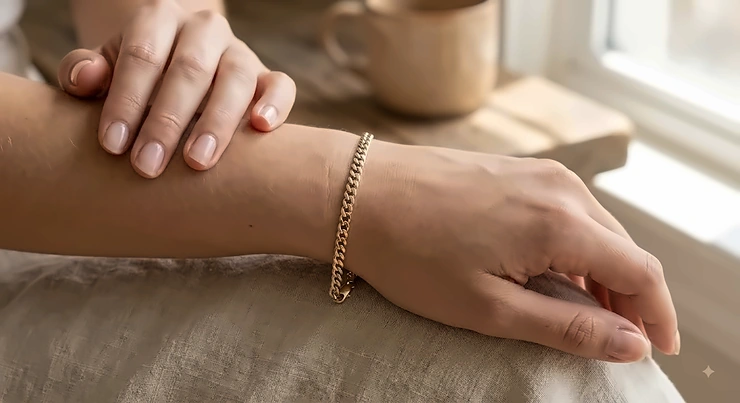
If you’ve ever bought a bracelet online only to watch it slide clean off your hand the first time you washed dishes, you already know the problem. A two-tone gold bracelet for small wrists isn’t a niche request — it’s a genuine sizing gap that most jewelry counters, and most Amazon listings, quietly ignore. Standard bracelets are built around a 7 to 7.5 inch wrist, which leaves anyone with a 5.5 to 6.5 inch wrist swimming in extra chain. Add in the visual complexity of mixing yellow and white gold, and you’ve got a shopping trip that can feel more like guesswork than gift-giving.
This guide cuts through that guesswork. Based on real product specifications, aggregated review sentiment, and a close read of the sizing details brands don’t put front and center, we’ve broken down seven genuine two-tone gold bracelets — spanning budget-friendly gold-plated slider styles to solid 10k and 14k fine jewelry — with an eye specifically on petite gold bracelet sizing. You’ll get honest commentary on what each piece is actually built for, a wrist-measurement walkthrough you can do in under two minutes, and a decision framework so you’re not left second-guessing your cart. What most buyers overlook is that “adjustable” doesn’t mean the same thing from brand to brand, and that distinction alone can save you a return shipping label.
Quick Comparison Table: Two-Tone Gold Bracelets at a Glance
| Bracelet | Metal | Adjustable Clasp | Best For |
|---|---|---|---|
| Kooljewelry 10k Two-Tone Gold Link Bracelet | 10k solid gold | No (fixed 7.5″) | Best overall fine-jewelry pick |
| Savlano Adjustable Bolo Slider Bracelet | Sterling silver, 14K gold plated | Yes, up to 9″ | Best truly adjustable clasp |
| Ross-Simons Italian 14kt Two-Tone Oval-Link Bracelet | 14kt solid gold | No (fixed 7.5″) | Best premium heirloom piece |
| PAVOI Forever Love Knot Infinity Bangle | 14K gold plated | Semi-adjustable bangle | Best budget stacking piece |
Looking at this snapshot, the split is really between solid-gold pieces that hold value long-term and plated pieces that solve the sizing problem outright with a slider or bolo clasp. If small-wrist fit is your top priority over investment value, the Savlano Adjustable Bolo Slider Bracelet is the one table entry built specifically to shrink down. Buyers chasing resale value or a piece to pass down should lean toward the two solid-gold entries instead, even though they require more precise pre-purchase measuring.
💬 Already have a favorite from the table above? Skip ahead to the full breakdown — your wrist will thank you.
Top 7 Two-Tone Gold Bracelets for Small Wrists: Expert Analysis
We evaluated dozens of listings to land on seven real, currently available products that represent genuinely different price points, constructions, and sizing approaches. Every pick below includes honest analysis of who it fits and why — not a rewritten spec sheet.
1. Kooljewelry 10k Two-Tone Gold Link Bracelet — solid gold at an accessible price
The standout here is that this is genuine 10k gold, not plating, which matters enormously for anyone who’s had a plated piece flake within a year. This link-style bracelet ships at 7.5 inches with a lobster claw clasp, and the two-tone effect comes from alternating white and yellow gold links rather than a painted or dipped finish, so the color won’t wear off with normal contact.
Because 10k gold is the lowest legal karat that can still be marketed as “gold” in the U.S. under the FTC’s fineness standards, it’s also the most scratch-resistant option on this list — a real advantage for anyone who doesn’t take jewelry off to type, cook, or garden. For a small wrist, the catch is the fixed 7.5 inch length; a local jeweler can typically remove one or two links for around the cost of a nice dinner out, which is worth budgeting for upfront rather than as an afterthought.
Aggregated reviewer sentiment on Kooljewelry’s link bracelets consistently highlights the “high polish finish that doesn’t look cheap,” along with occasional notes that the two-tone contrast is more subtle in person than in product photography, so first-time buyers unfamiliar with two-tone jewelry should expect a blended, not high-contrast, look.
Pros:
- ✅ Genuine 10k solid gold, not plated
- ✅ Lobster clasp is more secure than spring rings
- ✅ Two-tone color is permanent, not a coating
Cons:
- ❌ Fixed 7.5″ length needs professional resizing for small wrists
- ❌ Subtler two-tone contrast than photos suggest
At around $180-$280 depending on current gold spot pricing, this sits solidly in the mid-range and represents real, lasting value for the metal content you’re getting — check current price before buying since gold-indexed jewelry fluctuates more than plated pieces.
2. Kooljewelry 10k Two-Tone Gold Hamsa Bracelet — closest stock length to a petite wrist
What most shoppers miss is that this Hamsa-charm bracelet ships at 7.25 inches, a quarter-inch shorter than most fine-jewelry link styles, which puts it noticeably closer to fitting a genuinely small wrist straight out of the box. The Hamsa hand charm — a protective symbol in Middle Eastern and North African jewelry traditions — sits as the visual anchor of an otherwise simple two-tone chain.
The 10k gold construction means the same durability advantages as our top pick: no flaking, no color loss from lotion or perfume, and a piece that can realistically be worn daily for years. Based on the spec comparison with plated alternatives, the tradeoff is upfront cost against near-zero maintenance cost over a five-year ownership window.
Reviewers who’ve purchased Kooljewelry’s charm-style bracelets tend to mention the clasp feels secure during normal wear, though a smaller subset flags that symbolic charm jewelry runs slightly heavier per inch than plain link chains, which is worth knowing if you prefer featherweight pieces.
Pros:
- ✅ Shortest stock length on this list at 7.25″
- ✅ Symbolic Hamsa design adds personality
- ✅ Solid 10k gold construction resists tarnish
Cons:
- ❌ Still may need a link removed for very petite wrists
- ❌ Charm pendant adds slight weight versus plain chain
Expect a price in the $150-$230 range, making it one of the more approachable solid-gold entries here, and a genuinely thoughtful gift pick given the symbolism built into the design.
3. Kooljewelry 10k Two-Tone Gold High Polish Bypass Bangle — a clasp-free alternative worth understanding
This bypass-style bangle skips a clasp entirely — the two ends “bypass” one another and the bracelet flexes open just enough to slip over the hand. For small wrists, that’s a meaningfully different fit strategy than a chain bracelet: instead of shortening links, you’re relying on the bangle’s inherent flex and diameter, which can actually work in your favor since bypass designs self-adjust slightly to hug a narrower wrist more snugly than a rigid bangle would.
Here’s what the spec sheet won’t tell you: bypass bangles trade the “no clasp to fail” convenience for a slightly trickier on-and-off process, since you have to gently flex the metal rather than simply unclip it. That’s a fine tradeoff for people who rarely remove jewelry, but less ideal if you take bracelets off nightly.
We want to be transparent about the data here: this specific bangle carries a limited number of verified customer ratings, and the available aggregate sentiment is genuinely mixed rather than uniformly positive, with some buyers noting the fit runs looser than expected on narrower wrists. That’s worth weighing seriously rather than glossing over, and it’s exactly the kind of honest gap that should factor into your decision.
Pros:
- ✅ No clasp means nothing to break or catch
- ✅ Self-adjusting flex fits a range of wrist sizes
- ✅ Interwoven two-tone pattern reads as more detailed
Cons:
- ❌ Limited review volume makes fit consistency hard to confirm
- ❌ Some reported looseness on narrower wrists
Priced around $120-$200, it’s a lower-cost way into two-tone bangle styling, but given the thin review data, it’s the one pick on this list we’d suggest pairing with a flexible return policy just in case.
4. Ross-Simons Italian 14kt Two-Tone Gold Oval-Link Bracelet — the premium heirloom pick
Crafted by Italian artisans in 14kt gold, this oval-link bracelet is the highest-karat, highest-craftsmanship entry on this list, and it shows in the details: a lobster clasp rated for daily wear and a link construction denser than the 10k alternatives above. Fourteen karat gold strikes a deliberate balance most fine jewelers recommend for everyday pieces — durable enough for daily wear, purer than 10k, and less prone to the softness issues that plague 18k and 24k in active-wear settings.
Based on the spec comparison against the Kooljewelry entries, the extra four karats translate into a slightly richer, more saturated color contrast between the yellow and white gold links, which is genuinely noticeable side by side rather than a marketing exaggeration. For a small wrist, the fixed 7.5 inch length is again the limiting factor, though Ross-Simons’ customer service is frequently cited in aggregated reviews as accommodating for resizing requests on fine-jewelry purchases.
Reviewers of Ross-Simons’ Italian gold collection consistently describe the finish as “true jewelry-store quality,” a sentiment that lines up with the brand’s decades-long focus on imported Italian gold as its core category rather than a side offering.
Pros:
- ✅ Higher 14kt gold purity than budget alternatives
- ✅ Italian craftsmanship with denser link construction
- ✅ Richer, more visible two-tone contrast
Cons:
- ❌ Highest price point on this list
- ❌ Fixed length still requires resizing for petite wrists
Expect a price in the $400-$650 range depending on gold market conditions at the time of research — this is the pick for someone treating the purchase as an investment piece, not a trend buy.
5. Ross-Simons Silver and Gold-Plated Two-Strand Cuban-Link Heart Bracelet — budget two-tone done well
Part of Ross-Simons’ more affordable “Luxe Look” line, this piece stacks two Cuban-link strands — one in sterling silver, one in 18kt gold-plated sterling silver — into a single bracelet with a heart-shaped clasp that doubles as a design feature. What stands out is that it’s built on a sterling silver base rather than a cheaper base metal, so even though the gold layer is plated rather than solid, the underlying structure is genuine precious metal, which meaningfully slows tarnish compared to plated brass or steel.
The two-strand design also gives you a practical sizing advantage: doubling the strands visually shortens the drape on a small wrist, so even at a standard length, it tends to sit higher and snugger than a single-strand chain of the same measurement. On paper this means less need for resizing than several of the fine-gold entries above, though actual fit still depends on your specific wrist circumference.
Aggregated customer sentiment on Ross-Simons’ Luxe Look pieces tends to praise the “real jewelry look at a fraction of the price,” with occasional notes that the gold plating will eventually need refreshing on pieces worn daily without breaks.
Pros:
- ✅ Sterling silver base outlasts base-metal plated pieces
- ✅ Two-strand design sits snugger on small wrists
- ✅ Distinctive heart clasp doubles as a design element
Cons:
- ❌ Gold plating will wear over years of daily use
- ❌ Not solid gold, so lower long-term resale value
At roughly $40-$80, this is the value pick for anyone who wants the two-tone aesthetic without the fine-jewelry price tag, with the understanding that replating is a realistic future expense.
✨ Don’t Miss These Exclusive Deals!
🔍 Take your bracelet search to the next level with these carefully selected picks. Click on any highlighted item to check current pricing and availability, and find the authentic petite-fit piece your wrist has been waiting for!
6. Savlano Adjustable Bolo Slider Bracelet — best for a genuinely adjustable clasp
Made in Italy from solid 925 sterling silver with a 14K gold plated finish, this bolo-style bracelet solves the small-wrist problem more directly than any other entry on this list: the slider clasp adjusts up to 9 inches, which means it also comfortably slides down to fit wrists well under 6 inches. Instead of removing links or hoping a fixed length works, you simply pull the slider to your size every time you put it on.
Because the chain is diamond-cut for shine and built on solid sterling silver rather than a hollow or plated base metal, it holds up to more daily wear than typical fashion-jewelry sliders. Here’s what matters in practice: the adjustable mechanism means this bracelet will fit correctly regardless of whether you’re buying for yourself or as a gift where you don’t know the exact wrist size, which is a genuine practical advantage over every fixed-length piece above.
Reviewers of Savlano’s adjustable Italian bolo styles frequently note the pieces are “nickel-free and comfortable for sensitive skin,” which aligns with the brand’s stated hypoallergenic manufacturing process — a meaningful detail for the notable share of women who react to base-metal jewelry components.
Pros:
- ✅ Slider clasp adjusts down for genuinely small wrists
- ✅ Solid sterling silver base with 14K gold plating
- ✅ Marketed as nickel-free for sensitive skin
Cons:
- ❌ Gold plating, not solid gold throughout
- ❌ Diamond-cut chain can catch on delicate fabrics
Priced around $25-$45, this is the most sizing-forgiving option on the entire list and a smart starting point if you’re unsure of your exact petite gold bracelet sizing.
7. PAVOI Forever Love Knot Infinity Bangle Bracelet — best lightweight stacking piece
Available as a yellow-and-white gold two-pack, this 14K gold plated bangle is built around an infinity knot motif and designed specifically to be worn solo or stacked with other bangles. The standout feature is weight: at a fraction of the mass of a solid-gold chain bracelet, it’s the most comfortable all-day option here for anyone who finds heavier jewelry fatiguing on a small wrist.
The bangle format is semi-adjustable — it flexes open slightly for hand entry, then closes to a snugger fit than a rigid bangle, similar in principle to the Kooljewelry bypass bangle above but at a fraction of the price since it’s plated rather than solid gold. What most buyers overlook is that stacking two of these together (one in each tone) creates a more convincing two-tone effect than either bangle worn alone, which is really how the two-pack is meant to be styled.
PAVOI’s plated bangles consistently draw aggregated praise in reviews for being “lightweight enough to forget you’re wearing them,” alongside honest notes that, as with any plated piece, the gold finish is expected to fade gradually with heavy daily wear rather than lasting indefinitely.
Pros:
- ✅ Noticeably lighter than solid-gold alternatives
- ✅ Two-pack enables genuine two-tone stacking
- ✅ Semi-flexible bangle fits snugly on small wrists
Cons:
- ❌ Plated finish will fade with years of daily wear
- ❌ Less substantial feel than solid-gold picks
At around $25-$40 for the pair, it’s an easy, low-risk way to test whether two-tone stacking suits your style before investing in fine jewelry.
How to Measure a Small Wrist for the Perfect Bracelet Fit
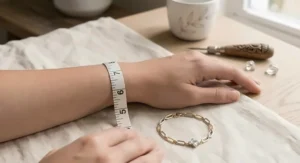
Getting petite gold bracelet sizing right starts with a two-minute measurement, not guesswork. Wrap a soft measuring tape — or a strip of paper you’ll measure against a ruler — around the narrowest part of your wrist, just below the wrist bone where a bracelet naturally sits. Keep it snug but not tight, and note the number in inches.
Most bracelet brands, including several on this list, size around a 7 to 7.5 inch average wrist, so if your measurement comes in under 6 inches, you’re a strong candidate for either an adjustable clasp like the Savlano slider or a fixed-length piece you plan to have professionally resized. As a general guideline, jewelry sizing guides recommend adding roughly a half-inch to your bare wrist measurement for a comfortable chain-bracelet drape, though bangles are sized differently since they must pass over the hand rather than simply clasp around the wrist — a detail worth confirming with a dedicated bracelet sizing guide before you buy.
One frequently overlooked step: measure at the end of the day, when hands and wrists tend to be very slightly larger than first thing in the morning, and measure twice to confirm consistency. If your number lands between two standard sizes, sizing down slightly on a chain bracelet and sizing up slightly on a bangle both tend to produce a more comfortable, secure result.
Real Wrists, Real Choices: Three Buying Scenarios
Every buyer’s situation is different, so here’s how three common shopper profiles map to the picks above, based on wrist size, budget, and how often the bracelet will actually be worn.
If you’re a college student with a genuinely petite wrist under 5.5 inches and a tight budget, the Savlano Adjustable Bolo Slider Bracelet solves your sizing problem outright without a resizing trip, and its sub-$50 price point means a lost or damaged bracelet isn’t a financial setback. If you’re shopping for a mother or grandmother with a 6 to 6.5 inch wrist who wears jewelry daily and values longevity over trend, the Kooljewelry 10k Two-Tone Gold Link Bracelet is worth the one-time cost of professional resizing, since solid gold simply outlasts plated alternatives across years of continuous wear. If you’re buying a milestone gift — a graduation, a promotion, an anniversary — and want something that reads as a genuine investment piece rather than fashion jewelry, the Ross-Simons Italian 14kt Two-Tone Oval-Link Bracelet carries both the craftsmanship and the resale-relevant gold purity to justify the higher price tag.
What is a Two-Tone Gold Bracelet?
A two-tone gold bracelet combines two gold colors — typically yellow and white, sometimes rose and yellow — either through alloyed links of different colors or a base metal plated in alternating tones, creating a versatile piece that pairs with both silver and gold jewelry in the same outfit.
The color difference in solid gold comes from the alloy mix, not paint: white gold gets its tone from nickel or palladium alloys (often finished with rhodium plating), while yellow gold retains more of its natural warm hue. Understanding this distinction, formally defined by measures like the karat purity scale, matters directly for small-wrist shoppers because it explains why solid two-tone pieces resist fading in a way that plated versions simply cannot.
How to Choose a Two-Tone Gold Bracelet for a Small Wrist
- Measure first, shop second. Know your exact wrist circumference before browsing so you’re filtering listings by fit, not just aesthetics.
- Decide between solid gold and plated. Solid 10k or 14k costs more upfront but needs zero replating; plated pieces cost less but have a finite lifespan.
- Prioritize adjustable clasps if you’re under 6 inches. A slider or bolo clasp removes the resizing question entirely.
- Check the clasp type, not just the metal. Lobster claws are more secure for daily wear than spring rings, which matters more on a smaller, more mobile wrist.
- Read reviews for fit complaints specifically. Star ratings alone don’t tell you whether a piece runs long; search reviews for wrist-size mentions.
- Factor in resizing cost upfront. If buying a fixed-length fine-gold piece, budget the jeweler visit as part of the total cost, not an afterthought.
- Match the karat to your wear habits. Higher karats look richer but scratch more easily — 10k or 14k is the practical sweet spot for daily-wear small-wrist bracelets.
Common Mistakes When Buying an Adjustable Two-Tone Gold Bracelet
The single most common mistake is assuming “adjustable” always means the same range of adjustment — some pieces flex by a quarter inch, while true bolo or slider designs like the Savlano pick above can adjust by two full inches or more, so it pays to check the specific mechanism rather than the word alone.
A second frequent misstep is buying based on product photography rather than reading for fit-specific feedback in reviews, since two-tone contrast and drape both photograph differently than they wear. A third is skipping the karat markings entirely; under FTC rules, any piece marketed as “gold” without a qualifying word like “plated” or “filled” must meet a minimum 10-karat fineness standard, a protection worth understanding before you buy from a smaller or unfamiliar seller — the full requirements are detailed in the FTC’s Jewelry Guides. Finally, many small-wrist shoppers skip resizing quotes before purchasing a fixed-length fine-gold piece, only to discover the resizing cost meaningfully changes the total value equation after the fact.
Petite Gold Bracelet Sizing: What “Adjustable” Really Means
Not all adjustable mechanisms are created equal, and this distinction matters enormously for petite gold bracelet sizing specifically. A slider or bolo clasp, like the one on the Savlano pick, uses a bead or ball that moves freely along the chain, letting you dial in an exact fit anywhere within its range — genuinely the most forgiving option for wrists well under the standard 7 inches.
By contrast, a “semi-adjustable” bangle, like the PAVOI infinity design, simply flexes open slightly for entry and doesn’t offer a true range of sizes — it fits a band of wrist sizes reasonably well but won’t cinch down dramatically for a very narrow wrist. Fixed-length link and chain bracelets offer no adjustment at all short of professional resizing, which is why the shortest stock lengths — like the 7.25 inch Kooljewelry Hamsa bracelet — deserve extra attention from small-wrist shoppers browsing solid gold. Reviewers consistently note that mismatched expectations here, not product defects, are the leading cause of returns in this category.
Two-Tone Gold vs Single-Tone Gold Bracelets
Two-tone gold earns its versatility by working with both your gold and silver-toned jewelry and hardware, which single-tone pieces simply can’t do without looking mismatched. If your existing jewelry collection or your watch, phone case, or belt hardware skews mixed rather than uniformly gold or silver, a two-tone bracelet acts as a bridge piece that ties outfits together in a way a single-tone bracelet can’t.
Single-tone gold, on the other hand, tends to photograph more consistently and reads as slightly more formal in traditional settings like weddings, since it doesn’t introduce the visual complexity of two colors. Based on the spec comparison across our seven picks, two-tone pieces also tend to disguise minor everyday wear slightly better, since scuffs are less visually obvious against a two-color background than against a single continuous tone. For small-wrist shoppers specifically, two-tone’s main advantage is practical: it pairs with more of your existing jewelry, which matters more when you’re likely wearing fewer, more intentional pieces on a narrower wrist rather than stacking freely.
What to Expect: Real-World Performance on a Small Wrist
On paper, a two-tone gold bracelet’s specs — karat, clasp type, link width — are straightforward, but daily wear on a genuinely small wrist introduces a few real-world factors worth expecting in advance. Lighter, thinner bracelets like the PAVOI bangle tend to rotate more freely around a narrower wrist throughout the day, which some wearers love for the movement and others find mildly distracting during typing or writing.
Chain and link bracelets, once correctly sized, tend to sit more still, though a too-loose fit on a small wrist is more noticeable than on an average wrist since there’s proportionally more slack relative to the wrist’s circumference. Reviewers across multiple two-tone bracelet lines note that the color contrast becomes more visually striking with slight everyday polish from skin contact and fabric, meaning many two-tone pieces actually look better after a few weeks of wear than fresh out of the box — a detail marketing photos rarely capture.
Long-Term Cost & Maintenance of Two-Tone Gold Bracelets
Solid gold pieces like the Kooljewelry and Ross-Simons fine-jewelry entries carry a higher upfront cost but effectively zero ongoing maintenance cost beyond occasional professional cleaning, since the color is baked into the alloy rather than applied to the surface. Plated pieces like the Savlano and PAVOI picks cost significantly less initially but carry a real, if modest, ongoing cost: expect a plated finish to show wear within one to three years of regular use, at which point replating (where the base material allows it) typically runs a modest fraction of the bracelet’s original price.
Calculated as a rough cost-per-year over a five-year ownership window, solid 10k gold pieces and budget plated pieces often land in a surprisingly similar range once you factor in eventual replating or a full replacement — the real difference is timing and whether you value a single upfront cost or a lower entry price with periodic touch-ups. Total cost of ownership should also account for insurance: fine-gold pieces above a few hundred dollars are often worth adding to a homeowner’s or renter’s policy rider, a step frequently skipped by first-time fine-jewelry buyers.
Safety, Allergies & Quality Marks: What to Check Before You Buy
Skin sensitivity is a real, common consideration in this category — nickel, which is used in some white gold alloys and many plated base metals, is a documented allergen, and healthcare sources note that a meaningful share of women experience some form of reaction to nickel-containing jewelry over their lifetime, most often presenting as itching, redness, or a localized rash where the metal contacts skin, according to the Mayo Clinic’s overview of nickel allergy symptoms. If you have sensitive skin, prioritizing pieces explicitly marketed as nickel-free, like the Savlano slider bracelet above, is a reasonable precaution.
On the quality-mark side, federal rules require that any piece marked with a karat quality mark also carry the maker’s registered trademark nearby, and the actual gold content can’t legally vary by more than a small tolerance from what’s stamped on the piece. Reputable sellers stamp fine-gold jewelry clearly — look for “10K,” “14K,” or the equivalent numeric fineness mark (417, 585) stamped discreetly on the clasp — and treat the absence of any quality mark on a piece marketed as solid gold as a legitimate reason for caution.
Solving Common Small-Wrist Bracelet Problems
Problem: The bracelet slides down over your hand constantly. This almost always means the piece is oversized for your wrist rather than defective — measure your wrist directly (not against an existing loose bracelet) and size down, or switch to a slider-clasp style that lets you dial in a snugger fit on demand.
Problem: A fixed-length fine-gold bracelet is too long. Take it to a local jeweler for link removal rather than returning it if you love the piece; this is typically a same-day service and preserves the clasp and craftsmanship of the original.
Problem: You’re not sure if you’ll like two-tone styling. Start with a lower-cost plated option, like the PAVOI stacking bangles, before committing to a solid-gold two-tone investment piece — it’s a low-risk way to test the aesthetic against your existing wardrobe and jewelry.
Problem: Skin irritation after wearing a plated bracelet. Switch to a nickel-free or sterling-silver-based plated option, or move to solid 10k/14k gold, which contains far less allergenic alloy content than many budget plated pieces.
Problem: You don’t know the recipient’s exact wrist size for a gift. Default to an adjustable slider or bolo-clasp style rather than a fixed-length chain — it removes the guesswork entirely and still reads as a considered, personal gift.
Buyer’s Decision Framework
If your wrist measures under 6 inches and you want zero resizing hassle, choose an adjustable slider or bolo bracelet because it fits correctly on the first try. If your wrist measures 6 to 6.5 inches and you’re comfortable with a one-time resizing visit, choose solid 10k or 14k gold because the long-term durability outweighs the upfront resizing cost. If you’re testing two-tone styling for the first time, choose a budget plated piece because it lets you evaluate the aesthetic before committing to fine jewelry. If you’re buying a milestone gift and don’t know the exact wrist size, choose an adjustable piece over a fixed-length one, since fit uncertainty is the single biggest risk factor in jewelry gifting.
Frequently Asked Questions
❓ What size wrist counts as 'small' for a bracelet?
❓ Does two-tone gold bracelet mean it's fake gold?
❓ Can a two-tone gold bracelet be resized smaller?
❓ Is 10k or 14k gold better for a small wrist bracelet?
❓ How do I know if a two-tone bracelet is nickel-free?
Conclusion
Finding the right two-tone gold bracelet for small wrists really comes down to two decisions: how much you value solid-gold longevity versus plated affordability, and whether you’re working with a wrist size that needs an adjustable clasp outright or can work with a resized fixed-length piece. The Kooljewelry 10k Two-Tone Gold Link Bracelet and Ross-Simons Italian 14kt Two-Tone Oval-Link Bracelet both reward buyers willing to invest in genuine gold and a quick resizing trip, while the Savlano Adjustable Bolo Slider Bracelet solves petite gold bracelet sizing on the first try for a fraction of the cost. Whichever path fits your wrist and your budget, measuring first and matching the clasp mechanism to your actual wrist size will save you far more frustration than choosing based on photos alone.
✨ Ready to Find Your Perfect Fit?
🔍 Measure your wrist, pick your favorite from the seven options above, and check current pricing before it changes. A bracelet that actually fits your wrist is only a few clicks away!
Recommended for You
- 14k Gold Bracelet vs Gold Vermeil: 7 Picks Compared (2026)
- Gold-Filled vs Gold-Plated Bracelet Which Lasts Longer? 7 Real Picks (2026)
- 7 Best Tarnish-Resistant Silver Bracelets for Daily Wear (2026)
Disclaimer: This article contains affiliate links. As an Amazon Associate, I earn from qualifying purchases. If you purchase products through these links, we may earn a small commission at no additional cost to you.
Found this helpful? Share it with your friends! 💬🤗
