
In This Article
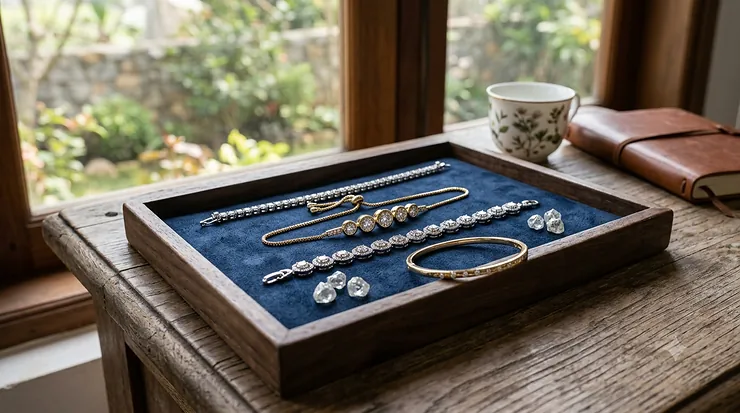
Somewhere between the last frost of March and the first real warmth of spring, a whole month of birthdays gets to claim the flashiest gem on the periodic table. If you were born in April — or you’re shopping for someone who was — you already know the drill: april birthstone diamond bracelets aren’t just another jewelry category, they’re basically the birthstone lottery jackpot. Sapphire people get a pretty blue. Amethyst people get a moody purple. April people get diamond, the hardest natural substance on Earth and the one gem every other gem gets compared to.
That’s a nice bit of trivia, but it doesn’t help you actually pick one. Walk into any search bar and you’ll hit a wall of tennis bracelets, diamond accent bracelets, and vague “birthstone jewelry” listings that all sort of blur together after the tenth tab. So here’s what this guide does differently: real products, real specs, and honest analysis of what you’re actually paying for — no invented reviews, no fantasy price tags, just the stuff you’d want a knowledgeable friend to tell you before you swipe your card.
<span style=”display:none”>diamond bracelet birthstone</span>What is an april birthstone diamond bracelet? It’s a bracelet — usually a tennis-style line of stones, a charm-and-bead design, or a diamond-accented chain — built specifically around diamond, April’s assigned birthstone, either as the sole stone or paired with sterling silver, white gold, or yellow gold settings. According to the Gemological Institute of America, diamond has been treasured since it was first traded out of India as early as the fourth century BCE, long before it was formally named April’s birthstone. We’ll compare seven real options across every price tier and give you a framework for picking the right one without needing a gemology degree.
Quick Comparison Table: April Birthstone Diamond Bracelets at a Glance
| Bracelet | Stone Type | Metal | Best For |
|---|---|---|---|
| Dazzlingrock Collection 0.50 cttw Tennis Bracelet | Natural diamond | Sterling silver | Budget-conscious first buyers |
| KATARINA Diamond Infinity Bracelet (1/20 cttw) | Natural diamond accent | Sterling silver | Everyday minimalist wear |
| PANDORA April Birthstone Dangle Charm Set | Lab-created stone | Sterling silver | Charm-bracelet collectors |
| Pompeii3 3 ct T.W. Tennis Bracelet | Natural diamond | 14K white gold | Classic milestone gift |
| VIR JEWELS 2 cttw Lab Grown Tennis Bracelet | Lab-grown diamond | 14K white gold | Big-look budget stretch |
| Houston Diamond District Lab Grown Tennis Bracelet | Lab-grown diamond | 14K white gold | Custom carat shoppers |
| Pompeii3 9 ct IGI Certified Tennis Bracelet | Lab-grown diamond | 14K white gold | Statement anniversary piece |
Look at that spread for a second, because it tells the real story before we even get into specifics: this category isn’t one product, it’s three different products wearing the same trench coat. You’ve got the accent-diamond pieces (Katarina, Pandora) that give you the birthstone symbolism without the tennis-bracelet price tag, the natural-diamond tennis bracelets (Dazzlingrock, Pompeii3’s 3-carat) that trade lower carat weight for mined-stone provenance, and the lab-grown heavy hitters (Vir Jewels, Houston Diamond District, Pompeii3’s 9-carat) that let you buy serious size without a serious mortgage. None of these is objectively “better” — they’re solving different problems, and knowing which problem you have is half the battle.
💬 Just one click — help others make better buying decisions too!😊
💬 Found a comparison that actually helped? Pin this guide before you forget which bracelet was which!😊
Top 7 April Birthstone Diamond Bracelets: Expert Analysis
1. Dazzlingrock Collection 0.50 Carat Diamond Tennis Bracelet — most accessible entry point into real diamonds
The Dazzlingrock name shows up constantly in “affordable real diamond” searches, and this 0.50 carat total weight tennis bracelet in sterling silver is exactly why: it’s a genuine mined-diamond piece that doesn’t require a four-figure budget.
Half a carat spread across a full line of round stones means each individual diamond is small — think melee-sized, not statement-sized — but set in a classic prong tennis-bracelet chain, sterling silver. That’s a meaningful distinction from lab-grown or accent pieces: every stone here came out of the ground, which matters to buyers who specifically want the “real thing” angle of the April birthstone story, even at modest carat weight.
Based on the spec comparison against other sub-$150 tennis bracelets, this one earns its spot by sticking to a simple formula instead of overpromising: sterling silver keeps costs down, natural diamonds keep authenticity up, and the tennis-bracelet silhouette keeps it flexible for daily wear or gifting. It’s a strong pick for a first diamond purchase, a graduation gift, or anyone testing whether they even like the tennis-bracelet look before committing to gold.
Reviewers consistently report that pieces in this Dazzlingrock tier deliver more sparkle than the price suggests, though — as with any sterling silver diamond bracelet — a few buyers note the clasp benefits from careful handling since silver settings are softer than gold or platinum.
Pros:
✅ Genuine natural diamonds, not simulants
✅ Sterling silver keeps the entry price low
✅ Classic tennis-bracelet design works for any occasion
Cons:
❌ Small individual stone size at 0.50 cttw total
❌ Silver setting needs gentler care than gold
Expect this bracelet to sit in the affordable range, generally under $150 depending on current promotions — always check current price, since sterling silver diamond jewelry fluctuates with silver spot pricing. For the money, it’s hard to beat as a low-risk way to own real diamonds.
2. KATARINA 1/20 cttw Diamond Infinity Bracelet — most symbolic design for everyday sentimentality
Katarina built an entire sub-category around small, meaningful diamond accents in sterling silver, and this infinity-symbol bracelet leans hard into that “wear your feelings” territory.
At 1/20 total carat weight, this isn’t a bracelet you buy for sparkle density — the diamonds here are accents, not the main event. What matters more is what the design says: an infinity motif in a 7-inch sterling silver chain with a lobster clasp, built to be worn daily rather than saved for special occasions.
Here’s what most buyers overlook about accent pieces like this: the low carat weight isn’t a flaw, it’s the point. Someone buying an April birthstone bracelet as a subtle, wearable-every-single-day piece has different priorities than someone buying a statement anniversary gift, and Katarina’s infinity design is explicitly built for the former. It photographs well layered with other delicate bracelets, which fits the current stacking-jewelry trend.
Aggregated feedback on this Katarina line skews toward buyers who describe it as a comfortable daily-wear piece rather than an occasion-only accessory, with the sentimental infinity symbolism cited as a common reason for purchase — often for anniversaries, graduations, or simply as a “just because” gift.
Pros:
✅ Meaningful infinity design beyond generic sparkle
✅ Genuine diamonds at an accessible price
✅ Comfortable for 24/7 wear
Cons:
❌ Very low carat weight for buyers wanting visible shine
❌ I1-I2 clarity means some inclusions are visible
Priced in the budget range — typically under $100 — this is less about the diamond and more about the message. If sentiment matters more than sparkle, it earns its spot on the list.
3. PANDORA April Birthstone Dangle Charm & Bracelet Set — best for charm-bracelet collectors who want the birthstone theme
Pandora didn’t build this piece around natural diamonds at all — it pairs a sterling silver snake-chain bracelet with a heart-shaped April birthstone dangle charm using a lab-created clear stone, and it’s worth including precisely because it represents the “birthstone as symbolism” end of this category.
The set gives you the base Pandora Moments bracelet plus one charm, which means it’s designed to grow: the bracelet features a heart-shaped clasp and April birthstone dangle charm, and it’s built to be styled with additional charms over time rather than worn as a finished, static piece.
What the spec sheet won’t tell you, but the Pandora charm-bracelet ecosystem makes obvious, is that you’re not really buying a diamond bracelet here — you’re buying an entry point into a modular jewelry system where the April birthstone charm is one piece of a bigger collection habit. That’s either exactly what a buyer wants (a growable, personalizable gift) or a mismatch if they specifically want carat weight and diamond fire.
Reviewers of Pandora’s birthstone charm sets frequently mention them as go-to birthday gifts precisely because the charm visually signals the birth month at a glance, which matters more to some buyers than diamond authenticity.
Pros:
✅ Officially licensed Pandora piece with authentic branding
✅ Designed to expand with additional charms later
✅ Clear visual birthstone symbolism, easy gift explanation
Cons:
❌ Uses a lab-created clear stone, not a mined or lab-grown diamond
❌ Bracelet alone looks sparse without additional charms
This set typically falls in the $50-$100 range depending on current Pandora promotions. It’s the right call for someone who wants the April birthstone story told clearly, not necessarily a diamond investment piece.
4. Pompeii3 3 ct T.W. Round Diamond Tennis Bracelet, 14K White Gold — best all-around natural diamond tennis bracelet
This is the bracelet most people picture when they hear “diamond tennis bracelet”: a full line of round natural diamonds totaling 3 carats, prong-set in 14K white gold, 7 inches long.
Three carats spread across a 7-inch line means the individual stones sit in a comfortable middle ground — visible sparkle without moving into “obviously oversized for daily wear” territory. Solid 14K white gold also matters more than it sounds: unlike gold-plated alternatives, the color and shine don’t wear off with repeated wear, washing, or years on a jewelry rotation.
Based on the spec comparison against Pompeii3’s own lab-grown lines, the natural-diamond version at this carat weight sits at a genuine premium, and that premium buys provenance — mined stones, not laboratory-created ones — which some buyers specifically want for anniversary or milestone gifts tied to permanence and tradition. Pompeii3 positions itself around gemology credentials and decades in the diamond retail business, which lines up with the level of craftsmanship this piece is built to.
A common theme in aggregated feedback on Pompeii3’s natural-diamond tennis bracelets is praise for the secure double-lock clasp, a detail that matters enormously for a bracelet meant to be worn regularly rather than displayed in a box.
Pros:
✅ Natural mined diamonds at a substantial 3 ct total weight
✅ Solid 14K white gold, not plated
✅ Double-lock clasp built for daily security
Cons:
❌ Significant price jump versus lab-grown equivalents
❌ White gold requires occasional rhodium replating over years
Expect this piece in the $2,000-$4,000 range depending on color and clarity grade selected — always check current price, since natural diamond tennis bracelets track market fluctuations closely. This is the milestone-gift pick: engagement, major anniversary, or a genuinely special April birthday.
5. VIR JEWELS 2 cttw Lab Grown Diamond Tennis Bracelet, 14K White Gold — best value-to-size ratio
Vir Jewels built its brand around making lab-grown diamonds accessible, and this 2 carat total weight tennis bracelet in solid 14K white gold is a clean demonstration of why lab-grown has reshaped this entire category.
Two carats in a tennis-bracelet line delivers noticeably more visual presence than the sub-1-carat accent pieces on this list, and because the diamonds are lab-grown rather than mined, that carat weight comes at a fraction of what a natural-diamond equivalent would cost. Lab-grown diamonds have the same physical and chemical properties as natural diamonds, so the difference is entirely about origin, not appearance or durability.
Here’s what most buyers overlook about lab-grown tennis bracelets in this carat range: you’re not compromising on the diamond itself, you’re compromising on the story of where it came from. For anyone whose priority is “I want it to look like a real diamond tennis bracelet without the natural-diamond price,” this is close to the sweet spot on the market right now — real diamond hardness and sparkle, dramatically lower cost per carat.
Reviewers of Vir Jewels’ tennis bracelet line commonly cite the visual impact relative to price as the primary reason for purchase, with the 14K gold setting cited as a meaningful step up from silver-based lab-grown alternatives.
Pros:
✅ 2 full carats in solid 14K white gold
✅ Lab-grown diamonds cost dramatically less per carat than natural
✅ Same hardness and optical properties as mined diamonds
Cons:
❌ FTC rules require clear “lab-grown” disclosure, and resale value differs from natural stones
❌ Some buyers still prefer natural stones for sentimental or investment reasons
This bracelet typically lands in the $600-$1,200 range — a fraction of what 2 carats of natural diamonds in the same setting would cost. For pure visual impact per dollar, it’s one of the strongest options here.
6. Houston Diamond District Lab Grown Diamond Classic Tennis Bracelet, 4-Prong — best for custom carat shoppers
Houston Diamond District distinguishes itself by offering this tennis bracelet across an unusually wide carat range — from roughly 2 carats up through 28 carats — in the same 4-prong setting, letting buyers dial in exactly how much sparkle they want.
That range matters more than it might seem. Most tennis bracelets lock you into one fixed carat weight, forcing a binary choice between “too subtle” and “way over budget.” A 4-prong setting also holds each stone more securely than a 3-prong equivalent, trading a slightly less minimalist look for extra security — a reasonable trade for a piece meant for daily wear.
What the spec sheet won’t tell you, but the sheer breadth of this product line suggests, is that Houston Diamond District is optimizing for buyers who already know roughly what they want to spend and are shopping by budget first, carat weight second. That’s a genuinely different shopping experience than fixed-carat competitors, and it’s worth it for anyone who finds themselves torn between two carat tiers elsewhere.
Aggregated review sentiment for this product line points to strong satisfaction with the 4-prong setting’s durability for everyday wear, alongside consistent praise for the ability to select carat weight and color/clarity combination independently.
Pros:
✅ Wide carat range lets buyers customize within one product line
✅ 4-prong setting adds extra security over 3-prong designs
✅ E-F color and VS2-SI1 clarity options available across tiers
Cons:
❌ Higher carat tiers require careful budget planning before browsing
❌ 4-prong setting is marginally less sleek than 3-prong alternatives
Price ranges vary enormously here depending on carat selection — from the low hundreds at entry carat weights into the thousands at the top end — so treat the listed range as a starting point and check current pricing for your specific carat choice.
7. Pompeii3 9 ct T.W. Round Lab Grown Diamond Tennis Bracelet, IGI Certified — best statement piece for major milestones
At the top of this list sits Pompeii3’s largest lab-grown offering: 9 carats total weight, round brilliant cut, prong-set in solid 14K white gold with a double lock clasp — and critically, IGI certified.
That certification is the detail worth dwelling on. All diamonds are prong set in solid 14k white gold with a double lock, and the IGI certificate is included, meaning an independent lab has verified the stones’ specifications rather than taking the seller’s word for it. At 9 carats, that kind of third-party documentation isn’t a nice-to-have, it’s essential — this is a five-figure-adjacent style of purchase even at lab-grown pricing, and paperwork protects the buyer on resale, insurance, and appraisal down the line.
On paper, this bracelet is built for exactly one kind of buyer: someone who wants maximum visual impact and wants it documented. Based on the spec comparison against the rest of this list, nothing else here comes close on raw carat weight, which makes it the natural pick for a major anniversary, a milestone birthday, or a self-purchase reward after a big life event.
Reviewers of high-carat IGI-certified lab-grown tennis bracelets in this tier frequently highlight the certification as the deciding factor over competitors, alongside consistent praise for how the F color, VS clarity grade translates into strong brilliance in person.
Pros:
✅ Substantial 9 ct total weight for maximum visual presence
✅ IGI certification documents color, clarity, and authenticity
✅ F color, VS clarity — a genuinely high quality grade
Cons:
❌ Even at lab-grown pricing, this is a major purchase
❌ Large carat tennis bracelets require a more deliberate insurance conversation
Expect this piece in the $3,000-$6,000 range depending on the current market and any active promotions — always confirm current pricing before buying at this carat level. For sheer statement-making sparkle backed by paperwork, it’s the top pick on this list.
Benefits vs. Traditional Alternatives
| Factor | Diamond Bracelet | Colored Gemstone Alternative (White Sapphire, CZ) |
|---|---|---|
| Hardness (Mohs scale) | 10 | 9 (sapphire) / 8.5 (CZ) |
| Traditional April symbolism | Official birthstone | Historical alternate |
| Typical price range | $50-$6,000+ | $15-$150 |
| Best For | Milestone gifts, daily-wear investment pieces | Budget-friendly birthstone lookalikes |
The hardness gap between diamond and its alternatives isn’t just trivia — it’s the practical reason diamond tennis bracelets hold up to decades of daily wear while cubic zirconia settings tend to dull or scratch faster. That said, white sapphire and white topaz are recognized alternatives for anyone who wants the April birthstone look without the diamond price tag, and there’s no dishonesty in choosing that route as long as the listing discloses the stone accurately. Buyers prioritizing symbolism and tradition over investment value may find a well-made CZ or sapphire piece perfectly satisfying for everyday wear.
Practical Usage Guide: Caring for Your Diamond Bracelet
Getting a diamond bracelet home is the easy part — keeping it sparkling for years is where most buyers drop the ball in the first 30 days. Start with the clasp: every time you take the bracelet off, check that the safety catch (if it has one) clicked fully shut, because a half-latched clasp is the single most common cause of a lost tennis bracelet. Diamond, rated 10 on the Mohs hardness scale, is usually durable enough to be placed in an ultrasonic cleaner, though bracelets with treated stones or particularly delicate settings do better with a gentler approach.
For routine care, warm water, a drop of mild dish soap, and a soft-bristled toothbrush handle 90% of the grime that dulls a diamond’s sparkle — buildup from lotion, soap residue, and everyday skin oil is the real enemy, not the diamond itself. Dry with a lint-free cloth and store the bracelet flat or hanging, never tossed loose into a drawer where it can tangle with other pieces or scratch softer jewelry. Set a recurring reminder every six months to have a jeweler check the prongs; a diamond can survive almost anything, but a worn prong that lets a stone slip loose is the actual risk over years of wear. Common first-30-day mistakes include sleeping or showering in the bracelet (soap film builds up fast) and skipping the initial professional inspection most retailers include free with purchase.
Real-World Scenario: Who Actually Buys Which April Birthstone Bracelet
Picture three different April shoppers browsing the same category. First, there’s the college student buying her roommate a birthday gift on a tight budget — she’s realistically looking at the Katarina infinity bracelet or the Dazzlingrock tennis bracelet, both under $150, both genuinely diamond, both appropriate for a 20-something’s everyday jewelry rotation.
Then there’s the husband shopping for a 10th anniversary gift, diamond being the traditional stone for that milestone. He’s got real budget flexibility and wants something his wife will wear constantly, which points toward the Pompeii3 3-carat natural tennis bracelet or, if he wants more visual size for the same spend, the Vir Jewels 2-carat lab-grown option — the honest trade-off between provenance and carat weight is exactly the conversation he needs to have with himself before buying.
Finally, there’s the self-purchaser celebrating a major promotion or milestone birthday who wants something unmistakably substantial. For her, the Pompeii3 9-carat IGI-certified piece or the top end of the Houston Diamond District range makes the most sense — she’s not choosing based on price sensitivity, she’s choosing based on documentation and carat weight, and both of those products deliver.
How to Choose an April Birthstone Diamond Bracelet
- Decide natural vs. lab-grown first. This single decision affects price more than any other factor — lab-grown diamonds typically cost 60-80% less per carat while sharing identical hardness and optical properties.
- Set a carat-weight range before browsing. Knowing whether you want a subtle 0.5 ct accent or a 3+ ct statement piece narrows the field immediately and prevents budget creep.
- Check the metal, not just the stone. Solid 14K gold outlasts gold-plated settings significantly; sterling silver is a reasonable budget choice but needs gentler care.
- Confirm certification on anything over 1 carat. IGI or GIA documentation protects you on appraisal, insurance, and resale — treat it as non-negotiable past a certain price point.
- Match clasp style to lifestyle. A double-lock clasp costs little extra and dramatically reduces the odds of losing the bracelet during active daily wear.
- Read aggregated review themes, not star ratings alone. Recurring complaints about clasps or sizing tell you more than an average rating number ever will.
- Budget for insurance on anything past roughly $1,000. A basic jewelry rider on homeowners or renters insurance is inexpensive relative to the replacement cost of a lost tennis bracelet.
Common Mistakes When Buying Diamond Bracelets
The most frequent mistake isn’t overspending — it’s buying based on a photo without checking the actual carat weight and clarity grade listed in the specifications, which can make a modest bracelet look far more substantial online than it does in person. A close second is skipping the clasp details entirely; buyers focus so heavily on the diamonds that they overlook whether the closure mechanism is actually secure enough for how they plan to wear the piece day to day.
Another common misstep is assuming “diamond” always means “natural diamond.” Per the FTC’s Jewelry Guides, sellers must clearly disclose lab-grown or simulated stones, but it’s still worth reading the listing closely rather than assuming based on price alone. Finally, plenty of buyers skip sizing entirely — tennis bracelets in particular need to fit snugly enough to stay centered on the wrist without sliding, and a bracelet that’s even half an inch too long dramatically increases the odds of snagging or loss.
Diamond Tennis Bracelets vs. Diamond Accent Bracelets
These two subcategories get lumped together constantly, but they solve different problems. A tennis bracelet is a continuous line of similarly sized diamonds running the full circumference of the wrist — the tennis bracelet was originally called an “eternity bracelet,” getting its current name during the 1987 U.S. Open when a champion’s diamond bracelet broke mid-match, and the style has carried that reputation for maximalist, continuous sparkle ever since. It’s built for visual impact and works best when carat weight and budget align comfortably.
A diamond accent bracelet, by contrast, uses diamonds as a smaller feature within a broader design — an infinity symbol, a heart charm, a chain link — rather than as the entire piece. Accent bracelets typically cost far less because total carat weight stays low, but they trade sparkle density for design flexibility and everyday subtlety. If the goal is announcing April birthstone status boldly, a tennis bracelet wins. If the goal is quiet, meaningful, wearable-with-anything jewelry, an accent bracelet is usually the smarter buy.
✨ Ready to Compare Real Options? ✨
🔍 Take your april birthstone diamond bracelets search to the next level by comparing carat weight, certification, and metal side by side. Click through to check current pricing and availability on any pick above — these details make all the difference in finding a piece your April birthday person will actually love!
Diamond Accent Bracelets for Every Budget
Diamond accent bracelets deserve their own spotlight because they’re the most misunderstood corner of this category — buyers often assume “accent” means “cheap” or “low quality,” when really it means “diamonds are a design element, not the entire budget.” The Katarina infinity bracelet on this list is a clean example: genuine natural diamonds, meaningful design, sterling silver setting, all at a price point that makes it approachable as a first diamond purchase or a thoughtful non-milestone gift.
The practical advantage of accent pieces is versatility. A tennis bracelet reads as a specific kind of statement jewelry — appropriate for some outfits and occasions, slightly much for others. A diamond accent bracelet, precisely because the sparkle is understated, works with a work blazer as easily as it works with a weekend outfit, which matters enormously if the buyer wants one piece that does double duty rather than an occasion-specific item that sits in a drawer most of the year.
Diamond Anniversary Jewelry: Why It’s Tied to April’s Birthstone
Diamond isn’t only the April birthstone — it’s also the gem given to celebrate 60th and 75th wedding anniversaries, a tradition the American Gem Society traces back through centuries of diamond symbolism, which creates a genuinely useful overlap for gift shoppers. If someone has an April birthday and an upcoming anniversary, a diamond bracelet does double symbolic duty in a way few other gifts can match.
This overlap also explains why diamond tennis bracelets specifically have become such popular anniversary gifts more broadly, not just at the traditional 60th and 75th milestones — a diamond tennis bracelet is frequently positioned as the ultimate luxury gift for a milestone birthstone occasion. For anniversary shoppers browsing this list, the Pompeii3 3-carat natural tennis bracelet carries the strongest traditional weight given its mined-diamond provenance, while the Vir Jewels or Houston Diamond District lab-grown options offer the same symbolic diamond-anniversary gesture at a more accessible price point for earlier anniversary years.
What to Expect: Real-World Performance
Specs on a page don’t tell you what a bracelet feels like on an actual wrist across an actual year of wear, so here’s the translation. A 0.50 cttw tennis bracelet like the Dazzlingrock reads as a fine, consistent sparkle line — noticeable up close, subtle from a few feet away. Step up to 2-3 carats and the sparkle becomes genuinely eye-catching under normal indoor lighting, the kind of piece people notice and comment on. At 9 carats, expect a bracelet that catches light constantly and reads as a clear statement piece in any setting, formal or casual.
Weight matters too, and it’s rarely discussed. Higher-carat tennis bracelets carry noticeably more physical heft on the wrist — not uncomfortable, but a real sensation that differs from a lightweight accent bracelet. Buyers upgrading from a thin sterling silver piece to a substantial gold tennis bracelet should expect an adjustment period of a few days before the added weight feels normal.
Diamond Bracelets for Different Buyer Types
Beginners buying their first piece of real diamond jewelry generally do best starting with a lower-carat, budget-friendly option like the Dazzlingrock or Katarina picks — enough to own genuine diamonds without the anxiety that comes with a five-figure-adjacent purchase.
Gift-givers on a deadline benefit most from Pandora’s charm set or a similarly recognizable branded piece, since brand recognition simplifies the buying decision and virtually guarantees a positive reaction even without deep jewelry knowledge.
Milestone shoppers — engagements, major anniversaries, big birthdays — should lean toward the certified, higher-carat options like Pompeii3’s 3-carat natural or 9-carat lab-grown pieces, where documentation and carat weight matter more than price sensitivity.
Value-focused buyers who want maximum visual size for the dollar are the clearest audience for lab-grown tennis bracelets like Vir Jewels or Houston Diamond District, where the carat-to-cost ratio simply outperforms natural-diamond equivalents.
Long-Term Cost & Maintenance
The sticker price is only the starting number. Budget roughly $50-$150 annually for professional cleaning and prong inspection on a gold tennis bracelet worn regularly — cheap insurance against the far larger cost of a lost stone. Insurance itself typically runs 1-2% of the appraised value per year through a jewelry rider, meaning a $3,000 bracelet costs roughly $30-$60 annually to insure, a cost worth weighing against the anxiety of wearing an uninsured piece daily.
Resale value differs meaningfully between natural and lab-grown stones — natural diamonds have historically held value better on the secondary market, though that gap has been narrowing as lab-grown supply has scaled. For buyers thinking of a diamond bracelet as part investment, part jewelry, that distinction is worth factoring into the natural-versus-lab-grown decision alongside upfront cost.
Features That Actually Matter (And Those That Don’t)
Certification matters — genuinely, not as marketing fluff. An IGI or GIA report on anything above roughly 1 carat total weight protects the buyer in ways a seller’s own description simply can’t. Clasp security matters just as much; a double-lock clasp is a small feature that dramatically reduces real-world loss risk. Metal purity — solid gold versus plated — matters for longevity, since plating wears thin with years of daily contact against skin and clothing.
What matters far less than marketing suggests: exact color grade differences within a narrow range (most people can’t distinguish F from H color with the naked eye), and brand name alone divorced from actual specs. A well-specified bracelet from a lesser-known seller like Houston Diamond District can outperform a big-name brand piece with weaker carat weight or clarity — the spec sheet, not the logo, should drive the decision.
Safety, Regulations & Compliance Guide
Under the FTC’s Guides for the Jewelry, Precious Metals, and Pewter Industries, any bracelet made with laboratory-created diamonds must clearly disclose that fact — terms like “laboratory-grown,” “laboratory-created,” or “[manufacturer name]-created” are the accepted disclosure language, positioned clearly and close to the word “diamond” itself, not buried in fine print or a separate education page. Sellers who fail to make that disclosure clearly and conspicuously are considered to be engaging in deceptive advertising under federal law, so a reputable listing should never leave a buyer guessing whether a stone is mined or grown.
This matters practically, not just legally: it directly affects resale value, insurance appraisal, and the honest expectations a buyer should carry into the purchase. Reading the full product title and description — not just the headline photo — is the simplest way to confirm exactly what’s being sold before adding it to a cart.
Buyer’s Decision Framework
If budget is under $200 and the goal is genuine diamonds, choose a sterling silver accent or entry tennis bracelet, because carat weight matters less than authenticity at this price point. If budget is $500-$1,500 and visual size matters most, choose a lab-grown tennis bracelet in the 1-2 carat range, because the cost-per-carat advantage is largest here. If the occasion is a major anniversary or milestone and documentation matters, choose a certified natural or lab-grown piece above 2 carats with IGI or GIA paperwork, because provenance and verification become essential at this spend level. If the recipient already collects charm bracelets, choose a themed charm addition over a standalone tennis bracelet, because it integrates into an existing collection rather than competing with it.
Frequently Asked Questions
❓ What is the birthstone for April?
❓ Are lab-grown diamonds real diamonds?
❓ How much does a diamond tennis bracelet typically cost?
❓ What carat weight is best for a diamond bracelet?
❓ Is diamond a good gift for an April birthday?
Conclusion
If there’s one takeaway from all seven of these picks, it’s that “diamond bracelet” isn’t a single purchase decision — it’s at least three different decisions stacked together: natural or lab-grown, accent or full tennis line, and budget or investment tier. The Dazzlingrock and Katarina pieces prove real diamonds don’t require a big budget. The Pandora set proves symbolism can matter more than carat weight. And the Pompeii3, Vir Jewels, and Houston Diamond District options show just how far lab-grown diamonds have pushed carat weight into reach for buyers who want serious sparkle without a serious price tag.
Whichever direction fits, the fundamentals stay the same: check the certification on anything substantial, confirm the clasp style matches how the piece will actually be worn, and always verify current pricing before buying, since diamond jewelry pricing shifts with market conditions. April birthstone diamond bracelets earn their reputation as one of the most versatile birthstone categories out there — there’s a genuinely well-made option here at nearly every price point.
Disclosure: This article contains affiliate links. As an Amazon Associate, I earn from qualifying purchases. If you purchase products through these links, we may earn a small commission at no additional cost to you.
Recommended for You
- 7 Best Aquamarine Birthstone Bracelets for March (2026)
- Amethyst Birthstone Bracelets for February: 7 Stunning Picks (2026)
- January Birthstone Bracelets Garnet: 7 Stunning Picks for 2026
✨ Found this helpful? Share it with your friends! 💬🤗
