
In This Article
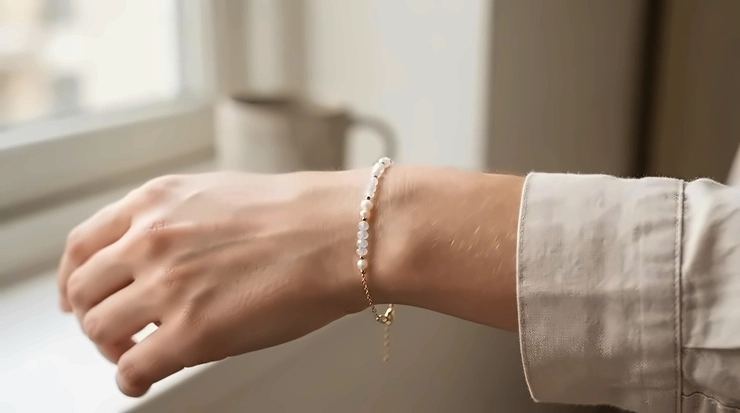
Picture the cuff of a little black dress, or a bare wrist reaching for an anniversary card. That’s the natural habitat of an akoya pearl bracelet — the jewelry equivalent of a crisp white shirt. Unshowy at a glance, genuinely hard to beat up close.
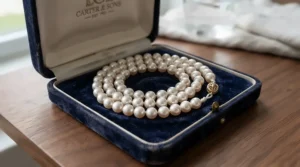
So what is an akoya pearl bracelet, exactly? It’s a strand of round, mirror-bright cultured pearls grown inside the small Pinctada fucata oyster, most often farmed off Japan’s southern coast, strung together and finished with a metal clasp, typically sized 6.5 to 8 inches for the wrist rather than the neckline.
I spent the better part of two weeks buried in spec sheets, grading guides, and review threads — including GIA’s own pearl value factors — so you don’t have to. Here’s the thing nobody tells you upfront: shopping for an akoya pearl bracelet is messier than the product photos suggest. “AAA” means something different depending on which seller printed it, “Japan-origin” gets used loosely by companies that source elsewhere, and the clasp — the one detail buried at the bottom of the listing — is usually what decides whether you actually enjoy wearing the thing three years from now.
That’s what this guide untangles. Below are seven real akoya pearl bracelets spanning entry-level to heirloom, what their specs actually mean once the box is open, and where the genuine trade-offs sit between them. Whether you’re outfitting a gift budget under $200 or considering a Hanadama-grade splurge, you’ll leave with a clearer picture than any single listing gives you.
Quick Comparison Table
If you’re short on time, here’s the condensed version. Full breakdowns, pros, cons, and honest commentary follow in the next section.
| Bracelet | Pearl Size | Clasp | Price Range | Best For |
|---|---|---|---|---|
| PremiumPearl White Japanese Akoya Bracelet | 6.5–7mm, AA+ | Sterling silver | Under $200 | First-time buyers, budget gifting |
| The Pearl Source 6.0–6.5mm AAA Akoya Bracelet | 6.0–6.5mm, AAA | 14K gold | $150–$300 range | Everyday elegance on a budget |
| Moon Label Japanese Akoya Bracelet | 6.5mm | Original safety clasp | $250–$400 range | Comfort-focused daily wear |
| The Pearl Source 7–7.5mm AAA Akoya Bracelet | 7.0–7.5mm, AAA | 14K gold | $300–$450 range | A statement without shouting |
| The Pearl Source Black Akoya Bracelet | 7.0–7.5mm, AAA | 14K white gold | $350–$500 range | Buyers who want color variety |
| The Pearl Source Hanadama Akoya Bracelet | 6.5–7mm, Hanadama | 18K gold | $1,000–$1,600 range | Certified top-tier luster |
| Mikimoto Akoya Cultured Pearl Bracelet | 6.5–7mm | 18K white gold | $3,000+ range | Heirloom-grade investment |
A pattern worth noticing: the price gap between “good” and “excellent” akoya is narrower than the gap between “excellent” and “Hanadama-certified.” Most of the jump from the PremiumPearl White Japanese Akoya Bracelet to the mid-tier The Pearl Source options buys you gold instead of silver and a tighter AAA grading. The much bigger jump to Mikimoto buys brand heritage, house-level quality control, and resale recognition — not necessarily pearls that look dramatically different to the naked eye.
💬 Just one click — help others make better buying decisions too!😊
Top 7 Akoya Pearl Bracelets: Expert Analysis
1. PremiumPearl White Japanese Akoya Cultured Pearl Bracelet — best entry point under $200
The PremiumPearl White Japanese Akoya Cultured Pearl Bracelet is the bracelet I’d point a first-time pearl buyer toward, and the sterling silver clasp is exactly why. Running 6.5–7mm in AA+ quality, the pearls are hand-selected and strung by USA-based jewelers who quality-check each strand before it ships, with a rhodium-plated sterling silver clasp instead of gold. Practically speaking, AA+ sits one notch below AAA: expect strong luster and a mostly round shape, with slightly more tolerance for minor surface characteristics than you’d get further up this list. That’s a reasonable trade for a lower price, not a red flag.
Based on the spec comparison against the gold-clasped options below, this is the bracelet for someone testing whether they even like wearing pearls daily, or shopping for a graduation or bridesmaid gift where budget matters more than provenance bragging rights. Reviewers of PremiumPearl’s akoya line consistently mention that the strand looks more expensive than its price suggests, and that the included gift box makes it presentation-ready without extra spending.
Pros:
- ✅ Genuine Japanese akoya pearls at an entry-level price
- ✅ Hypoallergenic sterling silver clasp, safe for sensitive skin
- ✅ Comes with a gift box and certificate of authenticity
Cons:
- ❌ AA+ grade allows more surface characteristics than AAA
- ❌ Silver clasp will need occasional polishing to stay bright
Priced generally under $200, this is the strongest value pick on this list if gold isn’t a requirement — check current price for exact availability by size.
2. The Pearl Source 14K Gold 6.0–6.5mm AAA Akoya Bracelet — best all-around value in gold
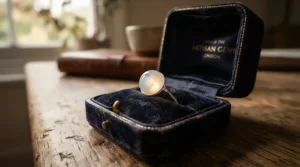
Step up to the The Pearl Source 14K Gold 6.0–6.5mm AAA Akoya Bracelet and the difference is immediate: a genuine 14K gold clasp and a full AAA grade, meaning 95%+ clean surfaces and noticeably sharper mirror-luster than AA+ pearls. The 6.0–6.5mm size is on the smaller end of the akoya range, which in practice reads as delicate and office-appropriate rather than bold.
What most buyers overlook about this size is that smaller akoya pearls are actually harder to farm consistently round than people assume — the oyster still needs the same multi-season nacre-building process regardless of final size, so you’re not paying less because the pearls are “unfinished.” The Pearl Source backs the piece with Jewelers of America membership and a 60-day return window, both of which matter more than marketing copy for a company you’re trusting with a gift purchase. Aggregated customer feedback on The Pearl Source’s akoya bracelets skews strongly positive, with recurring mentions of the pearls’ glow holding up well against a white gold or platinum ring worn alongside it, and of the piece being passed down as a family keepsake.
Pros:
- ✅ True AAA grading with a real 14K gold clasp
- ✅ Backed by a 60-day money-back guarantee
- ✅ Delicate size works for both formal and everyday wear
Cons:
- ❌ Smaller pearl size reads less dramatic than 7mm+
- ❌ Gold plating on the clasp box (not the pearls) can wear if snagged repeatedly
Expect this one in the $150–$300 range depending on current promotions — one of the better dollar-for-dollar picks if you want gold without the premium markup.
3. Moon Label Japanese 6.5mm Akoya Cultured Pearl Bracelet — most comfort-focused everyday clasp
The Moon Label Japanese 6.5mm Akoya Cultured Pearl Bracelet solves a problem most akoya bracelets don’t even acknowledge: cheap clasps that flip around and dig into your wrist mid-wear. Moon Label is the retail arm of Otsuki Pearl, a Japanese manufacturer with a claimed 30%-plus share of first-class akoya pearl handling worldwide, and it shows in the clasp engineering — a rounded, “won’t-look-awkward-facing-forward” design that’s genuinely rare at this price point.
Here’s what the spec sheet won’t tell you, but the product design communicates clearly: this bracelet was built by people who actually wear pearls daily, not just sell them. The 6.5mm size sits in the sweet spot between the delicate 6.0mm options and the bolder 7mm-plus strands, and the “twist to remove, snap to secure” mechanism is a meaningfully different everyday experience than fumbling with a traditional fishhook clasp one-handed. Because Moon Label ships primarily as an imported product, verified third-party review volume on U.S. retail platforms is thinner than for The Pearl Source, so weight your decision more heavily on the documented Japanese manufacturing pedigree than on a large review count.
Pros:
- ✅ Purpose-designed clasp stays comfortable facing forward
- ✅ Sourced from a major Japanese akoya pearl manufacturer
- ✅ Classic, understated design that layers well with other jewelry
Cons:
- ❌ Smaller U.S. review pool than domestic competitors
- ❌ Import shipping can extend delivery timelines
Typically priced in the $250–$400 range, this is the pick for someone who’s owned a fussy pearl bracelet before and wants the clasp fixed this time.
4. The Pearl Source 14K Gold 7.0–7.5mm AAA Akoya Bracelet — a statement without shouting
Bump up to 7.0–7.5mm pearls with the The Pearl Source 14K Gold 7.0–7.5mm AAA Akoya Bracelet and you’re in classic “mother’s day heirloom” territory — large enough to register from across a room, still restrained enough for a boardroom. The AAA grading here means the same 95%+ clean-surface standard as the 6mm version, just applied to a noticeably larger pearl, which is where nacre-thickness and shape consistency actually get harder to hold.
Based on the spec comparison, this size is the one jewelers most often recommend as a “first real pearl bracelet” purchase, because it photographs well and pairs naturally with the 7–8mm range most akoya pearl necklaces and stud earrings are sold in — meaning you can build a matching set without hunting for exact size parity. Reviewers frequently describe the piece as looking substantially more expensive than its actual price range, and several long-term owners report the pearls retaining their luster after years of rotation with everyday jewelry, provided they’re stored separately from harder gemstones that could scratch the nacre.
Pros:
- ✅ Larger 7–7.5mm size photographs and reads as a statement
- ✅ Matches common necklace and earring sizing for full sets
- ✅ Strong track record of luster retention in long-term reviews
Cons:
- ❌ Noticeably pricier than the 6mm version for the size jump
- ❌ Larger pearls show surface flaws more visibly if grading slips
Budget the $300–$450 range for this size — a reasonable middle ground between the entry-level options and the certified premium tier below.
5. The Pearl Source 14K White Gold Black Japanese Akoya Bracelet — most versatile color statement
Not every akoya buyer wants classic white, and the The Pearl Source 14K White Gold Black Japanese Akoya Bracelet is the honest answer for that crowd. At 7.0–7.5mm with AAA grading, the black color comes from a controlled treatment process applied to cultured pearls — a completely standard, disclosed practice in the pearl industry, and one the FTC specifically requires sellers to be upfront about (more on that in the regulations section below).
What most buyers overlook is that black akoya pearls tend to show off overtones — subtle green, blue, or aubergine flashes across the surface — more dramatically than white pearls show their rose or silver overtones, simply because the darker base color creates more visual contrast. That makes surface quality and luster even more important to check closely on a black strand, since flaws are marginally easier to spot against the darker background. Paired with a 14K white gold clasp rather than yellow, this bracelet reads modern rather than vintage, and it’s a genuinely underused option for evening wear or for buyers who already own several white pearl pieces and want variety.
Pros:
- ✅ Distinctive black color for buyers who want variety
- ✅ Overtones show more vividly against the dark base color
- ✅ White gold clasp gives it a contemporary finish
Cons:
- ❌ Treated color requires the same disclosure care any seller should give
- ❌ Smaller color-matched niche means fewer sets to pair it with
Expect the $350–$500 range for this piece — a smart pick if “different from everyone else’s pearls” is part of the appeal.
6. The Pearl Source 18K Gold 6.5–7mm Hanadama Akoya Bracelet — highest certified luster tier
This is where “trust me, it’s AAA” stops being enough, and certification takes over. The The Pearl Source 18K Gold 6.5–7mm Hanadama Akoya Bracelet carries the Hanadama designation, a grade issued not by the retailer but by Japan’s Pearl Science Laboratory — an independent lab that examines submitted strands and certifies only the top slice, often cited around the top 0.1% of harvested akoya pearls, for luster, nacre thickness, and surface quality.
Here’s what that means in practice: Hanadama isn’t a marketing synonym for “our best AAA.” It’s a third-party pass/fail credential, and a strand that fails simply doesn’t get the certificate — the seller can’t just relabel a AAA strand as Hanadama. On the wrist, the difference from a strong AAA strand shows up mostly in depth of reflection: Hanadama pearls tend to throw back light with more dimension rather than a flat shine, an effect that’s genuinely more visible in person than in any product photo. At 18K gold rather than 14K, the clasp itself also carries a meaningfully higher resale and durability profile.
Pros:
- ✅ Independently certified by Japan’s Pearl Science Laboratory
- ✅ 18K gold clasp adds long-term durability and resale value
- ✅ Noticeably deeper, more dimensional luster than standard AAA
Cons:
- ❌ Significant price jump from the standard AAA tier
- ❌ Certification adds cost even when visual difference is subtle to untrained eyes
This tier generally runs in the $1,000–$1,600 range depending on exact size and current inventory — a genuine investment piece rather than an impulse gift.
7. Mikimoto Akoya Cultured Pearl Bracelet, 18K White Gold — the heirloom-grade splurge
There’s a reason every akoya guide eventually mentions Mikimoto: Kokichi Mikimoto is the man credited with patenting cultured pearl farming in Japan’s Mie Prefecture back in 1893, and the company that bears his name still operates as the benchmark the rest of the industry measures itself against. The Mikimoto Akoya Cultured Pearl Bracelet in 18K white gold, typically built around 6.5–7mm pearls, represents the top of this list by a wide margin.
Based on the spec comparison, you’re not just buying pearls at this tier — you’re buying a house-level grading standard that’s stricter than most independent Hanadama certifications, plus a brand with genuine resale and appraisal recognition that a smaller retailer simply can’t match. What the spec sheet won’t tell you is that a meaningful portion of that premium is the Mikimoto name itself, which functions almost like a diamond’s certificate of origin in resale conversations — appraisers and estate jewelers recognize it instantly, which matters if this bracelet is ever insured, inherited, or resold. That said, the honest trade-off is real: dollar-for-dollar luster quality versus the certified Hanadama option above narrows considerably once you control for brand premium.
Pros:
- ✅ Industry-benchmark quality control and grading standards
- ✅ Strong resale and appraisal recognition from the brand name alone
- ✅ 18K white gold construction built for decades of wear
Cons:
- ❌ Substantial brand premium layered on top of pearl quality
- ❌ Price puts it out of reach as a casual gift purchase
Prices generally start around $3,000 and climb from there depending on size and design — reserve this pick for an anniversary, milestone birthday, or genuine heirloom purpose.
Affordable Akoya Pearl Bracelet: Real Quality Without the Luxury Price Tag
An affordable akoya pearl bracelet isn’t a contradiction in terms — it just means understanding which corners are safe to cut and which aren’t. The safe corners: clasp metal (sterling silver instead of gold saves real money without touching pearl quality) and pearl size (6.0–6.5mm strands cost noticeably less than 7mm-plus for the same grade, since larger akoya pearls are rarer per harvest). The unsafe corner: grading. A strand marketed as “A” or unlabeled entirely often has thinner nacre and softer luster that won’t hold up to years of wear, regardless of how good it looks under store lighting on day one.
Both the PremiumPearl White Japanese Akoya Cultured Pearl Bracelet and the smaller-pearl The Pearl Source 14K Gold 6.0–6.5mm AAA Akoya Bracelet hit this balance well — real Japanese-sourced akoya, real AA+ or AAA grading, just without the size or metal upgrades that drive up cost. What most buyers overlook is that “affordable” and “cheap imitation” are entirely different categories: a genuine AA+ akoya pearl bracelet under $200 will out-shine a fake or heavily treated freshwater strand at the same price every single time, because the nacre-building biology simply can’t be faked, only substituted with a lower-luster pearl type.
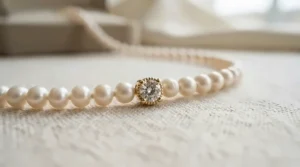
Akoya Pearl Bracelet Gift Under 200 Dollars: What You Actually Get
If you’re specifically hunting for an akoya pearl bracelet gift under 200 dollars, set expectations here so you’re not disappointed at checkout: at this budget, you’re almost always looking at AA or AA+ grading, sterling silver rather than gold clasps, and pearl sizes in the 6.0–6.5mm range. That’s not a downgrade to be embarrassed about — it’s simply where the honest price floor sits for genuine, non-fake Japanese akoya.
The PremiumPearl White Japanese Akoya Cultured Pearl Bracelet is the clearest fit in this budget band, arriving gift-boxed with a certificate of authenticity that reassures a recipient the pearls are real. Here’s what to weigh: if the occasion calls for something with more visual weight, consider the 6.0–6.5mm gold-clasped option from The Pearl Source instead, watching for seasonal promotions that can bring it into range. Either way, a genuine akoya pearl bracelet under $200 remains one of the few pieces of real fine jewelry that reads far more expensive than its actual price — a quiet advantage for anyone gifting on a set budget.
Pearl Luster Grading Explained: What Those Letters Actually Mean
What is pearl luster grading? It’s the system used to rate how sharply a pearl reflects light, ranked from a hazy, weak glow at the bottom to a crisp, almost mirror-like reflection at the top — and it’s the single factor GIA’s own research identifies as doing the most work in determining an akoya pearl’s overall value.
Here’s the part that trips up first-time buyers: there is no single universal letter-grade scale. GIA itself doesn’t issue “AAA” or “AA+” labels — it describes pearls using seven value factors (size, shape, color, luster, surface, nacre, and matching) rated in plain language like “Excellent” or “Good.” The A-through-AAA system you see on most retail listings, including several bracelets above, is a retailer convention, meaning each seller sets their own bar. A reputable seller’s AAA and a discount seller’s AAA are not guaranteed to mean the same thing.
Practically, here’s how to sanity-check it yourself: tilt the bracelet under a single overhead light. High-luster akoya pearls throw back a small, sharp point of light — almost like a tiny mirror — with the rest of the pearl’s surface still visibly glowing. Lower-luster pearls scatter that same light into a soft, chalky haze with no sharp point. If a seller won’t let you view real photos under normal lighting before buying, that’s a bigger red flag than any letter grade on the listing.
Japan-Origin Pearls: Why It Matters and How to Verify It
Japan-origin pearls carry a specific, defensible reputation — not brand snobbery, but a function of geography and a century-plus head start. Akoya pearl farming began in Japan’s Mie Prefecture, and GIA’s research on the category notes the industry has operated there continuously since. Japanese akoya farms benefit from cooler coastal waters that slow the oyster’s nacre-secretion rate, which sounds like a downside until you realize slower nacre growth typically produces a denser, more optically uniform layer — directly translating to sharper luster on the finished pearl.
That said, “Japan-origin” doesn’t automatically mean “better than every alternative” — it means a different, generally more consistent starting point. Chinese and Vietnamese akoya farms have narrowed the quality gap substantially in the past decade, and a well-graded Chinese akoya strand can outperform a poorly graded Japanese one. Here’s how to actually verify origin claims rather than take them on faith: ask the seller directly whether the pearls were harvested and processed in Japan or merely “designed” or “finished” there, since the second phrasing is a common softening tactic. Reputable sellers like The Pearl Source and Mikimoto state origin plainly in their listings; vague wording is worth a follow-up question before you buy.
| Pearl Type | Typical Origin | Luster Character | Price Range | Best For |
|---|---|---|---|---|
| Japanese Akoya | Mie, Ehime, Nagasaki prefectures | Sharp, mirror-like | $150–$3,000+ range | Classic round strand, gifting, heirlooms |
| Chinese/Vietnamese Akoya | Coastal China, Vietnam | Good, more variable | $80–$400 range | Budget-conscious buyers wanting real akoya |
| Freshwater cultured pearl | Primarily China (rivers/lakes) | Softer, satiny | $30–$250 range | Casual everyday pieces, larger baroque shapes |
Looking at the table, the price-to-luster ratio actually favors well-graded Japanese akoya once you’re spending above roughly $150, since freshwater alternatives in that range rarely match akoya’s mirror finish. Below that threshold, a quality freshwater strand can be the more sensible everyday choice, precisely because it tolerates casual wear better than thinner-nacre akoya.
Bracelet Clasp Types Explained: Which One Should You Choose
The clasp is the part of an akoya pearl bracelet nobody photographs and everybody eventually complains about, so it’s worth understanding the main types before you buy. According to jewelry clasp guides from established retailers, the fishhook clasp — a curved metal hook sliding into a decorative oval box — is the traditional standard for pearl strands and appears on most of the bracelets in this guide, prized for its classic look but occasionally fiddly to fasten one-handed.
The lobster clasp, with its familiar spring-loaded pinching mechanism, shows up less often on formal pearl strands but offers easier one-handed operation, which matters more than aesthetics for daily wear. Box clasps, which tuck a tab into a hinged box with a safety latch, sit at the more secure end of the spectrum and are worth prioritizing if the bracelet will see rougher daily use. Then there are proprietary designs like the one on the Moon Label Japanese 6.5mm Akoya Cultured Pearl Bracelet, engineered specifically to solve the “clasp flips to the front” annoyance common with standard fishhook designs.
Here’s what most buyers overlook: clasp metal matters as much as clasp style. A 14K or 18K gold clasp resists tarnish and daily wear far longer than gold-plated alternatives, and sterling silver, while more affordable, needs occasional polishing to stay bright. If you’re buying for someone who wears jewelry daily rather than for special occasions, weight your decision toward clasp durability at least as heavily as pearl grade.
How to Choose an Akoya Pearl Bracelet
Cutting through the marketing terms, here’s a practical, step-by-step framework for choosing an akoya pearl bracelet that actually fits your budget and how you’ll wear it.
- Set your budget band first. Under $200 means AA/AA+ grading and silver clasps; $250–$500 typically means AAA with gold; $1,000+ enters certified Hanadama or brand-premium territory.
- Decide on pearl size before grade. A 6.0mm AAA strand and a 7.5mm AA+ strand can cost similarly — pick the size that fits your wrist and existing jewelry first.
- Check the clasp metal and type separately from the pearls. A gorgeous strand with a flimsy plated clasp is a false economy if you’ll wear it often.
- Ask for origin specifics, not just “Japanese-inspired” language. Reputable sellers will confirm harvest location without hedging.
- Look for a real return policy. Pearls are notoriously hard to judge from photos alone; a 30- to 60-day window protects you if the luster disappoints in person.
- Match it to existing pieces if building a set. 7–7.5mm bracelets pair naturally with the most common akoya necklace and earring sizing.
- Reserve certified Hanadama or brand-name purchases for milestone occasions, where the certificate or brand recognition adds long-term value beyond the pearls themselves.
Common Mistakes When Buying an Akoya Pearl Bracelet
The single most common mistake is trusting a letter grade without checking who assigned it — as covered above, “AAA” is a retailer’s own scale, not a regulated standard, so it’s only as trustworthy as the seller behind it. A close second: buying based on product photos alone. Studio lighting flatters every pearl equally; ask for or search out photos taken in ordinary daylight before committing to an expensive strand.
Buyers also frequently underestimate nacre thickness as a durability factor, focusing entirely on how the pearl looks on day one rather than how it’ll hold up after years of contact with skin oils, lotion, and perfume. Thin-nacre pearls can develop a dull, worn appearance faster than thick-nacre pearls of the same initial grade. Finally, a subtler mistake: assuming bigger always means better. A well-matched 6.5mm strand with excellent luster will outshine a poorly matched 8mm strand with inconsistent color every time — matching and luster do more visual work than raw size.

What to Expect: Real-World Performance and Everyday Wear
Specs are one thing; living with the bracelet is another. On the wrist, a well-graded akoya pearl bracelet catches light differently depending on the hour — a soft glow under warm indoor lighting, a sharper flash under direct sun or camera flash, which is part of why the same bracelet can look subtly different in every photo you see of it online.
Day-to-day, expect the clasp to be the part you interact with most, meaning a comfortable fishhook or a well-designed proprietary clasp (like Moon Label’s) genuinely changes how often you reach for the bracelet versus leaving it in the box. Reviewers across nearly every brand in this guide mention a similar pattern: initial skepticism about whether “real pearls” would look as good as the product photos, followed by surprise at how much better the luster reads in person under natural light than in any online image.
Long-Term Cost & Maintenance: The True Cost of Ownership
The purchase price is only the first cost. Akoya pearls are organic gemstones, softer than most stones, and they react to chemicals in perfume, hairspray, and lotion — the practical rule is to put the bracelet on last, after getting dressed and applying any products, and take it off first when undressing. Storage matters too: a soft pouch separate from harder gemstones prevents surface scratching, since pearls sit around a 2.5–4.5 on the Mohs hardness scale, softer than nearly every other gem in a typical jewelry box.
| Ownership Factor | Budget Tier (Under $200) | Mid Tier ($250–$500) | Premium Tier ($1,000+) |
|---|---|---|---|
| Clasp maintenance | Occasional silver polishing | Minimal (gold resists tarnish) | Minimal (14K–18K gold) |
| Restringing interval | Every 1–2 years with daily wear | Every 2–3 years | Every 3–5 years |
| Typical restringing cost | Around $20–$40 range | Around $30–$60 range | Around $50–$100 range |
| Resale/appraisal recognition | Limited | Moderate (brand-dependent) | Strong (Hanadama or Mikimoto) |
Looking at the table, the real long-term cost gap isn’t the bracelet itself — it’s restringing frequency and resale recognition. A $180 sterling silver akoya bracelet worn daily may need restringing sooner than a $1,200 Hanadama-certified piece worn occasionally, meaning “cheaper” and “lower total cost of ownership” aren’t always the same thing over a five-year horizon.
Safety, Regulations & Authenticity: What the FTC Requires
Because pearls are frequently treated, dyed, or otherwise altered, U.S. jewelry sellers operate under specific disclosure rules. The FTC’s guidance on advertising pearls makes clear that sellers must disclose whether a pearl is natural, cultured, or imitation, and that simply naming a pearl type — freshwater, South Sea, or Akoya — isn’t sufficient to satisfy treatment-disclosure requirements if the pearl’s color has been altered.
That’s directly relevant to the black akoya bracelet featured in this guide: a legitimate seller will state plainly that the black color results from a standard, disclosed treatment process, not from a naturally black-bodied akoya pearl (which is exceptionally rare). Practically, this regulatory backdrop is good news for shoppers — it means reputable sellers have a legal obligation to be specific rather than vague about what you’re actually buying, and any listing that dodges the “natural, cultured, or treated” question directly is worth a follow-up email before purchase.
Practical Usage Guide: Caring for Your Akoya Pearl Bracelet
Getting the most out of a new akoya pearl bracelet comes down to a handful of habits in the first month of ownership. On day one, resist the urge to wear it swimming, showering, or exercising — chlorine and prolonged water exposure are among the fastest ways to dull nacre luster. Wipe pearls gently with a soft, slightly damp cloth after each wear to remove skin oils and perfume residue before storing.
A common first-30-days mistake is tossing the bracelet into a jewelry box drawer alongside rings and other harder pieces; instead, keep it in its original pouch or a dedicated soft compartment. If you notice the clasp loosening or the silk thread showing any stretch after several months of regular wear, that’s the cue to schedule restringing before a pearl is lost, not after. For sterling silver clasps specifically, a jewelry polishing cloth used every few weeks keeps tarnish from building up between wears — a two-minute habit that meaningfully extends how “new” the piece looks.
Real-World Scenarios: Matching Bracelets to Buyers
The budget-conscious first-timer: Someone buying their first strand of real pearls, likely for themselves, on a sub-$200 budget and unsure they’ll wear pearls often. The PremiumPearl White Japanese Akoya Cultured Pearl Bracelet fits this scenario precisely — genuine akoya at low financial risk, with room to upgrade later once they know they love wearing it.
The milestone-anniversary shopper: Someone marking a 10th or 25th anniversary who wants something that reads as a genuine investment, not a routine gift. The The Pearl Source 18K Gold Hanadama Akoya Bracelet matches this occasion well — certified quality that justifies the price tag and carries lasting sentimental and resale value.
The daily-wear professional: Someone who wants one versatile piece to wear five days a week under a blazer or with everyday jewelry. The Moon Label Japanese 6.5mm Akoya Cultured Pearl Bracelet or the The Pearl Source 14K Gold 7.0–7.5mm AAA Akoya Bracelet both suit this use case, prioritizing clasp comfort and durable gold construction over rare certification.
Buyer’s Decision Framework: If This, Choose That
If your budget caps under $200, choose the sterling silver AA+ tier — you’ll get genuine akoya pearls without stretching finances. If you’re building a matching necklace-and-earring set, choose the 7.0–7.5mm size, since it aligns with the most common akoya jewelry sizing across brands. If comfort during daily wear is your top priority, choose a bracelet with a purpose-engineered or box clasp over a traditional fishhook. If the purchase marks a milestone occasion or is intended as a family heirloom, choose certified Hanadama or a recognized heritage brand, where the certification and name carry value beyond the pearls alone. And if you’re simply unsure, the mid-tier AAA gold-clasped option remains the safest middle ground — enough quality to satisfy a discerning eye, without premium-tier pricing.
Frequently Asked Questions
❓ How can you tell if an akoya pearl bracelet is real?
❓ What size akoya pearl bracelet should I buy?
❓ Are Chinese akoya pearls lower quality than Japanese akoya pearls?
❓ How often should an akoya pearl bracelet be restrung?
❓ Is an akoya pearl bracelet a good investment?
Conclusion
An akoya pearl bracelet is one of the rare categories of fine jewelry where a genuinely affordable option and a genuinely luxurious one can both be the “right” choice, depending entirely on who’s wearing it and why. The PremiumPearl White Japanese Akoya Cultured Pearl Bracelet proves real, Japan-sourced pearls don’t require a four-figure budget, while the Mikimoto Akoya Cultured Pearl Bracelet shows exactly what a century of grading standards and brand trust adds on top of the pearls themselves.
What matters more than any single letter grade is understanding the handful of variables that actually drive value — luster, nacre thickness, verified origin, and clasp quality — so you’re evaluating a listing on its merits rather than its marketing language. Whether you land on the budget-friendly The Pearl Source 14K Gold 6.0–6.5mm AAA Akoya Bracelet or the certified The Pearl Source 18K Gold Hanadama Akoya Bracelet, the goal is the same: a bracelet you’ll actually reach for, not one that sits in a drawer looking pretty in photos.
Recommended for You
- 7 Best Swarovski Crystal Bracelet for Weddings Picks (2026)
- Natural Stone Bracelet vs Crystal Bracelet: 7 Picks Ranked (2026)
- Labradorite Bracelet for Meditation: 7 Picks That Actually Flash (2026)
Disclaimer: This article contains affiliate links. As an Amazon Associate, I earn from qualifying purchases. If you purchase products through these links, we may earn a small commission at no additional cost to you.
✨ Found this helpful? Share it with your friends! 💬🤗
