
In This Article
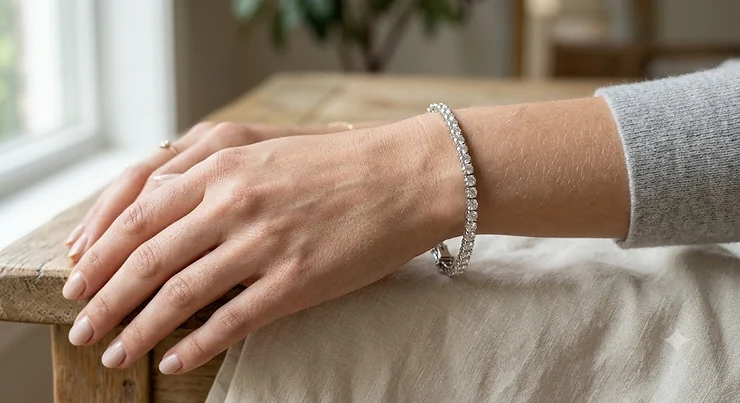
A wrist full of sparkle used to mean a wrist full of debt. Not anymore. A lab-grown diamond bracelet gets you the same fire, the same hardness, the same “wait, is that real?” reaction from your coworkers — grown in a controlled facility instead of pulled out of the ground after a few billion years of geological patience. In plain terms: a lab-grown diamond bracelet is a bracelet set with diamonds that were created using HPHT (high-pressure, high-temperature) or CVD (chemical vapor deposition) technology rather than mined, while remaining chemically, physically, and optically identical to their mined counterparts.
That last part isn’t marketing fluff — it’s the actual science, and we’ll get into it. What this guide won’t do is treat you like you can’t handle nuance. We researched real products, real certification standards, and real regulatory rules so you can walk away knowing exactly what you’re buying, not just what a product listing wants you to believe. We’ll compare seven actual bracelets spanning budget-friendly to genuinely showstopping, explain what those IGI and GIA reports on the listing actually mean, and cover the stuff nobody tells you until after you’ve already clicked “buy” — like why carat weight isn’t the flex you think it is, and which “deals” are just clever framing.
By the end, you’ll know how to read a listing like someone who’s done this before, not someone hoping the photos don’t lie.
Quick Comparison Table
| Bracelet | Carat Range | Metal | Price Range | Best For |
|---|---|---|---|---|
| Amazon Essentials Lab Grown Diamond Bar Bolo Bracelet | 0.175 ct | 925 Sterling Silver | Under $100 | First-time buyers, layering |
| Gem Stone King Lab Grown Diamond Solitaire Bracelet | 0.70 ct | 18K Rose Gold Plated Silver | $150-$300 range | Everyday minimalist wear |
| Fascinating Diamonds Lab Grown Diamond Tennis Bracelet | 1 ct | 14K White Gold | $600-$900 range | Classic tennis bracelet look on a budget |
| Diamond2Deal Lab Grown Diamond Tennis Bracelet | 1.26 ct | 14K White Gold | $900-$1,300 range | Balanced value and sparkle |
| IceCarats Lab Grown Diamond Tennis Bracelet | 2.18 ct | 14K Solid White Gold | $1,600-$2,200 range | Noticeable upgrade without going premium |
| Houston Diamond District Luxury Tennis Bracelet | around 3 ct | 14K White Gold | $2,600-$3,800 range | Special-occasion statement piece |
| Friendly Diamonds IGI Certified Platinum Tennis Bracelet | 10 ct | Platinum | $9,000-$13,000 range | Milestone gifts, heirloom-quality investment |
Looking at the spread above, the jump from Amazon Essentials to Friendly Diamonds isn’t just carat weight climbing — it’s metal purity, prong construction, and certification depth all scaling together. Buyers chasing everyday wearability tend to land in the middle of this table, while the two bookends serve very specific, very different purposes: one is a low-risk way to try lab diamonds, the other is a legacy purchase.
💬 Found the range that fits your budget? Bookmark this page — you’ll want to compare specs again before you check out.😊
Top 7 Lab-Grown Diamond Bracelets: Expert Analysis
1. Amazon Essentials Lab Grown Diamond Bar Bolo Bracelet — most forgiving fit for any wrist size
The adjustable bolo-style closure is the real standout here — no clasp sizing guesswork, no trip to a jeweler for resizing. This piece pairs a 0.175 cttw lab-grown diamond with a created blue sapphire accent on a 925 sterling silver bar, and it’s IGI certified, which is worth noting at this price tier since plenty of budget jewelry skips certification entirely.
Sterling silver won’t hold up to daily hard wear the way gold does, and the stone count here is intentionally modest, so don’t expect tennis-bracelet sparkle. Based on the spec sheet, this is squarely an entry-point piece: it’s for someone testing whether they even like wearing diamond jewelry regularly, or a gift where the price point matters more than the carat count.
Aggregated feedback on Amazon Essentials’ certified lab diamond line tends to cluster around the adjustable fit and the reassurance of visible IGI documentation, with occasional notes that sterling silver settings need more careful storage than gold. What most shoppers overlook is that the sapphire accent adds color contrast that a straight diamond bar wouldn’t have, which is a nice design touch for a first piece.
Pros:
- ✅ IGI certified even at a genuinely low price point
- ✅ Bolo closure adjusts without a jeweler visit
- ✅ Sapphire accent adds color without added cost
Cons:
- ❌ Sterling silver tarnishes faster than gold settings
- ❌ Low carat weight means minimal visible sparkle
At around $70-$100, this is priced to be an impulse-friendly gift or a low-stakes way to own IGI-certified lab diamonds before committing to a bigger purchase — solid value for what it’s designed to do.
2. Gem Stone King Lab Grown Diamond Solitaire Bracelet — best rose gold option under $300
The oval-cut 7x5mm solitaire stone set in 18K rose gold plated silver is the standout feature, giving this bracelet a fashion-forward look that plain round-cut tennis styles don’t have. At 0.70 cttw with DEF color and VVS-VS clarity, the spec sheet reads better than you’d expect at this price band — DEF color is near-colorless, and VVS-VS clarity means inclusions are difficult to see without magnification.
Here’s what to weigh: rose gold plating over silver means the gold layer can wear thin over years of daily wear, unlike solid gold, so this suits someone who wants the rose gold aesthetic now without the solid-gold price tag. Reviewers of Gem Stone King’s lab diamond collection commonly mention the color accuracy of the rose gold tone and the adjustable 9-inch length as practical wins, though some buyers note that plated pieces eventually need re-plating to keep their color.
The oval cut shape alone sets this apart from six other round-cut-dominated picks on this list, which matters if you’re building a bracelet stack that doesn’t look repetitive.
Pros:
- ✅ Oval solitaire cut stands out from typical round styles
- ✅ Strong DEF color and VVS-VS clarity for the price
- ✅ Fully adjustable up to 9 inches
Cons:
- ❌ Gold plating wears down with years of daily use
- ❌ Silver base means less long-term durability than solid gold
In the $150-$300 range, this is one of the stronger value plays on this list if rose gold plating doesn’t bother you — the clarity grade alone often costs more elsewhere.
3. Fascinating Diamonds Lab Grown Diamond Tennis Bracelet — most classic tennis silhouette at entry pricing
A single continuous line of 1 carat total weight round-cut diamonds set in 14K white gold — this is the tennis bracelet archetype, no reinvention needed. D-E color and VS1-VS2 clarity put this comfortably in the “eye-clean and colorless” zone, meaning inclusions and tint are essentially invisible in normal lighting.
Based on the spec comparison against pricier tennis bracelets on this list, the 1-carat total weight here is spread across many small stones rather than concentrated in a few large ones, which is standard tennis bracelet construction and keeps the per-stone cost down. This is the pick for someone who wants “the tennis bracelet” without wanting to explain to guests why they paid four figures for it.
Fascinating Diamonds positions itself as a direct diamond cutter selling factory-direct, and aggregated buyer sentiment around their tennis bracelet line frequently highlights the secure click-clasp closure and the classic proportions, with occasional comments that individual stone sizes are, unsurprisingly, smaller than higher-carat alternatives.
Pros:
- ✅ Classic single-line tennis silhouette in solid 14K gold
- ✅ D-E color and VS1-VS2 clarity are genuinely strong grades
- ✅ Secure click-lock clasp system
Cons:
- ❌ Individual stones are small relative to total carat weight
- ❌ Less “statement” presence than higher-carat options
At a $600-$900 range, this delivers the archetypal tennis bracelet look at roughly a third of what a comparable mined-diamond version would run.
4. Diamond2Deal Lab Grown Diamond Tennis Bracelet — sweet spot between visible sparkle and price
The 1.26 carat total weight bumps this just above the previous pick, and in practice that extra quarter-carat spread across a full line of stones is noticeably more luminous on the wrist. VS-SI clarity with G-H color is a slightly more relaxed grade than some competitors on this list — G-H color carries a faint warmth rather than icy white, and SI clarity means inclusions may be visible under 10x magnification but are typically not visible to the naked eye.
What most buyers overlook about this tier is that G-H/VS-SI represents genuinely smart value engineering: you’re not paying a premium for a grade difference the human eye mostly can’t detect anyway. The 14K white gold setting and 7-inch standard length keep this practical for daily wear rather than special-occasion-only.
Diamond2Deal’s positioning as a direct-to-consumer seller on lab-grown tennis bracelets tends to draw feedback around the noticeable jump in sparkle from sub-1-carat pieces, alongside the expected trade-off that G-H color reads slightly warmer in daylight than D-E stones.
Pros:
- ✅ Noticeably more sparkle than sub-1-carat alternatives
- ✅ Smart value grading (G-H/VS-SI) that’s hard to spot by eye
- ✅ Standard 7-inch length fits most wrists
Cons:
- ❌ Warmer color tone than D-E graded pieces
- ❌ SI clarity may show minor inclusions under magnification
In the $900-$1,300 range, this is the bracelet we’d point a first-time tennis bracelet buyer toward if daily wear matters more than top-tier grading.
5. IceCarats Lab Grown Diamond Tennis Bracelet — most noticeable upgrade before premium pricing
At 2.18 carats total weight, this is where the visual jump becomes obvious across a room, not just up close. The round cut, polished 14K solid white gold setting (not plated — solid) is worth flagging, since solid gold holds up to daily wear and resists the fading that plated pieces eventually show.
Here’s what the spec sheet doesn’t say outright: doubling the carat weight from the entry-level picks on this list roughly triples visible brightness, because more total surface area is reflecting light back at the viewer. This is the bracelet for someone who’s decided they want a genuine statement piece but isn’t ready for four-figure-plus premium territory.
IceCarats built its catalog around accessible fine jewelry, and buyer feedback on their diamond tennis line commonly centers on the solid gold construction holding up better over time than budget-tier plated alternatives, with some noting that pieces above 2 carats benefit from professional clasp inspection every year or so.
Pros:
- ✅ Solid 14K white gold, not plated
- ✅ 2.18 ct delivers genuinely noticeable brightness
- ✅ Polished finish photographs and wears well
Cons:
- ❌ Priced meaningfully above entry-tier tennis bracelets
- ❌ Higher carat weight means more careful clasp maintenance
Expect a $1,600-$2,200 range here — a fair jump from the entry tier, but the solid-gold build and carat bump both justify it on paper.
6. Houston Diamond District Luxury Tennis Bracelet — best for special-occasion statement wear
Houston Diamond District’s luxury collection line starts around 3 carats and climbs dramatically from there, with D-E color and VS1-VS2 clarity across a 3-prong luxury setting. The 3-prong construction (versus a 4-prong) is the standout detail — fewer prongs per stone means slightly more visible diamond and slightly less metal, which reads as brighter but does mean marginally less physical security per stone over years of wear.
Based on the spec comparison, D-E/VS1-VS2 at this carat range is genuinely premium grading, not just a premium price tag — this is a bracelet built for people who’ve already owned a lower-carat piece and know what they’re upgrading toward.
Reviewers of Houston Diamond District’s tennis bracelet collections frequently mention the substantial, weighty feel on the wrist and the bright, colorless face-up appearance, while some note that pieces in the higher carat variants within this collection are better suited to special occasions than daily gym-and-errands wear given the investment involved.
Pros:
- ✅ D-E/VS1-VS2 grading is genuinely premium, not just priced that way
- ✅ 3-prong setting maximizes visible diamond
- ✅ Substantial, statement-piece presence
Cons:
- ❌ 3-prong settings offer slightly less security than 4-prong
- ❌ Better suited to special occasions than daily wear given the value
Pricing lands in the $2,600-$3,800 range for the entry point of this collection — a meaningful step up, positioned for buyers who’ve outgrown starter tennis bracelets.
7. Friendly Diamonds IGI Certified Platinum Tennis Bracelet — the flagship, IGI-certified, platinum-set showpiece
Ten carats of emerald-cut lab-grown diamonds set in platinum, with F-G color and VS1-VS2 clarity, IGI certified — every element here is engineered to be the last bracelet on someone’s wish list, not the first. The emerald cut is a fundamentally different look from the round brilliants dominating the rest of this list: emerald cuts show off clarity through broad, flat facets rather than maximizing sparkle, so any inclusions are more visible than they’d be in a round cut, which makes the VS1-VS2 clarity grade here more meaningful than the same grade on a round stone.
Platinum, unlike white gold, doesn’t need rhodium replating and resists tarnish indefinitely, which matters enormously at this investment level. What the spec sheet won’t tell you, but jewelry appraisers will, is that platinum’s density also means this bracelet will feel noticeably heavier on the wrist than a same-carat white gold piece — a detail that either reads as luxurious substance or unwelcome weight, depending on the wearer.
Friendly Diamonds markets itself around transparent sourcing and IGI documentation on every piece, and aggregated buyer sentiment around their tennis bracelet line tends to focus on the packaging experience and the confidence that IGI certification provides at this price point, which matters when the purchase amount climbs into five figures.
Pros:
- ✅ Platinum setting resists tarnish and never needs replating
- ✅ IGI certified with documented F-G/VS1-VS2 grading
- ✅ Emerald cut offers a distinctive look at this carat range
Cons:
- ❌ Emerald cut shows inclusions more than round brilliant cuts
- ❌ Platinum’s weight isn’t for everyone on the wrist
This piece runs in the $9,000-$13,000 range at the time of research — a legitimate heirloom-tier investment, and the one bracelet on this list built to be worn for decades, not just this decade.
Buyer’s Decision Framework
Cutting through carat counts and clarity letters, here’s a simple way to decide fast. If you’re buying your first piece of lab-grown diamond jewelry just to see how it feels to wear, choose something under 1 carat in sterling silver or gold vermeil, because the financial risk is low if your taste changes. If you want the classic tennis bracelet look for daily wear without daily-wear anxiety, choose a 1-1.5 carat piece in solid 14K gold, since solid gold tolerates knocks and scrapes far better than plated metal. If the bracelet is meant to mark something — an anniversary, a graduation, a promotion — choose in the 2-3 carat range with at least VS clarity, because that’s the threshold where the piece reads as intentional rather than incidental. And if this is a legacy purchase meant to outlast you, choose platinum over white gold and insist on IGI or GIA documentation, since platinum’s durability and a strong certification trail are what actually preserve resale and insurance value decades down the line. Notice what’s absent from this framework: “biggest carat weight you can afford.” That’s deliberate — carat weight without matching clarity and color just means a bigger, cloudier stone, and we’ll unpack exactly why in the carat weight section below. The better question is always “what’s this bracelet actually for,” and the carat range follows from that answer, not the other way around.
Real-World Scenarios: Who Should Buy Which Bracelet
Picture a 24-year-old graduate student on a tight budget who wants to treat herself after finishing her thesis. She’s wearing jewelry daily but doesn’t have four figures to spend, and she’s not sure diamonds are even her long-term style. The Amazon Essentials or Gem Stone King picks make sense here — low financial risk, real IGI documentation, and an aesthetic she can evaluate before ever considering an upgrade. Now picture a couple celebrating a ten-year anniversary who want something the recipient will wear constantly, not save for special occasions. The Diamond2Deal or IceCarats bracelets hit that daily-wear sweet spot — solid gold, meaningful sparkle, and a price that doesn’t require a financing plan. Finally, picture a family marking a milestone birthday — a 50th, a 60th — where the gift is meant to become a family heirloom discussed for decades. The Houston Diamond District or Friendly Diamonds pieces belong in that conversation, where platinum’s permanence and documented certification matter more than any other factor. Matching the bracelet to the occasion, rather than to a generic “best” ranking, is the single most useful filter in this entire guide.
Practical Usage Guide: Caring for Your Lab-Grown Diamond Bracelet
Lab-grown diamonds are exactly as hard as mined diamonds — a 10 on the Mohs scale — so the diamond itself isn’t the fragile part of your bracelet; the metal setting and clasp are. In the first 30 days, avoid wearing your new bracelet during workouts, dishwashing, or gardening, since these are the activities most likely to loosen prongs before you’ve had a chance to get the piece professionally inspected once. Clean it every one to two weeks with warm water, a few drops of mild dish soap, and a soft-bristled toothbrush, working gently around the setting to dislodge lotion and skin oil buildup, which dulls sparkle far more than most people realize. Store it flat or hanging, never tossed loose into a drawer with other jewelry, since diamonds are hard enough to scratch other gems and even other diamonds on contact. The most common first-month mistake is skipping the professional prong check — have a jeweler verify the setting is secure within the first month of regular wear, especially on tennis bracelets and pieces above 2 carats, where a single loose prong can mean a lost stone. For solid gold and platinum pieces, an annual professional cleaning and inspection is enough; for plated pieces, ask your jeweler about replating timelines before the gold layer visibly thins.
How to Choose a Lab-Grown Diamond Bracelet
Shopping for a lab-grown diamond bracelet comes down to seven decisions, in this order of importance:
- Set a real budget first, then shop within it — decide your ceiling before you start browsing, since carat weight and clarity grades escalate price fast and it’s easy to creep upward without noticing.
- Confirm the certification — look specifically for IGI or GIA documentation on the listing, since uncertified “lab grown” claims from unknown sellers are far harder to verify after purchase.
- Pick your metal based on lifestyle, not just looks — solid gold or platinum for daily wear, plated metals only for occasional-wear pieces you’re willing to eventually replate.
- Prioritize clarity over carat weight if you’re choosing between the two — a smaller, cleaner stone reads better up close than a larger, included one.
- Match color grade to metal tone — D-F color grades look best in white metals like platinum or white gold, while G-H grades can actually look warmer and richer in yellow or rose gold settings.
- Check the clasp type — box clasps and double-locking safety clasps are more secure for tennis bracelets than simple lobster clasps, especially for pieces you’ll wear daily.
- Read the return and resizing policy before buying — bracelets are notoriously hard to size correctly on a first try, so a flexible return window matters as much as the diamond itself.
Working through these in order keeps you from falling for the two most common traps: buying on carat weight alone, or buying on price alone. According to the Federal Trade Commission’s Jewelry Guides for advertising diamonds, sellers are required to clearly disclose when a diamond is laboratory-grown rather than mined — so step two on this list isn’t just about quality, it’s about making sure the listing itself is playing by the rules.
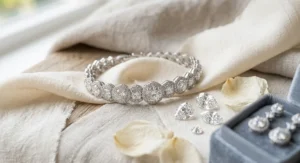
Lab-Grown vs Mined Diamond: The Differences That Actually Matter
| Factor | Lab-Grown Diamond | Mined Diamond |
|---|---|---|
| Formation | Weeks in a lab via HPHT or CVD | Billions of years underground |
| Chemical composition | Identical carbon crystal structure | Identical carbon crystal structure |
| Price for same specs | 20-40% less, typically | Full market price |
| Resale value | Generally lower, less established secondary market | More established resale market |
| Origin traceability | Documented growth method (CVD/HPHT) on report | Country of origin, sometimes tracked |
According to GIA’s own research on the topic, laboratory-grown diamonds are created through two primary methods — HPHT, which mimics the earth’s natural pressure-and-heat process, and CVD, which builds a diamond crystal layer by layer from carbon-rich gas. Visually and chemically, the result is the same diamond; a jeweler’s loupe won’t tell them apart, and only specialized spectroscopic equipment in a gem lab can. The real difference buyers should care about isn’t beauty or durability — it’s price and resale. Because lab-grown diamonds aren’t scarce in the way mined stones are, you get more carat weight and clarity per dollar spent, but the secondary market for lab-grown stones is younger and less predictable, meaning resale value tends to sit meaningfully below the original purchase price. If you’re buying to wear and enjoy, lab-grown is a smarter dollar-for-dollar choice; if resale value is your top priority, that calculation shifts.
✨ See a bracelet above that fits your priorities? Compare the certification details one more time before you commit.
Lab Diamond Bracelet Certification: What IGI and GIA Reports Really Tell You
Every product on this list that carries a grading report will show either IGI or GIA certification, and the two aren’t interchangeable in practice, even though both evaluate the same 4Cs — cut, color, clarity, and carat weight. IGI has certified lab-grown diamonds since 2005 and currently grades the large majority of lab-grown stones on the market, while GIA moved more cautiously, and as of late 2025 shifted its lab-grown grading to a simplified “Premium” or “Standard” system rather than the traditional letter-and-clarity scale it uses for mined stones. In practice, this means an IGI report gives you more granular information about a lab-grown bracelet’s actual color and clarity letter grades, while a GIA-graded lab-grown stone gives you less granularity but comes from an organization with a longer overall grading history. Neither is “wrong” — they’re different tools. What actually matters for you as a buyer is simpler: does the listing show any certification at all, and can you verify that certificate number on the issuing lab’s own website? The Federal Trade Commission’s regulations under 16 CFR Part 23 require that any laboratory-created diamond be clearly and conspicuously disclosed as such in advertising — so a legitimate seller won’t just casually use the word “diamond” without qualifying it. If a bracelet listing skips certification entirely, treat that as a red flag rather than a cost-saving feature, regardless of how attractive the price range looks.
Carat Weight Value: Getting More Sparkle Per Dollar
| Carat Range | Typical Price Range | Value Insight |
|---|---|---|
| Under 1 ct | Under $300 | Best entry point; minimal resale concern |
| 1-2 ct | $600-$2,200 range | Sweet spot for daily-wear tennis bracelets |
| 2-4 ct | $2,200-$4,000 range | Noticeable statement presence |
| 5+ ct | $5,000+ range | Investment-tier; prioritize certification and metal |
Carat weight measures total diamond weight, not visual size or brilliance — a 2-carat bracelet with muddy clarity can look less impressive than a 1-carat bracelet with excellent clarity and cut, because light simply doesn’t bounce back as cleanly through an included stone. The smarter framing for value isn’t “biggest carat weight for the money,” it’s “best-looking stone for the money,” and those aren’t always the same purchase. Buyers consistently overpay by chasing round-number carat totals — a 1.00 ct listing often costs disproportionately more than a 0.95 ct listing with nearly identical visual size, purely because “1 carat” sounds better on a label. If you’re comparing two bracelets at similar total price, run the math on price-per-carat alongside the clarity and color grades, not carat weight in isolation; a slightly lower total weight with better clarity frequently delivers more visible sparkle for the same money.
Affordable Lab-Grown Diamond Jewelry: What Your Budget Actually Buys
Affordable lab-grown diamond jewelry doesn’t have to mean compromised quality — it means being strategic about where you spend your budget. At the sub-$300 tier, expect smaller total carat weight, plated or silver metals rather than solid gold, and simpler prong or bezel settings; that’s not a downgrade in authenticity, since even a 0.175 ct stone on an IGI-certified piece like the Amazon Essentials bracelet is a genuine, verifiably lab-grown diamond. In the $600-$1,300 range, you start seeing full tennis bracelet silhouettes in solid 14K gold with 1-1.3 total carat weight, which is where most first-time tennis bracelet buyers land comfortably. The biggest lever for staying affordable without sacrificing quality is accepting a slightly warmer color grade (G-H rather than D-F) and a slightly more included clarity grade (SI rather than VVS) — differences that are essentially invisible to the naked eye but meaningfully reduce price. Beginners chasing affordability should prioritize certification and metal quality over carat weight and top-tier grading; a certified, solid-gold 1-carat bracelet at G-H/SI beats an uncertified, plated 1.5-carat bracelet every time, both in longevity and in honest value.
Features That Actually Matter (And Those That Don’t)
What actually matters: certification (IGI or GIA), solid metal versus plating, clasp security, and clarity grade relative to cut style. What doesn’t matter nearly as much as marketing suggests: round-number carat totals, “flawless” claims on pieces where inclusions would be invisible anyway, and brand name recognition on a tennis bracelet, where construction quality varies more by seller practices than by brand prestige. Fluorescence — whether a diamond glows under UV light — is a spec some listings highlight prominently, but for lab-grown diamonds in a tennis bracelet setting, it has minimal visible impact under normal lighting and shouldn’t sway a purchase decision either way. Similarly, “eco-friendly” or “sustainable” labels on lab-grown diamond marketing deserve a skeptical eye — production requires substantial energy, and unqualified environmental claims aren’t automatically more accurate just because the diamond wasn’t mined. Focus your attention budget on the things that affect how the bracelet looks on your wrist and how long it lasts, not the things that just look impressive in a product description.
Common Mistakes When Buying a Lab-Grown Diamond Bracelet
The first common mistake is buying based on carat weight alone, ignoring clarity and color, which we’ve covered — but it bears repeating because it’s the single most expensive mistake on this list. The second is skipping certification verification, assuming that a listing’s claim of “IGI certified” is automatically true without checking the report number against IGI’s own database. The third is ignoring metal type, buying a plated bracelet for daily wear and being surprised a year later when the gold layer thins at contact points like the clasp. The fourth is underestimating sizing — bracelets that fit snugly in a product photo can sit differently on an actual wrist, so checking the exact length in inches against a bracelet you already own prevents an awkward return. The fifth is not asking about the return window before buying, since jewelry return policies vary widely and a bracelet that doesn’t fit or doesn’t match expectations needs a workable path back.
Frequently Asked Questions
❓ Are lab-grown diamond bracelets real diamonds?
❓ How much does a lab-grown diamond bracelet cost?
❓ Do lab-grown diamond bracelets hold their value?
❓ What carat weight is best for a tennis bracelet?
❓ Is IGI certification as reliable as GIA for lab-grown diamonds?
Conclusion
A lab-grown diamond bracelet isn’t a compromise version of “the real thing” — it’s a different, entirely legitimate way to own diamonds, at a fraction of what the same specs would cost in a mined stone. The right pick on this list depends far less on which bracelet has the biggest number attached to it and far more on matching carat weight, metal, and certification to how you’ll actually wear the piece. Start with the Amazon Essentials or Gem Stone King picks if you’re testing the waters, move toward the Diamond2Deal or IceCarats bracelets for genuine daily-wear sparkle, and reserve the Houston Diamond District or Friendly Diamonds pieces for the milestones that deserve platinum and ten figures of certification paperwork. Whichever you choose, verify the certification, understand the clarity and color trade-offs, and buy from a seller who discloses clearly rather than one who lets the word “diamond” do more talking than it should.
✨ Don’t Miss These Exclusive Deals!
🔍 Take your lab-grown diamond bracelet search to the next level with the picks above. Click on any highlighted bracelet to check current pricing and availability — these are real, verified options ready to make your wrist the best-accessorized one in the room!
Recommended for You
- Silver Tennis Bracelet: 7 Stunning Picks & Buying Tips (2026)
- Copper Bracelet for Arthritis Pain Reviews: 7 Real Picks (2026)
- Titanium Bracelet for Metal Allergies: 7 Best Picks for 2026
Disclaimer: This article contains affiliate links. As an Amazon Associate, I earn from qualifying purchases. If you purchase products through these links, we may earn a small commission at no additional cost to you.
✨ Found this helpful? Share it with your friends! 💬🤗
