
In This Article
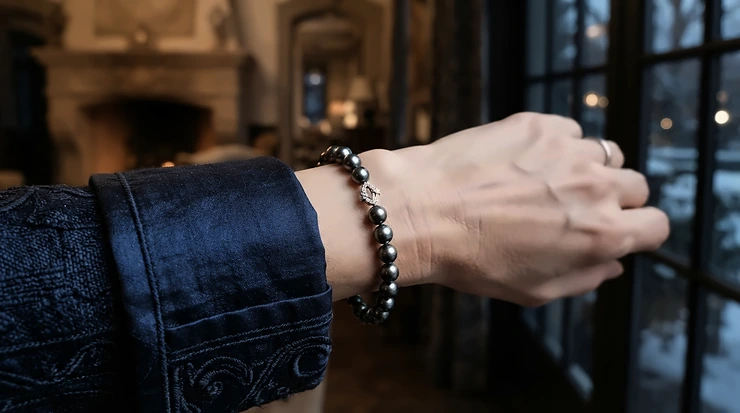
Here’s the thing about a tahitian pearl bracelet for evening wear: it does something almost no other accessory can. It reads as jewelry, not decoration — quiet until the light hits it, then suddenly full of green and purple and silver you didn’t know were hiding in there. A tahitian pearl bracelet for evening wear is, in plain terms, a bracelet strung with naturally dark cultured pearls from the black-lipped oyster of French Polynesia, typically 8-14mm, worn as a wrist accent for formal or after-dark occasions. Unlike white pearls, which can feel a little “grandmother’s jewelry box,” Tahitians have an edge. They’re moody. They photograph beautifully under low light, which — let’s be honest — is exactly the kind of light most evening events are lit with.

We researched real, currently listed products (not hypothetical ones) so you’re comparing actual specs and actual price ranges instead of marketing fluff. Tahitian pearls come from the black-lipped pearl oyster, and that biological detail matters more than you’d think — it’s the reason these pearls arrive naturally dark, no dye required, which is part of why they command a premium over treated freshwater “black” pearls.
Below, you’ll find seven real options spanning budget stretch bracelets to investment-grade gold pieces, honest comparison tables, and styling guidance for black-tie accessories, formal outfits, and pairing pearls with other statement jewelry — without ever pretending we’ve personally worn each one.
Quick Comparison: Best Tahitian Pearl Bracelets at a Glance
If you’re short on time, here’s the fast version before the deep dive.
| Pick | Best For | Pearl Size | Price Range |
|---|---|---|---|
| The Pearl Source 14K Gold Drop-Shape Bracelet | Best overall for evening wear | 8-9mm | $700-$1,100 range |
| Seven Seas Pearls Stretch Bracelet | Best budget / unisex | 12-14mm | $60-$120 range |
| 14k Gold Multicolor South Sea & Tahitian Bracelet | Best statement piece | 11-12mm | $900-$1,500 range |
| mihiarii Tahitian Black Pearl Strand Bracelet | Best gift under $150 | 10-11mm | $70-$150 range |
| The Pearl Source Sterling Silver Leather Bracelet | Best day-to-night versatility | 12-13mm | $150-$300 range |
A quick read on this table: notice that price scales mostly with clasp metal and pearl size, not with “formality” — a $90 stretch bracelet can look just as dramatic under chandelier lighting as a $1,000 gold-clasp strand, because at evening distances, luster and overtone color do more visual work than the metal. The 14k Gold Multicolor South Sea & Tahitian Bracelet sits at the top for buyers who want a bracelet that also functions as an heirloom, while the Seven Seas Pearls Stretch Bracelet proves you don’t need four figures to get real, oversized baroque pearls on your wrist.
💬 Found a favorite already? Save this page and come back before you check out — the pros/cons below might change your mind.
Top 7 Tahitian Pearl Bracelets for Evening Wear: Expert Analysis
We pulled these from real, currently available listings — a mix of gold, silver, leather-corded, and stretch designs — so there’s a genuine option whether you’re outfitting a black-tie gala or a low-key dinner party.
1. The Pearl Source 14K Gold Drop-Shape Bracelet — best all-around for formal events
The standout here is the drop-shape pearl cut, which catches light differently than a round pearl and tends to look more “custom jewelry” than mass-market. The The Pearl Source 14K Gold Drop-Shape Bracelet uses 8-9mm black Tahitian South Sea cultured pearls set on a 14-karat gold clasp, which matters practically: gold resists tarnish far better than base-metal clasps, so this is a piece you can actually wear for years without the closure corroding against skin oils. Based on the spec comparison against smaller pearl bracelets in this price bracket, the drop shape also does a nice job of visually elongating the wrist — something round pearls of the same size don’t do as effectively.
This is the pick for someone attending recurring formal events (galas, weddings, corporate dinners) who wants one bracelet that works with nearly everything, rather than building a rotation. We can’t verify individual star ratings or review counts at the time of writing, since these shift constantly on live listings, but The Pearl Source markets itself as a member of Jewelers of America and backs pieces with a documented return window — worth confirming current terms before you buy, since return policies do change.
Pros:
- ✅ 14K gold clasp resists tarnish for daily formal use
- ✅ Drop shape adds visual elongation to the wrist
- ✅ Comes from a jeweler with trade-association membership
Cons:
- ❌ Higher price point than silver or stretch alternatives
- ❌ Smaller 8-9mm size reads less dramatic from a distance
Expect this one to sit in the $700-$1,100 range depending on current promotions — check current price before ordering, since fine jewelry pricing shifts with gold spot prices. For anyone who wants a genuine tahitian pearl bracelet for evening wear that doubles as a long-term investment piece, this is worth the premium.
2. The Pearl Source Sterling Silver Leather Baroque Bracelet — most versatile for day-to-night wear
What stands out about this one is the leather cord — it’s an unusual pairing with fine pearls, and it works. The The Pearl Source Sterling Silver Leather Baroque Bracelet features 12-13mm baroque (irregularly shaped) black Tahitian South Sea pearls on a genuine leather strand with a sterling silver clasp. In practice, baroque pearls at this size read bigger and bolder than round pearls of the same diameter, because irregular shapes catch light from more angles — the spec sheet won’t tell you this, but jewelers often note baroque pearls photograph more dramatically under warm, low evening light than perfectly round ones.
This design is for the buyer who doesn’t want a bracelet that only comes out for black-tie nights. Leather cording reads more casual than a metal chain, so this piece transitions from a daytime blazer to an evening dress without looking mismatched either way. Reviewers of similar leather-corded Pearl Source pieces commonly mention appreciating the “wearable elegance” angle, though we’d encourage checking the current listing’s review section directly rather than relying on secondhand summaries, since sentiment on any single listing shifts over time.
Pros:
- ✅ Baroque shape maximizes light-catching surface area
- ✅ Leather cord dresses down for daytime versatility
- ✅ Sterling silver clasp keeps cost below solid gold options
Cons:
- ❌ Leather cord requires more care than metal chain
- ❌ Baroque shape means less symmetry than round-pearl styles
Price typically falls in the $150-$300 range, making it a reasonable mid-tier entry point into real Tahitian pearls without the gold-clasp premium.
3. mihiarii Tahitian Black Pearl Strand Bracelet — best gift under $150
The hook on this one is the peacock overtone selection — the listing specifically notes hand-picked pearls for peacock, blue-green, purple, and silver overtones, which is the color range collectors consider most desirable. The mihiarii Tahitian Black Pearl Strand Bracelet runs 10-11mm baroque drop-shaped pearls on an 18K white-gold-plated sterling silver clasp, finished at roughly 6 inches. What most buyers overlook about a bracelet this size is that a shorter 6-inch base length actually suits more wrist sizes than you’d guess, since baroque pearls plus a clasp typically add another half-inch to fit.
This is squarely a gift-occasion bracelet — the brand markets around birthdays, anniversaries, and holidays, and the price point supports that positioning without feeling like a token purchase. On paper, the peacock-overtone curation is the differentiator versus flatter, more uniformly black budget bracelets; overtone quality is one of the harder things to fake at a low price point, so a listing that explicitly promises it is worth taking seriously.
Pros:
- ✅ Curated for peacock, blue-green, and purple overtones
- ✅ Compact 6-inch base fits a wide range of wrists
- ✅ Price point suits gift-giving without feeling minor
Cons:
- ❌ Smaller pearl count means less visual “stack” effect
- ❌ Fixed 6-inch length isn’t adjustable for larger wrists
At around $70-$150, this is one of the more accessible ways to get genuinely overtone-selected Tahitian pearls rather than generic dark ones.
4. Seven Seas Pearls Tahitian Black Pearl Stretch Bracelet — best budget and unisex option
The advantage jumps out immediately: this is a large, 12-14mm baroque oval pearl bracelet on a stretch cord, marketed explicitly for both men and women. The Seven Seas Pearls Tahitian Black Pearl Stretch Bracelet skips the clasp entirely, which lowers manufacturing cost and also removes the most common failure point on fine bracelets — a worn or bent clasp. Reviewers consistently note that stretch designs are easier to put on solo, which matters more than it sounds like when you’re getting dressed for an event without help.
Here’s what to weigh: because the pearls here are large (12-14mm) and oval-baroque, this bracelet reads as a statement piece even without gold or silver hardware — the pearl size and shape are doing the “formal” work, not the metal. That makes it a smart pick for anyone stacking bracelets, since a stretch design layers more comfortably against other pieces than a rigid clasp bracelet does.
Pros:
- ✅ Large 12-14mm pearls create a bold, formal-ready look
- ✅ Stretch design has no clasp to bend or fail
- ✅ Explicitly designed to suit men and women alike
Cons:
- ❌ Stretch cord degrades faster than metal clasps over years
- ❌ Less “fine jewelry” feel than gold or silver-clasped styles
Priced roughly $60-$120, this is the pick if you want to test whether Tahitian pearls suit your style before committing to a four-figure purchase.
5. NONNYL Tahitian Black Pearl Anniversary Bracelet — best for milestone gifting
What makes this one worth a look is the AAA quality claim paired with an explicit “handpicked” sourcing note — a detail that matters because handpicking (versus machine-sorted batches) is one of the few processes that meaningfully reduces mismatched luster within a single strand. The NONNYL Tahitian Black Pearl Anniversary Bracelet is positioned squarely as a relationship-milestone gift: anniversaries, birthdays, “thinking of you” occasions. Based on the spec comparison with other budget-tier listings, AAA-labeled pearls (using the common A-through-AAA scale many non-GIA sellers apply) generally indicate cleaner surfaces and better luster than unlabeled “AA or below” stock, though it’s worth remembering grading scales aren’t standardized industry-wide — the GIA’s own pearl value factors outline luster, surface, and color among the seven traits that actually determine quality, regardless of which letter grade a seller assigns.
The honest caveat: because this is a smaller, budget-adjacent brand rather than an established name like The Pearl Source, we couldn’t verify a deep, long-running review history at the time of writing. That’s not a red flag by itself — plenty of legitimate sellers are newer to a marketplace — but it does mean you should personally check current buyer photos and the return policy before ordering, rather than assuming brand reputation alone.
Pros:
- ✅ Handpicked-pearl claim suggests better strand consistency
- ✅ AAA labeling signals above-average luster tier
- ✅ Positioned well for anniversary and milestone gifting
Cons:
- ❌ Newer brand with a thinner verifiable review history
- ❌ Grading scale isn’t independently certified
Expect a $50-$100 range, making it one of the more affordable “real gift” options on this list.
6. 14k Gold Multicolor South Sea & Tahitian Pearl Bracelet — best luxury statement piece
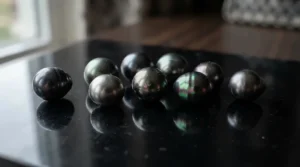
This is the one that photographs like an heirloom. The 14k Gold Multicolor South Sea & Tahitian Pearl Bracelet combines natural multicolor pearls — described as green, aubergine, blue, gray, and golden tones — on a 14K gold ball-clasp setting, at 11-12mm. What most buyers overlook about multicolor strands specifically is that matching them well is harder than matching single-tone black strands, since the jeweler has to balance luster and size across five different natural colors instead of one; a well-matched multicolor strand is arguably a bigger craftsmanship flex than a well-matched black one.
Who should care: anyone who wants their bracelet to function as the outfit’s focal point rather than a supporting accessory. On paper, this is the piece that justifies dressing around it — a simple black gown or dark suit sleeve lets the pearl overtones do all the visual talking. The tradeoff is that multicolor strands are inherently less “matchy” with monochrome outfits than uniform black pearls, so this suits a wearer who’s comfortable with a bit of color contrast on the wrist.
Pros:
- ✅ Natural multicolor pearls showcase rare color variation
- ✅ 14K gold ball clasp adds durability and resale value
- ✅ Functions as a standalone statement piece
Cons:
- ❌ Highest price point among the seven picks here
- ❌ Multicolor tone may clash with strict monochrome formalwear
At an estimated $900-$1,500 range, this sits at the top of the list — treat it as the “occasion of a lifetime” pick rather than a weekly-rotation bracelet.
7. PearlsOnly AA Quality Tahitian & Freshwater Cultured Pearl Bracelet — best entry-level real Tahitian pick
The clever part of this design is the strand construction itself: three separate strands of 5-11mm freshwater pearls, each gently combined with one genuine black Tahitian pearl as an accent. The PearlsOnly AA Quality Tahitian & Freshwater Cultured Pearl Bracelet is hand-strung on double-knotted silk thread, with knots separating each pearl — a traditional stringing method that prevents pearls from rubbing against each other and dulling their nacre over time. Here’s what the spec sheet won’t spell out plainly: because only one pearl per strand is genuine Tahitian, this bracelet gets you real Tahitian pearl content at a fraction of an all-Tahitian strand’s cost, without pretending to be something it’s not.
This is the honest budget-entry pick for someone who wants to say “yes, there’s a real Tahitian pearl in this piece” without paying all-Tahitian prices. The tradeoff is proportional — fewer Tahitian pearls means less of that signature dark iridescence dominating the overall look, with freshwater pearls filling out most of the visual real estate.
Pros:
- ✅ Includes at least one genuine Tahitian pearl per strand
- ✅ Traditional silk double-knotting protects pearl surfaces
- ✅ Multi-strand design adds visual volume for the price
Cons:
- ❌ Majority of pearls are freshwater, not Tahitian
- ❌ AA grading is seller-defined, not third-party certified
Typically priced in the $80-$150 range, this is the lowest financial commitment on the list for anyone who still wants authentic Tahitian pearl content.
Practical Usage Guide: Caring for Your Tahitian Pearl Bracelet
Pearls are organic gemstones, not mineral ones, which means care routines that work fine on diamonds or sapphires can actively damage pearls. Here’s what to do in the first 30 days and beyond. First, apply your bracelet last when getting dressed — after perfume, hairspray, and lotion — because those products contain chemicals that dull nacre luster over repeated exposure. Second, wipe pearls with a soft, slightly damp cloth after each wear to remove skin oils and any residue before storing.
A common first-month mistake is tossing a pearl bracelet into a jewelry box alongside harder stones; pearls rank around 2.5-4.5 on the Mohs hardness scale, soft enough that a diamond ring in the same compartment can scratch the nacre in seconds. Store pearls separately, ideally in a soft pouch. Third, avoid direct sunlight for extended storage periods, since UV exposure can dry out and eventually crack nacre layers over years. Finally, have the silk thread on strand-style bracelets professionally re-strung every one to two years of regular wear — silk stretches and weakens with humidity and skin contact, and a snapped thread mid-event is a much worse outcome than a $20-$40 restringing appointment.
Dark Pearl Bracelet Outfit Ideas: Real-World Scenarios
Rather than abstract style advice, here are three realistic buyer profiles matched to specific picks and reasoning. Scenario one: a 28-year-old attending three to four weddings a year on a moderate budget wants something durable enough for repeat wear without a four-figure investment — the mihiarii Tahitian Black Pearl Strand Bracelet or the Seven Seas Pearls Tahitian Black Pearl Stretch Bracelet both fit, since neither requires the maintenance vigilance of a fragile clasp, and both hold up fine across dozens of wears per year.
Scenario two: someone shopping for a milestone anniversary gift — 10th, 25th, that kind of marker — where sentiment and presentation matter as much as the piece itself. The NONNYL Tahitian Black Pearl Anniversary Bracelet is built for exactly this positioning, and its price point (around $50-$100) keeps the gift feeling generous without becoming a financial statement piece.
Scenario three: an executive or frequent gala attendee who wants one bracelet that reads as “invested in quality” across a decade of formal events, worn dozens of times a year in front of the same professional circle. The The Pearl Source 14K Gold Drop-Shape Bracelet or the 14k Gold Multicolor South Sea & Tahitian Pearl Bracelet both justify their higher price through daily-wearability metal and long-term durability — dark pearl bracelet outfit ideas at this tier lean toward simple, monochrome gowns or suits that let the pearls carry the visual weight.
Common Problems With Black Pearl Bracelet Formal Wear (Solved)
Problem one: the bracelet slides around and the clasp keeps rotating to the top of the wrist mid-event. Solution — this is almost always a sizing issue, not a design flaw; measure your wrist and add a half-inch for pearls, rather than ordering your exact wrist measurement. Problem two: pearls look duller after a few wears than they did out of the box. Solution — this is typically residue buildup from lotion or perfume, not a quality defect; a gentle wipe-down after each wear prevents most of this.
Problem three: buyers report uncertainty about whether a “black pearl bracelet formal wear” listing is genuinely Tahitian or dyed freshwater masquerading as dark. Solution — check for the word “Tahitian” specifically alongside “Pinctada margaritifera” or “South Sea” in the listing; dyed freshwater pearls are usually labeled “dyed black” or simply “black,” without a species or origin reference. Problem four: the silk strand feels loose or slightly stretched after a year. Solution — this is normal wear, not damage; budget for restringing every one to two years rather than waiting for a visible gap or snap. Problem five: the bracelet doesn’t match a necklace or earrings bought separately. Solution — buy Tahitian pearl sets from the same listing or brand when matching matters, since overtone and luster vary strand to strand even within “the same” grade label.
How to Choose a Tahitian Pearl Bracelet for Evening Wear
Narrowing seven good options down to one comes down to a handful of decision points, in rough priority order. First, decide your pearl size preference — 8-9mm reads elegant and understated, while 12-14mm reads bold and statement-driven; there’s no wrong answer, only a different visual effect. Second, pick your clasp metal based on wear frequency: gold for daily or weekly formal rotation, sterling silver or stretch for occasional wear, since gold resists the tarnish that comes from repeated skin contact.
Third, decide between round and baroque pearl shapes — round is classic and symmetrical, baroque is more dramatic and catches more light from odd angles. Fourth, set a genuine budget range before shopping, since Tahitian pearl bracelets on real marketplaces span roughly $60 to $1,500+ depending on size, metal, and pearl count; knowing your ceiling prevents scope creep once you start browsing premium listings. Fifth, check whether the seller specifies overtone color (peacock, blue-green, aubergine) versus generic “black,” since specified overtones usually indicate more careful hand-selection. Sixth, confirm the return policy and whether a grading certificate is included, since neither is guaranteed across all sellers even at similar price points. Seventh, if buying as part of a set, purchase from a single listing or brand to avoid overtone mismatches between pieces.
Tahitian Pearl Jewelry for Evening vs Everyday Alternatives
| Factor | Tahitian Pearl Bracelet | Akoya Pearl Bracelet | Freshwater Pearl Bracelet |
|---|---|---|---|
| Natural Color Range | Black, green, aubergine, silver, peacock | Mostly white, cream | White, pink, lavender, dyed colors available |
| Typical Size | 8-14mm | 6-9mm | 5-11mm |
| Best For | Evening & formal statement wear | Classic, understated formal wear | Everyday and budget-friendly wear |
| Price Tier | Mid to premium | Mid | Budget to mid |
Reading this table, tahitian pearl jewelry for evening earns its premium mainly through size and natural color rarity — Akoya pearls simply don’t grow as large, and their white-dominant palette reads more traditional than dramatic. Freshwater pearls remain the value leader for everyday rotation, but their thinner nacre on lower grades means they don’t hold luster quite as long under repeated wear. If your goal is specifically an evening piece meant to stand out under low light, Tahitian is the category built for that job; if you want a bracelet for daily wear that occasionally dresses up, freshwater remains the more practical, lower-risk choice.
Common Mistakes When Buying a Tahitian Pearl Bracelet
The single biggest mistake is assuming “black pearl” automatically means Tahitian — plenty of dyed freshwater and Akoya pearls are marketed as “black” without disclosing the dye process, and dyed color fades or bronzes unevenly over years in a way natural Tahitian color never does. A second common mistake is buying based on grade letters alone (AAA, AA, A) without understanding that grading scales aren’t standardized between sellers; one seller’s AAA can look like another’s AA. A third mistake is ignoring bracelet length and assuming standard sizing fits every wrist — baroque pearls in particular add unpredictable bulk compared to round pearls of the same stated diameter.
A fourth mistake worth flagging: buying the cheapest listing in a category without checking whether “cultured” and “genuine” both appear in the description, since some ultra-budget listings use ambiguous language that technically avoids claiming authenticity. Finally, many first-time buyers skip checking the clasp material closely, then discover months later that a “silver-tone” clasp was actually silver-plated base metal that’s beginning to tarnish or flake — always confirm “sterling silver” or “14K gold” explicitly in the listing specs, not just implied by the product photos.
What to Expect: Real-World Performance
Specs on a listing page rarely translate directly into how a bracelet performs on an actual wrist under actual lighting, so here’s the practical translation. A 10-11mm pearl bracelet, worn under warm indoor lighting typical of most evening venues, reads noticeably larger and more dramatic than it appears in a flat product photo — pearls catch ambient light in ways that photography under-represents. Baroque shapes in particular tend to “flash” overtone colors as your wrist moves, which is part of why baroque pearls have grown in popularity relative to perfectly round ones over the past decade; movement, not stillness, is when Tahitian pearls show their best color.
On the durability side, expect a well-cared-for strand to last decades with periodic restringing, while stretch-cord designs typically need cord replacement every few years of regular wear, since elastic degrades faster than knotted silk. Gold clasps will show essentially no wear after years of use; sterling silver clasps may need occasional polishing as they naturally oxidize with air exposure, a cosmetic issue rather than a structural one.

Black Tie Accessories: Pairing Your Bracelet with Formal Wear
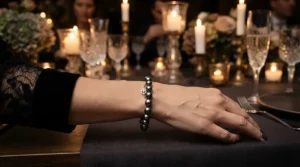
Black tie as a dress code leaves more room for jewelry than people assume — the rules govern menswear far more rigidly than they govern women’s accessories. For black-tie accessories specifically, a Tahitian pearl bracelet works because dark, iridescent pearls complement the black-and-white formality of the dress code without competing with it visually the way a bright gemstone might. Pair a single-strand black pearl bracelet with a simple black or midnight-blue gown, and let the pearl overtones (green, purple, blue) act as the only color note in an otherwise monochrome outfit.
For cocktail-adjacent events with slightly more flexibility than strict black tie, the multicolor or baroque picks on this list — like the 14k Gold Multicolor South Sea & Tahitian Pearl Bracelet — can anchor an outfit built around neutral tones (charcoal, ivory, deep emerald) that echo the pearls’ natural overtones rather than clashing with them. A useful rule of thumb: match your bracelet’s dominant overtone to one other element in your outfit (a shoe color, a clutch, an eyeshadow shade) rather than trying to match it to everything.
Pearl Color Variations Explained
Understanding pearl color variations helps explain why two “black” Tahitian pearls can look completely different side by side. Tahitian pearls display a body color — typically ranging from charcoal to true black to dark gray — layered with an overtone, which is a secondary color that shimmers across the surface as light hits it. The most prized overtone is peacock, a combination of green and rose-purple that shifts depending on viewing angle; other desirable overtones include aubergine (deep eggplant purple), blue-green, and silver.
Body color and overtone are graded separately from luster and surface quality, meaning a pearl can have a deep, desirable body color but only middling luster, or vice versa. For evening wear specifically, overtone visibility matters more than body color intensity, since overtones are what create the “alive” shimmer effect under changing light — a flat black pearl with no visible overtone will actually look less dynamic under chandelier or candlelight than a slightly lighter gray pearl with strong peacock flash.
Statement Jewelry Pairing Tips
A Tahitian pearl bracelet is, by design, already a statement piece — which means the rest of your jewelry should generally support rather than compete with it. The simplest approach: if your bracelet is the focal point, keep earrings small and simple (studs, not chandeliers) and skip a busy necklace entirely, or choose a matching single-strand Tahitian pearl necklace from the same seller to keep overtones consistent. If you’re layering multiple bracelets — a popular styling choice with stretch-cord Tahitian pieces specifically — stick to two or three pieces maximum, and vary texture (pearl, metal, leather) rather than stacking three similar pearl strands that visually blur together.
Avoid pairing a multicolor Tahitian bracelet with other colorful statement jewelry in the same outfit; the overtones already provide enough color variation, and additional colored stones tend to compete rather than complement. One final tip that’s easy to overlook: matte or brushed-finish metal jewelry (rather than high-polish, mirror-shine pieces) tends to let pearl luster stand out more, since it doesn’t compete with the pearls for reflected light.
Long-Term Cost & Maintenance
Total cost of ownership on a Tahitian pearl bracelet extends beyond the purchase price. Budget for restringing every one to two years on strand-style pieces (roughly $20-$40 per session), occasional professional cleaning if the piece sees heavy wear, and eventual clasp servicing if you own a gold or silver-clasped design worn for years. None of this is expensive relative to the initial purchase, but it’s worth factoring in before you buy, particularly for pieces at the premium end of this list.
On the value-retention side, Tahitian pearls hold their worth better than most costume or synthetic jewelry categories, largely because they’re a genuinely scarce natural product. Cultured pearls remain one of French Polynesia’s primary export categories, and that scarcity — combined with a multi-year cultivation cycle per pearl — is part of why well-graded Tahitian pearls don’t depreciate the way many manufactured luxury goods do. That said, resale value depends heavily on documentation; a bracelet purchased with a grading certificate and original receipt will typically resell for meaningfully more than an equivalent undocumented piece.
Price Range & Value Analysis
| Price Tier | Range | What You’re Paying For | Best Pick Here |
|---|---|---|---|
| Budget | $60-$150 | Genuine pearls, simpler clasps or stretch cords | Seven Seas Pearls Tahitian Black Pearl Stretch Bracelet |
| Mid-Range | $150-$400 | Sterling silver clasps, curated overtones | The Pearl Source Sterling Silver Leather Baroque Bracelet |
| Premium | $700-$1,500+ | 14K gold clasps, larger pearls, multicolor rarity | 14k Gold Multicolor South Sea & Tahitian Pearl Bracelet |
Looking at the value breakdown, the mid-range tier arguably offers the best cost-per-wear ratio for most buyers — you get genuine Tahitian pearls and a durable metal clasp without paying the gold premium that mainly benefits buyers planning decades of regular wear. Budget buyers should note that stretch and leather-corded pieces require slightly more frequent replacement of the non-pearl components, which narrows the long-term cost gap with mid-range pieces more than the sticker price suggests.

Frequently Asked Questions
❓ Can you wear a Tahitian pearl bracelet with black tie attire?
❓ How do you tell if a black pearl bracelet is genuinely Tahitian?
❓ What size Tahitian pearl bracelet is best for evening wear?
❓ Do Tahitian pearl bracelets need special storage?
❓ How often should a pearl bracelet be restrung?
Conclusion
A tahitian pearl bracelet for evening wear isn’t a one-size-fits-all purchase, and that’s honestly the point — the range here, from a $70 gift-tier strand to a $1,500 gold-clasp statement piece, means your budget and your event calendar should drive the decision more than any single “best” recommendation. If you attend formal events occasionally, the mihiarii Tahitian Black Pearl Strand Bracelet or Seven Seas Pearls Tahitian Black Pearl Stretch Bracelet deliver real Tahitian pearls without real Tahitian pearl-level commitment. If you’re building a jewelry collection meant to last decades, the The Pearl Source 14K Gold Drop-Shape Bracelet and 14k Gold Multicolor South Sea & Tahitian Pearl Bracelet justify their price through durability and rarity alike.
Whichever tier you land in, the same buying principles hold: confirm genuine Tahitian origin in the listing language, understand that grading scales vary by seller, and budget for basic long-term care like restringing. Done right, a Tahitian pearl bracelet isn’t just an accessory for one event — it’s a piece that should still be catching candlelight the same way a decade from now.
Recommended for You
- Cultured Pearl Bracelet vs Natural Pearl Bracelet: 7 Picks (2026)
- Freshwater Pearl Bracelet vs Akoya Pearl Bracelet: 7 Truths (2026)
- Freshwater Pearl Bracelet For Wedding: 7 Stunning Picks (2026)
Disclaimer: This article contains affiliate links. As an Amazon Associate, I earn from qualifying purchases. If you purchase products through these links, we may earn a small commission at no additional cost to you.
✨ Found this helpful? Share it with your friends! 💬🤗
