
In This Article
Here’s a sentence that trips up more shoppers than it should: almost every “pearl bracelet” sold today, from the $25 stretch set at a mall kiosk to the four-figure strand behind a jeweler’s glass counter, is cultured. Not fake. Not fraudulent. Just grown with a human hand guiding the process instead of pure chance. The cultured pearl bracelet vs natural pearl bracelet question sounds like a simple fork in the road, but it’s really a question about scarcity, price, and what you’re actually paying for when you clasp something lustrous around your wrist.
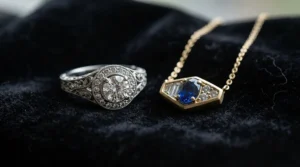
Natural pearls form when an irritant slips into a wild mollusk with zero human involvement, and they’re rare enough that most of what’s left in the market today is antique or auction-sourced. Cultured pearls, by contrast, are the same biological material — nacre over nacre, grown by a living oyster — just coaxed into existence on a farm. Both are, chemically and structurally, real pearls, and the Gemological Institute of America classifies both as natural material rather than synthetics, a distinction worth sitting with before you spend a dime.
This guide walks through what actually separates the two, why one costs $40 and the other can cost $40,000, and which of seven real, currently sold cultured pearl bracelets actually earns its price tag. We’ll also get into grading, certification, farming, and how to spot an imitation before it spots your wallet.
Quick Comparison Table
| Factor | Cultured Pearl Bracelet | Natural Pearl Bracelet |
|---|---|---|
| Origin | Farmed mollusk, human-nucleated | Wild mollusk, pure chance |
| Market availability | Widely available, new production | Extremely rare, mostly antique/auction |
| Typical price range | Under $50 to low four figures | Low thousands to well into six figures |
| Shape consistency | Generally round to near-round | Often irregular, baroque |
| Verification | Grading report optional but common | Lab report (GIA/SSEF) essentially mandatory |
| Best for | Everyday wear, gifting, layering | Collectors, heirloom pieces, investment |
The gap in that table isn’t just cosmetic. A cultured pearl bracelet is manufactured at scale, which is exactly why a well-made one can look nearly identical to a natural strand while costing a fraction of the price — thick nacre and good luster are achievable on a farm, not just in the wild. A natural pearl bracelet, on the other hand, carries scarcity as its core value driver, and that scarcity is precisely why documentation matters so much more once you cross into that territory. If you’re shopping for daily wear rather than a museum piece, the practical winner is almost always cultured.
✨ Comparing two bracelets side by side? Save this table and bookmark the page before you decide — you’ll want it again at checkout.✨
Top 7 Cultured Pearl Bracelets: Expert Analysis
Below are seven real, currently sold cultured pearl bracelets spanning budget stretch sets to premium saltwater strands. Every specification below reflects what each brand publishes; treat exact pricing as a moving target and always confirm the current figure before buying.
1. Honora Set of 5 White Freshwater Cultured Pearl Stretch Bracelets — budget stacking set that layers like a trend
Five stretch bracelets, one purchase — that’s the entire pitch, and it’s a genuinely smart one for anyone who wants the stacked-bangle look without buying five separate pieces. Honora has been sourcing freshwater cultured pearls out of China’s river farms for over six decades, and this set leans into the brand’s signature: natural and lightly infused colors pulled from a single mollusk that can produce dozens of pearls per harvest, which is exactly why the per-bracelet cost stays so low. Stretch cord means no clasp to fumble with, which matters more than it sounds like once you’ve tried buttoning a lobster clasp one-handed.
Based on the spec comparison with single-strand options, what you’re trading for that affordability is match precision — stretch sets prioritize wearability over perfectly graded, size-matched pearls, and that’s a fair trade for everyday stacking rather than formal wear. Aggregated sentiment across Honora’s broader stretch-bracelet catalog leans positive on comfort and in-hand luster, though a recurring theme in reviews of the brand’s colored variants is occasional uneven spacing that lets the elastic cord peek through between pearls.
Pros:
- ✅ Five bracelets in one purchase, ideal for stacking
- ✅ Backed by a 65-plus-year freshwater pearl specialist
- ✅ No clasp — stretch cord fits on and off easily
Cons:
- ❌ Less size-matching precision than single strands
- ❌ Elastic cord shows wear faster than knotted silk
Typically priced in the $30-$50 range for the full set, this is the easiest, lowest-commitment entry point into cultured pearls — solid value for what it is.
2. Aobei Pearl Single Cultured Freshwater Pearl Leather Bracelet — lightest, most minimalist single-pearl design
One pearl, one cord, zero fuss. Aobei Pearl builds this piece around an 11-11.5mm freshwater cultured pearl knotted onto a 2mm genuine black leather cord, finished with a smaller 9mm potato-shaped pearl at the clasp. That’s a genuinely large single pearl for the price bracket, and the leather cord shifts the whole vibe away from “formal jewelry” and toward something you could wear with a denim jacket without it looking out of place.
What most buyers overlook about single-pearl leather pieces is that the leather itself becomes a durability variable — genuine cord will soften and darken with wear the way a good leather watch strap does, which some people love and others find inconsistent with a “precious” piece. Verified review volume specific to this exact listing is limited, but feedback across Aobei’s broader leather-and-pearl line consistently highlights the soft hand-feel of the cord and well-matched luster on the main pearl, with occasional notes that the knot can loosen slightly after months of daily wear and benefits from an occasional re-tightening.
Pros:
- ✅ Large 11-11.5mm statement pearl at an accessible price
- ✅ Casual, versatile leather-cord styling
- ✅ Handmade knotting, easy to adjust length
Cons:
- ❌ Leather requires care to avoid moisture damage
- ❌ Knot can loosen with extended daily wear
Expect this piece to sit in the under-$25 range, making it one of the more affordable ways to wear a genuinely sizable freshwater pearl.
3. The Pearl Source White Freshwater Pearl Bracelet in Sterling Silver — AAA-grade classic strand with authenticity paperwork included
This is the archetype most people picture when they hear “pearl bracelet”: a matched strand of round white pearls on a sterling silver clasp. The Pearl Source grades these at AAA — the brand’s top freshwater tier — with pearls sized 7.0-7.5mm, and ships each one with a certificate of authenticity, which is a meaningfully bigger deal than it sounds like, since the FTC’s Jewelry Guides require sellers to actually say “cultured” rather than letting ambiguous language imply otherwise (a rule outlined in the FTC’s advertising guidance on pearls).
On paper, AAA freshwater means thick nacre, high symmetry, and minimal surface blemishing, which translates in practice to a strand that photographs and catches light almost as evenly as a saltwater Akoya piece costing several times more. Reviewers of this specific listing and the brand’s adjacent freshwater pieces consistently describe the pearls as more lustrous in person than in product photos, a pattern that tracks with AAA-grade nacre thickness doing real optical work.
Pros:
- ✅ AAA freshwater grading with visible surface uniformity
- ✅ Sterling silver is hypoallergenic and tarnish-resistant
- ✅ Ships with a certificate of authenticity
Cons:
- ❌ Sterling silver requires periodic polishing
- ❌ Fixed 7.0-7.5mm sizing limits statement-piece scale
Pricing generally sits in the $60-$100 range, positioning it as the sensible middle ground between stretch-set casualness and fine-jewelry investment.
4. Belacqua AA Quality Cultured Freshwater Pearl Strand Bracelet in Rose Gold-Toned Beads — warm-tone alternative to classic white-and-silver
Not every pearl bracelet needs to read “bridal.” Belacqua’s take swaps the expected sterling silver for rose gold-toned accent beads spaced between 8.0-8.5mm AA-quality freshwater pearls, giving the piece a warmer, more modern finish that pairs better with rose gold jewelry you might already own. At 7.5 inches, it runs slightly longer than the classic 7-inch strand, which is worth noting if you tend to size down.
Here’s what the spec sheet won’t spell out clearly: AA quality sits one tier below AAA, meaning you’ll see marginally more natural surface texture on close inspection — not a flaw, just a reminder that “flawless” pearls are graded, not default. That’s a completely reasonable trade for the price bracket, and it’s the same logic jewelers apply when they steer budget-conscious buyers toward AA over AAA. Dedicated review data for this exact configuration is thin, but the rose-gold-and-pearl pairing shows up as a consistently requested combination across freshwater bracelet listings generally, suggesting steady demand for the warmer palette.
Pros:
- ✅ Warm rose-gold tone pairs with modern gold jewelry
- ✅ Slightly longer 7.5-inch length fits more wrists
- ✅ Arrives in a gift box, ready for occasions
Cons:
- ❌ AA grading shows more surface texture than AAA
- ❌ Rose gold-toned beads may not be solid gold
Expect a price point in the $45-$75 window, a fair ask for a freshwater strand with a distinctive finish.
5. Amazon Collection 14k Yellow Gold Saltwater Cultured Akoya Pearl Bracelet — hand-knotted silk cord with a real gold clasp
This is where the cultured pearl bracelet vs natural pearl bracelet conversation starts getting interesting, because Akoya pearls are the saltwater category that historically sat closest to natural pearls in appearance. Amazon Collection’s own private-label piece uses AA-quality Akoya cultured pearls at 7.5-8mm, hand-knotted on matching silk cord in the traditional jewelers’ method, and finished with a genuine 14-karat yellow gold ball clasp rather than gold plating.
What most buyers overlook about Akoya pearls specifically is that they were the very first cultured pearl type to reach commercial production back in the 1920s, and they remain the industry benchmark for deep luster and rose overtones — a legacy that traces directly back to Kokichi Mikimoto’s original culturing experiments, detailed on his Wikipedia biography page. Silk-knotting between each pearl isn’t just tradition for tradition’s sake, either — it stops the whole strand from scattering if the cord ever breaks, unlike a bracelet strung on unknotted wire. Review data specific to this Amazon-exclusive listing benefits from being directly attached to verified Amazon purchases, and the recurring praise centers on the clasp feeling substantially more secure than the typical spring-ring closure found on cheaper strands.
Pros:
- ✅ Genuine 14k gold clasp, not plating
- ✅ Traditional hand-knotted silk cord construction
- ✅ Akoya’s deep luster outshines most freshwater pearls
Cons:
- ❌ Saltwater Akoya costs noticeably more than freshwater
- ❌ Silk cord eventually needs professional restringing
This piece typically lands in the $150-$250 range — a legitimate step up in both materials and craftsmanship over the freshwater options above it.

6. The Pearl Source 14K Gold AAA Japanese Akoya Saltwater Cultured Pearl Bracelet — top-tier Akoya with a money-back guarantee attached
If the Amazon Collection piece above is the accessible Akoya entry point, this is the version aimed at buyers who want the best grading available without going full South Sea. The Pearl Source rates this strand AAA — its highest saltwater tier — at 7.0-7.5mm, set on a 14-karat gold clasp and backed by a 60-day money-back guarantee, which is a meaningfully longer return window than most jewelry retailers offer.
Japanese Akoya oysters, primarily Pinctada fucata, are cultivated almost exclusively for round, symmetrical pearls, and that singular focus on roundness is exactly why AAA Akoya reads as noticeably more polished and “finished” than an equivalent freshwater grade — there’s simply less natural shape variation to grade around. Aggregated sentiment across this brand’s Akoya line, drawing on its stated base of over 50,000 customers, consistently emphasizes trust in the grading claims and responsiveness of customer service when sizing needs adjusting.
Pros:
- ✅ AAA saltwater grading, the brand’s top Akoya tier
- ✅ 60-day money-back guarantee is unusually generous
- ✅ Made in the USA by a Jewelers of America member
Cons:
- ❌ Premium Akoya pricing prices out casual buyers
- ❌ 14K gold clasp requires the same care as fine jewelry
Budget somewhere in the $150-$300 range for this one — it’s positioned as a genuine fine-jewelry purchase, not a fashion accessory.
7. The Pearl Source Tahitian South Sea Pearl Bracelet with Sterling Silver Clasp — baroque black pearls with the widest color range
Round isn’t the only shape worth wanting, and this is the pick for anyone drawn to Tahitian pearls’ famously moody palette — grays, greens, peacock, and near-black overtones that no freshwater or Akoya pearl can replicate. The Pearl Source’s AA+ graded Tahitian bracelet uses baroque (irregularly shaped) cultured pearls from Pinctada margaritifera oysters, finished with a sterling silver clasp.
Here’s what most shoppers get backwards about baroque shaping: it’s not a defect being priced around, it’s the natural growth pattern of larger-nucleus South Sea and Tahitian oysters, and collectors often pay a premium for dramatic baroque shapes specifically because each one is genuinely one-of-a-kind in a way a perfectly round pearl can’t be. Reviewers browsing Tahitian pearl jewelry as a category consistently flag the color depth as the standout feature, with the honest caveat that baroque shapes photograph less symmetrically than round strands — a trait to expect rather than a manufacturing flaw.
Pros:
- ✅ Genuine Tahitian black pearls, unmatched color depth
- ✅ Baroque shapes make every bracelet unique
- ✅ AA+ grading with visible high luster
Cons:
- ❌ Irregular baroque shape isn’t for symmetry purists
- ❌ Tahitian sourcing pushes price above Akoya and freshwater
Pricing generally runs in the $150-$350 range depending on baroque pattern and size — a genuinely distinctive alternative to the round-white default.
Are Cultured Pearls Real Pearls?
Yes. Cultured pearls are real pearls, grown by a living mollusk out of the same aragonite-and-conchiolin nacre as natural pearls, just with a human-inserted nucleus kickstarting the process instead of a random irritant. The Gemological Institute of America classifies both natural and cultured pearls as natural material, not synthetics — the distinction is about origin, not authenticity.
This is where a lot of confusion creeps in, and honestly, some of it is by design in less scrupulous corners of the jewelry market. A “cultured pearl” and an “imitation pearl” are two completely different products. Cultured pearls are biologically grown; imitation pearls are glass, plastic, or shell beads coated in a pearlescent lacquer, and federal law requires sellers to say so using words like “imitation,” “faux,” or “simulated” directly before the word pearl. Over 90% of pearls sold in jewelry today are cultured, which tells you something important: cultured isn’t the budget option compared to natural, it’s simply the modern market. Natural pearls are the outlier, not the norm, and treating “natural” as automatically superior to “cultured” misunderstands what each word is actually describing.

Natural Pearl Bracelet Cost: What You’re Really Paying For
A natural pearl bracelet’s price tag has almost nothing to do with size or shine and almost everything to do with rarity. Because wild mollusks produce a pearl in a small fraction of specimens — and matching multiple natural pearls into a single bracelet by size, color, and luster is exponentially harder than sourcing one — even a modest natural pearl bracelet routinely starts in the low thousands of dollars and climbs from there, with matched, well-documented strands regularly clearing five and six figures at auction.
Compare that to a cultured strand of near-identical visual quality selling for a few hundred dollars, and the math gets uncomfortable fast: you’re not paying for beauty at that price gap, you’re paying for scarcity and provenance. That’s not a criticism of natural pearls — scarcity is a legitimate value driver in plenty of markets — but it does mean buyers should walk in with realistic expectations. If someone offers you a “natural pearl bracelet” at a price that looks like cultured pricing, that’s not a deal; that’s a red flag worth treating with real skepticism, because it almost certainly isn’t what it claims to be.
Pearl Authenticity Certificate: How to Prove What You’re Buying
An authenticity certificate is only as good as the lab that issued it, and this is the section where that distinction actually matters to your wallet. A basic “certificate of authenticity” bundled in a gift box from a retailer typically just confirms the pearls are cultured (as opposed to imitation) — useful, but not the same tier of documentation as a formal gemological lab report.
For anything approaching natural-pearl territory, or high-value cultured strands, the recognized standard is a GIA Pearl Identification and Classification Report (or an equivalent from labs like SSEF), which uses X-ray radiography to examine internal growth structure — natural pearls typically show concentric growth arcs with no solid core, while bead-nucleated cultured pearls reveal a visible bead nucleus. Even trained gemologists reportedly achieve only around 65% accuracy from visual inspection alone, which is exactly why lab testing exists instead of trusting the naked eye. On the seller side, the FTC’s Jewelry Guides specifically prohibit describing cultured pearls using only their type (say, “Akoya pearls”) without the word “cultured” attached, precisely because that omission has historically misled buyers into assuming natural origin.
Pearl Farming Process: From Irritant to Iridescence
Cultured pearl farming starts with a technician — not chance — inserting a small nucleus, usually a polished bead cut from mussel shell, into a host mollusk, sometimes alongside a sliver of donor mantle tissue that tells the oyster’s body how to start secreting nacre. The oyster is then returned to controlled farm waters, where it layers nacre around that nucleus continuously for anywhere from several months (freshwater) to several years (Akoya and South Sea) before harvest.
The technique traces back to Kokichi Mikimoto, who successfully cultured his first pearls in 1893 after years of near-bankrupt experimentation, and by 1921 had commercialized round cultured pearls for the first time — a breakthrough that essentially built the modern pearl industry from scratch. What most people don’t realize is that a single freshwater mollusk can be nucleated with multiple tissue grafts and produce dozens of pearls in one harvest cycle, which is the structural reason freshwater cultured pearls are so much more affordable than saltwater varieties: saltwater oysters typically yield just one pearl per nucleation, per oyster, per multi-year cycle.
GIA Pearl Grading Explained: The 7 Value Factors
When gemologists evaluate a pearl professionally, they’re not eyeballing it — they’re scoring it against seven defined factors: size, shape, color, luster, surface quality, nacre quality, and (for multi-pearl pieces) matching. Nacre thickness alone is graded on a four-tier scale, from “Very Good” at 0.8mm or thicker down to “Poor” under 0.3mm, and that single number does more to predict a pearl’s longevity than almost any other spec on a listing.
| Nacre Grade | Thickness | What It Means in Practice | Best For |
|---|---|---|---|
| Very Good | ≥0.8mm | Deep, durable luster; resists thinning over decades | Investment pieces, natural pearls |
| Good | 0.5-0.8mm | Strong luster; typical of well-made AAA cultured strands | Everyday fine jewelry like The Pearl Source Akoya |
| Fair | 0.3-0.5mm | Visible shine but thinner protective layer | Budget stretch sets like the Honora set |
| Poor | <0.3mm | Nacre may wear thin with heavy daily use | Occasional-wear fashion pieces |
Reading that table against the seven products above, the pattern holds up: the premium Akoya and Tahitian picks lean toward Good-to-Very-Good nacre because saltwater oysters simply grow nacre more slowly and densely, while the budget freshwater stretch sets trade some nacre depth for accessibility. Neither choice is wrong — it’s a legitimate durability-versus-price tradeoff, not a quality failure on the cheaper end.
How to Spot Imitation Pearls: A Buyer’s Detection Guide
Before you assume something is a bargain natural or cultured pearl, rule out the much more common possibility: it’s not a pearl at all.
- Check the drill hole. Imitation pearls often show a glass or plastic core at the drill hole where coating has worn away; real cultured and natural pearls show consistent nacre all the way through.
- Weigh it in your hand. Genuine pearls feel notably heavier and cooler than glass-bead imitations of the same size — this comes down to nacre density versus hollow or lightweight glass cores.
- Look for surface irregularity. Perfectly uniform, poreless surfaces under magnification often indicate a coated imitation; real nacre has microscopic texture even when it looks smooth to the naked eye.
- Read the listing language carefully. Under FTC rules, sellers legally must use words like “imitation,” “faux,” or “simulated” directly before “pearl” if that’s what it is — vague terms like “pearlescent” or “pearl-style” are a signal to dig deeper.
- Ask for the coating disclosure. Legitimate sellers of cultured pearls will readily confirm mollusk origin; hesitation or vague answers about how the pearl was produced is itself informative.
- Compare the price to the category. A “cultured pearl” bracelet priced like a $5 fashion accessory almost certainly isn’t cultured pearl at all, regardless of what the listing title says.
None of these tests alone is airtight — that’s exactly why lab certification exists for anything above casual fashion-jewelry stakes — but running through this checklist before checkout catches the overwhelming majority of mislabeled listings.
How to Choose a Cultured Pearl Bracelet
- Start with your wear frequency. Daily wear favors durable stretch cord or a secure clasp over delicate knotted silk that needs periodic restringing.
- Match the pearl type to your skin tone and wardrobe. Rosé-overtone Akoya and warm freshwater pearls flatter warmer skin tones; crisp white freshwater pairs more neutrally.
- Decide your grading floor. AA is genuinely fine for fashion wear; AAA earns its premium if the piece will see formal or frequent use.
- Check nacre thickness when it’s listed. Anything under 0.4mm on a saltwater pearl is worth a second look before committing.
- Confirm metal type, not just color. “Gold-toned” and “14K gold” are very different promises — read the listing specs, not just the photo.
- Verify return policy length. Pearls can look different under home lighting than product photography; a 30-60 day window protects you.
- Save the receipt and any certificate. Even a basic authenticity certificate matters later for insurance, resale, or gifting provenance.

Common Mistakes When Buying a Pearl Bracelet
The single most common mistake is assuming “real pearl” and “natural pearl” mean the same thing — a listing can truthfully say “real cultured pearls,” and that’s not a downgrade, it’s accurate language. The second mistake is buying by photo alone; pearl luster is notoriously hard to capture on camera, and a bracelet that looks flat online frequently looks noticeably better in hand, which is exactly why generous return windows matter more for pearls than for most jewelry categories.
A third, sneakier mistake is ignoring clasp quality in favor of pearl grading. A gorgeous AAA strand secured by a flimsy spring-ring clasp is a strand you’ll eventually lose off your wrist — the clasp is not a minor detail, it’s the single point of failure on the entire piece. Finally, buyers frequently skip checking whether pearls have been dyed or treated to achieve an unusual color; under the Jewelry Guides, sellers are supposed to disclose non-permanent treatments, so a quick scan of the listing description before purchase is worth the thirty seconds it takes.
Cultured Pearl Bracelet vs Natural Pearl Bracelet: What to Expect in Real-World Performance
On paper, a AAA cultured freshwater strand and an antique natural pearl bracelet can look remarkably close in a product photo. In hand, over months of actual wear, a few differences tend to surface. Cultured pearls, especially well-nucleated Akoya and South Sea varieties, tend toward rounder, more symmetrical shapes that catch light evenly from any angle — a byproduct of controlled nucleation. Natural pearls more often show subtle asymmetry that becomes part of their character rather than a flaw, and that irregularity is frequently what collectors are specifically paying for.
Durability-wise, both hold up well with basic care, since the material science is identical. Where they diverge is maintenance context: a $40,000 natural strand tends to live in a safe between wearings and gets professionally restrung on a strict schedule, while a $75 cultured strand is far more likely to get worn hiking, swimming (not recommended, but it happens), and generally lived-in without the same white-glove treatment. That’s not a criticism of either choice — it’s simply two different relationships with the same category of object, and knowing which relationship you actually want is more useful than knowing which pearl is “better.”
Pearl Bracelets for Every Occasion: Matching Buyer Profiles
The first-time buyer on a tight budget. If you’re picking up your first pearl bracelet purely to try the look before committing more money, the Honora Set of 5 or the Aobei Pearl leather-cord piece make the most sense — low financial risk, real cultured pearls, and enough variety to figure out what style you actually gravitate toward before spending more.
The bride or bridesmaid shopping for a matched set. Weddings call for consistency across multiple people wearing similar pieces, and this is where The Pearl Source’s sterling silver freshwater strand shines — predictable AAA grading across multiple orders keeps everyone’s bracelet visually matched, and the included certificate doubles as a nice keepsake detail.
The gift-giver marking a milestone anniversary or birthday. Akoya sits in the sweet spot of “obviously special without requiring a natural-pearl budget,” making either the Amazon Collection or The Pearl Source Akoya bracelet a genuinely memorable gift that reads as considered rather than last-minute, especially in a proper gift box.
The collector or self-purchaser who wants something unmistakably unique. The Tahitian South Sea baroque bracelet is the pick here — no two baroque pearls are identical, so the piece functions almost like a fingerprint, which matters to buyers who specifically don’t want to see their exact bracelet on someone else’s wrist.
Practical Care Guide: Keeping Your Pearl Bracelet Lustrous for Decades
Pearls are organic gemstones, which means they’re softer and more chemically reactive than diamonds or sapphires — treat them accordingly and they’ll genuinely last generations. Put pearls on last when getting dressed, after perfume, hairspray, and lotion have settled, since these products chemically dull nacre luster over time in a way that’s essentially permanent once it happens. Wipe pearls with a soft, slightly damp cloth after each wear to remove skin oils and body chemistry, both of which can degrade nacre gradually with repeated contact.
Store pearls separately from harder gemstones that could scratch the relatively soft nacre surface — a fabric-lined pouch works far better than tossing them into a jewelry box drawer alongside everything else. If your bracelet is knotted on silk cord, plan on professional restringing roughly every one to two years of regular wear, since silk stretches and weakens with repeated flexing; a stretch-cord piece should get swapped out once the elastic shows visible fatigue rather than waiting for it to snap. Common first-30-days mistakes include wearing pearls into a shower or pool (chlorine and chemical exposure genuinely damage nacre) and storing them in an airtight plastic bag, which can trap moisture and dull luster faster than open, breathable storage.
Buyer’s Decision Framework: Cultured or Natural?
If you want daily-wearable jewelry without babying it, choose cultured, because the durability-to-cost ratio simply makes more sense for regular use. If you’re building a collection with resale or inheritance value in mind and have a real budget for it, natural pearls with proper lab documentation are a legitimate long-term asset class, though an illiquid and highly specialized one. If you’re shopping for a wedding, gift, or first pearl purchase, cultured is almost always the right call — full stop, no asterisk. And if someone offers you a “natural pearl bracelet” without a GIA or SSEF report at anything resembling cultured pricing, walk away; that mismatch between claim and price is close to a guaranteed red flag.
FAQ
❓ Is a cultured pearl bracelet worth buying over a natural pearl bracelet?
❓ How much does a genuine cultured pearl bracelet cost?
❓ Can you tell a natural pearl from a cultured pearl bracelet just by looking?
❓ Do cultured pearl bracelets come with a certificate of authenticity?
❓ Where can you buy a genuine natural pearl bracelet today?
Conclusion
The cultured pearl bracelet vs natural pearl bracelet decision ultimately isn’t a quality contest — both are genuinely, chemically real pearls grown by living mollusks. It’s a decision about scarcity, budget, and what role the bracelet is going to play in your life. Cultured pearls, whether freshwater, Akoya, or Tahitian, deliver real luster, real durability, and real craftsmanship at prices that make sense for everyday wear, gifting, and building a jewelry collection you’ll actually use. Natural pearls occupy a different category entirely — rare, historically significant, and priced accordingly, with documentation doing most of the heavy lifting to justify that price.
Of the seven bracelets covered here, there’s no single universal winner — the Honora set and Aobei Pearl leather bracelet cover low-risk entry points, The Pearl Source’s freshwater and Akoya strands hold the dependable middle ground, and the Amazon Collection Akoya piece and Tahitian baroque bracelet earn their higher price tags through metal quality and sheer rarity of color, respectively. Match the pick to your actual use case rather than chasing the “best” pearl in the abstract, and you’ll end up with a bracelet you reach for constantly instead of one that sits in a drawer.
Recommended for You
- Freshwater Pearl Bracelet vs Akoya Pearl Bracelet: 7 Truths (2026)
- Freshwater Pearl Bracelet For Wedding: 7 Stunning Picks (2026)
- South Sea Pearl Bracelet for Anniversary Gift: 7 Best Picks 2026
Disclaimer: This article contains affiliate links. As an Amazon Associate, I earn from qualifying purchases. If you purchase products through these links, we may earn a small commission at no additional cost to you.
✨ Found this helpful? Share it with your friends! 💬🤗
