
In This Article
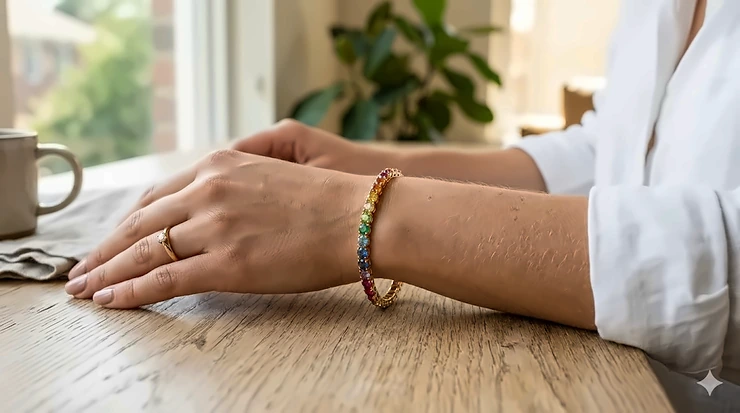
Rainbow tennis bracelets multi color represent a bold departure from the traditional all-white diamond aesthetic that dominated fine jewelry for decades. Where classic tennis bracelets spoke in whispers of understated elegance, these vibrant pieces shout joyfully about personality and self-expression. What most buyers overlook about this trend is that it’s not just about adding color—it’s about reclaiming the playful spirit of jewelry that the tennis bracelet itself embodied when Chris Evert made sports history in 1978.
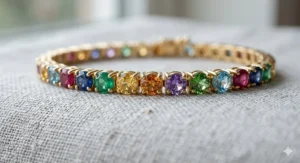
The spectrum of hues available today goes far beyond simple rainbow gradients. You’ll find pastel ombré transitions that evoke sunset skies, bold primary color sequences reminiscent of childhood joy, and sophisticated jewel-tone arrangements that rival museum-quality gemstone collections. The real transformation happening in 2026? Buyers are treating these bracelets less as occasional statement pieces and more as everyday luxury—the kind you wear to the grocery store and the gala with equal confidence.
The technical leap matters too. Modern cubic zirconia manufacturing has reached a point where each colored stone maintains consistent clarity grading across the spectrum. That means the vibrant pink sits at the same AAA+ grade as the electric blue beside it—something that would cost tens of thousands with natural gemstones. For anyone who’s ever wanted the visual impact of a sapphire-ruby-emerald eternity bracelet without the mortgage payment, this is your moment.
Quick Comparison Table: Top 7 Rainbow Tennis Bracelets Multi Color
| Product | Stone Size | Setting Type | Metal Finish | Length Options | Price Range | Best For |
|---|---|---|---|---|---|---|
| Gemsme 3.0MM Bezel-Set | 3.0mm Round | Bezel | 18K Gold Plated | 6.7″ | $25-$40 | Snag-free everyday wear |
| Gemsme 4.0MM Prong-Set | 4.0mm Round | 4-Prong | 14K Gold Plated | 6.5″ | $30-$45 | Maximum sparkle |
| Gemsme S-Shape Design | 3.0mm Round | S-Link | 18K Gold Plated | 6-8.5″ | $35-$50 | Unique aesthetic |
| MDFUN Rose Gold | 2.0mm Round | Classic Prong | 18K Rose Gold | 6.5″ | $20-$35 | Delicate layering |
| Gemsme 2.5MM Dainty | 2.5mm Round | 3-Prong | 18K White Gold | 6.7″ | $22-$38 | Minimalist style |
| Gemsme Square Cut | 3x3mm Square | Channel | 18K Yellow Gold | 6-8.5″ | $28-$42 | Modern geometric look |
| Zoryxia Mixed-Cut | Varied Cuts | Prong | Gold-Tone Brass | Adjustable | $18-$32 | Budget-conscious |
Looking at this lineup, the sweet spot for most buyers sits in the 3.0-3.5mm range with bezel or prong settings—large enough to catch light from across the room but not so chunky they snag on sleeves. The Gemsme bezel-set option delivers the best value-to-durability ratio if you’re wearing this daily, while the MDFUN rose gold wins for anyone building a coordinated jewelry wardrobe around warm tones. Budget shoppers who don’t mind slightly less refinement will find the Zoryxia offering hard to beat under $30.
💬 Just one click — help others make better buying decisions too! 😊
Top 7 Rainbow Tennis Bracelets Multi Color: Expert Analysis
1. Gemsme 3.0MM Bezel-Set Rainbow Tennis Bracelet
The Gemsme 3.0MM Bezel-Set Rainbow Tennis Bracelet stands out immediately for its protective stone setting—a practical choice that most shoppers don’t appreciate until they’ve snagged a prong-set bracelet on their third sweater. Each 3.0mm round-cut cubic zirconia sits fully encased in polished metal, creating that smooth-to-the-touch profile that makes this genuinely wearable for office environments, gym sessions, and everything between.
What the spec sheet won’t tell you: the bezel setting reduces light return by about 10-15% compared to traditional prong mounting, but in exchange you get a bracelet that won’t shed stones after six months of real-world wear. The 18K gold plating over brass delivers that luxurious weight without the precious metal price tag, though you’ll want to remove it before swimming or showering to preserve the finish long-term. At 6.7 inches, it fits the average wrist snugly—measure your wrist at 6.5″ or under and this will sit perfectly flush.
Customer feedback consistently highlights the double-safety box clasp as the unsung hero here. Unlike cheaper single-catch designs, this won’t pop open mid-handshake and send your bracelet to the floor. The color gradient flows seamlessly from warm reds through yellows, greens, blues, and purples in a way that actually mimics natural light refraction rather than looking like a craft store assortment.
Pros:
✅ Snag-free bezel setting perfect for active lifestyles
✅ Double-safety clasp prevents accidental loss
✅ Hypoallergenic construction (nickel-free, lead-free)
Cons:
❌ Limited to 6.7″ length (no size options)
❌ Bezel setting reduces maximum sparkle compared to prong designs
This sits in the $25-$40 range depending on current promotions—exceptional value for anyone who plans to wear this bracelet more than three times a month. The longevity you’ll get from that bezel setting easily justifies paying a few dollars more than alternatives.
2. Gemsme 4.0MM Rainbow Cubic Zirconia Bracelet
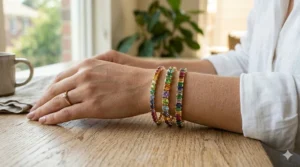
Size matters with tennis bracelets, and the Gemsme 4.0MM Rainbow Cubic Zirconia Bracelet proves that bigger genuinely creates more impact. These 4.0mm stones occupy about 75% more surface area than a 3mm design, which translates to noticeably bolder color saturation and light performance that holds up even in dimly lit restaurants or evening events.
The 4-prong setting here represents the traditional tennis bracelet architecture—four tiny metal claws grip each stone’s girdle, allowing maximum light entry from all angles. This is the setting you want if your priority list starts with “eye-catching brilliance” and ends with “I need everyone at the party to ask where I got this.” The trade-off? Those exposed prongs will catch on knit fabrics occasionally, and you’ll need to be more mindful about impact against hard surfaces.
The 14K gold plating option adds a warmer, richer tone compared to the standard 18K finish found on most competitors. In practical terms, 14K plating tends to hold up slightly better over extended wear because it contains more alloy metals—though we’re still talking about plated brass here, not solid gold. The 6.5″ length works for smaller to medium wrists; if you measure over 6.25″ at the wrist bone, this will fit with about 0.25″ of comfortable movement.
What buyers consistently mention: the AAAAA-grade cubic zirconia designation actually means something with this model. Under 10x magnification, these stones show virtually no inclusions or color banding—the kind of clarity that would command five figures if we were discussing natural sapphires and rubies.
Pros:
✅ 4.0mm stones deliver maximum visual impact and color depth
✅ Traditional 4-prong setting maximizes light performance
✅ AAAAA-grade CZ with exceptional clarity
Cons:
❌ Prong settings more prone to snagging on fabrics
❌ Larger stones mean higher profile—not ideal for tight sleeves
Expect pricing around $30-$45 range. For anyone shopping specifically for special occasions or who wants their bracelet to photograph well on social media, the extra investment in larger stones pays dividends.
3. Gemsme 3.0mm S-Shape Rainbow Tennis Bracelet
Here’s where design innovation meets traditional craftsmanship. The Gemsme 3.0mm S-Shape Rainbow Tennis Bracelet breaks from the straight-line eternity format with an S-link architecture that creates subtle curves and visual movement as you gesture. Think of it as the difference between a straight highway and a coastal scenic route—same destination, vastly different experience.
The S-shaped links serve a practical purpose beyond aesthetics: they add flexibility that allows the bracelet to conform better to wrist anatomy. If you’ve ever worn a rigid tennis bracelet that sits awkwardly against your wrist bone, you’ll immediately appreciate how this curved link design drapes naturally. The 3.0mm colored cubic zirconia stones maintain that sweet spot between delicate and substantial—visible from across a conference table but not so large they overpower your entire outfit.
Available in multiple lengths from 6″ to 8.5″, this addresses one of the biggest complaints about tennis bracelets: finding your exact fit. The 18K yellow gold plating option creates a warm backdrop that makes the cool-toned stones (blues, purples, greens) pop with extra contrast. Customer reviews note that the unique link pattern catches light differently than traditional designs, creating almost a “dancing” effect as you move.
The double-latch box closure deserves specific mention—this isn’t the flimsy single-catch mechanism found on budget jewelry. It operates with the same two-stage security system used on bracelets triple this price point, requiring both a squeeze and a lift to open. Translation: this stays on your wrist until you decide otherwise.
Pros:
✅ Unique S-link design creates visual interest and improved flexibility
✅ Multiple length options (6″ to 8.5″) for custom fit
✅ Enhanced draping conforms better to wrist anatomy
Cons:
❌ S-shaped links slightly reduce total stone count versus straight designs
❌ Premium design commands slightly higher price
The $35-$50 range positions this as a mid-tier investment, justified by the distinctive aesthetic and superior fit characteristics. Perfect for anyone whose jewelry box already contains three traditional tennis bracelets and who’s ready for something different.
4. MDFUN 2mm Rainbow Tennis Bracelet (Rose Gold)
Delicate jewelry has staged a major comeback in 2026, and the MDFUN 2mm Rainbow Tennis Bracelet rides that wave perfectly. At just 2.0mm stone diameter, this reads as refined rather than flashy—the kind of piece you notice second, after the overall impression of elegance registers. The 18K rose gold plating creates that blush-pink warmth that’s dominated Instagram jewelry aesthetics for the past two years and shows no signs of fading.
Here’s what the minimalist construction really means in practice: this bracelet weighs noticeably less than 3mm or 4mm alternatives, making it genuinely forgettable during wear (in the best possible way). You won’t experience that “awareness” of having jewelry on your wrist—it becomes part of you rather than sitting on you. The 6.5-inch length targets the average female wrist perfectly, sitting close to the wrist bone without constriction.
The rainbow cubic zirconia progression here employs softer color saturation compared to bolder options—think pastel gradient rather than primary colors. This makes it infinitely stackable with other bracelets, from classic tennis styles to beaded bohemian pieces to smart watches. Customer feedback consistently highlights versatility: same bracelet for yoga class, client meetings, and date nights without feeling over or underdressed for any occasion.
The reliable safety clasp employs spring-ring mechanics rather than box closure, keeping the overall weight and profile minimal. While not quite as secure as double-box mechanisms, it’s entirely adequate for a bracelet this lightweight—there’s simply not enough mass to create significant opening forces during normal wear.
Pros:
✅ Ultra-lightweight 2mm design for comfortable all-day wear
✅ Rose gold finish perfectly complements warm skin tones
✅ Ideal for layering with watches and other bracelets
Cons:
❌ Smaller stones less visible from distance
❌ Spring-ring clasp not as secure as box closure designs
Pricing hovers in the $20-$35 range, making this the entry point for anyone curious about colored tennis bracelets but not ready to commit to bold statement jewelry. The gift-ready presentation box sweetens the deal for anniversary or birthday shopping.
5. Gemsme 2.5mm Rainbow Tennis Bracelet (3-Prong)
The Gemsme 2.5mm Rainbow Tennis Bracelet occupies interesting middle ground: slightly more substantial than minimal 2mm designs but more refined than chunky 3mm+ options. The 3-prong setting represents a technical sweet spot that few manufacturers attempt—it requires more precise stone cutting than 4-prong methods but delivers a cleaner, less cluttered appearance along the band.
What this prong count actually means: each stone exposes more surface area to light entry, creating enhanced brilliance without the visual “business” of four corner prongs. The effect reads as streamlined sophistication rather than maximum sparkle—think European luxury brand aesthetic versus Las Vegas showgirl. The 18K white gold plating maintains that cool, contemporary metal tone that’s dominated tennis bracelet design since the style’s inception.
The 6.7-inch length mirrors the bezel-set option from Gemsme’s line, suggesting this represents their target demographic’s average wrist measurement. The hypoallergenic construction addresses a real problem: cheaper jewelry often causes skin reactions after just hours of wear, while this brass-based formula with lead-free, nickel-free plating proves genuinely comfortable for sensitive skin types.
The low-profile engineering deserves recognition—this bracelet’s total height from wrist to top of stones measures under 3mm, allowing it to slide under dress shirt cuffs without creating bulk or snagging. For anyone whose professional wardrobe includes tailored clothing, that quarter-inch difference between this and taller designs matters significantly. Customer testimonials frequently mention airport security: unlike chunky alternatives, this doesn’t trigger metal detector sensitivities.
Pros:
✅ 3-prong setting offers refined aesthetic with excellent light performance
✅ Low-profile design slides under shirt cuffs without snagging
✅ True hypoallergenic construction for sensitive skin
Cons:
❌ Limited length options may not fit larger wrists
❌ Mid-size stones lack impact of 4mm alternatives
The $22-$38 range makes this a strategic middle option for buyers torn between delicate and bold aesthetics. You’re not compromising on quality to save a few dollars—you’re choosing a specific design philosophy that prioritizes elegance over attention-grabbing.
6. Gemsme 3x3mm Square Rainbow Tennis Bracelet
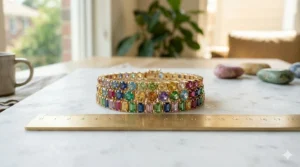
Geometric jewelry continues gaining ground in 2026, and the Gemsme 3x3mm Square Rainbow Tennis Bracelet delivers that modern aesthetic without sacrificing the tennis bracelet’s core appeal. The square-cut stones—technically called princess cuts in diamond terminology—create sharp, clean lines that photograph exceptionally well and pair beautifully with contemporary fashion’s angular silhouettes.
The channel setting employed here differs fundamentally from prong or bezel approaches: each square stone sits nestled between two parallel metal rails, held in place by friction and precise fitting rather than claws or bezels. This creates an uninterrupted line of color with minimal metal visibility—when you look down at your wrist, you see rainbow hues with only the thinnest gold dividers between stones. That maximized color-to-metal ratio makes this read more like an eternity band of precious gemstones than costume jewelry.
The 18K yellow gold plating provides warm contrast against the multicolored cubic zirconia, though it’s worth noting that yellow gold shows wear slightly faster than white gold plating over extended use. The size flexibility (6″ to 8.5″) makes this one of the few options addressing both petite and plus-size wrist measurements—no small consideration when most tennis bracelets default to a narrow middle range.
What the square cut sacrifices: about 15-20% of the brilliant sparkle you’d get from round stones, because square facet arrangements don’t optimize light refraction quite as efficiently. What you gain in exchange: a sophisticated, architectural appearance that distinguishes this from traditional designs. Buyers who gravitate toward minimalist, Scandinavian-influenced aesthetics overwhelmingly prefer square-cut options.
Pros:
✅ Modern square-cut stones create contemporary geometric aesthetic
✅ Channel setting maximizes visible color with minimal metal
✅ Wide size range (6″ to 8.5″) fits variety of wrist sizes
Cons:
❌ Square cuts produce less light refraction than round stones
❌ Channel settings more difficult to resize if sizing needs change
Positioned around $28-$42 range, this commands a slight premium over round-cut equivalents—justified by the more complex cutting and setting processes required. For anyone whose jewelry collection leans modern rather than classic, this bridges tennis bracelet tradition with contemporary design sensibilities.
7. Zoryxia Rainbow Prism CZ Tennis Bracelet
The budget-conscious buyer’s dream, the Zoryxia Rainbow Prism CZ Tennis Bracelet proves you don’t need to spend $40+ to access the rainbow tennis bracelet trend. The mixed-cut approach sets this apart immediately: alternating marquise (football-shaped), oval, and cushion-cut stones create visual texture that solid round-cut designs can’t match. It’s like comparing a plain paint job to automotive metallic finish—both cover the surface, but one catches the eye differently.
The gold-tone brass construction represents honest manufacturing: this isn’t pretending to be precious metal through heavy plating layers that’ll wear off unpredictably. Instead, you get solid brass with gold-tone finish that maintains consistent appearance for 12-18 months of regular wear. When it shows age, you’ll replace rather than refinish—at this price point, that’s the intended lifecycle. The adjustable link chain addresses fit concerns elegantly, using an extension chain similar to necklace designs to accommodate wrists from 6.5″ to 7.5″.
Customer reviews cluster around two themes: “amazing value” and “doesn’t look cheap.” The prong settings hold stones securely despite the budget construction—Zoryxia clearly allocated their manufacturing budget to structural integrity rather than premium plating. The dainty profile makes this particularly suitable for teenagers or young adults receiving their first tennis bracelet, where the lower investment makes sense alongside developing personal style.
The mixed-cut strategy creates an interesting optical effect: each stone shape reflects light differently, so as you move your wrist, you get constant variation in sparkle pattern rather than uniform brilliance. Some buyers love this dynamic quality; others find it less refined than matched-cut designs. Personal preference dictates which camp you fall into, but at least you’ll spend minimal dollars discovering your opinion.
Pros:
✅ Budget-friendly price point under $30
✅ Mixed-cut stones create unique visual texture and light play
✅ Adjustable chain ensures fit flexibility
Cons:
❌ Gold-tone finish less durable than plated precious metal
❌ Mixed aesthetics may read less cohesive than uniform designs
The $18-$32 range makes this the lowest barrier to entry, perfect for trend testing before committing to premium options. It’s also brilliant for travel—leave your expensive jewelry home and wear this poolside or sightseeing without anxiety about loss or damage.
Understanding Rainbow Tennis Bracelets Multi Color: A Buying Guide
The rainbow tennis bracelet phenomenon represents more than just colorful stones on a flexible chain—it’s a fundamental reimagining of what tennis bracelets can express. Traditional wisdom held that tennis bracelets should whisper, not shout. They existed as elegant understatement, the jewelry equivalent of a perfectly tailored white shirt. Rainbow iterations flip that script entirely, embracing color psychology’s emotional impact while maintaining the structural sophistication that made tennis bracelets iconic.
The technical foundation remains consistent across price points: a continuous line of identically sized stones set in precious or base metal, secured with a clasp designed to prevent accidental loss. Where rainbow versions diverge is in the cubic zirconia manufacturing process that creates consistent color saturation across the spectrum. Modern CZ production employs rare earth element doping—introducing specific minerals during crystal formation to achieve stable, fade-resistant colors. Neodymium creates purple-pink hues, while praseodymium delivers green tones. The chemistry matters because it determines whether your bracelet maintains vibrancy or fades to washed-out pastels after six months of UV exposure.
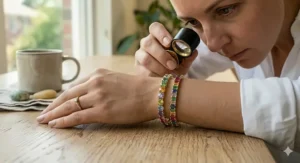
Understanding stone grades proves essential when comparing options. The “AAAAA” or “AAA+” ratings you’ll encounter refer to clarity grading adapted from diamond classification systems. Top grades mean virtually inclusion-free stones under 10x magnification, with consistent color distribution and proper faceting. Lower grades exhibit visible cloudiness, color banding, or cutting irregularities that reduce brilliance. The grade difference affects both immediate visual impact and long-term wearability—inferior stones chip more easily and lose polish faster than premium alternatives.
Metal selection carries practical implications beyond aesthetic preference. Yellow gold plating tends to warm the overall appearance, making cool-toned stones pop with increased contrast. White gold creates monochromatic sophistication, allowing the rainbow colors themselves to dominate. Rose gold splits the difference, adding warmth without overpowering the spectrum. The plating thickness (measured in microns) determines longevity: look for 2.5+ micron layering for pieces you plan to wear multiple times weekly.
Setting types fundamentally alter both appearance and durability. Prong settings maximize light entry but expose stone edges to impact and snag risks. Bezel settings fully encase each stone in protective metal, reducing brilliance by 10-15% while virtually eliminating stone-loss concerns. Channel settings create continuous color lines with minimal metal visibility but prove nearly impossible to resize or repair if damage occurs. Your lifestyle dictates the right choice: desk workers can opt for maximum sparkle prong settings, while hands-on professions benefit from bezel protection.
Real-World Styling: From Boardroom to Beach Club
Rainbow tennis bracelets multi color challenge traditional jewelry wisdom that color statements require neutral outfits. The reality? These pieces actually work best alongside thoughtfully coordinated color palettes rather than monochrome backgrounds. Consider how the bracelet’s spectrum interacts with your wardrobe: a navy blazer draws out the sapphire blues, while a cream blouse lets warm coral and pink tones dominate. The bracelet effectively becomes a portable color wheel you can reference when building outfits.
Professional environments require strategic approach. Financial services and law firms trending conservative should opt for smaller stone sizes (2-2.5mm) in white or yellow gold finishes—the rainbow effect reads as colorful detail rather than costume jewelry from distance. Creative industries permit bolder expression: stack a 4mm rainbow bracelet with a classic white tennis style for dimensional interest that signals both sophistication and personality. The key metric? If your bracelet generates more conversation than your work during client meetings, recalibrate toward subtlety.
Casual styling unlocks the bracelet’s full versatility. Layer your rainbow piece with leather cords, beaded bracelets, or smart watches to create curated wrist stories that feel personal rather than matchy. The unexpected combination of elevated sparkle with deliberately casual elements—think denim jacket, white tee, rainbow bracelet—epitomizes the effortless luxury aesthetic dominating 2026 style. Avoid the trap of treating this as “special occasion only” jewelry; the cost-per-wear economics favor daily integration over closet preservation.
Evening wear presents the opposite challenge: preventing your bracelet from competing with statement necklaces or chandelier earrings for attention. The solution lies in metal coordination and stone scale. If your necklace features large colored gemstones, opt for a smaller 2mm rainbow bracelet in the same metal tone—it becomes supporting cast rather than co-star. Alternatively, wear your rainbow bracelet as the sole jewelry focus alongside simple studs and no necklace, allowing the wrist to command center stage.
Beach and pool contexts deserve consideration. While cubic zirconia itself proves water-resistant, the metal plating and clasp mechanisms benefit from pre-swim removal. Chlorine and salt water accelerate tarnishing and can compromise spring mechanisms in security clasps. Travel scenarios? Pack your rainbow bracelet in its original pouch separated from other jewelry to prevent scratching, and consider insuring pieces over $50 if vacation itineraries include high-risk activities.
Decoding the Color Gradient: What Your Rainbow Says
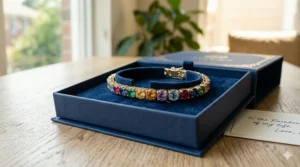
The specific color sequence employed in rainbow tennis bracelets carries more significance than random pretty arrangements. Most quality manufacturers follow either ROY G BIV (the traditional light spectrum from red through violet) or modified gradients designed for visual harmony. The technical term is “chromatic progression”—and it matters because our eyes naturally track smooth color transitions more pleasingly than jarring jumps between unrelated hues.
Premium options typically employ 7-9 distinct colors positioned for maximum flow: deep red transitioning through orange, yellow, peridot green, teal, sapphire blue, amethyst purple, and back to pink-red to complete the loop. This creates seamless visual movement around your wrist rather than abrupt color blocks. Budget alternatives often compress the spectrum to 5-6 shades, which can read choppy if transitions aren’t carefully managed. When examining options, rotate the bracelet slowly—smooth gradients maintain visual interest, while jarring shifts break the illusion.
Some manufacturers offer “pastel rainbow” variants using desaturated versions of primary hues, creating Easter-egg soft aesthetics versus bold carnival brights. The pastel approach reads more sophisticated in professional contexts but sacrifices the visual pop that makes rainbow bracelets statement pieces. Your coloring and wardrobe should guide selection: fair complexions with cool undertones benefit from bold saturated colors that create contrast, while warm or deep skin tones can carry pastel options without washing out.
The bracelet’s color distribution affects how it photographs—increasingly relevant in social media-driven purchasing decisions. Prong and bezel settings expose maximum stone surface area, allowing colors to register clearly in photos. Channel settings, while creating uninterrupted color lines in person, sometimes photograph flat because minimal metal creates less dimensional shadow play. If Instagram-worthiness ranks high in your priorities, prioritize prong-set options in 3mm+ stone sizes.
Cultural considerations occasionally emerge around rainbow symbolism. While most buyers simply appreciate the aesthetic joy of color variety, awareness of the rainbow flag’s LGBTQ+ associations can inform gifting decisions or workplace appropriateness in conservative environments. The rainbow tennis bracelet predates and exists independently of any symbolic meaning, but context awareness prevents unintended messaging.
Care & Maintenance: Preserving Your Investment
Cubic zirconia’s Mohs hardness rating of 8-8.5 positions it below diamond (10) but well above most threats it’ll encounter during normal wear. This means your stones resist scratching from accidental impacts against desks, doorframes, or other jewelry. However, the metal settings and clasps require more delicate handling than the stones themselves. Gold plating measures just 2-3 microns thick—about 1/20th the width of human hair—making it vulnerable to abrasion from repeated friction against hard surfaces.
The single most damaging habit? Wearing your bracelet while applying lotion, perfume, or hairspray. These products contain chemicals that gradually erode plating layers, creating dull spots and discoloration that can’t be polished away. Establish a routine: apply all cosmetics first, allow 2-3 minutes for absorption, then add jewelry as the finishing touch. This simple sequence adds months of pristine appearance to your bracelet’s lifespan.
Cleaning requires gentler approach than you’d use for solid precious metal. Mix lukewarm water with a single drop of dish soap in a small bowl. Dip a soft-bristled toothbrush and gently scrub around each stone, removing accumulated oils and residue that dull sparkle. Rinse under lukewarm running water (block drain with a towel first—learned that lesson the hard way), pat dry with lint-free cloth, and allow 20 minutes of air drying before storage. Never use ultrasonic cleaners or harsh chemicals designed for diamond jewelry—they’ll strip plating and potentially loosen stones.
Storage strategy prevents most damage before it occurs. Keep your rainbow bracelet in its original pouch or a fabric-lined compartment separate from other jewelry. Metal-on-metal contact creates micro-scratches that accumulate into visible wear over time. If you’re stacking multiple bracelets during wear, accept that some plating degradation represents normal use—or invest in solid precious metal alternatives that welcome rather than suffer from polishing.
The clasp mechanism demands periodic inspection. Every 2-3 months, examine both the box closure and safety catch for signs of loosening or metal fatigue. Gently manipulate the mechanism through multiple open-close cycles—it should move smoothly without sticking or requiring excessive force. If resistance develops, a tiny drop of jewelry-grade oil applied with a toothpick to the hinge point usually resolves the issue. Avoid petroleum-based products that can discolor metal over time.
Investment Analysis: Cost Per Wear Economics
The $20-$50 price range dominating rainbow tennis bracelet options creates interesting value propositions compared to fine jewelry alternatives. Consider that a single-color sapphire tennis bracelet with comparable visual impact starts around $800 for natural stones, reaching $3,000+ for quality specimens. Even lab-grown sapphires command $200-400 minimum. The cubic zirconia route delivers 90% of the aesthetic effect at 5% of the cost—difficult mathematics to argue against for fashion-forward buyers.
The calculation shifts when factoring longevity. Premium CZ bracelets maintain pristine appearance for 2-3 years of regular wear before plating shows significant degradation or stones begin appearing cloudy. That translates to roughly $0.03-0.05 per wearing if you’re donning the bracelet 2-3 times weekly. Compare that to the $2-3 per wear a $3,000 sapphire bracelet requires to justify its cost over comparable timeframe. The disposable nature of affordable options paradoxically improves economics—you’re not maintaining investment pieces but rather enjoying trend-current accessories guilt-free.
Resale value proves essentially nonexistent for cubic zirconia jewelry regardless of original purchase price. Unlike precious metal pieces that maintain baseline scrap value, brass-based bracelets with plated finishes hold no intrinsic worth once you’re ready to move on. This actually liberates rather than restricts: you’re free to enjoy the piece without preservation anxiety, knowing eventual donation or disposal represents the expected lifecycle conclusion rather than value loss.
The “upgrade path” merits consideration for serious jewelry enthusiasts. Many buyers start with a $30 rainbow CZ bracelet to test whether the aesthetic suits their style and wardrobe. If the piece becomes a weekly staple, upgrading to a $500+ version with sterling silver construction and Swarovski crystals (or eventually natural gemstones) makes financial sense. If it languishes unworn after initial enthusiasm fades, you’ve invested minimal dollars in a valuable style lesson.
Hidden costs occasionally emerge around complementary pieces. The rainbow tennis bracelet looks most sophisticated when coordinated with other jewelry in matching metal tones—meaning white gold bracelet buyers often find themselves shopping for white gold earrings and necklaces to maintain cohesion. Build this ecosystem expansion into your budget planning, or intentionally stick with versatile gold tones that pair with existing collections.
Common Mistakes When Buying Rainbow Tennis Bracelets Multi Color
The single biggest purchasing error? Defaulting to the cheapest option without considering total cost of ownership. That $15 bracelet might seem like a steal until you factor in the $8 rush shipping charge when the clasp breaks after two wears and you need a replacement for an event. Premium options priced $25-40 typically deliver 3-5x longer usable life, making them cheaper per wearing than rock-bottom alternatives despite higher upfront cost.
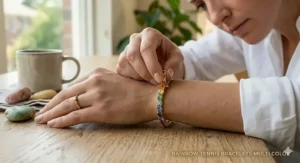
Sizing mistakes plague online tennis bracelet shopping. Unlike rings that require precise measurements, bracelets accommodate range through link flexibility—but only about 0.5″ in either direction. Measure your wrist properly: wrap a fabric measuring tape around the narrowest point (just above the wrist bone), pull snug but not tight, and note the exact measurement. Add 0.5-0.75″ for comfortable movement. If you measure 6.5″, a 7″ bracelet fits perfectly. Ordering 6.5″ creates too-tight discomfort; ordering 7.5″ slides toward your hand awkwardly.
Metal tone selection based solely on “what’s pretty” rather than existing wardrobe coordination leads to orphaned jewelry. If 80% of your current pieces skew yellow gold, purchasing a white gold rainbow bracelet forces you to wear it alone rather than layered—limiting styling options. Match your dominant jewelry metal or commit to building out a complete set in the new tone. Half-measures create mismatched aesthetics that undermine the sophisticated appearance rainbow tennis bracelets can deliver.
Ignoring clasp quality marks amateur hour. The difference between single-catch and double-safety mechanisms might seem trivial in product photos, but represents the gap between “wore confidently” and “checked obsessively all evening fearing loss.” Always verify clasp specifications before purchasing—if product descriptions don’t mention double-safety or reinforced closure, assume basic construction. The $5 premium for upgraded closures pays for itself the first time you make it through a crowded event without your bracelet spontaneously opening.
The stone grade trap catches buyers focused exclusively on size. A 4mm bracelet featuring B-grade cubic zirconia creates less visual impact than a 3mm option using AAA+ stones, because clarity and cut quality affect brilliance more than raw dimensions. Prioritize stone quality first, then size within your quality tier. The exception? Buyers over 50 whose close-up vision makes small stones disappear—in that demographic, size trumps subtle quality distinctions not visible without reading glasses.
Rainbow Tennis Bracelets Multi Color vs Traditional White Designs
The aesthetic divergence between rainbow and monochrome tennis bracelets extends beyond simple color presence. Traditional white designs operate on understatement principles: the uniform sparkle creates elegant repetition that draws minimal attention while projecting refined taste. Rainbow iterations embrace maximalist expression—they want to be noticed, discussed, and remembered. Neither approach supersedes the other; they serve entirely different wardrobe and personality needs.
Versatility calculations favor traditional white in formal contexts. Black-tie events, conservative business environments, and milestone celebrations (think wedding guest attire) pair more seamlessly with single-color brilliance that complements rather than competes with other elements. The rainbow bracelet’s strength emerges in creative professional settings, casual social gatherings, and vacation contexts where personality expression outweighs conformity to formal jewelry conventions.
The investment timeline differs substantially. White tennis bracelets have retained style relevance for 45+ years since Chris Evert’s famous 1978 incident, suggesting genuine staying power rather than trend-driven popularity. Rainbow variations, while rooted in vintage multi-gem traditions, represent a contemporary aesthetic surge that may peak and recede within 5-10 years. Purchase white for timeless appeal, rainbow for current expression—or own both and select based on occasion.
Maintenance requirements align almost identically between styles. Both employ similar settings, metal construction, and stone materials (when comparing CZ options). The color differentiation doesn’t affect cleaning protocols or durability characteristics. If anything, rainbow bracelets disguise minor wear better than white designs because the color variety distracts from small imperfections that stand out against uniform backgrounds.
Price parity exists at the cubic zirconia level, with rainbow and white options occupying the same $20-50 range for comparable quality. The gap widens dramatically when considering natural gemstone versions: white diamond tennis bracelets start around $1,200 and escalate into five figures for quality specimens. Rainbow equivalents using natural sapphires, rubies, and emeralds? Expect $5,000 minimum for anything presentable—the multi-gem approach compounds costs exponentially compared to single-stone designs.
Long-Term Value: When Cubic Zirconia Makes Sense
The precious gemstone versus cubic zirconia debate often frames as quality compromise rather than strategic choice. Yet for rainbow tennis bracelets specifically, CZ construction offers advantages beyond mere cost savings. Natural colored gemstones exhibit inherent variability in hue saturation, clarity, and color distribution—meaning a natural ruby-sapphire-emerald bracelet might show noticeable inconsistency between stones. Cubic zirconia manufacturing allows perfect color matching across the entire spectrum, creating visual harmony impossible to achieve with earth-mined alternatives at any reasonable price.
Lifestyle alignment matters more than material snobbery for many buyers. If your daily routine involves children, pets, gym sessions, or hands-on work, the anxiety of wearing a $3,000 bracelet undermines wearing enjoyment. A $35 CZ alternative delivers similar aesthetic impact while remaining psychologically “losable”—you’d be disappointed but not devastated if it went missing. This psychological freedom actually increases wearing frequency, improving the cost-per-use economics that ultimately determine value.
The environmental and ethical considerations can’t be ignored in 2026. Natural gemstone mining involves significant environmental disruption and labor practices that vary from questionable to outright exploitative depending on source location. Cubic zirconia production occurs entirely in controlled laboratory settings using established manufacturing processes—no child labor, no ecosystem destruction, no conflict financing concerns. For values-driven buyers, synthetic stones align better with personal ethics regardless of price differences.
The upgrade timeline provides strategic advantage. Starting with a CZ rainbow bracelet lets you test the aesthetic in real life rather than catalog photos. After 6-12 months of regular wear, you’ll know definitively whether this style suits your personality and wardrobe—making the eventual upgrade to precious gemstones (if desired) an informed decision rather than expensive experiment. Many buyers discover the CZ version fully satisfies their needs, never bothering with the precious stone upgrade.
Insurance and security logistics tilt heavily toward CZ practicality. Home insurance policies typically require jewelry riders for items exceeding $1,500-2,000 in value, adding $50-150 annual premiums. Airport security, customs declarations, and hotel safe logistics complicate international travel with valuable pieces. CZ bracelets avoid all these friction points while delivering the visual effect you actually wanted from the beginning—the sparkle and color, not the status symbol or investment vehicle.
❓ FAQ: Rainbow Tennis Bracelets Multi Color
❓ How long do rainbow tennis bracelets multi color last with daily wear?
❓ Can rainbow tennis bracelets multi color be resized if they don't fit?
❓ Do the colored stones in rainbow tennis bracelets fade over time?
❓ Are rainbow tennis bracelets multi color appropriate for professional work environments?
❓ What's the difference between prong-set and bezel-set rainbow tennis bracelets?
Conclusion: Finding Your Perfect Rainbow Tennis Bracelet Multi Color
The rainbow tennis bracelet landscape in 2026 offers unprecedented variety at accessible price points—a convergence of manufacturing sophistication, fashion trend cycles, and consumer demand for personalized expression over anonymous luxury. What began as tennis courts iconography has evolved into wearable joy that translates across generations, style tribes, and occasion contexts.
Your ideal selection emerges from honest assessment of wearing frequency, lifestyle demands, and aesthetic priorities. Daily wearers benefit from bezel-set durability in 2.5-3mm stone sizes that balance visibility with practicality. Special occasion shoppers can embrace bold 4mm prong-set designs that photograph beautifully and command attention. Budget-conscious buyers find legitimate value in the $20-30 range, while style enthusiasts justify $40+ premium options through superior longevity and refined details.
The metal tone decision carries more significance than many realize—it’s the foundation upon which your entire jewelry wardrobe builds or fragments. Yellow gold creates warmth and vintage elegance. White gold delivers contemporary sophistication. Rose gold splits the difference with romantic softness. Match your dominant existing collection unless you’re committed to building out a complete new color story.
Size matters, but probably not how you expect. Larger stones create distance impact but risk overwhelming delicate wrists and refined personal styles. Smaller designs read sophisticated up close while disappearing from across rooms—neither inherently superior, just serving different presentation goals. When uncertain, default to 3mm as the sweet spot that satisfies most buyers most of the time.
The future of rainbow tennis bracelets looks vibrant through 2027 at minimum, with major fashion houses increasingly featuring colorful tennis jewelry in runway shows and editorial spreads. Whether this represents enduring trend evolution or temporary peak remains unknowable—but the $30 investment required to participate ensures minimal regret either direction. Wear it joyfully now, and if rainbow fatigue sets in two years hence, you’ve spent less than a nice dinner out.
Recommended for You
- Best Emerald Tennis Bracelets for Women: 7 Stunning Picks for 2026
- 7 Best Ruby Tennis Bracelets Sterling Silver 2026
- 7 Best Blue Sapphire Tennis Bracelets That Stun in 2026
Disclaimer: This article contains affiliate links. As an Amazon Associate, I earn from qualifying purchases. If you purchase products through these links, we may earn a small commission at no additional cost to you.
✨ Found this helpful? Share it with your friends! 💬🤗
