
In This Article
Somewhere along the way, medical jewelry got a reputation problem. Picture the stereotype: a chunky steel dog tag, stamped letters, the aesthetic appeal of a hospital wristband. No wonder so many women quietly stuff theirs in a drawer instead of wearing it.
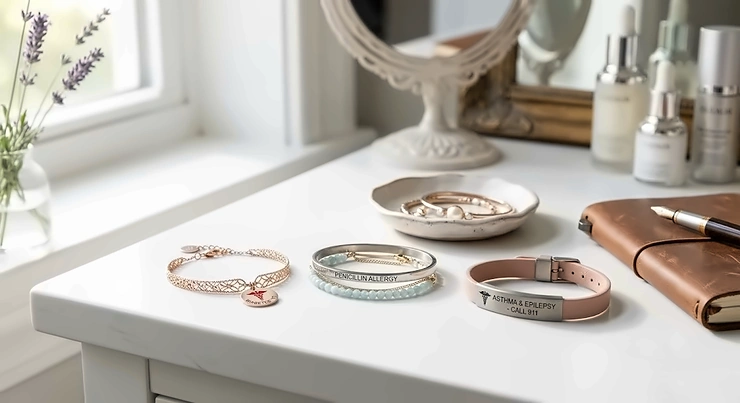
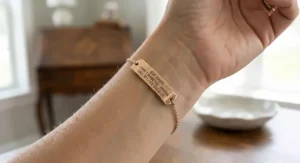
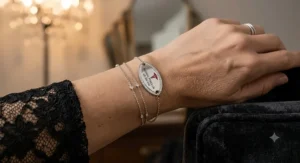
Here’s the thing, though — that stereotype is about a decade out of date. The market for fashionable medical alert bracelets for women has quietly turned into its own little design category, with heart-link chains, rose gold finishes, crystal accents, and mesh bands that could pass for something you’d find in a regular jewelry case. The medical information is still there, engraved and ready for a first responder to find. It’s just no longer shouting about it.
This matters more than it sounds like it should. A medical ID only works if you actually wear it, and you’re far more likely to wear something you’d choose for yourself anyway. Below, I’ve pulled together seven real, currently available options — from budget-friendly steel pieces under $20 to a heritage American brand that treats engraving like fine jewelry — plus the practical stuff nobody tells you upfront: how to size it, what to actually engrave, and which “feature” is mostly marketing fluff.
Quick definition, for anyone who landed here mid-search: a medical alert bracelet (also called a medical ID) is a piece of wearable jewelry, usually featuring the internationally recognized medical caduceus symbol, engraved with health information — conditions, allergies, medications, or emergency contacts — so first responders can act quickly if you can’t speak for yourself.
Quick Comparison: Fashionable Medical Alert Bracelets for Women at a Glance
Here’s the lay of the land before we go deep on each one.
| Bracelet | Style | Price Range | Best For |
|---|---|---|---|
| Lauren’s Hope Isla Medical ID Bracelet | Beaded crystal & opal, herringbone chain | $40–$70 | Special-occasion wear, premium gifting |
| Divoti Custom Engraved Medical Alert Bracelet (Premier Heart Charm) | Enamel heart charm, stainless steel | $25–$45 | Everyday wear with a soft, feminine look |
| Hobkro Customizable Medical Alert ID Bracelet | Interchangeable stainless steel | $15–$25 | Swapping tags between outfits |
| LinnaLove Heart Medical Alert Bracelet | Heart-link chain, gold/silver tone | $15–$22 | Budget shoppers who still want jewelry-grade looks |
| YOUNIFLARE Personalized Medical Info Bracelet | Milanese mesh band | $18–$28 | A modern, smartwatch-band aesthetic |
| ASTERY Medical Alert Bracelet | Stainless steel with assistive wearer tool | $14–$20 | Arthritis, limited dexterity, post-surgery |
| NARTGO Rose Gold Heart Medical Alert ID Bracelet | Rose gold heart, adjustable chain | $12–$18 | Trend-conscious budget buyers |
A few patterns jump out once you line these up. The price gap between the mass-market steel options and the heritage brands isn’t really about safety — a $15 stainless steel tag protects you just as well as a $60 one — it’s about materials, craftsmanship, and how long the finish holds up under daily wear. If you’re buying your very first medical ID and aren’t sure you’ll stick with wearing it, starting cheap and stylish (LinnaLove, NARTGO) makes more sense than dropping $60 on day one. If you’ve worn one for years and know it’s a permanent part of your routine, the Lauren’s Hope or Divoti tier earns its price through durability and a nicer everyday feel.
💬 Just one click — help others make better buying decisions too!😊
Top 7 Fashionable Medical Alert Bracelets for Women
1. Lauren’s Hope Isla Medical ID Bracelet
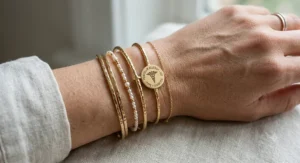
The standout feature here is restraint — this bracelet doesn’t look medical at all until you flip the tag over. The chain mixes herringbone links with hand-set abalone, opal, and crystal accents, the kind of detail you’d expect on a bracelet that has nothing to do with health information.
What most buyers overlook is that the engraving itself is the real product. Lauren’s Hope allows up to six lines of laser-engraved text, which is genuinely useful if you’re managing more than one condition — say, a blood thinner and a penicillin allergy — where a cheaper four-line tag forces you to cut something important. The company is a family-owned, USA-based operation, and that shows up in small ways: a one-year jewelry warranty and a customer care team you can actually reach.
Buyers consistently mention that it doesn’t read as “medical” to people who don’t already know, which seems to be exactly the point for a lot of shoppers in this category. It also shows up often in gift-giving contexts — a daughter buying one for a newly diagnosed mother, that sort of thing.
✅ Pros:
- Six lines of engraving for complex medical histories
- Genuinely jewelry-grade materials and finish
- USA-based customer support and a real warranty
❌ Cons:
- Costs more than mass-market alternatives
- Delicate stone accents need a bit more care than plain steel
Price sits in the $40–$70 range depending on chain and tag combination — worth it if you want something you’d wear even without the medical reason.
2. Divoti Custom Engraved Medical Alert Bracelet (Premier Heart Charm)
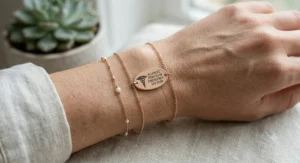
The standout here is the hardware: 316L surgical-grade stainless steel with a hard-enamel heart charm, engraved using fiber laser technology that’s noticeably more fade-resistant than the chemical-etched tags you’ll find on cheaper bracelets.
In practice, that laser engraving matters more than the spec sheet implies. Cheaper etching can blur or lighten within a year or two of regular wear; deep laser engraving stays legible, which is the entire point of a medical ID — it’s useless if a paramedic can’t read it at a glance. Divoti also bundles in access to a companion medical-alert app that can share your GPS location, a nice bonus layer of safety for anyone who travels alone or exercises outdoors.
This one tends to suit women who want something soft and a little sentimental — the heart motif reads more “jewelry” than “alert tag” — without giving up the durability of premium steel.
✅ Pros:
- Deep laser engraving resists fading far better than etched alternatives
- Optional companion app with GPS sharing
- Made and engraved in the USA
❌ Cons:
- Heart-charm styling won’t suit everyone’s taste
- Some versions cap engraving at four lines, fewer than Lauren’s Hope
Expect to pay in the $25–$45 range, putting it solidly between the budget steel options and the premium beaded lines.
3. Hobkro Customizable Medical Alert ID Bracelet
The defining feature is the interchangeable system — the tag detaches from the chain, so you can own one engraved tag and rotate it across multiple bracelet styles depending on your outfit or mood.
What that means day to day: you’re not locked into one look forever. If you get tired of the chain, swap it without re-engraving anything, since most interchangeable tags use a near-universal clasp size that fits other brands’ replacement chains too. It’s also fully waterproof, which is the kind of detail that doesn’t sound exciting until you’re showering with it for the thousandth time and don’t have to think about it.
Feedback tends to cluster around two things: people like the flexibility, and they like that it’s one of the more affordable ways into this category without feeling like a downgrade in quality.
✅ Pros:
- Interchangeable tag-and-chain system
- Waterproof for daily showering and swimming
- Budget-friendly entry point into stainless steel medical IDs
❌ Cons:
- Detachable clasps can feel slightly less secure than soldered links
- Quality control on mass-market interchangeable hardware varies more than with name brands
Typically priced in the $15–$25 range.
4. LinnaLove Heart Medical Alert Bracelet
The standout feature is how convincingly it disguises itself as regular jewelry — a heart-link chain in gold or silver tone that wouldn’t look out of place next to any other bracelet in your collection.
The practical details back that up: 316L stainless steel construction means it’s nickel-free and hypoallergenic, a real consideration if you’ve ever had a cheap bracelet turn your wrist green or itchy after a week. It ships with a free medical ID wallet card as a backup and a small velvet gift bag, which makes it a popular pick as a gift rather than a self-purchase — something to keep in mind if you’re shopping for a parent who’s resistant to the idea of wearing one at all.
Reviewers tend to highlight the comfortable fit and the fact that it genuinely looks pretty, not just “acceptable for a medical bracelet.”
✅ Pros:
- Hypoallergenic 316L steel, gentle on sensitive skin
- Includes wallet card backup and gift packaging
- Genuinely attractive heart-link design at a low price
❌ Cons:
- Adjustable range (roughly 6.5–8.5 inches) won’t fit every wrist comfortably
- Smaller engraving plate limits how much text fits
Price typically runs $15–$22.
5. YOUNIFLARE Personalized Medical Info Bracelet
The standout here is the band itself — a Milanese mesh design that looks far more like an Apple Watch strap than a traditional medical ID, which is exactly the appeal for women who want something that reads as “modern accessory” first.
That mesh format does more than look current. The adjustable, magnetic-style closure typical of Milanese bands is genuinely easier to fasten one-handed than a lobster clasp, a small but real advantage if dexterity is ever an issue. The laser-engraved tag sits flush against the mesh rather than dangling, giving it a cleaner profile under a sleeve or watch.
This one tends to appeal to women who already wear a fitness tracker or smartwatch and want their medical ID to match that aesthetic rather than clash with it.
✅ Pros:
- Modern mesh-band look that doesn’t scream “medical bracelet”
- Adjustable closure that’s easy to fasten without help
- Works well stacked with a smartwatch or fitness tracker
❌ Cons:
- Metallic mesh can occasionally catch arm hair for some wearers
- Less sparkle or visual interest than beaded or charm styles
Generally priced around $18–$28.
6. ASTERY Medical Alert Bracelet
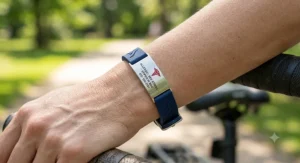
The standout feature isn’t the bracelet itself — it’s the included assistive wearer tool, designed specifically to help people with arthritis or limited hand strength fasten the clasp without assistance.
That’s a detail aimed squarely at a real problem: a medical ID does nothing for you if it sits in a drawer because the clasp is too fiddly to manage solo, especially post-surgery or with conditions like arthritis where this kind of jewelry matters most. It also ships with a paired wallet card and covers a wide 6 to 9 inch sizing range, making it one of the more adaptable budget options for different wrist sizes.
Buyers in this category tend to be purchasing for an aging parent or for themselves following a new diagnosis, and the assistive tool gets mentioned often as the deciding factor.
✅ Pros:
- Includes a wearer-assist tool for limited dexterity
- Wide 6–9 inch adjustable range
- Comes with a backup medical information card
❌ Cons:
- Styling is more functional than fashion-forward compared to heart or charm designs
- Plainer tag shape than most other entries on this list
Price typically falls between $14 and $20.
7. NARTGO Rose Gold Heart Medical Alert ID Bracelet
The standout feature is simply the finish — a rose gold heart design that taps directly into a color trend that’s stayed popular for years now, at a price point that makes it easy to justify even as a backup bracelet.
It’s an adjustable chain rather than a fixed length, so it accommodates a reasonable range of wrist sizes without needing exact measurements ahead of time. As with most plated finishes, the rose gold tone will wear thinner over years of daily contact compared to a solid-tone stainless steel piece — worth knowing upfront rather than discovering three years in.
This tends to be the pick for someone who wants to own two or three medical IDs in rotation, or who’s testing the waters before committing to a pricier piece.
✅ Pros:
- On-trend rose gold finish at a genuinely low price
- Adjustable chain fits a range of wrist sizes
- Affordable enough to buy a backup or matching set
❌ Cons:
- Plated finish may wear thinner than solid-tone steel over years of use
- Budget hardware means the clasp is often the first part to loosen
Generally available in the $12–$18 range.
Practical Usage Guide: Sizing, Engraving, and Care
Getting the bracelet itself right is only half the job — how you set it up matters just as much.
Sizing it correctly. Measure around your wrist with a soft tape or a strip of paper, then add about half an inch for comfort. Most women’s medical IDs land somewhere between 6.5 and 8 inches once you factor that in. If a listing only gives you the total length of “tag plus chain,” subtract your tag’s length first, or you’ll end up with something noticeably too tight.
Choosing what to engrave. Lead with your name, then your most urgent condition or allergy on the next line — first responders are trained to scan quickly, not read a paragraph. After that, prioritize anything that affects emergency treatment directly: blood thinners, severe allergies, pacemakers, epilepsy, or a DNR status, in roughly that order of urgency. It’s worth a quick conversation with your doctor about exactly what’s safe and useful to include, since the right wording can vary by condition.
Maintenance that actually extends the life of the piece. Wipe stainless steel pieces dry after showering or swimming even on “waterproof” models — it’s not the water that causes problems, it’s letting moisture sit in the clasp mechanism. Store plated finishes like rose gold separately from other jewelry to avoid scratch contact, and avoid chlorinated pools with beaded or crystal-accented pieces, since chlorine is harder on adhesives than on solid metal.
The first 30 days. This is when most people either build the habit or quietly stop wearing it. Put it on the same time you put on a watch or wedding ring — anchoring it to an existing habit works far better than relying on willpower alone.
Real-World Scenarios: Which Bracelet Fits Your Life
A few composite profiles, based on the kinds of situations that come up again and again in this category.
The new runner with a nut allergy. She’s training for her first half marathon and needs something that survives sweat, doesn’t bounce around mid-stride, and won’t need babying. The waterproof, interchangeable Hobkro or the mesh-band YOUNIFLARE both fit — durable, low-maintenance, and unbothered by a long run in July.
The retiree whose cardiologist has mentioned a medical ID three appointments in a row. She’s resistant because every option she’s seen looks institutional. This is the exact gap the Lauren’s Hope Isla or LinnaLove Heart bracelet fills — jewelry first, medical ID second, which tends to be the thing that finally gets it onto someone’s wrist.
The mother managing her daughter’s newly diagnosed Type 1 diabetes. Budget matters because growing kids need re-sizing, and durability matters more than sparkle. The ASTERY or NARTGO options make sense here — affordable enough to replace as a wrist grows, sturdy enough for daily school-and-playground wear.
The professional who doesn’t want a single visible sign of a medical condition at work. The Divoti Premier Heart Charm or the mesh YOUNIFLARE read as ordinary jewelry across a boardroom table, which is often the deciding factor for this group.
How to Choose Fashionable Medical Alert Bracelets for Women
- Start with material. Stainless steel (especially 316L) is the safest default — hypoallergenic, durable, and budget-friendly. Reserve precious-metal or beaded styles for cases where you specifically want a dressier look.
- Decide how you want it to fit. Fixed-length chains need an accurate wrist measurement; adjustable chains forgive sizing mistakes but can shift slightly throughout the day.
- Count your engraving lines before you shop. If you’re managing multiple conditions or medications, filter for bracelets offering five or six lines rather than three or four.
- Match it to your daily wardrobe, not your dressiest outfit. A medical ID only works if you wear it constantly, so pick something compatible with gym clothes and pajamas, not just date night.
- Check water and activity resistance if it applies to you. Swimmers, runners, and anyone who showers daily (so, everyone) should prioritize waterproof claims over decorative detail.
- Decide if an interchangeable system is worth it. It adds flexibility but also one more point where hardware can loosen over time — a fair trade for some, not for others.
- Read the warranty and return policy before buying, not after. Custom-engraved items are often final sale, so confirm sizing and content before you submit your order.
Common Mistakes When Buying a Medical Alert Bracelet
- Choosing purely on looks and skipping legibility. A gorgeous bracelet with a tiny, low-contrast engraving plate fails at its one job if a paramedic can’t read it quickly.
- Guessing at wrist size instead of measuring. This is the single most common return reason across this entire category.
- Treating the bracelet as a replacement for a wallet card. Bracelets can be missed if a sleeve covers the wrist; a backup card is cheap insurance.
- Picking a trendy plated finish without expecting it to fade. That’s fine for a $15 backup piece, less fine if it’s your only medical ID and you expected it to last a decade.
- Forgetting to update the engraving after a diagnosis changes. A new allergy or medication that isn’t reflected on the bracelet can be just as dangerous as wearing nothing at all.
Fashionable Medical Alert Bracelets vs. Traditional Medical ID Tags
| Option | Visible to First Responders | Everyday Style | Comfort for Daily Wear | Best For |
|---|---|---|---|---|
| Fashion-forward medical ID bracelet | High — worn openly on wrist | High | High | Anyone who wants consistent daily wear |
| Traditional engraved steel dog-tag style | High | Low | Moderate | Budget priority, style indifferent |
| Medical alert necklace | Moderate — may be hidden under clothing | Moderate–High | High | Those who dislike wrist jewelry |
| Wallet card only | Low — easy to miss if unconscious | N/A | N/A | Backup only, not standalone |
The pattern here is pretty clear: visibility and comfort move together. A traditional dog-tag style is just as functional medically, but the lower comfort and style score tends to translate into people simply not wearing it consistently — and a medical ID sitting in a drawer protects nobody. Necklaces work well for people who specifically dislike anything on their wrists, but they’re easier for a first responder to miss under a collar or scarf, especially in winter. Wallet cards are worth carrying as a backup, never as your only line of defense, since they’re useless if you’re separated from your bag in an emergency.
According to Wikipedia’s overview of medical identification tags, these tags exist specifically for situations where someone is unconscious, confused, very young, or otherwise unable to communicate their own medical history — which is the entire case for prioritizing visibility over subtlety when it counts.
Features That Actually Matter (And Those That Don’t)
Actually matters: Engraving depth and contrast. A deep, high-contrast engraving stays legible for years; a shallow etched one can fade within months of regular wrist friction.
Actually matters: Hypoallergenic material. Nickel sensitivity is common enough that 316L surgical steel or titanium should be a baseline requirement, not a premium add-on.
Actually matters: Adjustable sizing or accurate length options. A bracelet that’s loose enough to spin around your wrist all day is annoying enough that some people stop wearing it entirely.
Doesn’t matter much: Smartphone app integration, unless you specifically want GPS-sharing as a feature. The core function of a medical ID — passive, battery-free, always-on information — doesn’t require it.
Doesn’t matter much: Having the caduceus symbol specifically, as opposed to a different clear medical indicator. What matters is that first responders can immediately recognize something is a medical alert; the exact symbol matters less than legible engraving underneath it.
Medical Alert Bracelets for Diabetics and Other Specific Conditions
This is where the secondary keyword — medical alert bracelets for diabetics — earns its own section, because diabetes is one of the most common reasons people in this category are shopping in the first place.
The reasoning is straightforward: severe hypoglycemia can cause confusion, fainting, or loss of consciousness, all situations where a person can’t explain their own condition. A University of Rochester Medical Center summary notes that wearing medical identification makes it less likely that a condition gets misdiagnosed in an emergency, and that it’s specifically recommended for situations like exercising or traveling, when help may be slower to identify what’s wrong.
Despite that recommendation, actual usage is lower than you’d expect. A study published in the American Diabetes Association’s journal Diabetes Care, using data from the BETTER patient registry, found that only about 42% of participants with type 1 diabetes reported wearing a medical ID — and that women were more likely than men to wear one. That gap matters, because the same research notes that education efforts about wearing a Med ID should especially target people at higher risk of severe low-blood-sugar episodes.
For diabetes specifically, the engraving priority list looks like: name, “Diabetes” (specify Type 1 or Type 2), insulin or other medications if relevant, and an emergency contact. For other conditions — blood thinners, epilepsy, severe allergies, pacemakers — the same logic applies: lead with whatever a paramedic needs to know in the first five seconds, then layer in detail as space allows.
FAQ
❓ How much do medical alert bracelets for women cost?
❓ Can you shower or swim with a medical alert bracelet?
❓ What should I engrave on a medical alert bracelet?
❓ Are silicone or stainless steel medical ID bracelets better for everyday wear?
❓ Do fashionable medical alert bracelets need a subscription or phone connection?
Conclusion
The honest takeaway here is that “medical” and “fashionable” stopped being opposites a while ago, and the market has mostly caught up. Whether you’re drawn to the heritage craftsmanship of Lauren’s Hope, the everyday durability of Divoti, or one of the budget-friendly steel options like LinnaLove or NARTGO, the real win is picking something you’ll actually keep on your wrist every single day — because a medical ID sitting in a jewelry box helps exactly no one.
Start with your wrist measurement, decide how many lines of engraving your situation actually needs, and let your daily wardrobe — not your dressiest outfit — guide the style. Everything else, including price, is genuinely flexible.
✨ Don’t Miss These Exclusive Deals!
🔍 Take your medical ID search to the next level with the picks above. Click on any highlighted bracelet to check current pricing and availability — these are real, available pieces, not placeholders. The right one might be simpler to find than you expected!
Recommended for You
- 7 Best Minimalist Slider Chain Bracelets That Elevate Any Look in 2026
- Gemstone Bolo Bracelets Sterling Silver: 7 Best Picks in 2026
- 7 Best Adjustable Slider Bracelets for Women in 2026
Disclaimer: This article contains affiliate links. As an Amazon Associate, I earn from qualifying purchases. If you purchase products through these links, we may earn a small commission at no additional cost to you.
✨ Found this helpful? Share it with your friends! 💬🤗
