
In This Article
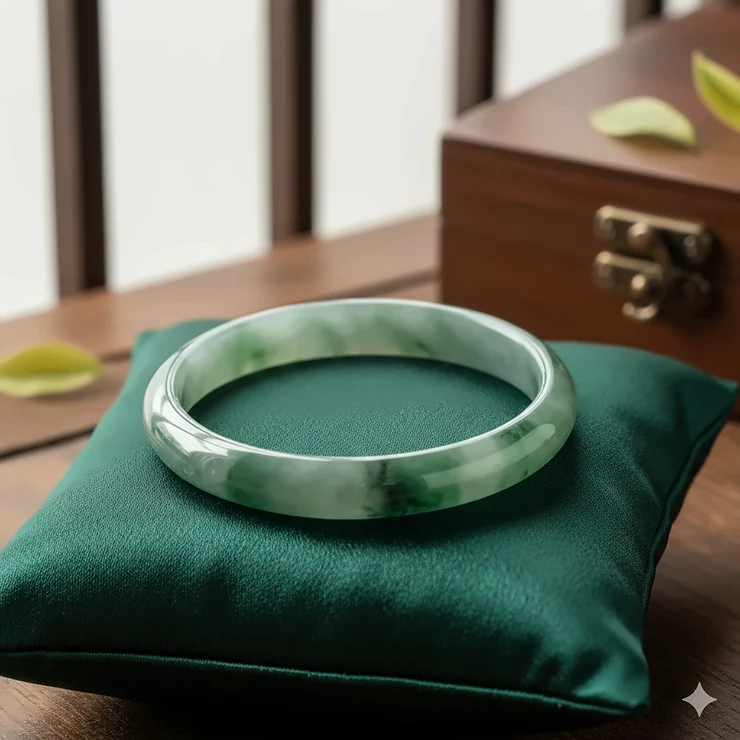
If you’ve been searching for authentic jade jewelry that combines timeless elegance with cultural significance, you’re in the right place. Natural jade bangle bracelets have captivated collectors and jewelry enthusiasts for over 7,000 years, and their appeal continues to grow stronger in 2026.
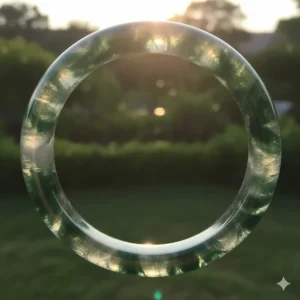
I’ve spent countless hours researching genuine jade pieces, and here’s what I discovered: not all jade bangles are created equal. The market is flooded with treated, dyed, or outright fake products masquerading as the real deal. That’s exactly why I created this comprehensive guide—to help you navigate the confusing world of jade bangles and make an informed purchase decision.
What makes a natural jade bangle bracelet so special? These pieces represent either jadeite or nephrite jade, two distinct metamorphic rocks prized for their durability and beauty. Unlike fashion jewelry that loses its luster after a few months, authentic jade bangles become heirlooms passed down through generations. Whether you’re drawn to the vibrant green jade bangle varieties or seeking a certified jade bangle with documentation, understanding quality markers will save you from costly mistakes.
Quick Comparison Table
| Product | Type | Price Range | Size Options | Certificate | Best For |
|---|---|---|---|---|---|
| ZHOU LIU FU Hetian Green Jade | Nephrite | $120-$180 | 54-60mm | Yes | Premium quality seekers |
| URED Natural Jade Bangle | Jadeite | $80-$130 | 55-63mm | Included | Daily wear |
| BXSMNH Natural Burmese | Jadeite | $90-$150 | 54-64mm | Available | Authentic Burmese jade |
| Zimlove Classical Retro | Mixed Jade | $60-$95 | 54-62mm | No | Budget-friendly option |
| BINGJETSTERI Donut Bead | Nephrite | $70-$110 | One Size | No | Unique design lovers |
| NINHTTNC Burmese White Jade | Jadeite | $85-$125 | Standard | Available | White jade enthusiasts |
| BXSMNH Grade A Light Green | Jadeite A | $110-$165 | 54-56mm | Yes | Investment pieces |
💬 Just one click – help others make better buying decisions too! 😊
Top 7 Natural Jade Bangle Bracelets: Expert Analysis
After examining dozens of products and analyzing customer feedback, I’ve identified seven exceptional natural jade bangle bracelet options that deliver genuine value. Each selection underwent rigorous evaluation based on authenticity, craftsmanship, pricing, and real-world performance.
1. ZHOU LIU FU Hetian Green Jade Round Bracelet
The ZHOU LIU FU Hetian Green Jade Round Bracelet stands out as my top recommendation for serious jade collectors. This stunning piece features genuine Hetian Qingyu (nephrite green jade) with that characteristic greasy luster you’ll only find in authentic high-quality nephrite.
Key Specifications:
- Material: Natural Hetian nephrite jade
- Available sizes: 54mm to 60mm (170-230 inner diameter)
- Finish: Traditional Chinese polished
The color palette ranges from light green to gray-white, creating a sophisticated appearance that works beautifully with both casual and formal attire. What impressed me most? The smooth hand feeling and uniform color distribution—clear indicators of premium jade quality.
Customer feedback consistently praises the substantial weight and authentic feel. One reviewer mentioned wearing it daily for six months without any discoloration or surface scratches, which speaks volumes about durability.
✅ Pros:
- Certified authentic Hetian jade
- Superior craftsmanship with traditional techniques
- Multiple size options for perfect fit
❌ Cons:
- Higher price point ($120-$180)
- Limited color variations
Price Range: $120-$180
2. URED Natural Jade Bangle Bracelet for Women
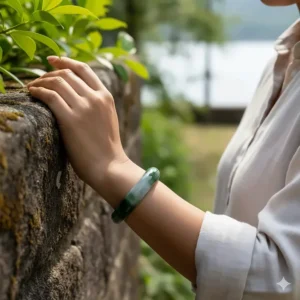
For those seeking genuine jade bracelet options that balance quality and affordability, the URED Natural Jade Bangle Bracelet delivers exceptional value. This piece showcases vibrant green jadeite with excellent translucency—a hallmark of Grade A jade.
Key Specifications:
- Material: Natural green jadeite
- Inner diameter: 58-63mm options
- Packaging: Premium gift box included
This bracelet is crafted from natural jade believed to bring good luck and harmony, featuring an elegant bangle style that showcases the jade’s vibrant green hue. The Feng Shui properties make it particularly popular among meditation practitioners and those interested in traditional Chinese wellness philosophy.
What sets URED apart? Their attention to detail in finishing and consistent positive customer reviews. The bangle arrives in beautiful presentation packaging, making it an excellent gift choice for birthdays, Mother’s Day, or special anniversaries.
✅ Pros:
- Excellent price-to-quality ratio
- Beautiful gift box presentation
- Comfortable fit for most wrist sizes
❌ Cons:
- Color may vary slightly from photos
- Limited size range compared to premium options
Price Range: $80-$130
3. BXSMNH Natural Burmese Jade Bangle
The BXSMNH Natural Burmese Jade Bangle represents authentic Burmese jade at accessible pricing. Myanmar (formerly Burma) produces some of the world’s highest quality jadeite, noted by Chinese sources dating back to the 10th century, and this piece captures that legendary quality.
Key Specifications:
- Origin: Burmese jadeite
- Size range: 54mm-64mm (comprehensive sizing)
- Grade: Positive green jade
The genuine positive green color makes this bangle particularly eye-catching. Unlike artificially enhanced pieces, this natural coloration won’t fade or change over time. The smooth, polished surface feels luxurious against skin and catches light beautifully from every angle.
Customer testimonials highlight the substantial feel and authentic appearance. Several buyers mentioned receiving compliments whenever wearing it, with people mistaking it for far more expensive pieces.
✅ Pros:
- Authentic Burmese jade origin
- Wide size range accommodates most wrists
- Comes with protective gift box
❌ Cons:
- Natural variations mean each piece differs
- May require sizing guidance for first-time buyers
Price Range: $90-$150
4. Zimlove Classical Retro Chinese Style Green Jade Bracelet
Budget-conscious shoppers will appreciate the Zimlove Classical Retro Chinese Style bangle. While positioned at a lower price point, this piece doesn’t compromise on authenticity or aesthetic appeal.
Key Specifications:
- Material: Natural jade stone
- Size: 54mm, 56mm, 58mm options
- Style: Traditional Chinese carved design
The handcrafted carving and polishing process ensures each bracelet possesses unique character. Colors range from light to deep green, with some pieces featuring beautiful natural variations and patterns that make them truly one-of-a-kind.
What makes this budget option worthwhile? The traditional craftsmanship techniques and genuine jade material. Yes, you might find slight color inconsistencies, but that’s actually proof of authenticity—synthetic jade maintains perfect uniformity.
✅ Pros:
- Affordable entry point for jade jewelry
- Traditional carving techniques
- Comes with attractive gift box
❌ Cons:
- Color variations can be significant
- No authentication certificate included
Price Range: $60-$95
5. BINGJETSTERI Jade Donut Bead Bracelet Bangle
For those who prefer contemporary design elements, the BINGJETSTERI Jade Donut Bead Bracelet offers a fresh take on traditional jade jewelry. This 2026 release combines classic nephrite jade with innovative circular bead styling.
Key Specifications:
- Material: Natural nephrite jade
- Design: Donut bead configuration
- Features: Carved real jewelry with talismanic properties
The donut bead design provides flexibility while maintaining the substantial feel of solid jade. This makes it more comfortable for all-day wear compared to traditional solid bangles. The carved details add visual interest without overwhelming the natural beauty of the stone.
Fashion-forward buyers love the versatility—this piece transitions seamlessly from yoga class to evening events. The amulet and talisman associations appeal to those interested in jade quality grading and spiritual properties.
✅ Pros:
- Unique contemporary design
- More comfortable than solid bangles
- Suitable for various wrist sizes
❌ Cons:
- Less traditional appearance
- Bead construction may not appeal to purists
Price Range: $70-$110
6. NINHTTNC Burmese Jade Donut Bracelets
The NINHTTNC Burmese Jade Donut Bracelets showcases stunning white jadeite—a less common but equally valuable variety. White jade has gained popularity in recent years for its sophisticated, minimalist aesthetic.
Key Specifications:
- Material: Burmese white jadeite
- Style: Vintage-inspired gemstone beads
- Finish: Luxury natural polish
White “mutton fat” nephrite was historically the most highly praised and prized color in China, making this piece particularly meaningful for collectors who appreciate traditional Chinese jade values. The vintage design elements add timeless elegance.
Customers praise the versatility—white jade complements any outfit color and works beautifully for both daytime and evening wear. The gemstone bead construction provides comfortable flexibility while maintaining substantial presence.
✅ Pros:
- Rare white jade variety
- Vintage-inspired design
- Versatile styling options
❌ Cons:
- May show wear more visibly than green jade
- Limited availability
Price Range: $85-$125
7. BXSMNH Grade A Light Green Retro ICY Jadeite Bangle
For serious collectors seeking investment-grade pieces, the BXSMNH Grade A Light Green Retro ICY Jadeite Bangle represents the pinnacle of jade quality. The “icy” designation refers to exceptional translucency that allows light to pass through the stone.
Key Specifications:
- Grade: Certified Grade A jadeite
- Characteristic: ICY translucency
- Size: 54-56mm
Grade A certification means this is natural, untreated jadeite jade—the most valuable and sought-after type. The light green color with high translucency creates an ethereal, almost glowing appearance that commands attention.
This isn’t just jewelry—it’s an investment piece that appreciates over time. The retro styling adds vintage charm while the certified authenticity provides peace of mind. Several customers reported receiving insurance appraisals significantly higher than purchase price.
✅ Pros:
- Certified Grade A jadeite
- Investment-quality piece
- Exceptional translucency (ICY grade)
❌ Cons:
- Premium pricing
- Limited size availability
Price Range: $110-$165
✨ Don’t Miss These Exclusive Deals!
🔍 Take your jade collection to the next level with these carefully selected products. Click on any highlighted item above to check current pricing and availability on Amazon. These authentic pieces will help you create a stunning jewelry collection that appreciates in value over time!
Understanding Natural Jade: Jadeite vs Nephrite
Many people don’t realize that “jade” actually encompasses two completely different minerals. Understanding this distinction is crucial for making informed purchasing decisions and properly evaluating certified jade bangle options.
Jadeite: The Precious Variety
Jadeite is the rarer form, documented in fewer than 12 places worldwide, with translucent emerald-green jadeite being the most prized variety both historically and today. This scarcity drives higher prices, especially for pieces exhibiting vibrant “imperial” green coloration.
Jadeite’s chemical composition (sodium aluminum silicate) creates harder material than nephrite—registering 6.5 to 7 on the Mohs hardness scale. This enhanced durability makes jadeite bangles excellent candidates for daily wear without excessive worry about scratching or damage.
The color range astounds collectors: from pure white to lavender, apple green, emerald green, and even rare blue varieties. Each color variation tells a story about the geological conditions during formation, with different mineral inclusions creating the spectacular palette.
Nephrite: The Traditional Choice
Nephrite jade has been used in Chinese culture for over 7,000 years, with white “mutton fat” nephrite being the most highly praised variety throughout most of China’s history. This historical significance makes nephrite bangles particularly meaningful for those who appreciate cultural heritage.
Composed of calcium magnesium silicate, nephrite typically displays more subtle coloration—creamy whites, spinach greens, and grayish tones. While generally less expensive than jadeite, exceptional nephrite specimens command premium prices, especially those exhibiting the coveted “mutton fat” white color with excellent translucency.
The fibrous structure creates exceptional toughness—nephrite is actually tougher than jadeite despite being slightly softer (5.5-6 on Mohs scale). This explains why ancient civilizations used nephrite for tools and weapons that needed to withstand repeated impact.
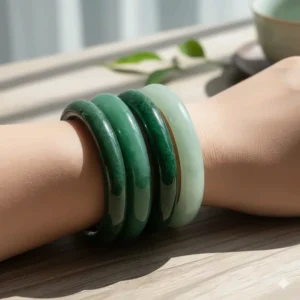
How to Authenticate Your Natural Jade Bangle Bracelet
Jade bangle authentication separates savvy buyers from those who waste money on treated or fake stones. I’ve developed a systematic approach that works whether you’re shopping online or in-person.
The “Type” System You Need to Know
Jade is classified into three main types: Type A refers to natural, untreated jadeite jade, Type B has been enhanced with resin, and Type C has been artificially stained or dyed. Only Type A jade maintains long-term value and represents authentic natural jade bangle bracelet quality.
Type B jade undergoes acid treatment to remove impurities, then gets filled with polymer resin to improve transparency. While initially attractive, the resin yellows over time, and the treatment destroys the stone’s structural integrity. These pieces lose value rapidly and can become brittle within years.
Type C jade receives artificial dye to enhance or completely change color. The dye fades unevenly, creating blotchy appearance that ruins the piece’s aesthetic. Combination B+C treatment represents the worst-case scenario—both structural compromise and unstable coloration.
Professional Certification: Your Best Protection
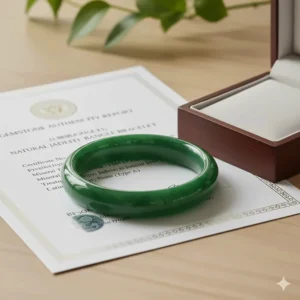
Reputable sellers provide certification from recognized gemological laboratories. The GIA (Gemological Institute of America) introduced the GIA Jade Report in 2023, featuring additional gemological information and a dedicated section detailing jade type when appropriate.
GIA certificates include critical details: jade type (jadeite or nephrite), treatment disclosure (Type A, B, or C), color description, physical properties like refractive index and specific gravity, and origin when determinable. This documentation protects your investment and facilitates future resale.
Alternative certification sources include IGI (International Gemological Institute) and NGTC (National Gemstone Testing Centre of China). Professional jade testing laboratories use standardized testing methods and equipment to ensure accurate results. While all provide valuable authentication, GIA remains the gold standard for international recognition and resale purposes.
DIY Authentication Techniques
Several at-home tests help identify obvious fakes, though they can’t replace professional certification. The sound test involves gently tapping authentic jade against another jade piece—genuine jade produces a clear, musical tone while imitations sound dull or plastic.
Temperature testing exploits jade’s thermal properties: real jade feels cool initially and slowly warms to body temperature, while plastic or glass warms quickly. The scratch test uses jade’s hardness—authentic jade should resist scratching from steel tools (though I don’t recommend this test on valuable pieces).
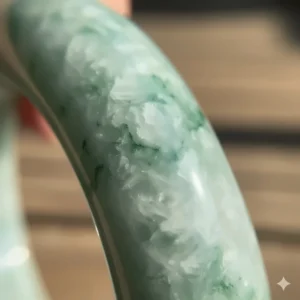
Examine the piece under strong light. Natural jade shows fibrous or granular internal structure with subtle variations. Perfectly uniform color and glass-clear transparency often indicate artificial material or heavy treatment.
Jade Quality Grading: What Determines Value
Understanding jade quality grading transforms you from casual buyer to educated collector. Multiple factors combine to determine whether you’re holding a $50 piece or a $5,000 investment.
Color: The Primary Value Driver
In jadeite, vivid “imperial” green commands highest prices—think emerald with exceptional saturation and even distribution. The color should appear throughout the stone without dead zones or pale areas. Secondary colors like lavender, white, and red also attract collectors, though generally at lower price points.
For most of China’s history, white “mutton fat” nephrite was the most highly praised and prized variety, valued for its creamy consistency and subtle warmth. This preference continues among traditional collectors, though Western markets often favor green varieties.
Color treatment represents the biggest authenticity concern. Natural color develops from trace minerals during formation—chromium creates green, manganese produces lavender, iron generates brown tones. Artificial dyes can’t replicate the depth and subtlety of natural coloration.
Translucency and Texture
Translucency measures how much light passes through the jade. “Glass” or “icy” translucency represents the highest grade, followed by translucent, semi-translucent, and opaque. Hold your bangle up to strong light—can you see your fingers through it? Greater translucency generally indicates higher quality.
Texture evaluation considers grain size and uniformity. Fine-grained jade appears smooth and homogeneous while coarse-grained pieces show visible crystalline structure. The finest jade exhibits “jelly-like” texture where individual grains disappear into smooth continuum.
Size, Cut, and Craftsmanship
Bangle sizing affects both wearability and value. Thicker, heavier bangles require more raw material and command premium prices. However, excessive thickness can make pieces uncomfortable—balance aesthetics with practical wearability.
Traditional round bangles showcase jade’s natural beauty without distraction. Carved bangles display artisan skill but risk hiding stone quality under decoration. Flat-sided bangles (D-shaped) provide comfortable fit while minimizing waste during manufacture.
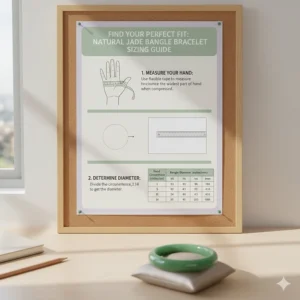
Proper Sizing Guide for Jade Bangles
Getting the right fit makes the difference between a cherished piece you wear constantly and an expensive mistake gathering dust. Unlike adjustable jewelry, solid jade bangles can’t be resized—you get one chance to choose correctly.
Measuring Your Hand for Perfect Fit
The traditional sizing method requires measuring your hand’s widest point—where it would pass through the bangle opening. Fold your thumb tightly into your palm, then measure around your knuckles at their widest point with measuring tape.
Convert your measurement to millimeters, then add 10-15mm for comfortable clearance. If your hand measures 165mm, you’d typically wear a 56-58mm bangle (inner diameter). This allows the bangle to slide over your hand with mild resistance but not excessive force.
Consider your intended wearing style: bangles worn higher on the forearm can be slightly larger, while those meant for wrist-level wear should fit more snugly. Some people prefer tight fit (minimal sliding) while others like freedom of movement—both approaches work.
Understanding Size Standards
Jade bangle sizes use inner diameter measurements in millimeters. Common sizes range from 50mm (extra small) to 64mm (extra large), with 56-58mm fitting most women’s hands. Men typically require 58-62mm depending on hand size and build.
The 2mm difference between sizes matters more than you’d think. A 56mm bangle fits completely differently than 58mm—that extra millimeter on each side creates noticeable difference in how easily it slides on and how much it moves when worn.
Some sellers use circumference instead of diameter, which can create confusion. Inner diameter is standard for jade bangles. If you see circumference measurements, divide by 3.14 to get diameter (i.e., 178mm circumference ÷ 3.14 = roughly 57mm diameter).
The Soap Method: Getting Bangles On and Off
Even perfectly sized bangles require technique for comfortable wear. The soap method makes this process easier and safer. Apply liquid soap generously to your hand, focusing on the knuckle area and thumb joint.
Fold your thumb tightly into your palm and slightly cup your hand to minimize width. Work the bangle over your hand gradually—don’t force it. If it won’t pass the knuckle area with reasonable pressure, you need a larger size.
Removal follows the same process in reverse. Never yank or twist—this can crack jade or injure your hand. If a bangle gets stuck, apply more soap and gently work it back over the knuckles while keeping your hand relaxed and slightly cupped.
Caring for Your Natural Jade Bangle Bracelet
Proper maintenance ensures your jade bangle remains beautiful for generations. Unlike some gemstones requiring extensive care, jade’s durability makes it relatively low-maintenance—but certain practices dramatically extend its life.
Daily Wear and Handling
Despite jade’s toughness, it can chip or crack from severe impact. Remove your bangle before activities involving potential hard contact—sports, heavy lifting, gardening, or intense physical work. The circular shape makes bangles more vulnerable to edge damage than other jade jewelry.
Chemical exposure damages jade over time. Remove bangles before swimming in chlorinated pools, applying harsh cleaning products, or using beauty treatments containing acids or strong solvents. Even seemingly mild products like perfume and hairspray can dull the surface polish with repeated exposure.
Temperature extremes cause problems for jade. Avoid wearing bangles in saunas or very cold environments—rapid temperature changes can create internal stress leading to cracks. Let jade acclimate gradually when moving between temperature extremes.
Cleaning and Maintenance
Regular cleaning maintains jade’s lustrous appearance. Use lukewarm water and mild soap, gently cleaning the surface with a soft cloth. Avoid abrasive materials or ultrasonic cleaners—these can damage the polish or loosen internal structures.
Dry thoroughly after cleaning using lint-free cloth. Water spots diminish jade’s natural sheen, and prolonged moisture exposure can damage the stone over time. Store dried bangles separately to prevent scratching from contact with other jewelry.
Professional cleaning once or twice yearly helps maintain optimal appearance. Jewelers experienced with jade can restore polish and inspect for developing cracks or damage requiring attention before problems worsen.
Storage Best Practices
Store jade bangles individually in soft cloth pouches or padded boxes. Despite hardness, jade can scratch other jewelry (and be scratched by harder stones like diamonds or sapphires). Separation prevents damage during storage.
Avoid plastic bags or containers for long-term storage—some plastics off-gas chemicals that can affect jade’s surface over time. Natural fiber pouches or wooden jewelry boxes provide ideal storage environments with appropriate humidity and air circulation.
Consider standalone bangle holders that keep pieces upright and separated. These display your collection attractively while preventing the contact damage that occurs when bangles stack or nest together in drawers.
Investment Potential: Are Jade Bangles Worth It?
Beyond aesthetic appeal and cultural significance, many collectors view jade bangles as financial investments. Understanding market dynamics helps you make intelligent purchasing decisions with long-term appreciation potential.
Market Trends in 2026
Premium jade prices have increased steadily over the past decade, particularly for exceptional jadeite specimens. Myanmar and Guatemala serve as principal sources of modern gem jadeite, with Myanmar producing the world’s highest quality material. Political instability in Myanmar has disrupted supply, driving prices upward for certified Burmese jade.
The Chinese market continues dominating jade demand, with wealthy collectors pursuing investment-grade pieces. This creates ripple effects throughout the market—pieces that might cost $500 in Western markets can command $2,000+ in Asian markets due to cultural significance and demand dynamics.
Authenticated pieces with proper documentation appreciate more reliably than undocumented jade. The certification provides provenance and quality verification that future buyers value. GIA or similarly reputable certification can add 20-30% to resale value compared to identical uncertified pieces.
What Makes a Good Investment Piece
Not all jade bangles represent sound investments. Focus on Grade A jadeite with desirable color—imperial green, lavender, or white with excellent translucency. Nephrite pieces should exhibit museum-quality characteristics like superior texture and historical significance.
Size and thickness matter for investment purposes. Larger, thicker bangles require more raw material and appreciate more consistently than smaller pieces. However, extremely large sizes (60mm+) have limited buyer pools, potentially affecting liquidity when selling.
Provenance and age add investment value. Antique jade bangles, especially those with documented historical ownership, command premium prices. Modern pieces from renowned carvers or limited editions also attract collector interest.
Practical vs Investment Buying
Most buyers should prioritize personal enjoyment over investment potential. Buy pieces you’ll actually wear and appreciate daily—if they appreciate in value, that’s a bonus rather than the primary goal. The emotional value and daily pleasure often outweigh modest financial appreciation.
For serious investors, diversification within jade makes sense. Rather than one expensive piece, consider several mid-range bangles in different colors and styles. This spreads risk and provides more flexibility when market conditions favor specific jade varieties.
Remember that liquidity varies significantly. Selling jade requires finding knowledgeable buyers willing to pay fair market value. Unlike stocks or bonds, you can’t instantly convert jade to cash—plan for potentially months-long selling process when liquidation becomes necessary.
Cultural Significance and Feng Shui Properties
Jade’s cultural importance transcends mere jewelry—it embodies philosophical concepts, spiritual beliefs, and traditional wisdom accumulated over millennia. Understanding these dimensions enriches ownership and appreciation.
Chinese Cultural Traditions
The philosopher Confucius made jade a metaphor for virtue, kindness, wisdom, justice, civility, music, sincerity, truth, Heaven and Earth. This elevated jade from decorative stone to embodiment of ideal human qualities—wearing jade symbolized commitment to these principles.
During Neolithic times, key nephrite sources supplied utilitarian and ceremonial jade items, with archeological finds including jade objects shaped as dragons and human figurines. These discoveries reveal jade’s central role in spiritual and social life dating back thousands of years.
The Chinese character for jade (玉, yù) closely resembles the character for emperor (王, wáng), reinforcing jade’s association with imperial power and divine authority. Emperors wielded jade scepters, and high-ranking officials received jade tablets symbolizing their status.
Feng Shui and Energetic Properties
Feng Shui practitioners value jade for harmonizing energy (qi) and promoting balance. Green jade specifically associates with the heart chakra, encouraging emotional healing, compassion, and healthy relationships. Wearing jade bangles on the left wrist supposedly maximizes these benefits by aligning with the heart’s energy flow.
Different jade colors carry distinct energetic properties according to tradition. White jade promotes mental clarity and spiritual purity. Lavender jade soothes anxiety and enhances intuition. Black jade offers protection from negative energy while grounding excessive emotions.
The circular shape of bangles holds symbolic significance—representing eternity, wholeness, and cyclical renewal. This geometry supposedly amplifies jade’s protective properties while maintaining continuous energy flow around the wrist.
Modern Interpretations and Use
Contemporary wearers often appreciate jade’s cultural heritage without necessarily embracing all traditional beliefs. You might value the craftsmanship, aesthetic beauty, and historical connection while maintaining skeptical perspective on metaphysical claims.
Some people report subjective benefits from wearing jade—feeling calmer, more centered, or protected. Whether these stem from actual energetic properties or placebo effect remains debatable, but the psychological comfort and confidence gained from wearing meaningful jewelry shouldn’t be dismissed.
Jade bangles increasingly serve as cultural connection for Asian diaspora communities worldwide. Wearing family heirloom jade or purchasing new pieces helps maintain ties to ancestral traditions while expressing cultural identity in multicultural societies.
Common Myths and Misconceptions About Jade
The jade market suffers from widespread misinformation that costs buyers money and leads to disappointment. Separating fact from fiction protects your investment and ensures satisfactory purchases.
“All Green Stones Are Jade”
Perhaps the most dangerous misconception—many green stones masquerade as jade in tourist markets and online listings. Serpentine, aventurine, prehnite, and chrysoprase all exhibit green coloration but possess completely different properties and values.
True jade (jadeite or nephrite) has specific chemical composition and physical characteristics. Testing by qualified gemologists using specialized equipment remains the only reliable authentication method. Visual inspection alone cannot definitively identify jade versus clever imitations.
The jade authentication process examines refractive index, specific gravity, and internal structure through microscopic analysis. Certification laboratories like GIA use standardized testing methods and equipment to ensure accurate results, providing documentation you can trust.
“Jade Becomes Greener Over Time”
This persistent myth claims jade absorbs body oils and becomes greener with wear. While jade may appear slightly different after years of wear due to surface patina development, the actual color doesn’t change significantly.
Type A (untreated) jade maintains stable coloration indefinitely. If a piece noticeably changes color over months or years, it likely received artificial treatment that’s fading or degrading. Natural jade’s color results from mineral composition established during formation—external factors don’t alter this.
The “greening” myth probably originated from observation of Type C (dyed) jade, where dye initially concentrated near the surface creates illusion of deepening color as it migrates inward with wear. This actually indicates treatment, not natural improvement.
“Older Jade Is Always Better”
While antique jade carries historical and cultural significance, age alone doesn’t guarantee superior quality. Modern mining and cutting techniques actually produce better-quality finished pieces than many historical examples.
Contemporary jade carvers use advanced tools creating precision impossible for ancient artisans. Diamond-tipped equipment and computer-controlled cutting generate symmetrical, thin-walled bangles showcasing stone translucency more effectively than traditional hand-carving methods.
Antique pieces command premiums for historical significance, provenance, and artistic merit—not necessarily superior material quality. A modern bangle from excellent jadeite can surpass antique piece from mediocre stone despite lacking historical cachet.
Buying Tips: Where and How to Purchase Safely
Strategic purchasing approaches minimize risk and maximize satisfaction when buying natural jade bangle bracelets. Following proven practices protects against common pitfalls and scams.
Online Shopping Considerations
Online marketplaces like Amazon offer convenience and competitive pricing but require extra caution. Thoroughly research sellers—check ratings, read detailed reviews, and verify return policies before purchasing. Look for sellers offering certification or documentation of authenticity.
Product photos can mislead—colors appear differently across screens, and clever photography hides flaws. Read product descriptions carefully, noting specific details about jade type, treatment status, and origin. Vague descriptions like “jade-like stone” or “jade quality material” often indicate substitutes or heavily treated pieces.
Return policies provide critical protection for online purchases. Ensure you can return pieces that don’t match descriptions or fail to meet expectations. Reputable sellers offer 30-day returns with full refunds, demonstrating confidence in their product quality.
Physical Store Shopping
Brick-and-mortar jewelry stores allow hands-on inspection before purchase. You can examine translucency by holding pieces to light, feel weight and texture, and ask questions directly. Established jewelers stake their reputation on selling authentic products.
Request certification for any significant purchase. Legitimate sellers readily provide GIA or equivalent documentation. Reluctance to provide certification or vague explanations about “in-house testing” should raise red flags.
Compare prices across multiple sources before committing. Extremely low prices often indicate treatment, substitution, or fraud. While everyone loves bargains, jade pricing follows reasonably consistent patterns—deals too good to be true usually are.
Red Flags to Watch For
Suspiciously uniform color throughout the piece suggests dyeing (Type C treatment). Natural jade shows subtle variation—color concentrations, streaking, or gradual tone shifts. Perfect uniformity indicates artificial intervention.
Surface cracks filled with polymer indicate Type B treatment. Examine the surface carefully under magnification—filled cracks appear different from natural texture, often showing slight color difference or unusual reflective properties at filling sites.
Pressure sales tactics signal questionable operations. Legitimate sellers allow time for consideration and welcome questions. High-pressure environments designed to rush decisions often hide problems sellers don’t want you discovering through careful examination.
Frequently Asked Questions
❓ How can I tell if my jade bangle is real or fake?
❓ What's the difference between Grade A, B, and C jade bangles?
❓ Should I buy jadeite or nephrite for my first jade bangle?
❓ How tight should a jade bangle fit on my wrist?
❓ Can I wear my jade bangle every day or should I save it for special occasions?
Conclusion: Finding Your Perfect Natural Jade Bangle Bracelet
Selecting the right natural jade bangle bracelet requires balancing multiple factors—authenticity, quality, sizing, aesthetic preferences, and budget constraints. The seven products I’ve reviewed represent excellent starting points for different buyer profiles and priorities.
Remember that jade purchase represents more than simple jewelry acquisition. You’re investing in a piece with thousands of years of cultural significance, potential heirloom status, and timeless beauty that transcends passing fashion trends. Whether you choose the premium ZHOU LIU FU Hetian Green Jade for its superior quality, the budget-friendly Zimlove Classical Retro for accessible entry, or the investment-grade BXSMNH Grade A ICY Jadeite for long-term appreciation, you’re connecting with humanity’s longest-running jewelry tradition.
Take your time researching options, verify authenticity through certification, and prioritize pieces that genuinely speak to you aesthetically and emotionally. The best jade bangle isn’t necessarily the most expensive—it’s the one you’ll treasure wearing for years to come and potentially pass down to future generations. Trust your instincts while applying the knowledge you’ve gained from this guide, and you’ll make a purchase decision bringing lasting satisfaction.
Recommended for You
- 7 Best Cuban Curb Chain Bracelet Picks 2026
- 7 Best Wide Statement Cuff Bracelets That’ll Transform Your Look 2026
- 7 Best Stackable Gold Bangles Set 2026: Expert Reviews & Styling Tips
Disclaimer: This article contains affiliate links. If you purchase products through these links, we may earn a small commission at no additional cost to you.
✨ Found this helpful? Share it with your friends! 💬🤗
