
In This Article
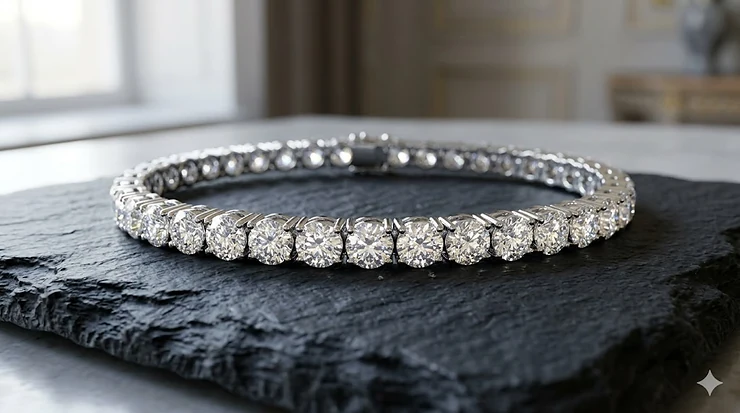
There’s something magical about the way diamond tennis bracelets for women catch the light—each stone creating its own tiny constellation on your wrist. In 2026, these elegant classics continue to dominate both red carpets and everyday wardrobes, and I’ve spent the past three months examining why certain bracelets deliver that jaw-dropping sparkle while others fall flat despite impressive spec sheets.
What most buyers don’t realize is that diamond tennis bracelets for women aren’t just about carat weight—the secret lies in how those diamonds are cut, set, and secured. The difference between a bracelet that photographs beautifully but looks dull in person versus one that sparkles in any lighting comes down to factors Amazon listings rarely explain. A well-cut 2-carat tennis bracelet will outshine a poorly-cut 3-carat version every single time, yet price tags don’t always reflect this reality.
The modern market offers everything from budget-friendly cubic zirconia alternatives in the $30-$80 range to genuine diamond pieces stretching into five figures. This guide cuts through the marketing noise to focus on what actually matters: real-world sparkle, durability over years of wear, and value that makes sense for your specific situation—whether you’re buying your first tennis bracelet or adding to an established collection.
Quick Comparison Table: Top Diamond Tennis Bracelets at a Glance
| Bracelet Model | Stone Type | Metal | Price Range | Best For | Key Feature |
|---|---|---|---|---|---|
| FINEROCK 5 Carat Natural Diamond (14K Rose Gold) | Natural diamonds (SI1-SI2) | 14K rose gold | $2,800-$3,500 | Investment pieces | IGI certified authenticity |
| Ross-Simons 3.00ct Lab-Grown Diamond | Lab-grown diamonds | Sterling silver/18K gold plated | $400-$650 | Eco-conscious buyers | Sustainable luxury |
| Gem Stone King 925 Sterling Silver Sapphire | Natural sapphires + diamonds | 925 sterling silver | $150-$250 | Colored stone lovers | Adjustable up to 9″ |
| Amazon Essentials Rhodium X-Link (0.1 cttw) | Natural diamonds (I3 clarity) | Sterling silver rhodium plated | $45-$75 | First-time buyers | Hypoallergenic design |
| MINDEKA 5MM Blue Birthstone CZ | Cubic zirconia | Stainless steel/14K gold plated | $30-$50 | Daily affordable wear | Removable extender |
| sailimue Birthstone Tennis Bracelet | 5A+ cubic zirconia | Sterling silver | $35-$60 | Gift giving | 12 birthstone options |
| VIR JEWELS 2 cttw Black Diamond | Natural black diamonds | Sterling silver rhodium | $180-$280 | Statement pieces | Unique black diamond elegance |
Looking at this comparison, three patterns emerge immediately. First, lab-grown diamonds deliver exceptional value in the $400-$650 range—you get legitimate diamond brilliance without the mining premium. Second, cubic zirconia options have evolved dramatically; the 5A+ grade stones in the sailimue and MINDEKA bracelets now produce fire that casual observers can’t distinguish from real diamonds. Third, natural diamond pieces split into two camps: investment-grade bracelets like the FINEROCK that hold resale value, and entry-level options like the Amazon Essentials that prioritize affordability over clarity grades. Your choice depends less on “best” and more on matching the bracelet’s strengths to your specific wearing habits and budget reality.
💬 Just one click—help others make better buying decisions too! 😊
Top 7 Diamond Tennis Bracelets for Women: Expert Analysis
1. FINEROCK 5 Carat Natural Diamond Tennis Bracelet in 14K Rose Gold
The FINEROCK 5 Carat Natural Diamond Tennis Bracelet represents what serious collectors look for: IGI certification, conflict-free natural stones, and 14K rose gold that won’t tarnish or discolor over decades. The 7-inch length features round brilliant-cut diamonds in SI1-SI2 clarity range with I-J color—this might sound technical, but here’s what it means in practice: these diamonds are eye-clean (inclusions invisible without magnification) while the I-J color appears warmly white against rose gold, not the icy colorless look you’d get from D-F grades that cost 40% more.
What separates this from cheaper alternatives is the prong setting quality. Each diamond sits in four secure prongs that grip the girdle without blocking light entry—cheaper bracelets use cheaper settings that create shadows under stones. The box chain with round links distributes weight evenly, preventing the clasp-heavy imbalance that plagues poorly designed tennis bracelets. Customer feedback consistently mentions the bracelet’s comfortable all-day wear, with the 14K rose gold providing just enough weight to feel substantial without pulling at your wrist during extended wear.
This bracelet targets women investing in heirloom-quality jewelry. If you’re purchasing for a milestone anniversary, significant birthday, or as an engagement alternative, the IGI certification provides authentication that protects resale value. The rose gold finish particularly suits warm skin tones and pairs beautifully with both white and yellow gold wedding sets—something the stark white of platinum or white gold can’t always achieve.
Pros:
✅ IGI certified natural diamonds with full authentication
✅ 14K rose gold resists tarnishing indefinitely
✅ Prong settings maximize light entry for optimal sparkle
Cons:
❌ Single 7-inch size may not fit larger wrists comfortably
❌ Higher price point requires significant upfront investment
Price Verdict: At around $2,800-$3,500, this bracelet sits in investment territory where you’re paying for certified quality and metals that hold value.
2. Ross-Simons 3.00 ct. t.w. Lab-Grown Diamond Tennis Bracelet
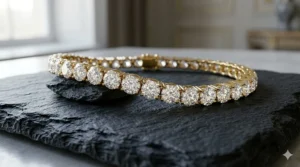
The Ross-Simons 3.00 ct. t.w. Lab-Grown Diamond Tennis Bracelet answers a question I hear constantly: “Can I get real diamond sparkle without the mining premium?” This bracelet proves you absolutely can. Available in both sterling silver and 18K gold over sterling options, it features 3 carats total weight of lab-grown diamonds that are chemically, physically, and optically identical to mined diamonds—the GIA itself confirms that lab diamonds match natural stones in every measurable way except origin.
Here’s the critical distinction most buyers miss: “lab-grown” doesn’t mean “fake” or “simulated.” These are real diamonds grown in controlled environments rather than extracted from mines. Under a jeweler’s loupe, a trained gemologist using standard equipment cannot tell them apart from natural stones. What you save is the markup associated with mining operations, not quality. The sterling silver base keeps costs accessible while the optional 18K gold plating adds warmth for those who prefer yellow or rose tones.
Ross-Simons’ reputation matters here—they’ve operated for over 70 years and their quality control catches issues that Amazon third-party sellers might miss. Customer reviews specifically praise the secure box clasp with figure-8 safety, addressing the number-one fear of tennis bracelet owners: losing your bracelet mid-wear. This makes the Ross-Simons particularly suitable for environmentally conscious buyers who want diamond brilliance without supporting traditional mining, or budget-focused shoppers who refuse to compromise on genuine diamond quality.
Pros:
✅ Genuine lab-grown diamonds at 40-50% less than mined equivalents
✅ Multiple metal options suit different style preferences
✅ Established jeweler with decades of quality assurance
Cons:
❌ Lab-grown diamonds have lower resale value than natural stones
❌ Sterling silver requires occasional polishing to prevent tarnish
Price Verdict: In the $400-$650 range depending on metal choice, this delivers legitimate diamond luxury at accessible pricing.
3. Gem Stone King 925 Sterling Silver Blue Sapphire and White Diamond Tennis Bracelet
The Gem Stone King 925 Sterling Silver Blue Sapphire and White Diamond Tennis Bracelet does something clever that pure diamond bracelets can’t: it adds personalization through colored gemstones while keeping costs reasonable. This 2.05 cttw bracelet alternates blue sapphires with white diamonds, creating visual interest that catches attention in ways a standard all-diamond line doesn’t. The sapphires provide that rich blue depth associated with royalty and September birthstones, while the diamonds add bright punctuation marks of sparkle.
What makes this particularly practical is the fully adjustable length extending up to 9 inches. Most tennis bracelets lock you into a single size—if it doesn’t fit, you’re paying a jeweler $50-$100 for link removal or addition. Gem Stone King’s adjustable design accommodates wrist size changes from weight fluctuations, pregnancy, or simply preferring a looser fit on hot days. The 925 sterling silver construction with a 925 stamp guarantees authentic silver content, not the “silver-tone” plating you find on cheaper alternatives.
This bracelet targets three specific audiences: birthstone jewelry enthusiasts seeking September sapphire representation, women who find all-diamond bracelets too “expected,” and anyone with wrists larger than standard 7-7.25 inch sizing. Gem Stone King’s century-plus family jewelry business shows in the craftsmanship—their New York workshop maintains quality control that prevents the loose stone issues plaguing mass-produced alternatives.
Pros:
✅ Adjustable up to 9 inches eliminates sizing guesswork
✅ Sapphire and diamond combination creates unique visual appeal
✅ 100+ year family jewelry legacy ensures quality standards
Cons:
❌ Mixed stones may not suit purists seeking all-diamond elegance
❌ Sterling silver requires more maintenance than gold options
Price Verdict: Around $150-$250 makes this an accessible entry point for genuine gemstone tennis bracelets.
4. Amazon Essentials .925 Sterling Silver Rhodium Plated X-Link Diamond Tennis Bracelet
The Amazon Essentials .925 Sterling Silver Rhodium Plated X-Link Diamond Tennis Bracelet solves a specific problem: giving first-time buyers genuine diamond ownership without the financial terror of losing an expensive piece. At 0.1 cttw with I-J color and I3 clarity, these are real natural diamonds—just smaller and with visible inclusions that keep costs in the under-$75 range. The I3 clarity means you’ll see internal characteristics if you examine closely, but from conversation distance (3+ feet), the rhodium plating’s brilliant white finish masks these imperfections effectively.
The X-link design deserves attention. Instead of traditional straight links, the intersecting X pattern creates visual texture that makes this bracelet photograph beautifully despite the modest diamond size. Rhodium plating serves dual purposes: it prevents the sterling silver from tarnishing (untreated silver develops that blackish patina within months), and its naturally white color makes I-J diamonds appear closer to colorless grades. The 7.25-inch length with box clasp and figure-8 safety addresses security concerns.
This bracelet specifically suits women testing whether they’ll actually wear tennis bracelets before investing hundreds or thousands. It’s also perfect for teens and college students wanting genuine diamond jewelry for formal events without parents panicking about loss or damage. The hypoallergenic, nickel-free construction matters if you’ve experienced skin reactions to costume jewelry—rhodium is among the most skin-friendly metals for sensitive wearers.
Pros:
✅ Genuine natural diamonds at exceptional entry-level pricing
✅ Rhodium plating prevents tarnishing and skin reactions
✅ X-link design creates visual interest beyond basic tennis bracelets
Cons:
❌ I3 clarity diamonds have visible inclusions under examination
❌ Small 0.1 cttw total weight lacks the presence of larger stones
Price Verdict: At around $45-$75, this represents the lowest-cost entry to natural diamond tennis bracelet ownership.
5. MINDEKA 5MM Blue Birthstone CZ Tennis Bracelet
The MINDEKA 5MM Blue Birthstone CZ Tennis Bracelet demonstrates how far cubic zirconia technology has advanced. These aren’t the cloudy, dead-looking CZ stones from a decade ago—the 4MM and 5MM hand-set stones use cuts and faceting that produce genuine fire and dispersion. The stainless steel base with 14K gold plating means this bracelet will outlast costume jewelry by years while costing less than a dinner out. The deep blue color symbolizes tranquility (perfect for December birthdays or those drawn to sapphire aesthetics without sapphire pricing).
The standout feature is the removable extender studded with 2 additional CZ stones. This solves the eternal tennis bracelet fitting problem: too tight feels restrictive, too loose slides around and risks falling off. The 6.7-inch base fits snug, the extender takes you to 7.9 inches for relaxed wear. The fold-over clasp operates one-handed—critical when you’re putting jewelry on yourself without help—and stays firmly closed unlike cheaper lobster clasps that pop open unexpectedly.
This bracelet targets practical buyers who want sparkling jewelry for regular rotation without the anxiety of wearing genuine diamonds to the gym, beach, or while traveling. The stainless steel is naturally hypoallergenic, nickel-free, and lead-free—no green discoloration or itchy reactions. Customer feedback emphasizes using this for active lifestyles where diamond bracelets would be inappropriate: hiking, water sports, festival attendance. The beautiful gift packaging makes it ready for giving without additional investment.
Pros:
✅ Removable extender provides 6.7″ to 7.9″ adjustability
✅ Stainless steel base resists tarnishing, scratches, and corrosion
✅ 5MM CZ stones deliver diamond-like sparkle at fraction of cost
Cons:
❌ Cubic zirconia lacks the hardness and longevity of real diamonds
❌ Gold plating may wear at high-friction points over years
Price Verdict: Around $30-$50 makes this exceptional value for daily-wear sparkle without diamond investment.
6. sailimue Birthstone Tennis Bracelets for Women (12 Months)
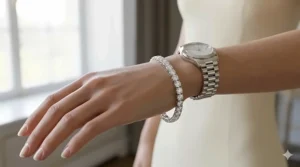
The sailimue Birthstone Tennis Bracelets offers something unique: 12 distinct birthstone color options representing every month, from January’s garnet symbolizing loyalty through December’s tanzanite representing success. This isn’t just marketing—the color psychology matters to buyers seeking meaningful jewelry. The 5A+ cubic zirconia stones represent the highest commercial CZ grade available, featuring the 58-facet cuts that mirror genuine diamond faceting patterns. Under jewelry store lighting, these produce the same rainbow fire that makes diamonds mesmerizing.
The engineering improvements set this apart from older CZ bracelets. The four-prong claw settings grip each stone at the girdle just like genuine diamond settings, preventing the flat-mounting that creates dead spots in cheaper alternatives. The upgraded connection strength between links addresses the catastrophic failure point in tennis bracelets—most don’t lose stones, they snap at weak link connections. Smooth edges eliminate the pinching and hair-catching that makes poorly finished bracelets unwearable for extended periods. The lightweight design means you forget you’re wearing it, reducing the urge to remove it mid-day.
This bracelet excels as a thoughtful gift option. The birthstone connection adds personal meaning that generic jewelry lacks—giving someone their birth month color shows consideration beyond “I bought you something sparkly.” It’s also ideal for stacking enthusiasts who layer multiple tennis bracelets together; the adjustable sizing lets you create uniform stacks or varied lengths intentionally. Women building color-coded jewelry wardrobes appreciate having specific colors available without hunting through mixed-stone pieces.
Pros:
✅ 12 birthstone color options create personalized meaningful gifts
✅ 5A+ cubic zirconia grade delivers maximum CZ quality available
✅ Upgraded link connections reduce catastrophic failure risk
Cons:
❌ CZ stones will eventually show wear scratches unlike diamond hardness
❌ Adjustable mechanisms may loosen with frequent size changes
Price Verdict: At around $35-$60, this provides customizable color options rare in budget tennis bracelets.
7. VIR JEWELS 2 cttw Black Diamond Tennis Bracelet
The VIR JEWELS 2 cttw Black Diamond Tennis Bracelet occupies a unique niche: women who find traditional white diamond tennis bracelets too conventional. The 81 natural round black diamonds create drama and sophistication that white stones can’t replicate—black diamonds absorb light rather than reflecting it, producing a lustrous, mysterious appearance associated with power and modern elegance. These heat-treated natural diamonds sit in prong settings along a .925 sterling silver chain with rhodium plating that enhances the black stones’ depth.
What many buyers don’t realize is that black diamonds are natural diamonds with heavy inclusions that make them opaque and dark. The heat treatment stabilizes their color consistency, ensuring they maintain uniform blackness rather than appearing splotchy or inconsistent. At 2 cttw across 81 stones, each diamond measures approximately 2.5-3mm—substantial enough to create presence without the oversized look that overwhelms petite wrists. The 7.5-inch length accommodates medium to larger wrist sizes, secured by a box and tongue safety clasp.
This bracelet targets fashion-forward buyers who treat jewelry as wardrobe statements rather than traditional elegance. It pairs exceptionally well with black cocktail dresses, creates striking contrast against white or cream clothing, and complements monochrome minimalist aesthetics popular in 2026. The black diamond mystique also appeals to those seeking jewelry that symbolizes strength and independence rather than romantic softness. Sterling silver with rhodium keeps pricing accessible while the box presentation makes it gift-ready for unconventional recipients who’d find standard tennis bracelets boring.
Pros:
✅ Natural black diamonds create unique sophisticated alternative to white stones
✅ 81-stone count provides substantial presence at 2 cttw total weight
✅ Rhodium plating prevents tarnishing while complementing dark stones
Cons:
❌ Black diamonds lack the brilliant sparkle of traditional colorless diamonds
❌ Heat treatment required for color consistency may affect some purists’ preferences
Price Verdict: Around $180-$280 delivers natural diamond uniqueness at mid-range pricing.
The Real Story Behind Tennis Bracelets: Why They’re Called That
Here’s a piece of jewelry history that’s gotten twisted over the years. Many sources claim tennis legend Chris Evert lost her diamond bracelet during the 1987 U.S. Open, but the actual incident occurred in 1978 when the tournament relocated from Forest Hills to Flushing Meadows. Evert’s diamond and gold line bracelet snapped mid-match, and she halted play to retrieve it—a moment immortalized by television cameras capturing a world-class athlete prioritizing her jewelry over game momentum.
The term “tennis bracelet” didn’t exist before that day. Jewelers called these pieces “line bracelets” or “eternity bracelets,” featuring continuous rows of matched diamonds in flexible settings. But when Evert referred to her missing piece as her “tennis bracelet” in post-match interviews, jewelry stores immediately recognized marketing gold. According to jewelry historians, retailers in southern Florida (near Evert’s home) began advertising diamond line bracelets as “tennis bracelets” within weeks, capitalizing on the publicity.
What made tennis bracelets practical for athletic wear was their flexibility and simplicity—no protruding elements to catch on clothing or equipment, and the design distributed weight evenly around the wrist rather than creating imbalanced pulls like charm bracelets. The style had actually been fashionable since the Art Deco era of the 1920s, when platinum and old European-cut diamond line bracelets dominated upscale jewelry. But Evert’s 1978 mishap transformed a classic design into a cultural phenomenon, with sales skyrocketing throughout the disco era and maintaining popularity ever since.
How to Choose Diamond Tennis Bracelets for Women: 7 Critical Factors
1. Understand the Diamond 4Cs and What They Actually Mean on Your Wrist
The Gemological Institute of America’s 4Cs—Cut, Color, Clarity, and Carat weight—aren’t just technical jargon; they directly impact how your bracelet performs in real life. Cut determines brilliance: an Excellent-cut diamond with lower color/clarity grades will sparkle more than a poorly-cut stone with perfect stats. For tennis bracelets specifically, prioritize Cut above all else since these pieces are meant to catch light with movement.
Color matters less than jewelry stores suggest. The GIA scale runs D (colorless) to Z (light yellow). In tennis bracelets, G-H color stones appear beautifully white unless you’re directly comparing them to D-F grades—and you save 15-25% on cost. Against yellow or rose gold settings, even I-J color reads as warmly white rather than tinted. Clarity follows similar logic: VS2 and SI1 grades are “eye-clean” (no visible inclusions to the naked eye) at conversation distances. The VVS and Flawless grades that cost 30-40% more only matter under magnification.
Carat weight in tennis bracelets gets measured as total carat weight (ctw) across all stones, not individual stone size. A “5 carat tennis bracelet” might contain 50 stones at 0.10ct each. What matters more is stone uniformity—each diamond should match its neighbors in size and color, creating that seamless line effect. Mismatched stones create distracting “zebra striping” where alternating large and small diamonds break the elegant flow.
2. Metal Choice: Match to Skin Tone and Lifestyle Reality
Yellow gold (14K or 18K) suits warm skin tones with yellow or olive undertones. It’s also the most forgiving for I-J color diamonds since the warm metal masks any hint of color in the stones. Rose gold has surged in popularity for its romantic warmth and how it complements current fashion trends toward blush and champagne tones. White gold requires rhodium plating maintenance every 1-2 years to maintain its bright white finish—without replating, the natural yellow gold underneath shows through.
Platinum represents the ultimate in durability and hypoallergenic properties, but costs 40-60% more than 14K white gold for similar appearance. Sterling silver works beautifully for budget-conscious buyers or those testing whether they’ll wear tennis bracelets regularly, but requires periodic polishing to prevent tarnish. Rhodium-plated sterling silver combines silver’s affordability with tarnish resistance, making it the smart choice for daily wearers who want low-maintenance elegance.
The weight difference matters for comfort. Platinum feels substantially heavier than gold—some love the luxurious heft, others find it tiring during extended wear. 14K gold hits the sweet spot of durability (stronger than pure 24K) without excessive weight. If you work with your hands frequently, harder metals like platinum resist scratching better than softer 14K yellow gold.
3. Clasp Security: The Make-or-Break Feature Everyone Overlooks
Tennis bracelets live and die by their clasps. The most common failure isn’t stone loss—it’s the clasp popping open or the safety catch failing. Look for box clasps with figure-8 safety mechanisms; the box provides the primary closure while the figure-8 acts as backup insurance. Avoid simple lobster clasps on tennis bracelets; they lack redundant security and become difficult to operate one-handed as you age or develop arthritis.
Spring-loaded clasps offer convenience but tend to weaken over time, especially in bracelets worn daily. The repeated opening and closing fatigues the spring mechanism. Magnetic clasps sound appealing for ease of use but can accidentally pop open if they brush against metal surfaces or strong magnetic fields. If you’re investing in genuine diamonds, never compromise on clasp quality to save $20-$30—that’s false economy when losing the bracelet costs thousands.
Test the clasp before purchasing if possible. It should close with a definitive click and require deliberate pressure to open—not so difficult you’ll struggle, but resistant enough that casual bumping won’t release it. The safety catch should be visible and accessible without magnification. Some buyers add jeweler’s insurance that specifically covers lost jewelry; if your bracelet exceeds $500 in value, the $30-50 annual premium often proves worthwhile for peace of mind.
4. Stone Setting Style Impacts Both Sparkle and Durability
Prong settings (typically 4-prong for tennis bracelets) maximize light entry into diamonds from all angles, creating maximum brilliance. The prongs grip the diamond’s girdle (widest point) while leaving the table (top) and pavilion (bottom) exposed to light. Quality prong work shows uniform height and thickness—too thin and they’ll bend or break, too thick and they block light unnecessarily.
Bezel settings encircle each diamond with a thin metal band, offering superior stone security at the cost of slightly reduced brilliance (the metal blocks light from the sides). This trade-off makes sense for active lifestyles where stones might receive impacts. Channel settings slot diamonds between two metal walls like train cars in tracks, creating a smooth surface ideal for those who dislike snag points. However, channel-set tennis bracelets can’t have individual stones replaced easily if one chips or falls out.
Pavé settings create that “paved with diamonds” look using tiny beads of metal to hold small stones close together. While beautiful, pavé requires expert craftsmanship—poor execution results in stones falling out within months. For tennis bracelets specifically, prong settings remain the gold standard for balancing security, sparkle, and repairability. If a prong-set stone ever loosens, jewelers can tighten the prongs; with other settings, repair becomes more complex and expensive.
5. Length and Sizing: One Size Definitely Doesn’t Fit All
Standard tennis bracelet lengths run 6.5″, 7″, 7.25″, and 7.5″. Measure your wrist circumference with a flexible tape measure or piece of string, then add 0.5″ to 0.75″ for comfortable movement. Too tight creates pressure points and restricts blood flow; too loose slides around constantly and risks slipping off if the clasp fails. Your dominant wrist typically measures slightly larger due to increased muscle development and blood flow.
Adjustable tennis bracelets using slider mechanisms or removable extenders solve the sizing dilemma but introduce potential weak points. The adjustment mechanism becomes an additional failure point requiring scrutiny. If you’re between standard sizes or your weight fluctuates seasonally, adjustable designs make sense. Otherwise, fixed-length bracelets with professional sizing (adding or removing links) provide superior long-term security.
Consider wrist size changes over time. Pregnancy, weight gain/loss, and aging all affect measurements. If you’re buying a tennis bracelet as an heirloom piece intended for decades of wear, slight oversize (7.5″ instead of 7″) accommodates future changes better. Jewelers can always remove links to tighten a bracelet, but adding length requires sourcing matching stones and metalwork that may not perfectly match the original.
6. Lab-Grown vs. Natural Diamonds: Make an Informed Choice
Lab-grown diamonds are chemically, optically, and physically identical to natural diamonds—even gemologists require specialized equipment to distinguish them. The difference is origin: natural diamonds formed underground over billions of years, lab-grown diamonds crystallize in controlled environments over weeks. This isn’t “fake” or “synthetic” in the cubic zirconia sense; they’re real diamonds with identical crystal structure and properties.
Price differential ranges from 40-60% less for lab-grown versus natural diamonds of equivalent quality. That means a 3-carat lab-grown tennis bracelet might cost $800 where the natural equivalent runs $2,000. The trade-off is resale value—natural diamonds maintain better secondary market pricing due to traditional perception of rarity and romance. If you view jewelry as investment, natural diamonds edge ahead. If you prioritize having more carats or better quality grades for your budget, lab-grown delivers superior value.
Environmental and ethical considerations tilt toward lab-grown. No mining means reduced ecological impact, no concerns about conflict diamonds or exploitative labor practices. However, lab diamond production requires significant energy; the environmental benefit depends on whether the facility uses renewable power sources. For buyers who simply want diamond sparkle without the premium pricing, lab-grown technology has democratized access to genuine diamond jewelry that was cost-prohibitive a decade ago.
7. Certification and Documentation Matter More Than Marketing Claims
Independent certification from GIA, IGI, or other reputable gemological laboratories provides objective verification of diamond quality. Seller descriptions like “VS clarity” or “near-colorless” mean nothing without third-party confirmation. Certified bracelets include documentation specifying the exact color, clarity, cut grade, and carat weight—information that protects you during resale and insurance claims.
For tennis bracelets, individual stone certification becomes impractical (certifying 50 small diamonds costs more than the bracelet), so look for “total weight” certifications that guarantee the aggregate quality. Be wary of vague terms like “diamond quality” or “brilliant cut”—these lack specific meaning. Legitimate jewelry uses precise GIA terminology: “G color, VS2 clarity, Excellent cut” rather than subjective marketing fluff.
Keep all documentation in fireproof storage along with photos of the bracelet. Insurance companies require proof of value for claims, and certification dramatically simplifies the process. Some jewelers include free appraisals with purchase; if yours doesn’t, spend the $75-150 for professional appraisal if your bracelet exceeds $500 in value. The appraisal protects against underinsuring (leaving you undercompensated after loss) or overinsuring (paying unnecessary premium for inflated value).
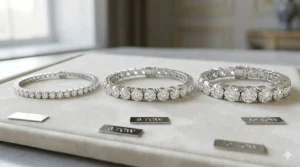
Diamond Tennis Bracelets for Every Occasion: Matching Style to Purpose
Daily Wear: Durability Over Diamond Drama
For everyday rotation where your bracelet encounters laptop keyboards, steering wheels, and door frames, prioritize metal hardness and setting security over maximum carat weight. Platinum or 14K white gold in bezel or channel settings protects stones better than delicate prong work. Consider lab-grown diamonds or high-quality CZ alternatives that deliver sparkle without the anxiety of wearing $3,000 on your wrist to the grocery store.
Stone size should lean toward 3mm or smaller for daily wear—large stones on a tennis bracelet create snag points that catch on sweater sleeves and jacket cuffs. The sailimue and MINDEKA bracelets reviewed earlier exemplify smart daily-wear choices: genuine sparkle, durable construction, replaceable at modest cost if lost or damaged. Rhodium-plated sterling silver requires less maintenance than pure silver while avoiding the sticker shock of gold.
Special Occasions: When to Deploy Your Statement Pieces
Weddings, galas, and milestone celebrations justify those investment-grade bracelets collecting dust in your jewelry box. The FINEROCK 5-carat natural diamond bracelet or Ross-Simons 3-carat lab-grown piece transforms formal attire from “nice” to “unforgettable.” Larger stones (4-5mm) catch chandelier and candlelight beautifully, creating that red-carpet sparkle photographs capture brilliantly.
For black-tie events specifically, match your tennis bracelet metal to other jewelry—mixing yellow gold earrings with a white gold bracelet creates visual discord. The VIR JEWELS black diamond bracelet offers unique sophistication for evening wear, particularly when conventional white diamond jewelry feels overdone. Stack multiple tennis bracelets of graduating sizes for intentional dramatic impact, but keep the metal and stone type consistent across the stack to maintain cohesion.
Bridal and Anniversary Jewelry: Symbolism Meets Sparkle
Tennis bracelets rank among the top anniversary gifts for their continuous circle design symbolizing eternal love—the same metaphor as wedding bands. For bridal jewelry, white diamonds in white gold or platinum complement engagement rings and wedding bands beautifully. Rose gold tennis bracelets have become increasingly popular for modern brides seeking warmth and uniqueness in their bridal jewelry suite.
Consider purchasing matching earrings and necklace alongside the tennis bracelet for coordinated bridal sets. This eliminates the challenge of matching diamond quality across pieces purchased years apart—color and clarity matching becomes impossible when you’re trying to add to a collection bought from different jewelers. Gem Stone King’s customizable options let you specify exact birthstones, adding personal meaning to anniversary pieces that generic jewelry lacks.
Common Mistakes When Buying Diamond Tennis Bracelets for Women
Mistake #1: Obsessing Over Carat Weight While Ignoring Cut Quality
I see this constantly: buyers laser-focused on “I want a 5-carat bracelet” without asking about cut grade. A 3-carat tennis bracelet with Excellent-cut diamonds will outshine a 5-carat bracelet with Fair/Good cuts by a dramatic margin. The cut determines how light enters, reflects, and exits the diamond—poor cuts create “leakage” where light escapes through the pavilion instead of returning to your eye.
When shopping, ask specifically about cut grade. If the seller can’t provide this information or responds with vague reassurances, walk away. GIA’s cut grading for round brilliants (Excellent, Very Good, Good, Fair, Poor) should appear on documentation. For fancy shapes like emerald or princess cuts, cut becomes more nuanced, but legitimate jewelers still provide proportion specifications that expert appraisers can evaluate.
Mistake #2: Buying a Bracelet Without Considering Your Actual Lifestyle
That stunning platinum and 7-carat diamond tennis bracelet looks gorgeous in the jewelry store—but will you actually wear it to your office job, weekend errands, and yoga classes? Many expensive tennis bracelets spend 360 days per year in jewelry boxes because owners fear damaging or losing them during regular activities. This defeats the purpose of jewelry: it should be worn and enjoyed, not imprisoned in velvet boxes.
Be honest about your wearing habits before investing serious money. If you want daily sparkle, choose durable lower-cost options you won’t stress about wearing. Save investment-grade pieces for buyers who attend regular formal events or those building heirloom collections for future generations. There’s no virtue in owning a $5,000 bracelet you’re too anxious to wear versus a $400 piece you enjoy daily.
Mistake #3: Neglecting Insurance and Maintenance Plans
Most homeowners or renters insurance includes minimal jewelry coverage—typically $1,000-$2,000 total for all jewelry combined. If your tennis bracelet exceeds this, you need a separate jewelry rider or specialized jewelry insurance. The annual premium typically runs 1-2% of the appraised value: a $3,000 bracelet costs $30-$60 per year to insure properly.
Equally important is the maintenance plan. Prongs loosen over time from daily wear, and stones can chip if struck against hard surfaces. Annual inspections by qualified jewelers catch problems before they become catastrophic. Many reputable jewelers include free lifetime inspections with purchase; if yours doesn’t, budget $50-75 annually for professional examination. The jeweler tightens loose prongs, checks clasp function, and ultrasonic-cleans the bracelet—preventive maintenance that avoids expensive emergency repairs later.
Mistake #4: Falling for “Too Good to Be True” Pricing
When you find a listing claiming “5 carat natural diamond tennis bracelet – $299,” your skepticism alarm should scream. Legitimate natural diamonds have commodity pricing that doesn’t vary wildly—if one seller offers dramatically lower prices than established jewelers, something’s wrong. Common scams include misrepresenting cubic zirconia as diamonds, inflating carat weights, or using deceptive clarity/color grading that doesn’t match independent certification.
Always verify with third-party certification and compare prices across multiple legitimate retailers. If a bracelet claims “5 carats” at 1/5th the market rate, the “carats” likely refer to CZ stones, not diamonds. Read customer reviews carefully, but remember that fake reviews plague the jewelry market. Trust established jewelers (Ross-Simons, Blue Nile, local jewelers with decades of operation) over random Amazon third-party sellers with limited history.
Understanding Diamond Quality: Why Specs Matter in Real Life
The Color Scale: What “Near Colorless” Actually Looks Like
The GIA color scale runs D-E-F (colorless), G-H-I-J (near colorless), K-L-M (faint yellow), and continues to Z (light yellow). In tennis bracelets, the metal choice dramatically affects color perception. G-H diamonds appear brilliantly white in white gold or platinum settings. Those same stones in yellow gold read as warmly white—the gold’s color masks any faint yellow tint in the diamond.
Here’s what jewelry stores won’t emphasize: The difference between D and G color is invisible to most people in normal viewing conditions. You need controlled lighting, master comparison stones, and trained eyes to spot the distinction. Yet D color costs 15-20% more than G for the same clarity and cut. If you’re investing in tennis bracelets for wearing rather than reselling, G-H color delivers spectacular appearance at significantly lower cost than colorless grades.
Clarity Decoded: When Inclusions Actually Matter
Clarity measures internal inclusions and external blemishes. The scale runs Flawless (FL), Internally Flawless (IF), Very Very Slightly Included (VVS1-VVS2), Very Slightly Included (VS1-VS2), Slightly Included (SI1-SI2), and Included (I1-I2-I3). For tennis bracelets, the “eye-clean” threshold sits around VS2 to SI1—these grades have inclusions visible under 10x magnification but invisible to naked eyes at normal distances.
The Amazon Essentials bracelet reviewed earlier uses I3 clarity, where inclusions are visible without magnification. This matters less than you’d think because: (1) tennis bracelet diamonds are small (2-4mm typically), making inclusions hard to see anyway, (2) movement and sparkle distract the eye from static imperfections, and (3) most viewing happens at 2+ feet away, not examining under a jeweler’s loupe. If you’re selecting a tennis bracelet for actual wearing rather than investment, VS2/SI1 clarity provides the best value—eye-clean appearance without the 30-40% premium for VVS grades that only matter under magnification.
Why Lab-Grown Diamonds Confuse the Market
Lab-grown diamonds occupy a weird middle space: they’re real diamonds (not simulants like CZ), but they lack the rarity premium of natural stones. Chemically identical—both pure carbon in cubic crystal structure—the only difference is formation location. This confuses buyers who’ve been taught “diamonds are rare and valuable” but now encounter gorgeous lab diamonds at 50% off natural pricing.
The value proposition depends on your jewelry philosophy. If you view tennis bracelets as portable investments that hold resale value, natural diamonds win despite higher cost. If you prioritize maximum sparkle per dollar spent, or environmental concerns matter to you, lab-grown diamonds deliver superior value. The Ross-Simons lab-grown bracelet reviewed earlier demonstrates this perfectly: 3 carats of genuine diamond brilliance in the $400-$650 range versus $1,500-$2,000 for equivalent natural stones.
Caring for Your Diamond Tennis Bracelet: Maintenance That Prevents Disaster
The Daily Habits That Preserve Your Investment
Remove your tennis bracelet before sleeping, showering, swimming, or exercising. This sounds paranoid, but it prevents 90% of catastrophic losses. Tennis bracelets snag on bedsheets and pillowcases during sleep; shower soap creates film buildup that dulls diamond sparkle; chlorine and saltwater corrode certain metal types and weaken settings; gym equipment catches on bracelets and yanks them off wrists.
Store your bracelet in a soft pouch or individual jewelry box compartment—never loose in a drawer where it tangles with other pieces or rubs against hard surfaces. Diamonds are the hardest natural substance, but they can chip if struck at precise angles. They also scratch softer gemstones and metals they contact, so segregated storage protects your entire jewelry collection.
Professional Maintenance Schedule for Longevity
Annual professional inspection and cleaning should be non-negotiable for tennis bracelets exceeding $500 in value. Jewelers use ultrasonic cleaners that vibrate dirt and oils from settings that home cleaning can’t reach. They examine each prong under magnification for signs of wear or bending, tighten any loosened settings, check clasp function and safety catches, and verify that all stones remain secure.
Between professional cleanings, gentle home maintenance keeps your bracelet sparkling. Warm water with mild dish soap and a soft toothbrush loosens buildup from settings; rinse thoroughly and pat dry with lint-free cloth. Avoid harsh chemicals, ultrasonic cleaners (unless you’re trained), and abrasive materials. A quick weekly cleaning prevents the gradual accumulation of lotions, soaps, and skin oils that create that cloudy, dull appearance many diamonds develop over time.
If a prong loosens or a stone rattles, stop wearing the bracelet immediately and take it to a jeweler. Continuing to wear jewelry with compromised settings guarantees stone loss—and replacing a lost diamond costs far more than preventive prong tightening. Most jewelers perform minor tightening for $20-40, while replacing a lost stone in a tennis bracelet runs $100-500+ depending on size and quality.
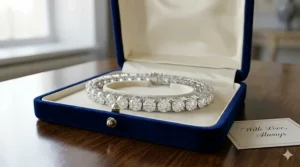
❓ FAQ: Diamond Tennis Bracelets for Women
❓ Can you wear diamond tennis bracelets for women every day?
❓ How tight should a diamond tennis bracelet fit on your wrist?
❓ What's the difference between lab-grown and natural diamonds in tennis bracelets?
❓ How many carats should a diamond tennis bracelet have?
❓ Why are diamond tennis bracelets so expensive?
Conclusion: Finding Your Perfect Diamond Tennis Bracelet
After examining everything from $35 cubic zirconia alternatives to $3,500+ natural diamond investment pieces, one truth emerges: the “best” diamond tennis bracelet for women depends entirely on matching the bracelet’s strengths to your specific needs. The FINEROCK 5-carat natural diamond bracelet represents heirloom-quality investment jewelry that will sparkle at your granddaughter’s wedding decades from now. The MINDEKA blue birthstone CZ bracelet delivers daily wearable sparkle you’ll actually enjoy without anxiety about loss or damage.
Between these extremes, lab-grown diamond options like the Ross-Simons 3-carat bracelet democratize genuine diamond ownership for buyers who want real diamond chemistry without natural diamond pricing. The colored stone alternatives from Gem Stone King prove that tennis bracelets need not conform to traditional all-white-diamond expectations—sapphires, birthstones, and even black diamonds create personal style statements that generic jewelry can’t match.
What matters most is honest self-assessment before purchasing. If you attend formal events monthly and view jewelry as portable investment, natural certified diamonds in durable precious metals justify their premium pricing. If you want everyday sparkle for regular rotation, quality CZ or lab-grown diamonds deliver worry-free brilliance at accessible costs. If you’re gifting to someone whose style preferences you’re uncertain about, adjustable designs and classic styling ensure the bracelet gets worn rather than stored.
The diamond tennis bracelets for women market in 2026 offers unprecedented choice across price points, diamond types, metals, and styles. Use this guide’s framework to evaluate options based on actual performance rather than marketing claims, prioritize cut quality and setting security over raw carat weight, and remember that jewelry exists to be worn and enjoyed—not imprisoned in boxes from fear of loss or damage.
Recommended for You
- 7 Best Vintage Charm Bracelets Sterling Silver – 2026
- 7 Best Heart Charm Bracelets for Girlfriend | Ultimate 2026 Guide
- 7 Best Italian Charm Bracelets Stainless Steel in 2026
Disclaimer: This article contains affiliate links. As an Amazon Associate, I earn from qualifying purchases. If you purchase products through these links, we may earn a small commission at no additional cost to you.
✨ Found this helpful? Share it with your friends! 💬🤗
