In This Article
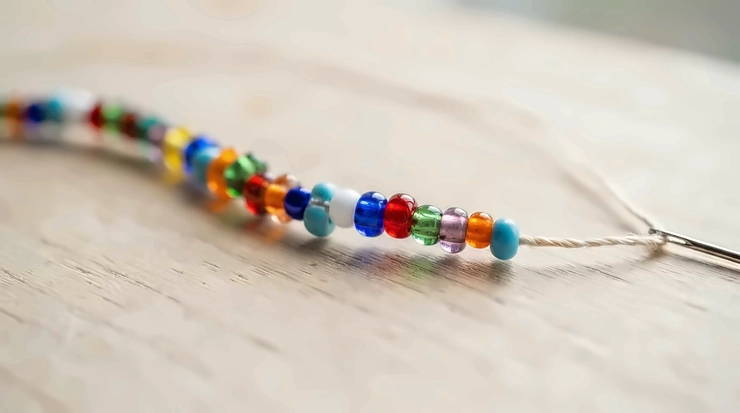
A silk cord bracelet for delicate jewelry is a bracelet strung on fine, twisted natural silk thread, usually with a needle end, and typically knotted between each pearl or gemstone. The knots cushion every bead and keep neighbors from scratching each other. The silk drapes softly around the wrist instead of standing up like a wire.
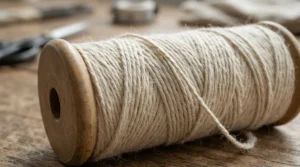
Here’s the thing about delicate beads: they punish bad string. A 3mm moonstone doesn’t care about your deadline, and a freshwater pearl with a razor-sharp drill hole will saw through the wrong cord like a bread knife through a baguette. Silk has been the traditional answer for generations, and it’s still the one jewelers reach for. It’s soft, it knots beautifully, and it hangs the way expensive jewelry should. The Berkeley pearl care guide notes that silk and nylon are the most common stringing threads for pearls, and that knotting between beads means a break costs you only a single bead instead of the whole strand.
This guide skips the guesswork. Below you’ll find seven real silk cords, what their specs mean for a fine silk knotted bracelet, and honest guidance on sizing, pairing, durability, and care. Prices are given as ranges, and everything is based on real specs and published review sentiment, not invented testing.
Quick Comparison: Top Silk Cords at a Glance
Before the deep dive, here’s the cheat sheet. Diameters come from the product listings and the Beadaholique Griffin silk size chart.
| Product | Diameter | Format | Best For |
|---|---|---|---|
| Griffin Size 0 | 0.30mm | 2 m card, needle attached | Tiny-hole gems, ultra-dainty stacks |
| Griffin Size 1 | 0.35mm | 2 m card, needle attached | Everyday 3-4mm gemstone bracelets |
| Griffin Size 4 | 0.60mm | 2 m card, needle attached | Pearls and mid-size beads |
| Beadalon Size #2 | 0.45mm | 2 m card, needle attached | Color choice, easy first project |
| Beadalon Variety Pack | Sizes 2, 4, 6 | 5 cards, 2 m each | Learning sizes cheaply |
| Beadsmith Size F | 0.348mm | 140-yard spool | Frequent knotters, restringing |
| Hobbyworker 5-Piece Set | Sizes 2, 4, 6 | 5 cords with needles | Budget multi-size practice |
Notice how much the diameters cluster. Griffin Size 1 (0.35mm) and Beadsmith Size F (0.348mm) are nearly identical in thickness, so your real choice is convenience versus quantity. The cards come with a needle attached and enough cord for a few bracelets, while the spool gives you hundreds of feet but needs its own needle. Beadalon Size #2 and Griffin Size 4 cover the middle ground for beads with roomier holes.
💬 Just one click — help others make better buying decisions too!😊
Top 7 Silk Cords for a Silk Cord Bracelet for Delicate Jewelry: Expert Analysis
Every option below is a real, currently listed product. The analysis reasons from published specs and aggregated review sentiment. None of it claims hands-on testing, because that would be made up.
1. Griffin Silk Bead Cord Perlseide Size 0 (0.30mm) — finest option for tiny-drilled gems
Think of a 0.30mm cord as a mechanical pencil lead you can tie in a knot. That’s the whole pitch. This German-made card carries 2 meters of natural silk with a stainless steel needle already attached, so there’s nothing to thread.
That thinness matters in practice. It slides through tiny drill holes on 2-3mm gemstone rondelles and small pearls, and the knots stay so compact that a fine silk knotted bracelet looks almost seamless. The trade-off is tensile margin. Thin silk suits light beads and shouldn’t be asked to carry heavy stones.
On paper, this is the pick for stacking-style bracelets: tiny amethyst, moonstone, or rice pearls in a wrist-hugging strand. Review data specific to Size 0 was thin in the sources I checked, so I can’t quote a rating. Across the Griffin line, retailer reviewers consistently praise the attached needle and the way the twisted strand knots without doubling over.
Pros:
- ✅ Slips through the tiniest drill holes
- ✅ Knots stay small and tidy
- ✅ Needle already attached to the cord
Cons:
- ❌ Not suited to heavier beads
- ❌ Only 2 meters per card
Price check: usually under $10 per card at the time of research; prices may vary. For truly dainty work, it’s worth every penny.
2. Griffin Silk Bead Cord Perlseide Size 1 (0.35mm) — sweet spot for everyday gemstone bracelets
Just 0.05mm thicker than Size 0, and yet this is the size most delicate-jewelry projects quietly want. It keeps the fine drape but gives you a touch more strength, which becomes noticeable once you’re knotting 30-plus beads.
The 0.35mm diameter works with 3-4mm gemstone beads and small pearls whose holes are generous enough to accept it, so test-fit one bead before committing. Twisted natural silk grips its own knots better than slick synthetics, which means a knot tightened once tends to stay put. Analytically, it’s the safest starting size for someone building their first silk cord for beaded bracelet projects with everyday gems.
A retailer reviewer on Beadaholique praised Griffin silk for its drape and single-strand, twisted construction, which let them knot freehand instead of doubling thinner thread. That comment was about the Size 4 listing, so treat it as brand-level sentiment rather than a Size 1 verdict.
Pros:
- ✅ Balanced strength and fineness
- ✅ Natural twist helps knots hold
- ✅ Attached needle speeds stringing
Cons:
- ❌ Too thick for micro-holes
- ❌ Limited length for multiple bracelets
Price check: expect a low single-digit to roughly $10 range; check current price. Value verdict: excellent for a first serious bracelet.
3. Griffin Silk Bead Cord Perlseide Size 4 (0.60mm) — workhorse for pearls and larger beads
At 0.60mm, this is the classic pearl-knotting thickness. Where the first two cords whisper, this one has some body. It fills a larger drill hole snugly, which is the point: cord that rattles inside the hole lets the bead shift and wear the silk.
The 2-meter card is enough for a bracelet or two, and the pre-attached needle means you skip the doubling step that thinner threads demand. The Artbeads product notes describe silk as the traditional stringing material for knotted pearl and gemstone jewelry, with a twist that knots easily. That matches how this one behaves on paper. Choose it for 5-7mm beads, chunkier freshwater pearls, or any hand-knotted jewelry piece meant for daily wear.
Aggregated Beadaholique reviews for this exact size are positive. A first-time beader called it easy to use and said their pearls turned out well, and another reviewer felt no other silk matched it, pointing to how easily it knots with tweezers. Those reviews come from a retailer’s own site, so weigh them accordingly.
Pros:
- ✅ Fills larger drill holes securely
- ✅ Beginner-friendly with attached needle
- ✅ Strong, well-behaved knotting
Cons:
- ❌ Too thick for small gemstones
- ❌ Visible knots on tiny beads
Price check: typically under $10; prices may vary. Value verdict: the safest all-purpose pearl silk.
4. Beadalon Silk Thread with Needle, Size #2 (0.45mm) — pre-threaded silk in more color choices
Beadalon sells 100% silk in a 0.45mm size #2, with the needle pre-attached and 2 meters per card. What sets this listing apart is color: the product pages show white, grey, and black. Matching cord color to your beads is a real design decision, since the knots show.
Size #2 sits between Griffin’s Size 1 and Size 4, which makes it ideal for 4-5mm gemstones where a fine silk knotted bracelet should still feel sturdy. Beadalon’s own guidance recommends French wire at the clasp to protect silk from abrasion, plus stringing glue on the last knot. That advice is worth following on any silk build, since the clasp end is where cord dies first.
I couldn’t verify a large independent review pool for this specific size, so I won’t cite a rating. The manufacturer emphasizes ease of use, and the pre-attached needle is a genuine time saver. Beadalon also notes that silk stored wound can develop kinks, so hang a card straight before you start.
Pros:
- ✅ Needle pre-attached for fast stringing
- ✅ Grey and black options for design contrast
- ✅ Mid-weight size suits 4-5mm gems
Cons:
- ❌ Kinks possible if stored wound tightly
- ❌ Limited independent review data found
Price check: usually under $10 per card; check current price. Value verdict: fair, especially if you need a non-white color.
5. Beadalon Silk Thread Variety Pack 106A-120 (Sizes 2, 4, 6) — cheapest way to learn what size you need
Sizing silk is the hardest part of this hobby, and a variety pack lets you skip the expensive guessing. This white pack contains five cards: one size 2, two size 4, and two size 6, each 2 meters with a needle.
The size 6 (0.70mm) is the heavy hitter, suited to bigger gemstones. The size 2 (0.45mm) handles the gentle work. Sizes 4 and 6 come in pairs, which is smart because thicker cords get used up faster on chunkier knots. In practice, this pack works as a sampler: match each cord to a bead type, then reorder your favorite in bulk.
Independent review sentiment for this specific pack was limited in my research, so I’m reasoning from the specs. What the listing does confirm is that the cards come pre-threaded and that Beadalon sells the glue and French wire needed to finish a clean piece.
Pros:
- ✅ Three sizes in one purchase
- ✅ Spare cards for practice knots
- ✅ Each card has a needle attached
Cons:
- ❌ Only white is offered in this pack
- ❌ Size 6 is too heavy for delicate gems
Price check: expect roughly the low-to-mid teens range; prices may vary. Value verdict: great for beginners still finding their size.
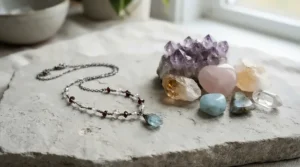
6. The Beadsmith Pure Silk Cord Size F (0.348mm), 140-Yard Spool — best value for frequent knotters
Cards are convenient. Spools are economical. This half-ounce spool holds 140 yards of 3-ply twisted silk at 0.348mm, and the listing describes it as suited to knotting and restringing. That’s roughly a hundred-plus bracelets of cord, as long as you don’t mind threading your own needle.
The 3-ply twist is the interesting spec. It gives the cord a soft, supple hand while keeping enough body to knot cleanly. At nearly the same diameter as Griffin Size 1, it works for the same 3-4mm gemstones and small pearls. The catch: there’s no attached needle, so you’ll want a collapsible-eye twisted wire needle. The Amazon listings suggest exactly that kind of pairing.
If you restring jewelry for friends or sell handmade pieces, this is the smart pick. The cost per bracelet drops enough that you can afford to discard a cord after a kink instead of forcing it. Aggregated review data for this spool wasn’t verifiable in my sources, so I’m relying on the listing specs.
Pros:
- ✅ Huge length for the money
- ✅ Wide range of spool colors available
- ✅ Soft 3-ply twist knots cleanly
Cons:
- ❌ No needle attached; you supply one
- ❌ Overkill for a one-off bracelet
Price check: often in the roughly $10-$20 range; check current price. Value verdict: unbeatable for volume.
7. The Hobbyworker 5-Piece Silk Beading Cord Set (Sizes 2, 4, 6) — lesser-known budget multi-pack
This is the wildcard: a five-piece white set of silk cords with needles in sizes 2, 4, and 6. It’s a lesser-known brand next to Griffin and Beadalon, and the listing has less spec detail. So my analysis leans on the listing’s stated sizes and the general behavior of silk in those diameters.
If the sizes match their labels, this is functionally a sampler like the variety pack above. It’s useful for practice knots, testing hole fit, and learning how thickness changes a bracelet’s look. Hobbyworker also lists a 20-piece multicolor pack in some sizes, which suggests room to grow into color work later.
I couldn’t verify a robust review pool, and lesser-known brands deserve a cautious test before you commit expensive stones. Use this set for practice and low-stakes pieces first. Once you trust the cord, use it for real jewelry.
Pros:
- ✅ Five cords, three sizes for practice
- ✅ Needles included on each cord
- ✅ Budget-friendly way to experiment
Cons:
- ❌ Less spec and review detail available
- ❌ Not proven for high-value gemstones
Price check: typically in the roughly $8-$15 range; prices may vary. Value verdict: good practice set, but verify quality before precious beads.
How the Seven Compare on Paper
| Product | Diameter | Best For |
|---|---|---|
| Griffin Size 0 | 0.30mm | Micro-holes, ultra-fine bracelets |
| Griffin Size 1 | 0.35mm | Daily gemstone wear |
| Griffin Size 4 | 0.60mm | Pearls, larger beads |
| Beadalon Size #2 | 0.45mm | Color-matched knotting |
| Beadalon Variety Pack | 0.45-0.70mm | Size testing |
| Beadsmith Size F | 0.348mm | High-volume knotting |
| Hobbyworker Set | 0.45-0.70mm | Budget practice |
Looking at the table, Griffin Size 1 and Beadsmith Size F are the fine-work twins, and your choice comes down to card convenience versus spool economy. Griffin Size 4 is the only real pearl workhorse in this group, so anyone stringing 6mm-plus beads should start there. The two multi-packs earn their keep as sizing tools rather than final purchases.
How to Choose Silk Cord for Beaded Bracelet Projects
Choosing silk cord for beaded bracelet builds comes down to a few checks, and getting them in order saves you from restringing a bracelet at midnight.
- Measure the drill hole first. The cord must pass through comfortably, twice if you’re doubling or knotting near the hole. Test-fit one bead before buying.
- Match diameter to bead weight. Fine cords (0.30-0.35mm) suit light 2-4mm beads. Mid cords (0.45-0.60mm) suit 4-7mm beads. Heavier cords (0.70mm and up) suit large stones.
- Decide card or spool. Cards come with a needle attached, which is perfect for one-off projects. Spools are cheaper per foot but require a separate needle.
- Pick a color with the knot in mind. Knots are visible, so white or ivory disappears against pearls while grey or black gives contrast on pale gems.
- Plan the clasp end. Silk wears fastest where it meets metal, so budget for French wire, or bead tips, and a dab of stringing glue.
- Buy a little extra. Each knot consumes cord, so a 2-meter card is comfortable for a standard-length bracelet but tight for multi-strand designs.
The Griffin size chart at Beadaholique lists sizes from 0.30mm through 1.05mm, which gives you a full ladder to climb as your beads get bigger.
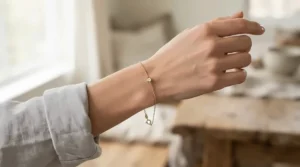
Delicate Jewelry Cord Material: Silk vs. Nylon vs. Everything Else
Selecting a delicate jewelry cord material isn’t purely about looks. It’s about how the cord behaves against soft, easily scratched gems. Silk is warm, flexible, and gentle on nacre. Nylon is stronger and more moisture-tolerant but can feel stiffer. Wire-based stringing is tough but loses the soft drape.
| Material | Drape | Strength | Best For |
|---|---|---|---|
| Silk | Soft, fluid | Moderate | Pearls, soft gems, heirloom-style pieces |
| Nylon | Slightly stiffer | Higher | Active wear, moisture exposure |
| Beading wire | Structured | Highest | Heavy or sharp-edged beads |
Silk wins when softness matters most. If a bracelet lives on a desk-job wrist and rarely sees water, silk’s gentleness is a genuine advantage. If you’re building something for gym days and dishwashing, nylon may make more sense. For a silk cord bracelet for delicate jewelry, the deciding factor is usually the bead: pearls and other soft materials prefer silk’s cushion. Choose wire only when beads are heavy or have sharp holes that would shred natural fiber.
Fine Silk Knotted Bracelet: What to Expect in Real-World Wear
A fine silk knotted bracelet behaves differently from a stretch cord or wire piece, and setting expectations helps prevent disappointment.
It drapes. Instead of standing off the wrist, it slides with movement, which is exactly what makes silk look expensive. It has a slight give. Silk stretches gradually with wear, so a snug bracelet loosens over months. Jewelers who restring pearls report that a stretched strand comes back noticeably shorter once re-knotted tight, often by half an inch to two inches on long necklaces. A bracelet will shorten by less, but the principle holds.
It shows wear honestly. Fading, darkening, and fraying near the clasp are the early signs. That isn’t a defect. It’s silk telling you the cord is due for replacement. Because the piece is knotted, a break usually costs you one bead rather than a floor full of them.
It rewards care. Skip perfume and hairspray, remove it before showers, and store it flat. Treat it like the fine jewelry it is, and it behaves like fine jewelry.
Hand-Knotted Jewelry: A Step-by-Step Guide for Your First Bracelet
Making hand-knotted jewelry is easier than it looks, and the technique is the same one described in Beadaholique’s pearl knotting tutorial, which covers using tweezers or a beading awl to seat each knot.
What you’ll need: silk cord on a card (or spool plus needle), beads, a clasp, bead tips or French wire, tweezers or an awl, and stringing glue.
- Gently pre-stretch the silk. Many jewelers do this to remove early give before knotting.
- Secure the start. Tie a stopper knot, attach a bead tip or clasp end, and dab a tiny amount of glue.
- String one bead. Slide it against the starting knot.
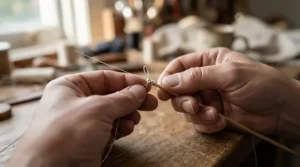
- Tie an overhand knot. Make a loose loop, pass the cord through, and use tweezers or an awl to slide the knot snug against the bead.
- Repeat. Bead, knot, bead, knot. Consistent tension is more important than speed.
- Finish carefully. Attach the second clasp end, add glue to the last knot, and trim once dry.
As a rough rule, allow around four to five times your finished length in cord, since knots eat more than you’d expect. A 2-meter card comfortably covers a standard bracelet with room to spare.
Gemstone Bracelet Pairing: Matching Stone to Silk Size
Good gemstone bracelet pairing starts with physics. Stone hardness, bead weight, and hole size decide which silk works.
Soft stones such as pearls (roughly 2.5-4.5 on the Mohs scale), turquoise, and amazonite scratch easily and benefit most from knotted silk. Mid-hard stones like moonstone and labradorite tolerate silk well but dislike friction against neighbors. Hard stones like quartz, garnet, and sapphire won’t scratch, but their drill holes can be sharp.
The practical pairing logic is simple. For tiny 2-3mm gems, reach for Griffin Size 0. For everyday 3-4mm stones, Griffin Size 1 or Beadsmith Size F fit well. For 4-5mm beads, Beadalon Size #2 hits the middle. For pearls and 5-7mm stones, Griffin Size 4 is the comfortable default.
If the cord barely fits, don’t force it. Forcing thicker silk through a small hole fuzzes the fibers and starts the fraying clock before you’ve even finished. When in doubt, go one size down and knot a little tighter.
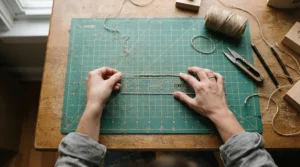
Silk Cord Durability: How Long Will It Really Last?
Silk cord durability is the honest asterisk on this whole category. Silk is beautiful, but it’s organic, so it ages.
Retailer guidance is consistent. Cooksongold notes that silk tends to fray and stretch and puts its approximate lifespan at three to five years. The Berkeley pearl care resource advises restringing pearl strands every one to two years, sooner if the thread begins to bag or fray. Those numbers differ because wear differs: a strand worn daily near perfume and skin oils ages faster than one worn for special occasions.
What shortens silk’s life:
- Perfume, hairspray, and lotions
- Sweat, water, and humidity
- Friction against sharp drill holes
- Hanging storage that stretches the cord
What extends it: knotting between beads, using French wire at the clasp, storing flat, and rotating bracelets so none wears daily. Treat durability as a maintenance schedule, not a flaw. A good silk cord bracelet for delicate jewelry rewards a yearly inspection and the occasional restring.
Real-World Scenarios: Which Cord for Which Person?
Here are three hypothetical profiles matched to products, with budget, environment, and frequency of use.
The weekend crafter. She wants a first pearl bracelet as a gift, works at the kitchen table, and will make maybe two pieces this year. The Beadalon Variety Pack lets her test three sizes for the price of a couple of coffees, then move to Griffin Size 4 for the real pearls.
The Etsy seller. He makes ten to fifteen gemstone bracelets a month, mostly 3-4mm stones. The Beadsmith Size F spool drops his per-bracelet cord cost dramatically. He’d pair it with twisted wire needles and keep a few Griffin Size 0 cards for special micro-bead orders.
The heirloom restringer. She’s fixing her grandmother’s tired pearl bracelet, which hasn’t been restrung in years. Fresh Griffin Size 4 in a matching color, plus French wire at the clasp, gives the piece a proper reset. Jewelers generally recommend professional restringing for high-value strands, so anything truly precious deserves a specialist.
Common Problems and Simple Fixes
Problem: the cord won’t pass through the bead. Go down one size, or ream the hole lightly if the bead allows. Never force it.
Problem: knots keep slipping. Use an awl or tweezers to seat each knot against the bead, and add glue to the final knot only.
Problem: the bracelet stretched out. That’s normal silk behavior. Pre-stretch next time and plan on restringing when the gaps between beads appear.
Problem: the cord is kinked. Beadalon notes silk stored wound can kink. Hang the cord straight for a bit, or gently pull it taut before knotting.
Problem: fraying near the clasp. Add French wire or bead tips at the clasp. It’s cheap insurance.
Problem: uncertain about wear. Check periodically for stretching, discoloration, or fraying. Nelson Coleman Jewelers reports that GIA recommends professional inspection and cleaning every six months to a year, with restringing as the threads weaken.
Common Mistakes When Buying Silk Cord
Buying too thick. It’s the number-one error. Thick cord looks safer, but it stresses drill holes and bulks up knots.
Ignoring the needle. A spool with no needle plan stalls your project. Cards solve this instantly.
Skipping the clasp protection. No French wire means the silk saws against metal every time you flex your wrist.
Confusing brands’ size labels. Griffin uses numbered sizes, while Beadsmith uses letters. Beadsmith Size F (0.348mm) is roughly comparable to Griffin Size 1 (0.35mm), so compare diameters in millimeters rather than labels.
Assuming silk is waterproof-friendly. It isn’t. Pull the bracelet off before washing hands or showering.
Trusting spec sheets alone. Specs don’t tell you how a cord behaves after six months of wear. Plan restringing from day one.
Frequently Asked Questions
❓ Is a silk cord bracelet for delicate jewelry stretchy?
❓ Do I need a special needle with silk cord?
❓ Can I wear silk-strung bracelets in the shower?
❓ How do I choose a color of silk cord?
❓ Is one 2-meter card enough for a bracelet?
Conclusion
The best silk cord bracelet for delicate jewelry depends on the beads in your hand. For tiny gems and ultra-fine work, Griffin Size 0 is the specialist. For everyday gemstone bracelets, Griffin Size 1 is the sweet spot. For pearls and larger beads, Griffin Size 4 is the dependable workhorse.
If color matters, Beadalon Size #2 brings grey and black options. If you’re still learning sizes, the Beadalon Variety Pack or Hobbyworker 5-Piece Set lets you experiment cheaply. If you make bracelets regularly, Beadsmith Size F on a spool is the economical choice, provided you’re happy to thread your own needle.
Above all, respect silk’s nature. It’s soft, beautiful, and mortal. Knot between beads, protect the clasp, keep it away from perfume, and plan for a restring every year or two. Do that, and your delicate stones will sit on a cord that flatters them.
Recommended for You
- Hemp Cord Bracelet For Beach Style: 7 Stunning Picks (2026)
- Nylon Cord Bracelet Vs Waxed Cotton Cord Bracelet: 7 Picks (2026)
- Genuine Leather Vs Vegan Leather Bracelet: 7 Picks Tested For 2026
Disclaimer: This article contains affiliate links. As an Amazon Associate, I earn from qualifying purchases. If you purchase products through these links, we may earn a small commission at no additional cost to you.
✨ Found this helpful? Share it with your friends! 💬🤗
