

In This Article
There’s something almost stubbornly romantic about a piece of jewelry that only makes sense when it’s split in two. That’s the whole pitch behind matching puzzle bracelets for couples — two halves, two wrists, one shape that only clicks into place when you’re standing next to the person who has the other piece. It’s a little corny. It’s also, according to actual research on symbolic gifts, doing more emotional heavy lifting than people give it credit for.

This guide is built around real products currently sold on Amazon, real aggregated review sentiment, and honest analysis of who each one actually suits — not a rewritten spec sheet. Whether you’re shopping for an anniversary, a long-distance milestone, or just because Tuesday felt like a good day to be sentimental, you’ll find budget, mid-range, and premium couples bracelet sets below, along with the questions worth asking before you buy. We’ll also dig into interlocking piece jewelry construction, skin-safety considerations, and how these pieces actually hold up once the honeymoon glow of a new purchase wears off.
One quick definitional note before we dive in: matching puzzle bracelets for couples are two-piece bracelet sets — usually a heart, infinity symbol, or geometric shape — split down the middle so each half is worn separately and only “completes” visually when the wearers are photographed or standing together. They’re a subgenre of relationship puzzle bracelets built specifically around that split-and-reunite visual, and as research on relational gift-giving suggests, objects that physically represent connection tend to carry outsized emotional weight relative to their price.
Quick Comparison Table
| Product | Price Range | Material | Best For |
|---|---|---|---|
| MEALGUET Interlocking Puzzle Heart Bracelets | $15–$25 | Stainless steel, CZ | Best overall interlocking design |
| VNOX Puzzle Heart Bracelets | Under $15 | Stainless steel | Tightest budget |
| Cupimatch “Always & Forever” Set | $10–$18 | Titanium steel, CZ | Dainty, everyday wear |
| ATLVXJL Star & Moon Set | $10–$16 | Stainless steel | Non-heart alternative |
| Uloveido Cuban Chain Lock Bangles | $20–$32 | Titanium steel | Durability, heavier build |
| Tarsus Mutual Attraction Bracelet | $16–$26 | Stainless steel | Magnetic “pull together” concept |
| TOTWOO Touch Bracelets | $80–$150 | Alloy + smart chip | Long-distance, tech-forward couples |
Looking at the spread, the gap between the cheapest and most expensive option here isn’t really about quality of materials — it’s about what the bracelet does. The six analog sets are all variations on stainless or titanium steel with a physically split charm, while TOTWOO Touch Bracelets justify their premium jump with an actual Bluetooth-connected chip that lights up and vibrates when your partner taps theirs. If symbolism alone is the goal, you don’t need to spend past $30; if you want the bracelet to function like a long-distance communication device, that’s where the premium tier earns its price.
💬 Already have a favorite from the table above? Scroll down to see it in action — and don’t forget to share this guide with your partner before you decide together!
Top 7 Matching Puzzle Bracelets for Couples: Expert Analysis
1. MEALGUET Interlocking Puzzle Heart Bracelets — cleanest interlock when hands come together
The standout here is literal: when you and your partner press your wrists together, the two puzzle-piece charms lock into a single unbroken heart, which is a more convincing “complete picture” effect than most competitors manage. Each charm is stainless steel set with AAA cubic zirconia, and the chain is adjustable, so sizing isn’t the headache it is with fixed-link couples bracelet sets. MEALGUET has been producing fashion jewelry for over a decade, which shows up in small details — smoother edge finishing, a clasp that doesn’t catch on sleeves.
Based on the spec comparison with similar interlocking-charm sets, this is the one to buy if you want the visual “gimmick” to actually read clearly in photos, since sloppier puzzle cuts on cheaper alternatives often don’t line up. Reviewers consistently report that the CZ stones hold their shine longer than expected for the price point, though a handful mention the extension chain feels a bit thin. It’s aimed squarely at couples who want a legitimate piece of interlocking piece jewelry rather than a novelty stocking-stuffer.
Pros:
- ✅ Charms interlock cleanly into a full heart shape
- ✅ Adjustable chain fits most wrist sizes
- ✅ CZ stones hold shine longer than typical for the price
Cons:
- ❌ Extension chain feels slightly thin to some wearers
- ❌ Only one heart-shape design option currently offered
In the mid-teens to mid-twenties price range, MEALGUET delivers real value — you’re paying for design precision more than raw materials, and for this specific style of jewelry, that’s the right thing to pay for.

2. VNOX Puzzle Heart Bracelets — most affordable entry point that still looks intentional
VNOX keeps things simple: two stainless-steel halves of a heart, a basic cable chain, and a price that undercuts almost everything else on this list. The standout feature is how the brand frames the set specifically around long-distance relationships, which shows in small touches like a slightly larger split-heart pendant that reads clearly even in low-light phone photos.
The steel itself is a lower-cost grade than the surgical-grade steel used in pricier sets, meaning it’s fine for daily wear but slightly more prone to surface scratching over a year or two of steady use — a reasonable trade-off for buyers prioritizing affordability. Aggregated review sentiment skews positive on appearance-for-price, with several buyers noting the bracelets look considerably more expensive than the listed range suggests, though a recurring complaint involves the clasp mechanism feeling loose after a few months.
Pros:
- ✅ Lowest price point on this list without looking cheap
- ✅ Larger pendant size reads well in photos
- ✅ Marketed specifically toward long-distance couples
Cons:
- ❌ Clasp reportedly loosens after months of daily wear
- ❌ Steel grade more prone to surface scratches over time
If your budget is the main constraint, VNOX is the pragmatic pick — just don’t expect it to survive rough handling the way a heavier-gauge set would.
3. Cupimatch “Always & Forever” CZ Couple Set — most delicate, everyday-wearable design
Where some couples bracelet sets go heavy and statement-making, Cupimatch goes the other direction: a slim titanium-steel band, small CZ accents, and an engraved “Always & Forever / Forever & Always” message split across the two pieces. The standout feature is genuinely how unobtrusive it is — this reads as normal jewelry first and a couples statement second, which matters for people who don’t want to explain their bracelet at work.
The titanium-steel base resists tarnishing better than plain stainless in humid climates, and the adjustable extension chain accommodates a wider range of wrist sizes than fixed-length competitors. What most buyers overlook about a design this dainty is that smaller charms are also lower-risk for catching on clothing or hair, which reviewers who wear it daily specifically call out as a practical upside rather than just an aesthetic one. Real complaints center on the engraving being faint on close inspection.
Pros:
- ✅ Subtle enough for daily and professional wear
- ✅ Titanium steel resists tarnish in humid conditions
- ✅ Engraved message adds sentiment without bulk
Cons:
- ❌ Engraved text can be faint or hard to read
- ❌ Less visually “matched” from a distance than heart-split styles
For couples who want romantic matching jewelry that doesn’t scream for attention, Cupimatch is the quieter, more wearable option.
4. ATLVXJL Star & Moon Couple Set — best non-heart symbolic alternative
Not every couple wants a heart. ATLVXJL swaps the standard split-heart for a sun-and-moon (or star-and-moon, depending on listing variant) motif, which taps into a different but equally common symbolic couple accessories tradition — one half representing day, the other night, together forming a complete cycle. The standout feature is genuinely the design variety; it’s one of the few sets on this list where the metaphor doesn’t rely on physically interlocking pieces.
Construction-wise, it’s comparable to the VNOX set — accessible stainless steel, adjustable chain, mid-weight charm. Based on the spec comparison, buyers choosing between the two are really choosing symbolism (heart vs. celestial) rather than build quality. Reviewers frequently mention gifting this specifically for anniversaries tied to nighttime memories (first date, stargazing trips), and a common complaint in user reviews is that the moon charm’s fine detailing wears down faster than the flatter star charm.
Pros:
- ✅ Distinct sun/moon symbolism instead of standard heart
- ✅ Comparable build quality to similarly priced sets
- ✅ Popular gifting choice for meaningful shared memories
Cons:
- ❌ Fine detailing on the moon charm can wear down
- ❌ Fewer size/finish variants than heart-style competitors
If the heart motif feels overdone to you, ATLVXJL is the easiest swap without sacrificing price or wearability.
5. Uloveido Titanium Steel Cuban Chain Lock Bangles — most durable, heaviest-gauge build
Uloveido takes a different structural approach: instead of a slim cable chain, it uses a Cuban-link-style titanium steel band with a square heart-lock closure. The standout feature is durability — the thicker link gauge is noticeably more resistant to bending or deformation than the thinner chains used across most of this list, making it a better fit for people who work with their hands or simply wear jewelry harder than average.
That extra material means a heavier bangle, which is a genuine trade-off, not a flaw — some wearers will love the substantial feel, others will find it heavier than they expected for daily wear. Aggregated reviews are strongly positive on longevity, with multiple buyers reporting a full year or more of daily wear without visible wear on the plating. If you’ve been burned before by flimsy interlocking piece jewelry that bent out of shape within weeks, this is the corrective option.
Pros:
- ✅ Thicker gauge resists bending far better than slim chains
- ✅ Strong reported longevity from daily wearers
- ✅ Cuban-chain look reads as more “jewelry,” less “novelty gift”
Cons:
- ❌ Noticeably heavier than the other sets on this list
- ❌ Bulkier profile may not suit petite wrists
At the higher end of the mid-range, Uloveido is the pick for couples who want their bracelet to survive actual daily life, not just a photo shoot.
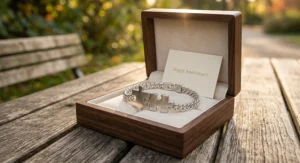
6. Tarsus Mutual Attraction Bracelet — most literal “pull toward each other” concept
Tarsus builds its bracelet set around a magnetic attraction gimmick rather than a physical puzzle split — the two charms are designed so that, when brought close, an internal magnet pulls them together. The standout feature is the sensory element: it’s genuinely satisfying in a way a static charm can’t replicate, and it translates the “we’re drawn to each other” metaphor into something you can physically feel rather than just see.
Here’s what the spec sheet won’t tell you, but reviewers note: the magnetic pull is moderate, not vice-grip strong, so it won’t damage the bracelet or pinch skin, but it also isn’t strong enough to keep the bracelets connected during activity — it’s a novelty moment, not a locking mechanism. That’s fine for its intended use (a fun beat during a proposal, anniversary, or reunion after time apart) but worth setting expectations correctly before buying. Reviewers who bought it purely as symbolic couple accessories for gifting report high satisfaction; those expecting a functional clasp were more mixed.
Pros:
- ✅ Unique magnetic “pull together” sensory effect
- ✅ Strong gifting appeal for reunions and proposals
- ✅ Magnetic force is gentle enough not to pinch skin
Cons:
- ❌ Magnet isn’t strong enough to function as a wearable clasp
- ❌ Novelty factor may fade faster than static-charm designs
Treat Tarsus as a moment-driven gift rather than an everyday functional accessory, and it delivers exactly what it promises.
7. TOTWOO Touch Bracelets for Couples — premium tech-forward option for long-distance couples
TOTWOO is in a different category entirely. Instead of a static split charm, each bracelet houses a small Bluetooth-connected chip: tap yours, and your partner’s bracelet lights up and vibrates, paired through a companion smartphone app over an internet connection — meaning the “connection” works across any distance, not just when you’re standing side by side. The standout feature is real functional utility for couples who are actually apart, not just a metaphor for closeness.
On paper, this means setup is more involved than any other bracelet here — both partners need the app installed, Bluetooth paired, and an active data connection for signals to travel. Battery life runs roughly three to seven days per charge depending on use, and the company includes two chargers in the box. Reviewers who use it for genuine long-distance relationships describe the touch-notification feature as surprisingly emotionally effective, while some reviews mention occasional connectivity drops that require re-pairing. Given the U.S. Department of Health and Human Services-linked research center at Bowling Green State University estimates a meaningful share of American newlyweds currently live apart from their spouse for non-marital reasons, per NCFMR’s newlywed living-apart data, a functional distance-bridging accessory like this fills a real gap rather than a manufactured one.
Pros:
- ✅ Actually functions across real distance, not just symbolically
- ✅ Adjustable light color and vibration intensity
- ✅ Includes custom date reminders and two chargers
Cons:
- ❌ Requires app, Bluetooth pairing, and data connection to work
- ❌ Occasional reported connectivity drops needing re-pairing
At $80–$150, TOTWOO costs several times more than the analog sets above, and the value verdict depends entirely on whether “connection” needs to be literal for your relationship — if it does, this is the only product here built to deliver that.

Practical Usage Guide: Getting the Most Out of Your Bracelets
Buying the bracelet is the easy part — keeping it looking good and meaning something a year later takes a little more intention. First 30 days matter more than people expect: most of the scratching, tarnishing, and clasp fatigue that shows up in negative reviews happens because a new bracelet gets worn through showers, workouts, and sleep before the wearer has a feel for how it holds up.
For any of the stainless or titanium steel sets — MEALGUET, VNOX, Cupimatch, ATLVXJL, Uloveido, or Tarsus — remove them before swimming, heavy exercise, or applying lotion and perfume directly to the wrist, since chemical exposure is the single biggest driver of premature tarnish on CZ-accented pieces. Wipe the charm with a soft, dry cloth every week or two rather than waiting until it looks dull; buildup is much easier to prevent than to reverse. If you own TOTWOO, the maintenance routine shifts toward software: keep the companion app updated, since the brand pushes firmware updates specifically to improve connection stability, and charge both bracelets on the same schedule so neither partner is caught with a dead battery during a meaningful moment.
A common first-month mistake with any relationship puzzle bracelets is over-adjusting the extension chain trying to get a “perfect” fit on day one — most adjustable chains are designed to be revisited after a week of wear, once you know how the bracelet actually sits during normal movement.
Real-World Scenarios: Who Actually Buys These
The long-distance couple. Sarah and Marcus see each other once a month between two cities. For them, a static charm was never quite enough — the emotional gap they’re trying to bridge is about presence, not aesthetics, which makes TOTWOO‘s actual touch-and-notify function worth the premium price. A set of boyfriend girlfriend bracelets that just look nice sitting in a drawer doesn’t solve their specific problem.
The budget-conscious first-anniversary gift. A college student picking a first meaningful jewelry gift for a partner doesn’t need $100 of smart tech — VNOX or ATLVXJL deliver the sentiment at a price that doesn’t create financial pressure around a one-year milestone, and the symbolism lands just as hard as it would from a pricier set.
The everyday-wear couple who both work in professional settings. For two people who need jewelry that survives a 9-to-5 without looking like a costume accessory, Cupimatch‘s dainty build or Uloveido‘s more durable bangle both outperform flashier options — subtlety and durability matter more here than novelty.
Problem → Solution: Fixing Common Buying Mistakes
Problem: The bracelets don’t line up correctly in photos. This usually comes down to cheap puzzle-cut tolerances. Solution: prioritize sets like MEALGUET, where reviewers specifically confirm clean interlocking, over unbranded listings with vague product photos.
Problem: One partner has sensitive skin and reacts to cheap jewelry. Solution: look specifically for 316L surgical-grade stainless steel or titanium steel in the listing description rather than trusting the word “hypoallergenic” alone — as the Mayo Clinic explains, nickel-free stainless steel and titanium are genuinely safer bets, while lower-grade alloys can still trigger reactions despite hypoallergenic marketing.
Problem: The relationship is long-distance and a static bracelet feels hollow. Solution: consider TOTWOO‘s connected functionality instead of a purely symbolic set — the price jump buys actual utility, not just a nicer finish.
Problem: The clasp or chain fails within a few months. Solution: favor heavier-gauge builds like Uloveido if daily durability matters more to you than a delicate look; thinner chains trade longevity for subtlety.
Problem: Buyer’s remorse over spending on “just a gimmick.” Solution: reframe the purchase around what research on relational gifting actually shows — that a well-matched symbolic object can meaningfully reinforce commitment, provided it’s chosen thoughtfully rather than as an afterthought, per the Psychology Today overview of gift-giving research.
🔍 Take Your Gift Search to the Next Level
Compare current pricing on the sets above and lock in the one that fits your relationship — and your budget — before the moment passes.
How to Choose Matching Puzzle Bracelets for Couples
- Decide what the bracelet needs to do. Purely symbolic couples bracelet sets and functional long-distance tech (like TOTWOO) solve different problems — pick based on need, not just aesthetics.
- Check the metal grade, not just the word “stainless.” 316L surgical steel and titanium resist skin reactions far better than lower-grade alloys.
- Match the design to how often it’ll be worn. Dainty sets like Cupimatch suit daily professional wear; heavier builds like Uloveido suit people who are rough on jewelry.
- Consider the occasion’s weight. A first Valentine’s gift and a five-year anniversary probably don’t call for the same budget tier.
- Read reviews for clasp and chain durability specifically, not just star ratings — this is where cheaper interlocking piece jewelry tends to fail first.
- Confirm sizing flexibility. Adjustable extension chains matter more than fixed lengths, since couples rarely share identical wrist sizes.
- Decide if the puzzle-split visual actually matters to you, or if a non-heart symbolic option (sun/moon, magnetic pull) fits your relationship better.

Common Mistakes When Buying Couples Puzzle Bracelets
The most frequent mistake is buying based on product photos alone. Puzzle-piece interlocking is genuinely difficult to manufacture with tight tolerances, and a listing photo can hide a sloppy cut that won’t actually align on real wrists — this is why cross-checking real review sentiment, not just the hero image, matters so much with this category.
A second common mistake is ignoring metal grade entirely. “Stainless steel” covers a wide quality range, and the cheapest listings often use 200-series alloys that release more nickel over time than the 316L surgical grade used in better sets. A third mistake is buying a large or heavy design for a partner who wears delicate jewelry daily — a bracelet that never gets worn because it feels bulky isn’t romantic, it’s a drawer item. Finally, treating every couples bracelet set as interchangeable overlooks a real distinction: TOTWOO solves a functional distance problem that none of the purely symbolic sets can touch, and buying the wrong category for your specific relationship situation is the single biggest source of post-purchase disappointment.
Matching Puzzle Bracelets vs Traditional Couple Jewelry
| Feature | Puzzle/Interlocking Bracelets | Traditional Matching Necklaces/Rings |
|---|---|---|
| Visual “reunion” effect | Yes — pieces physically complete each other | No, typically identical rather than complementary |
| Daily wear practicality | High (bracelets rarely catch or tangle) | Necklaces can catch; rings affect hand use |
| Price range | $10–$150 depending on tier | $20–$300+, wider spread |
| Long-distance function | Available (TOTWOO) | Rarely built-in |
| Best For | Couples wanting a “we complete each other” symbol | Couples wanting subtle, everyday-identical jewelry |
The core difference isn’t really price or material — it’s narrative. Traditional matching jewelry says “we chose the same thing,” while a puzzle-split design says “we’re two parts of one whole,” which is a meaningfully different symbolic statement for a lot of couples. Uloveido and MEALGUET both lean into that reunion narrative harder than a standard matching necklace ever could, simply by design.
What to Expect: Real-World Performance
Specs rarely tell the whole story of how jewelry behaves after three months of actual wear. Expect the CZ accents on budget sets like VNOX and ATLVXJL to retain their sparkle well under normal conditions but dull faster if exposed regularly to lotion, perfume, or chlorine. Expect adjustable chains to loosen slightly with repeated resizing — this is normal wear, not a defect, and most reviewers who complain about “loose clasps” are describing this exact mechanical reality rather than a manufacturing flaw.
For TOTWOO, expect the connection to feel genuinely novel for the first few weeks and then settle into a quiet, background presence — most long-term reviewers describe the value shifting from “exciting new gadget” to “reassuring habit” over time, which is arguably the better long-term outcome for a relationship-focused product.
Long-Term Cost & Maintenance
Total cost of ownership for the six analog sets is close to their sticker price — there’s no ongoing expense beyond occasional replating or professional cleaning if tarnish becomes noticeable, which for 316L steel or titanium builds like Uloveido and Cupimatch may never actually happen under normal wear. TOTWOO is the exception: while there’s no subscription fee for the core touch-and-light function, longevity depends on battery health over years of charge cycles, and the company’s own guidance suggests roughly 3–7 days per charge, meaning consistent charging habits are part of the real ownership cost.
Comparing cost-per-year of visible sentimental use, the cheaper symbolic couple accessories arguably deliver stronger ROI for the money — a $15 bracelet worn daily for three years costs a few cents per wear, while the value of TOTWOO‘s premium price hinges on whether the long-distance function actually gets used regularly rather than becoming a novelty that’s set aside after the first month.
Safety, Materials & Skin-Sensitivity Guide
Because these bracelets are meant for daily wear, material choice matters more than most buyers initially assume. Roughly one in ten people has some degree of nickel sensitivity, and as the Mayo Clinic notes, even jewelry marketed as “hypoallergenic” can still contain enough nickel to trigger a reaction in sensitive wearers, since the term isn’t strictly regulated. Surgical-grade 316L stainless steel and titanium are the safest widely available options because the nickel content, where present, is bound tightly enough within the alloy to minimize skin contact.
Among the sets reviewed here, titanium-based builds like Cupimatch and Uloveido carry a lower reaction risk than standard stainless steel by default, which is worth prioritizing if either partner has a history of costume-jewelry irritation. If you’re unsure, a simple 48-hour patch test — wearing the bracelet briefly and watching for redness — is a reasonable precaution before committing to daily wear, especially for gifts where you can’t confirm the recipient’s sensitivity in advance.
Features That Actually Matter (And Those That Don’t)
What actually matters: metal grade, clasp/chain durability, and — for TOTWOO specifically — connection reliability and battery life. These are the features that determine whether the bracelet survives past month three.
What matters less than marketing suggests: exact stone count or “carat-equivalent” CZ language on budget listings, since at this price tier the stones are decorative rather than investment-grade, and elaborate box packaging, which adds to unboxing appeal but nothing to the wearable product itself. The puzzle-cut precision genuinely does matter (it’s the difference between the charms visually completing each other or not), but the specific finish color — rose gold vs. silver vs. gold — is purely personal preference with no durability implications either way.

FAQ
❓ Do matching puzzle bracelets for couples actually fit together?
❓ Are stainless steel couple bracelets safe for sensitive skin?
❓ How much do couples bracelet sets typically cost?
❓ What's the difference between puzzle bracelets and regular matching bracelets?
❓ Can long-distance couples use matching bracelets to stay connected?
Conclusion
Matching puzzle bracelets for couples occupy an interesting middle ground between jewelry and communication — they’re never just about the metal or the stones, they’re about the story two people agree to wear on their wrists. Among the seven options here, MEALGUET earns the strongest all-around recommendation for its clean interlock and reasonable price, Uloveido wins on pure durability, Cupimatch suits understated daily wear, and TOTWOO is worth the premium specifically for couples actually navigating distance rather than just wanting a nice symbol.
There’s no single “best” answer here — the right pick depends entirely on your relationship’s actual situation, your skin sensitivity, and how much weight you want a small piece of interlocking piece jewelry to carry. What matters most is choosing deliberately rather than defaulting to whatever shows up first in a search, since — as the research on symbolic gifting suggests — intention is a big part of what makes these pieces meaningful in the first place.
✨ Found this helpful? Share it with your partner and pick your pair together! 💬🤗
Recommended for You
- Carabiner Bracelets Stainless Steel: 7 Picks That Won’t Snap in 2026
- 7 Jewelry Bracelets for Fitbit That Actually Look Expensive (2026)
- 7 Best Stainless Steel Mesh Bracelets for Women in 2026
Disclaimer: This article contains affiliate links. As an Amazon Associate, I earn from qualifying purchases. If you purchase products through these links, we may earn a small commission at no additional cost to you.
✨ Found this helpful? Share it with your friends! 💬🤗
