

In This Article
An elastic cord bracelet for kids is a no-clasp, pull-on wristband made from stretchy cord strung with beads, silicone, or coiled plastic. It slides over a small hand and springs back to fit the wrist. There’s no buckle, no tiny lobster claw, and no meltdown at the front door. That’s why it’s the default first piece of jewelry for so many children.
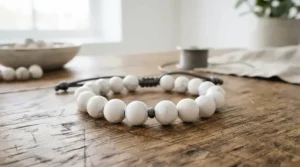
Simple, right? Not quite. Search for an elastic cord bracelet for kids on Amazon and you’ll face thousands of listings: pink princess sets, rainbow bead multipacks, sensory coils, DIY string rolls. They all promise the same trio of cute, safe, and easy. Some deliver. Others are a handful of tiny beads on a thread with a very large marketing budget.
Here’s the catch most listings skip. The weak point of any stretchy kids bracelet isn’t the beads. It’s the cord. When it snaps, a “bracelet” becomes a pile of loose parts, and federal rules define a small part as anything that fits completely inside a standardized test cylinder. The U.S. Consumer Product Safety Commission explains the details in its small parts and choking hazard labeling FAQs.
So this guide does three jobs. It walks through seven real options and what their specs mean in practice. It explains how to judge child-safe jewelry materials and the no-clasp bracelet for children style. And it gives you a repeatable routine for choking hazard prevention that works whichever bracelet you buy.
One note on honesty up front. I haven’t worn, tested, or chewed any of these products (kids do that better than I do). What follows is listing research, spec analysis, and safety reasoning, and I flag clearly where something couldn’t be verified.
Quick Comparison: Elastic Cord Bracelet for Kids at a Glance
Here’s the lineup in one scan. “Age label seen” reflects what the listings showed during research. Always re-check the live page, because sellers edit these constantly.
| Product | Type | Pieces | Age label seen | Best For |
|---|---|---|---|---|
| SIELEVIN LOVE Bead Set | Beaded stretch | 9 | Ages 3+ | Party favors, preschool-age gifting |
| Hicarer Rainbow Bead Bracelets | Beaded stretch | 20 | Check listing | Large birthday groups |
| Lorfancy Letter Bead Bracelets | Beaded stretch | 12 | Check listing (“toddler” in title) | Name-and-letter play, older kids |
| Guiqulai Friendship Bracelet Set | Beaded stretch | 48 | Check listing | Classrooms, siblings, bulk swaps |
| Maberry Sensory Coil Bracelets | Stretch coil | 6 | Over 3 | Fidgeting and sensory needs |
| Special Supplies Squishy Fuzzy Bands | Silicone band | 6 | Check listing | Bead-free wear |
| Pluralla Stretchy Bracelet String | DIY elastic cord | 4 rolls | Craft supply | Parent-assembled, custom-sized bracelets |
Looking at the table, the Guiqulai set wins on sheer quantity, but quantity is also where quality control gets slippery. Maberry and Special Supplies sidestep the bead problem entirely, which matters most for kids who still explore the world with their mouths. Pluralla is the odd one out: it’s a raw material, not a finished product, so the safety outcome depends on you.
💬 Just one click — help others make better buying decisions too!😊
Top 7 Elastic Cord Bracelet for Kids: Expert Analysis
Each pick below follows the same pattern: what the spec means in real life, who it suits, what review data could and couldn’t be confirmed, and an honest pros-and-cons split. Prices are ranges and tiers only, so check current price on the listing.
1. SIELEVIN LOVE Bead Set (9 PCS) — pink starter set labeled for ages 3+
The SIELEVIN set leads with the detail that matters most: its listing shows an age grade of 3 years and up. That puts it in the “kid who no longer mouths everything” bracket instead of pretending it suits a one-year-old.
Nine pink LOVE-lettered bracelets sounds like a lot for one child. Think of it as a spare-parts strategy. Stretch cord fails eventually, and having extras means a snapped bracelet is a shrug instead of a tragedy. It’s also the right count for party bags.
Based on the format, this suits preschoolers and early elementary kids who want to look like they’re wearing “real” jewelry. Wear it with an adult within sight. Letter beads are small, rigid, and slippery once the cord gives way.
Review data: I couldn’t verify detailed review text during research. The listing did show strong recent purchase volume, but popularity isn’t proof of safety, so don’t treat it as such.
Pros:
- ✅ Explicit 3+ age labeling on the listing
- ✅ Nine pieces give you spares
- ✅ Simple pull-on fit, no fiddly fastener
Cons:
- ❌ Rigid letter beads become loose parts if cord snaps
- ❌ Single color family limits variety
Price and value: budget tier. Strong value per bracelet, as long as you treat the extras as replacements.
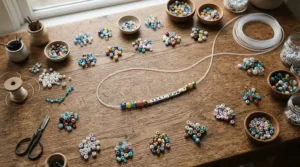
2. Hicarer Rainbow Bead Bracelets (20-Piece) — biggest rainbow haul for party hosts
When twenty small guests need twenty small gifts, the Hicarer set is built for exactly that scenario. The “vivid” rainbow style photographs well and reads as festive.
A twenty-piece pack changes the safety math. Spread across a party, those bracelets will land on wrists you’ve never met, from toddlers’ younger siblings to eight-year-olds who yank things. The more bracelets you hand out, the more important it becomes to sort them by age before the party starts.
Analysis: this is a gifting product first and a daily-wear product second. Stretch beads on thin cord in bulk packs tend to vary from piece to piece, so a quick tug test on a few from the pack (see the check routine below) is a smart habit. The listing didn’t make a clear age grade obvious in my research, so confirm it before buying.
Review data: I couldn’t verify real review text, so I won’t characterize customer opinion. Read the most recent one- and two-star reviews yourself and look for “snapped” or “beads everywhere.”
Pros:
- ✅ Twenty pieces covers whole party guest lists
- ✅ Bright rainbow palette suits many tastes
- ✅ Low cost per bracelet in a multipack
Cons:
- ❌ Age grading wasn’t clear in the listing
- ❌ Bulk packs invite uneven build quality
Price and value: budget tier. Best value when you’re gifting to a defined age group.
3. Lorfancy Letter Bead Bracelets (12 Pcs) — alphabet beads for name and word play
The Lorfancy set leans on letter beads, which turns a bracelet into a mini literacy toy. For a five-year-old learning to spell, that’s genuinely charming.
Here’s the wrinkle. The listing title includes the words “toddler” and “baby.” Treat that as search-engine seasoning, not a safety certification. A product marketed to toddlers still needs documented testing, and small hard beads on stretch cord are precisely what the small-parts rules worry about.
My analysis: the Lorfancy pack suits preschool-and-up kids under supervision, and it works best for children who are past the mouthing stage. If your child is under three, I’d skip any letter-bead bracelet and go bead-free instead.
Review data: I couldn’t verify review text during research. Ask the seller directly whether a Children’s Product Certificate exists for this item. Reputable sellers answer.
Pros:
- ✅ Letter beads double as spelling play
- ✅ Twelve pieces allow mix-and-match
- ✅ Light, easy-wear stretch fit
Cons:
- ❌ “Toddler” wording in title is marketing, not proof
- ❌ Individual letter beads are tiny if detached
Price and value: mid-budget tier. Fair value for older preschoolers and school-age kids.
4. Guiqulai Friendship Bracelet Set (48 Pcs) — most pieces per pack for classrooms
If you’re feeding a classroom exchange, a scout troop, or a sibling free-for-all, the Guiqulai set’s 48 pieces is the arithmetic answer. The title advertises adjustable, colorful beaded stretch bracelets.
Forty-eight bracelets at a low per-piece cost sounds like a bargain, and it often is. But large sets can hide variability, because one bracelet gets a snug knot and another gets a lazy one. That’s why I’d test a sample from the pack before handing any out.
On analysis, the preppy-bracelet look targets tweens as much as little kids. For an elastic cord bracelet for kids in the 6-to-10 range, that’s a feature. For a toddler, it’s a mismatch.
Review data: I couldn’t verify real review text, but this set showed up repeatedly across the kids-stretch search results, which signals strong visibility. Visibility is not the same as quality, so check recent reviews for breakage reports.
Pros:
- ✅ Forty-eight pieces stretch a budget far
- ✅ Tween-friendly style suits older kids
- ✅ Great for swaps and class gifts
Cons:
- ❌ Bulk size makes consistent quality harder to guarantee
- ❌ Not aimed at toddlers
Price and value: budget tier, with the lowest cost per bracelet in this lineup.
5. Maberry Sensory Coil Bracelets (6 Pack) — bead-free coils for fidgeting hands
Not every kid wants a bracelet to look at. Some want one to fiddle with. The Maberry coil bracelets are stretchy spirals that twist, bend, and stretch, with no beads at all.
That design choice is the whole point. The listing shows an age range of kids over 3 and a category rank in sensory motor aids, so it’s positioned as a sensory tool, not a fashion accessory. With no beads, nothing can scatter if the coil stretches out.
Analysis: this suits kids who need hands-on regulation in class or during long car rides, including many children with ADHD or autism, though always check with your child’s therapist about what works. Don’t assume a coil is a chew toy just because similar listings in the same family are. If your child chews, look for products explicitly sold and tested for that purpose.
Review data: I couldn’t verify detailed review text. Look for comments on whether coils lose their spring over time.
Pros:
- ✅ No beads, no loose small pieces
- ✅ Doubles as a quiet fidget
- ✅ Six colors in one pack
Cons:
- ❌ Coils can snag hair and sleeves
- ❌ Reads as a fidget, not jewelry
Price and value: budget-to-mid tier. Excellent value if the fidget function is what you want.
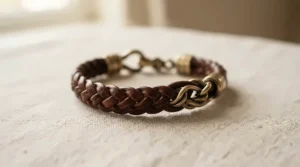
6. Special Supplies Squishy Fuzzy Band Bracelets (6 Pack) — soft one-piece silicone bands
Beads, cord, knots: remove all of it and you get the Special Supplies bands. These are flexible, stretchy, tactile bracelets that read more like a sensory toy than jewelry.
The best feature is what’s missing. A one-piece band has no knot to fail and no beads to detach, so the cord-snap scenario simply doesn’t exist. That’s the strongest argument for choosing it over beaded sets for younger or more mouthy kids.
My analysis: it’s a smart pick for classroom use, travel, and kids who like texture. The trade-off is style. If your child specifically wants glittery charm bracelets, they’ll find this plain.
Review data: I couldn’t verify review text during research. The listing wording suggests a silicone build, so check the live page for a stated age grade, because I couldn’t confirm one.
Pros:
- ✅ One-piece design with no knot to fail
- ✅ Soft, tactile feel kids tend to enjoy
- ✅ Nothing to detach or scatter
Cons:
- ❌ Plainer look than beaded sets
- ❌ Age grade wasn’t confirmed in research
Price and value: budget tier. Best safety-per-dollar for younger children.
7. Pluralla Stretchy Bracelet String (1mm, 4 Rolls) — DIY cord for parent-built bracelets
The Pluralla pack is the wildcard. You’re not buying a bracelet; you’re buying the raw material, four rolls totaling 660 feet of 1mm elastic.
Here’s the interesting twist for elastic cord bracelet for kids shoppers. Building it yourself gives you total control: choose large beads, size the bracelet precisely, and tie the knot properly. On paper that’s the most controllable option here.
But you’ve also become the manufacturer. Homemade jewelry isn’t third-party tested, so choose bead material carefully, check lead and cadmium disclosures, and avoid small beads for little kids. Thin 1mm cord also tends to wear faster under hard use than thicker cord, so retire homemade bracelets early.
Review data: I couldn’t verify review text. Spend a minute reading what crafters say about knot slippage.
Pros:
- ✅ You control bead size and fit
- ✅ Enormous length for the money
- ✅ Great for crafty older kids
Cons:
- ❌ Homemade means no third-party testing
- ❌ Thin cord wears faster
Price and value: budget tier, with the best per-bracelet cost if you’ll actually make many.
Choking Hazard Prevention: A Five-Minute Check Before Every Wear
This is the practical heart of the article. It costs nothing and works on any stretchy kids bracelet, from the cheapest multipack to a homemade one.
Start with the cylinder idea. A small part is anything that fully fits inside a test cylinder roughly 2.25 inches long and 1.25 inches wide, approximating a young child’s throat. At home, a toilet paper tube makes a decent stand-in. Any loose bead or piece that slips through is a hazard for children under three. The CPSC’s small parts regulation summary lays out the rule behind this.
Then run this routine:
- Tug test. Gently stretch the bracelet to roughly double its width. If beads shift, gaps open, or the cord creaks, retire it.
- Knot check. Look at the knot. It should be tight, trimmed, and ideally sealed. A frayed or bulging knot is the next failure.
- Bead wobble. Pinch each bead and try to rotate or pull it. Anything loose or cracked goes in the bin.
- Fit check. You should fit one finger under the bracelet. Too tight leaves marks; too loose catches on things.
- Supervision rule. Remove it for naps, bath, playground climbing equipment, and sports.
For a maintenance schedule, run the full check weekly and before any special event. Do a quick visual before each wear. Replace any beaded elastic cord bracelet for kids every few months regardless, because stretch cord ages even when nobody’s noticed.

Which Bracelet for Which Kid? Real-World Scenarios
Specs only matter when matched to an actual child. Here are three common profiles.
Scenario 1: The 4-year-old birthday guest. Budget is small, the setting is a party, and wear is occasional. The SIELEVIN set’s 3+ label and nine pieces fit well, and the Hicarer pack works if you’re hosting many kids. Supervise throughout, and tell parents of younger siblings that the bracelets are for the guest of honor’s age group only.
Scenario 2: The 7-year-old who can’t sit still. Mid-school-year, in a classroom, worn daily for hours. Bead-free is the sensible route here: the Maberry coils for fidgeting or the Special Supplies bands for a softer feel. Both avoid the loose-bead scenario that plagues classrooms, and both survive being stretched and twisted.
Scenario 3: The 9-year-old craft fan. Rainy weekends, a big appetite for making things, and parents who can supervise. The Pluralla cord gives her a project and you a safety lever, because you choose bead size and check knots together. For quick swaps with friends, the Guiqulai set covers the exchange economy at a low per-piece cost.
The pattern is straightforward. The younger or mouthier the child, the fewer small parts you want. As kids age, you can trade safety margin for style.
How to Choose an Elastic Cord Bracelet for Kids
Short on time? Work through these six steps in order.
- Start with age, not style. Find an explicit age label on the listing, and ignore words like “baby” in titles. Labels from the seller aren’t a guarantee, but missing ones are a warning.
- Pick bead-free for under-threes. Coils and silicone bands remove the biggest failure mode.
- Inspect cord and knots. Look for thicker cord and neat, sealed knots in photos.
- Check materials disclosure. Look for statements on lead, cadmium, and nickel, plus mention of testing. If there’s nothing, ask.
- Match wear pattern to design. Daily school wear needs durability. Party-bag use only needs cute.
- Buy spares. Multipacks aren’t just value; they let you retire worn bracelets guilt-free.
Do this and you’ll cut most of the risk before reading a single review.
Child-Safe Jewelry Materials: What to Look For
Materials do the quiet work of safety. A bracelet can be perfectly sized and still carry a chemical problem.
Start with the cord. Elastic cords are typically a stretchy synthetic core, and what matters is that it recovers its shape without thinning or fraying. Cheap cord loses spring quickly.
Next, beads. Wood, glass, clay, acrylic, and silicone each fail differently. Painted beads can chip. Glass can crack. Silicone is soft, but it should be a single piece rather than glued parts.
Then metal accents, the usual suspects for heavy metals. In the U.S., children’s jewelry must meet limits on total lead content of 0.01 percent and undergo relevant testing, according to this children’s jewelry regulations guide. Some states add cadmium limits.
Finally, coatings and paint. Glitter and painted finishes should be well bonded. Chipping paint on a bracelet worn by a chewer is a problem.
Practical approach: prefer solid, uncoated materials, ask sellers for test documentation, and discard anything that flakes, smells strongly of chemicals, or leaves residue on skin.
Safe Jewelry for Toddlers: What to Know Before You Buy
Let’s be blunt: toddlers and jewelry are an awkward pairing. The relevant standard states that jewelry is not recommended for children aged three and under without close parental supervision.
That isn’t just caution theater. Toddlers put things in their mouths, tug at wrists, and have narrow airways. A bracelet that snaps once can become a tiny scatter of hazards.
If you still want something wearable, here’s the safer approach:
- Go bead-free. One-piece silicone bands or similar designs remove detachable parts.
- Keep it supervised only. Wear it for photos, outings, or short moments, not unattended play.
- Skip sleep, naps, and bath. Always.
- Check daycare rules. Many centers prohibit jewelry entirely.
Treat “safe jewelry for toddlers” as “lowest-risk jewelry with an adult watching,” not “risk-free.” If that feels like a lot of caveats for an accessory, that’s because it is. For many families, a soft wristband for photos and nothing else is the honest answer.
Safety and Compliance Guide: CPSIA, ASTM F2923, and Small Parts
Three acronyms do most of the work in U.S. children’s jewelry rules.
CPSIA covers children’s products broadly. It requires third-party testing at an accepted lab and a Children’s Product Certificate, along with limits on lead and certain other substances.
ASTM F2923 is the consensus standard for children’s jewelry. It covers jewelry for kids 12 and under, addressing substances like lead and cadmium, plus some mechanical hazards. Per one overview, the CPSC doesn’t incorporate this standard into federal law, though retailers commonly require it. You can read the standard’s scope on the ASTM F2923-20 listing.
Small parts rules are separate. Products intended for children under three can’t contain small parts, and certain products for slightly older kids carry choking warnings.
What can a parent actually do with this? Look for stated compliance, ask for a Children’s Product Certificate when something looks vague, and treat the absence of any safety information as a signal. Keep in mind that a listing mentioning a standard is a claim, not proof.
No-Clasp Bracelet for Children vs Clasped and Charm Bracelets
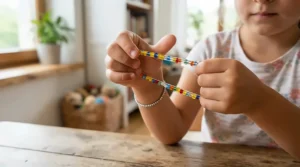
Why choose a no-clasp bracelet for children at all? Because clasps are where small fingers lose patience, and where small parts live.
A pull-on elastic design removes the fastener entirely. Kids put it on themselves, which is the whole appeal of easy-wear accessories. The trade-off is that the single stretch element carries all the stress.
Clasped bracelets, by contrast, can fail at the clasp, the jump ring, or the chain. Charm bracelets add dangling parts that tend to detach.
| Feature | Elastic cord (no-clasp) | Clasp / charm bracelet | Silicone band |
|---|---|---|---|
| Putting it on | Child can do it alone | Needs adult help | Child can do it alone |
| Main failure point | Cord or knot | Clasp, ring, charms | Tearing (rare) |
| Detachable parts | Beads, if cord snaps | Charms, clasps | None |
| Best For | Guiqulai, SIELEVIN | Older kids with supervision | Special Supplies, Maberry |
The table shows a clear split. Elastic cord wins on independence but loses on bead risk, so it fits kids past the mouthing stage. Bead-free options like Special Supplies and Maberry keep the independence while removing most of the detachment risk.
Easy-Wear Accessories: Stretchy Kids Bracelet Features That Actually Matter
Marketing loves to shout about sparkle. Here’s what deserves your attention, and what doesn’t.
Features that matter:
- Stretch recovery. The bracelet should snap back after being pulled. Floppy equals worn out.
- Even sizing. A good stretchy kids bracelet fits wrists across a few years, so check whether the listing shows adjustability.
- Smooth interior. Rough bead holes or seams chafe, and kids will refuse to wear it.
- Weight. Light bracelets get worn. Heavy ones get thrown.
Features that don’t:
- “Luxury” packaging. It’s a bracelet, not a watch.
- Huge piece counts. Forty-eight bracelets are only a benefit if you’ll use them.
- Trendy names. “Princess” and “preppy” tell you nothing about construction.
The key insight on easy-wear accessories is that ease of wear and safety pull in different directions. The easiest design is a pull-on stretch bracelet, but the safest is the one with fewest parts. Choose based on your child’s age, then tune for style.
Long-Term Cost and Maintenance for an Elastic Cord Bracelet for Kids
Cheap bracelets get expensive when you replace them constantly. Think in cost per month of safe use, not cost per box.
Stretch cord has a limited life. Heavy daily wear shortens it, and so do sweat, sunscreen, and chlorine. Expect to replace beaded bracelets more often than coils or silicone bands, which have no cord to fail.
| Product | Price tier (check current price) | Pieces | Value logic |
|---|---|---|---|
| Guiqulai | Budget multipack | 48 | Lowest cost per piece; test samples first |
| Hicarer | Budget multipack | 20 | Strong for events |
| SIELEVIN | Budget | 9 | Good spares for the price |
| Maberry | Budget-to-mid | 6 | Durable, no cord failure |
| Pluralla | Budget (raw material) | 4 rolls | Cheapest per bracelet if you craft often |
Read the table this way: value isn’t the cheapest sticker. It’s the lowest total cost across a year of replacements. Bead-free options often win on that math. Note that true “premium” kids’ stretch bracelets are scarce, because the category lives in a narrow price band.
Maintenance is easy. Rinse after swimming, air-dry, store flat, and never leave bracelets in hot cars, where heat degrades elastic.
Common Mistakes When Buying an Elastic Cord Bracelet for Kids
Most problems trace back to the same handful of errors.
Trusting the title. Words like “toddler” or “baby” aren’t certifications. Look for explicit age labeling and compliance information instead.
Buying by cuteness. The prettiest set with tiny glass beads may be the riskiest for a four-year-old.
Skipping the tug test. Thirty seconds of stretching saves a lot of floor-scrubbing and worry.
Ignoring wear patterns. A bracelet that’s fine at a party may not survive a month of school-yard use.
Forgetting supervision. No design removes the need for it, especially under age three.
Letting kids chew them. Standard jewelry isn’t designed for mouths. If your child chews, choose a product sold and tested for that purpose.
Assuming bulk equals bargain. Large packs are great when you check samples and use the pieces. They’re wasteful when half sit in a drawer.
Avoid these seven, and you’ll make better choices than most shoppers.
✨ Don’t Miss These Exclusive Deals!
🔍 Take your search for the right elastic cord bracelet for kids to the next level with these carefully selected products. Click on any highlighted item to check current pricing and availability. These picks will help you create safe, joyful dress-up moments your family will love!
FAQ
❓ What age can a child safely wear an elastic cord bracelet?
❓ Are stretchy kids bracelets lead-free?
❓ How tight should a no-clasp bracelet for children fit?
❓ Can kids wear elastic bracelets to bed or in the bath?
❓ How often should I replace an elastic cord bracelet for kids?
Conclusion
Choosing an elastic cord bracelet for kids comes down to one honest question: how old is the child, and what happens when the cord gives out?
For preschoolers heading to parties, the SIELEVIN set and the Hicarer pack deliver cheerful, low-cost options, provided you supervise and confirm age grading. For the classroom crowd, Guiqulai covers swaps, while Lorfancy suits letter-loving older kids. If your child fidgets or still mouths things, the bead-free Maberry coils and Special Supplies bands remove the biggest risk. And for crafty families, Pluralla turns an elastic cord bracelet for kids into a shared project, with you in charge of materials and knots.
Whatever you pick, remember the routine: tug, check the knots, inspect beads, confirm the fit, and supervise. Combine that with a hard look at child-safe jewelry materials and you’ve done more due diligence than most.
✨ Ready to find the right fit?
🛍️ Tap any highlighted product above to check current pricing and availability, and pick the one that matches your child’s age and habits. Safe, easy-wear accessories are closer than you think! 💖
Recommended for You
- Canvas Bracelet For Outdoor Activities: 7 Rugged Picks 2026
- Satin Cord Bracelet For Prom: 7 Stunning Picks (2026)
- Silk Cord Bracelet For Delicate Jewelry: 7 Best Picks 2026
Disclaimer: This article contains affiliate links. As an Amazon Associate, I earn from qualifying purchases. If you purchase products through these links, we may earn a small commission at no additional cost to you.
✨ Found this helpful? Share it with your friends! 💬🤗
