
In This Article
Two woods, two personalities. One is a near-black, mirror-polished heavyweight that has been trimming piano keys and violin fingerboards for centuries. The other is a warm, russet-to-chocolate family of timbers with a reputation for glow and for paperwork. Picking between them is rarely about “which is better.” It’s about which trade-offs you can live with every single day.
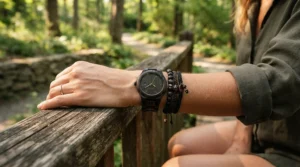
So, what is an ebony bracelet vs rosewood bracelet comparison really about? In short, it contrasts two dense tropical hardwoods from different botanical families: ebony (genus Diospyros) and rosewood (genus Dalbergia). The comparison covers color, weight, hardness, grain, regulation, and long-term wear. Ebony tends toward uniform black. Rosewood tends toward reddish brown with streaks.
Here’s the twist most shoppers miss. According to Wood Database’s Gaboon ebony profile, true ebony registers around 3,080 lbf on the Janka scale and about 60 lbs/ft³ dried weight. That puts it among the toughest materials you’ll ever wear on a wrist. But “rosewood” isn’t one wood. It’s a sprawling group, and its hardness swings wildly by species.
This guide walks through seven real bracelets, the science behind each wood, and the practical stuff the product pages skip: sizing, sweat, allergies, regulations, and long-term value. Along the way, you’ll get a proper dark wood bracelet comparison, a look at premium wood jewelry differences, and straight talk on ebony vs rosewood durability.
One honest note up front. Wood jewelry is sold through brand sites, boutiques, and marketplaces, and availability changes. I’ve grounded every spec below in published product pages and wood-science sources. Where I couldn’t verify independent customer reviews for a specific listing, I say so rather than invent anything.
Ebony Bracelet vs Rosewood Bracelet at a Glance
Before the deep dive, here’s the quick-scan version. Use it to orient yourself, then keep reading for the reasoning behind each row.
| Factor | Ebony | Rosewood | Best For |
|---|---|---|---|
| Typical color | Jet black to dark brown, sometimes striped (Macassar) | Orange, reddish brown, chocolate, often with dark streaks | Ebony for formal black; rosewood for warmth |
| Hardness (Janka, species-dependent) | About 3,080 lbf for Gaboon; striped Macassar is also very hard | Wide range; some species far softer than ebony | Ebony for scratch resistance |
| Density | Very dense, among the heaviest woods | Dense, but varies by species | Ebony for substantial feel |
| Grain | Mostly uniform, subtle | Streaks, ribbons, swirls | Rosewood for visible character |
| Regulation | Some species restricted; Cameroon has export rules | Entire Dalbergia genus sits in CITES Appendix II | Ebony for simpler paperwork in many cases |
| Price tier | Typically premium | Often more accessible | Rosewood for budget-conscious buyers |
The table tells a clear story. Ebony wins the hardness and uniformity rounds, while rosewood wins on visible character and, often, price. That said, a “rosewood” bracelet could be made from a species nearly as hard as ebony, so the label alone doesn’t settle anything. If you want a low-maintenance, formal piece, lean ebony. If you want a bracelet that shows off its grain in sunlight, rosewood deserves a hard look.
💬 Just one click — help others make better buying decisions too!😊
Top 7 Ebony and Rosewood Bracelets: Expert Analysis
Seven real bracelets, spread across budget, mid-range, and premium. Five lean ebony, two lean rosewood, which reflects what’s genuinely easy to find in this niche. Prices are ranges only, so check the current listing before you buy.
1. Treehut Classic Ebony Engravable Bracelet — best everyday stainless-and-ebony pairing
The Treehut Classic Ebony Engravable Bracelet pairs ebony links with a sleek black stainless plate you can engrave. Treehut says it hand-builds its bracelets in California from responsibly sourced wood, and positions this one as the signature piece in its engravable lineup.
What does that mean for your wrist? Ebony’s density gives the links a substantial, cool-to-the-touch feel, while the black steel plate adds a modern edge. Based on the spec profile, it suits someone who wants a dressy-casual piece without chasing trends. Treehut also notes that links can be adjusted at home, which matters because wood doesn’t stretch.
On reviews: Treehut advertises that it serves 50,000+ customers, but that’s a brand-level claim, not independent review data for this model. I couldn’t verify a standalone review pool, so check recent buyer feedback on whichever retailer you use.
Pros:
- ✅ Dense ebony links feel premium and substantial
- ✅ Engravable plate makes it gift-ready
- ✅ Adjustable links help with wrist fit
Cons:
- ❌ Wood-and-steel design needs care around water
- ❌ Engraving limits easy returns on custom orders
Price range: well under $100 for the brand’s bracelet range at the time of research; check the current price. Value verdict: strong for a gift or a first ebony piece.
2. Treehut Classic Ebony Grey Engravable Bracelet — best contrast of black and soft grey
The Treehut Classic Ebony Grey Engravable Bracelet combines ebony with grey maple, which Treehut describes as softening the darkness. The black stainless plate keeps the engraving as the focal point.
Here’s the analytical angle. Maple is lighter and less dense than ebony, so the bracelet will feel a touch less heavy than an all-ebony build. The visual payoff is a two-tone look that hides fine surface wear better than solid black does, since scratches on pure black can read as pale lines. If you wear a lot of grey and navy, this one slots in naturally.
On reviews: same caveat as above. Treehut’s own marketing is enthusiastic, but I couldn’t verify independent, model-specific review summaries.
Pros:
- ✅ Two-tone look pairs with grey and navy
- ✅ Lighter overall feel than all-ebony links
- ✅ Engraving plate offers personalization
Cons:
- ❌ Less dramatic than a pure black build
- ❌ Maple portions are softer than ebony
Price range: under $100 at the time of research. Value verdict: a smart mid-budget pick if all-black feels too severe.
3. Inox Jewelry Stainless Steel with Ebony Wood Link Bracelet BR34382 — best self-adjusting fit
The Inox Jewelry Stainless Steel with Ebony Wood Link Bracelet BR34382 lists a length range of roughly 7.75 to 8.25 inches with self-adjustable links. That adjustability is the standout. Wood bracelets are notoriously fussy about fit, and a design that flexes within a half inch removes the biggest annoyance.
The listing emphasizes dark hardwood paired with black IP-coated or matte stainless steel. Practically, that means the metal handles the structural stress at the links, while ebony supplies color and texture. It’s a sensible division of labor. This bracelet leans fashion-forward rather than minimalist, so expect more visible metal than you’d get from a pure bead style.
On reviews: I found no verifiable aggregated review data for this exact model, so I can’t speak to long-term wear reports.
Pros:
- ✅ Self-adjustable links forgive wrist fluctuation
- ✅ Steel reinforcement at stress points
- ✅ Dark finish suits formal outfits
Cons:
- ❌ Heavy metal presence versus pure wood styles
- ❌ Limited independent review data found
Price range: not verified at the time of research; check the current price. Value verdict: good if fit flexibility is your top priority.
4. Nature Bijoux Explore Ebony Howlite Bracelet — best texture contrast with white-veined stone
The Nature Bijoux Explore Ebony Howlite Bracelet (reference 13–33104) mixes ebony with howlite, a pale, veined stone. The maker describes it as handmade in its workshops, with an adjustable link system.
The interesting part is the contrast. Ebony is nearly uniform, so howlite’s marbled white gives the eye something to chew on. Stone beads also add weight, so this bracelet will feel heavier than a wood-only strand. It pairs easily with raw denim and linen, which is exactly how the brand pitches it.
Practical caution: stone and wood age differently. Wood can pick up wear and sweat residue, while howlite stays put. Wipe both gently.
On reviews: I couldn’t verify independent review sentiment for this listing.
Pros:
- ✅ Marbled howlite adds visual depth
- ✅ Adjustable link system for fit
- ✅ Handmade construction signals care
Cons:
- ❌ Stone beads add weight to the wrist
- ❌ Price and availability weren’t verifiable
Price range: not verified; check current pricing. Value verdict: best for style-led buyers who want contrast, not minimalism.
5. Atelier Tibet Ebony Bracelet with Himalayan Silver Beads — best artisan-made statement strand
The Atelier Tibet Ebony Bracelet with Himalayan Silver Beads uses ebony beads with seven carved edges, plus three hand-forged Himalayan silver beads. The beads measure 14 mm, and the bracelet is about 20 cm around. The listing says it’s made in Zurich.
That faceted carving does real work. Ebony’s fine, even texture takes crisp edges well, so the facets catch light in a way smooth round beads can’t. The silver accents add a cool counterpoint. At 14 mm, this is a bold bead; expect a presence closer to a mala than a delicate stack piece.
Fit note: the listing’s size chart suggests the bracelet runs one to three centimeters larger than your measured wrist, depending on taste. Measure first.
On reviews: I couldn’t verify independent review sentiment, so I’m not summarizing any.
Pros:
- ✅ Faceted beads catch light beautifully
- ✅ Hand-forged silver accents feel artisanal
- ✅ Bold bead size makes a statement
Cons:
- ❌ Large beads may overwhelm slim wrists
- ❌ Priced in Swiss francs, so conversion varies
Price range: roughly $50 to $70 depending on exchange rate and shipping. Value verdict: fair for hand-finished work with silver.
6. Kohgen Rosewood (Shitan) 6mm Beads Bracelet — best minimalist rosewood bead strand
The Kohgen Rosewood (Shitan) 6mm Beads Bracelet is built from reddish-brown rosewood, called shitan in Japan. Kohgen uses an unfinished “sunabiki” cut, meaning the bare wood texture is preserved. The listing gives bead sizes of roughly 0.9 by 0.8 cm for the parent bead, 0.7 by 0.6 cm for main beads, and an inner diameter near 16.5 cm.
Here’s the “so what.” An unfinished surface shows grain honestly. You’ll see the natural variation, and skin oils will slowly deepen the tone. That’s a feature if you like patina, and a drawback if you want a factory-uniform look. The beads are small, so the bracelet stays light and stackable.
On reviews: I found no verifiable aggregated customer reviews for this listing, so no sentiment summary is offered.
Pros:
- ✅ Unfinished surface shows true grain
- ✅ Small beads stay light and stackable
- ✅ Warm reddish tone contrasts dark outfits
Cons:
- ❌ Unpolished texture may feel less refined
- ❌ Fixed inner size limits fit flexibility
Price range: a modest budget tier; check the current price. Value verdict: a low-risk way to try rosewood.
7. Yogamatters Rosewood Mala Beads Bracelet — best budget entry point
The Yogamatters Rosewood Mala Beads Bracelet is an elasticated rosewood strand with a red tassel, advertised as 100% natural rosewood ethically sourced from India. The retailer’s Q&A says these usually carry 27 beads plus one bead for the tassel.
At that price, you’re testing the waters, not buying an heirloom. Elastic cord is comfortable but wears out faster than wire or chain links, so treat it as a consumable. The meditation-practice framing is the retailer’s; I’d evaluate it as a wood bead bracelet and nothing more.
On reviews: I couldn’t verify independent review summaries for this item. The “ethically sourced” line is a seller claim, so ask for documentation if sourcing matters to you.
Pros:
- ✅ Very low cost lets you test rosewood
- ✅ Elastic fit suits most wrists
- ✅ Lightweight beads feel unobtrusive
Cons:
- ❌ Elastic cord wears out over time
- ❌ Sourcing claim isn’t independently verified
Price range: under $10 before shipping at the time of research. Value verdict: great for experimenting, not for long-term investment.
Dark Wood Bracelet Comparison: How the Seven Stack Up
Now let’s line them up side by side. This is the dark wood bracelet comparison that matters most when you’re deciding where to spend.
| Bracelet | Main Wood | Style | Price Tier | Best For |
|---|---|---|---|---|
| Treehut Classic Ebony Engravable Bracelet | Ebony | Wood links + steel plate | Mid | Gift-giving |
| Treehut Classic Ebony Grey Engravable Bracelet | Ebony + grey maple | Two-tone links | Mid | Softer contrast |
| Inox Jewelry Ebony Wood Link Bracelet BR34382 | Ebony | Steel + wood links | Not verified | Fit flexibility |
| Nature Bijoux Explore Ebony Howlite | Ebony + howlite | Beaded | Not verified | Texture contrast |
| Atelier Tibet Ebony with Himalayan Silver | Ebony | Faceted beads | Premium-mid | Statement strand |
| Kohgen Rosewood (Shitan) 6mm | Rosewood | Small beads | Budget | Minimalist stacking |
| Yogamatters Rosewood Mala Beads | Rosewood | Elastic strand | Entry | Trying rosewood |
Looking at the grid, the pattern is obvious. Ebony shows up in the link-and-steel designs, where its hardness earns its keep. Rosewood shows up in lighter bead strands, where warmth and low cost matter more. If you want the toughest everyday wear, the Treehut Classic Ebony Engravable Bracelet and the Inox Jewelry Ebony Wood Link Bracelet BR34382 make the most structural sense. If you want to dip a toe in, the Yogamatters Rosewood Mala Beads Bracelet costs less than a sandwich.
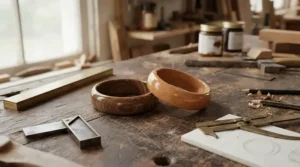
How to Choose Between an Ebony Bracelet vs Rosewood Bracelet
Here’s a practical decision path. Each step comes with the reasoning behind it.
- Decide your color first. Jet black reads formal; reddish brown reads relaxed. Color is the fastest way to narrow the field.
- Check the actual species. “Rosewood” can mean anything from a hard Dalbergia to a mislabeled substitute. Ask the seller which species it is.
- Match build to lifestyle. Link bracelets with steel suit desk-to-dinner wear. Bead strands suit casual or layered looks.
- Measure your wrist honestly. Wood doesn’t stretch. Treehut suggests adding roughly half an inch to an inch to your measurement for comfort.
- Weigh weight tolerance. Ebony and stone combos feel heavier. Slim wrists often prefer smaller beads.
- Scan sourcing statements. Look for specifics, not vague “eco-friendly” language.
- Plan for upkeep. Elastic cords and unfinished surfaces need replacement or gentle oiling over time.
This sequence works because it moves from visible traits to hidden ones. You’ll eliminate half the options by step three, and the remaining four steps protect you from regret.
Ebony vs Rosewood Durability: What Actually Wears Better
Let’s talk ebony vs rosewood durability, because it’s the question that costs people money when they get it wrong.
Hardness, measured by Janka, indicates dent and scratch resistance. Gaboon ebony sits near 3,080 lbf, though some sources list slightly different figures, so treat any single number as approximate. Rosewood is trickier. A species comparison dataset lists one Yucatan rosewood at roughly 5,382 N, versus ebony-class woods several times higher in the same dataset. Meanwhile, Amazon rosewood and Burmese rosewood sit around 12,000 N in comparable listings.
So here’s the practical read. Ebony is consistently at the top of the hardness range. Rosewood spans from “tough” to “noticeably softer,” depending on species. A rosewood bracelet from a softer species will pick up dings sooner, especially on bead edges.
Water is the other enemy. Treehut’s own care guidance recommends removing the bracelet before swimming, showering, or heavy sweating. Dense oily woods resist moisture better than most, but adhesives, cords, and finishes don’t. Honestly, the weakest part of most wood bracelets isn’t the wood; it’s the cord or the joint.
My analytical bottom line: for rough daily wear, ebony or a steel-reinforced link design wins. For occasional wear, either holds up fine.
Wood Density and Weight: How Each Bracelet Feels on the Wrist
Density decides whether you forget your bracelet or feel it all day. Wood density and weight are linked but not identical, because bead size, hollow carving, and metal components change the final heft.
Gaboon ebony averages about 60 lbs/ft³ (roughly 955 kg/m³), per the Wood Database figures noted earlier. Cocobolo, one of the better-known rosewoods, has an air-dry density of about 62 to 76 pcf according to the USDA Forest Products Laboratory sheet. That’s the same neighborhood. Other rosewoods run lighter; the comparison data above shows Yucatan rosewood around 673 kg/m³.
What does that mean in real life? A solid ebony bead bracelet will feel noticeably weightier than a rosewood strand of equal bead size from a lighter species. Add stone, as in the Nature Bijoux Explore Ebony Howlite Bracelet, or silver, as in the Atelier Tibet Ebony Bracelet with Himalayan Silver Beads, and the difference grows.
Treehut describes wood as lightweight enough that you “forget it’s on” in its brand copy, which is a fair generalization versus metal, but it’s marketing, not a measurement. Weigh the listing’s stated bead sizes. Smaller 6 mm beads, like the Kohgen Rosewood (Shitan) 6mm Beads Bracelet, keep the whole strand light.
Wood Grain Patterns: Uniform Black or Streaked Warmth
Wood grain patterns are where the two woods diverge most visually. If you’ve ever squinted at a bracelet in sunlight, you know why this matters.
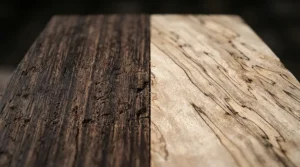
Ebony from the main commercial species is famous for near-solid black with little visible grain. Wood Database describes Gaboon heartwood as usually jet-black with little to no variation, occasionally with brown or grey streaks. Striped Macassar ebony is the exception, with dramatic yellow-brown and black banding.
Rosewood offers the opposite. Reds, oranges, and browns come with darker streaks, ribbons, and mottling. The USDA data on cocobolo notes heartwood maturing to a deep orange-red with black striping or mottling. Many Dalbergia species also darken with age.
Think of it this way. Ebony is a black-tie suit: consistent, quiet, authoritative. Rosewood is tweed: textured, warm, a bit unpredictable. Neither is wrong. If you hate surprises, choose ebony. If you want your bracelet to look different from the next person’s, choose rosewood.
One practical tip: unfinished surfaces, like the Kohgen bracelet’s sunabiki cut, display grain most honestly, while heavy polish can flatten the look.
Premium Wood Jewelry Differences: What Justifies the Price
The premium wood jewelry differences between a pricey bracelet and a bargain strand come down to four things: species honesty, finishing, hardware, and fit engineering.
First, species. Sources note that Gaboon ebony often costs two to three times more than most rosewoods per board, largely because the trees are small and demand is high. That supply reality trickles down to finished jewelry. Second, finishing. Fine polish and consistent bead calibration cost labor. Third, hardware: stainless links, hand-forged silver beads, and proper clasps cost more than elastic cord. Fourth, fit systems like adjustable or self-adjusting links, as on the Inox Jewelry Ebony Wood Link Bracelet BR34382.
Here’s what premium doesn’t automatically guarantee: better sourcing. A higher price can reflect craftsmanship rather than sustainability. If provenance matters, you need specifics from the seller.
The sweet spot for most buyers sits mid-range, where you get real hardware and consistent finishing without paying a luxury premium. The Treehut Classic Ebony Engravable Bracelet sits there. Meanwhile, ultra-cheap strands are fine as experiments, but expect to replace them.
Sustainable Wood Sourcing: Ebony and Rosewood Under the Microscope
Sustainable wood sourcing is the least glamorous part of this comparison and the most important one. Both woods come from slow-growing tropical trees, and both have complicated conservation stories.
For ebony, the picture is mixed and changes by species. Forest Legality’s risk tool describes Gaboon ebony as a slow-growing, sparse tree harvested selectively, with export restrictions in Cameroon and an IUCN “Endangered” listing noted. Meanwhile, Taylor Guitars’ sustainability blog reports that IUCN moved West African ebony from “Endangered” to “Vulnerable,” so assessments clearly shifted over time. Different sources, different dates, same takeaway: it’s a species to buy thoughtfully.
For rosewood, regulation is broader. Under CITES, all Dalbergia species except Brazilian rosewood (already under Appendix I) moved to Appendix II effective January 2, 2017.
So how do you shop responsibly? Ask which species, which country, and what documentation exists. Be wary of generic phrases. Treehut says it uses responsibly sourced or reclaimed wood, and Yogamatters says its rosewood is ethically sourced from India. Both are seller statements. Ask for specifics before treating them as verified.
✨ Want a clearer conscience with your cuff?
🌿 Pick bracelets from sellers who name species and origin, then use the product links above to check current availability and details before you buy.
Safety, Allergies, and Regulations: The Fine Print
Wood jewelry sits against skin all day, so a few safety notes belong in any honest comparison.
Both woods can sensitize some people. Wood Database-style profiles flag Diospyros ebony as a reported sensitizer, though severe reactions are uncommon. Cocobolo is a rosewood known for causing dermatitis; the USDA sheet says fine dust may cause rash, and a published case report describes allergic contact dermatitis from a cocobolo bracelet. Finished, sealed jewelry is a very different exposure from sanding dust, but if you have sensitive skin, test a new piece for short periods first.
Regulation matters mostly if you travel or buy internationally. The CITES Appendix II listing of Dalbergia covers a huge genus, and the CITES document on rosewood timber species explains that Annotation #15 includes most parts and derivatives, with limited exceptions such as certain non-commercial shipments up to 10 kg. Rules differ by country and have been amended since, so check current requirements before shipping or carrying rosewood items across borders.
Practical advice: keep receipts, ask sellers for species names, and avoid vague “exotic wood” labels. Paperwork headaches are a rosewood issue more than an ebony one in many cases, but ebony isn’t risk-free, since some species face export rules.
Common Mistakes When Buying a Wood Bracelet
Most regrets trace back to a handful of avoidable errors. Here’s what to watch.
Buying by color alone. A dark rosewood can look nearly black in photos. Dyed or stained wood can mimic ebony. If the listing doesn’t name the species, assume nothing.
Ignoring the cord. The wood may last for decades, while elastic lasts months. Prefer link or wire constructions if longevity matters.
Skipping the tape measure. Wood doesn’t stretch. Atelier Tibet’s own size notes say the bracelet may run 1 to 3 cm longer than your wrist, so a casual guess can leave you with a bracelet that slides off.
Treating “eco” as proof. Marketing language isn’t certification. Look for named species and origin.
Wearing it in the shower. Even brands that make wood jewelry advise removing it before swimming, showering, or heavy sweating.
Overpaying for hype. A pricey listing doesn’t guarantee better wood. Compare hardware, finish, and fit systems instead.
Honestly, the cheapest mistake to fix is the first one: ask the seller for the species. A reputable seller answers in a sentence.
Long-Term Cost and Maintenance: Where Your Money Actually Goes
Cost-per-wear tells a more honest story than sticker price. A bracelet worn three days a week for five years is roughly 780 wears, so even a mid-range piece lands at pennies per wear.
Ebony links with steel hardware, like the Treehut Classic Ebony Engravable Bracelet, justify their price through durability and adjustability. You can shorten the links yourself, and the bracelet can follow your wrist through weight changes. Elastic rosewood strands such as the Yogamatters Rosewood Mala Beads Bracelet cost very little up front but may need restringing, so budget a small ongoing cost.
Maintenance is light. Wipe with a dry or barely damp cloth, keep away from soaps and perfume, and store away from heat. Dense, oily woods like ebony and cocobolo rarely need much more. Avoid aggressive polishes, which can leave residue in carved facets like the ones on the Atelier Tibet Ebony Bracelet with Himalayan Silver Beads.
The total-cost verdict: mid-range linked ebony is the best long-term value; ultra-cheap rosewood strands are best treated as fun, replaceable accessories.
Practical Care and Sizing Guide for Your First 30 Days
This is where an ebony bracelet vs rosewood bracelet decision becomes a daily-use reality. Follow this routine and your first month will go smoothly.
Day 1: Fit check. Measure your wrist with a soft tape, then add roughly half an inch to an inch for comfort, as Treehut suggests. For link bracelets, adjust links before wearing for hours. For bead strands, confirm the inner diameter against listings like Kohgen’s 16.5 cm.
Week 1: Short wears. Wear the bracelet for a few hours at a time. This lets you catch any skin sensitivity early, especially with rosewood species known to irritate some people.
Weeks 2-3: Build a routine. Take it off before showers, swims, workouts, and dishwashing. Moisture and soap are the usual culprits behind loosened joints and dulled finishes.
Week 4: Inspect. Check cord tension, clasp security, and any rough edges on beads. Elastic stretches; a small gap between beads is your cue to restring.
Common first-month mistakes: tugging the bracelet over your hand, leaving it in a hot car, and stacking it with metal bangles that scratch it. Stack wood with wood or soft leather instead.
A quick maintenance rhythm: wipe weekly with a dry cloth, store in a pouch, and avoid sprays near it. That’s genuinely all most owners need.
Real-World Scenarios: Which Bracelet Fits Which Life
Spec sheets are abstract. Here are three typical profiles matched to the bracelets above, with reasoning.
The office professional (mid budget, daily wear). You type all day and dress business casual. A link-style bracelet like the Treehut Classic Ebony Engravable Bracelet or the Inox Jewelry Ebony Wood Link Bracelet BR34382 works because steel-reinforced links handle desk friction, and the dark tone passes as formal. Self-adjustable links also smooth out wrist-size swings during the day.
The weekend minimalist (low budget, casual style). You want something warm that stacks with a watch. The Kohgen Rosewood (Shitan) 6mm Beads Bracelet or the Yogamatters Rosewood Mala Beads Bracelet fits. Small beads stay light, and the reddish tone adds color to a neutral wardrobe. Accept that elastic will need replacing eventually.
The gift-giver (higher budget, wants meaning). You need something that feels special and personal. The Treehut Classic Ebony Grey Engravable Bracelet offers an engraved plate, while the Atelier Tibet Ebony Bracelet with Himalayan Silver Beads delivers an artisan story. Ask the seller for species and sourcing details so the gift comes with real provenance.
Notice what’s missing here: a universal winner. The best bracelet depends on budget, environment, and how often you’ll wear it.
FAQ
❓ Is ebony more durable than rosewood for bracelets?
❓ Does rosewood need special paperwork when traveling?
❓ Can I wear a wood bracelet in the shower?
❓ How do I tell real ebony from dyed wood?
❓ Which wood is better for sensitive skin?
Conclusion
So, where does the ebony bracelet vs rosewood bracelet debate land? Ebony is the tougher, darker, more uniform choice, ideal for formal wear, link constructions, and long-term durability. Rosewood is the warmer, more expressive, usually more affordable choice, ideal for casual style and visible grain, as long as you confirm the species and respect the regulations around it.
If you want one short rule: pick ebony for hardness and a clean black look, pick rosewood for character and budget, and pick neither until the seller names the species. Among the seven picks, the Treehut Classic Ebony Engravable Bracelet is the safest all-rounder, the Atelier Tibet Ebony Bracelet with Himalayan Silver Beads is the statement piece, and the Kohgen Rosewood (Shitan) 6mm Beads Bracelet is the low-risk way into rosewood.
Whatever you choose, measure your wrist, check the cord or link construction, and keep it dry. Wood rewards people who treat it well.
✨ Ready to find your perfect dark wood piece?
🔍 Click any highlighted bracelet name above to check current pricing, sizing, and availability, then choose the one that matches your wrist, your wardrobe, and your values!
Recommended for You
- Teak Wood Bracelet For Men: 7 Rugged Picks Worth Wearing In 2026
- Amber Bracelet For Arthritis Relief: 7 Honest Picks (2026)
- Sandalwood Bracelet For Meditation: 7 Best Picks Ranked 2026
Disclaimer: This article contains affiliate links. As an Amazon Associate, I earn from qualifying purchases. If you purchase products through these links, we may earn a small commission at no additional cost to you.
✨ Found this helpful? Share it with your friends! 💬🤗
