
In This Article
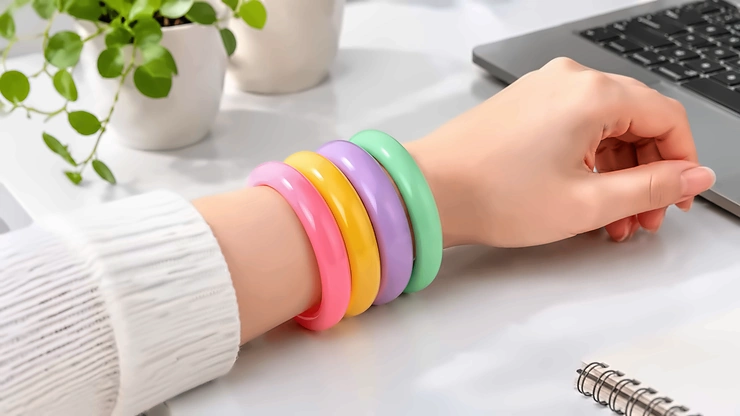
An acrylic bracelet vs resin bracelet comparison comes down to how each is made. Acrylic (PMMA) is a thermoplastic, melted and injection-molded or cut from cast sheet. Resin bracelets usually start as a two-part liquid, epoxy or polyester, that cures into a rigid thermoset. Acrylic tends to be lighter and more uniform. Resin tends to be layered and handmade-looking.
Here’s the twist that trips up most shoppers: acrylic is a resin. Retail listings love phrases like “acrylic resin bangle,” which tells you almost nothing about what’s inside. Material suppliers such as Trinseo, which publishes data on its ALTUGLAS PMMA grades, pitch general-purpose acrylic on clarity, gloss and surface hardness. Craft-grade epoxy brings a different personality: depth, inclusions, and cure-dependent toughness.
A quick note on method. This guide is built from supplier data, technical references, and retail listing information. I haven’t worn or tested these bracelets, so every verdict below is spec-based reasoning, not lived experience. Where the sources disagree, I’ll say so.
By the end, you’ll know which material suits your wrist, your habits, and your budget. You’ll also have seven real bangles to start shopping from.
Acrylic Bracelet vs Resin Bracelet at a Glance
| Feature | Acrylic (PMMA) | Resin (epoxy/polyester) |
|---|---|---|
| How it’s made | Injection molding or cutting from cast sheet | Poured liquid that cures into a solid |
| Look | Clean, uniform, glossy | Depth, marbling, inclusions |
| Weight | Light | Light |
| Surface scratching | Visible on clear pieces | Varies with formulation and cure |
| Impact behavior | Generally forgiving | Rigid, can chip or crack if brittle |
| Typical cost | Lower in bulk | Higher for handmade work |
| Best For | Everyday stacks, clear designs | Statement pieces, artisan looks |
Read the table as a starting point, not a verdict. Acrylic wins on consistency because machines repeat the same shape thousands of times. Resin wins on character because pouring allows swirls and embedded details injection molding can’t easily match. If you wear bangles daily, consistency usually matters more than character.
💬 Just one click — help others make better buying decisions too!😊
Top 7 Acrylic and Resin Bangles: Expert Analysis
Before the deep dives, here’s the lineup. These seven bracelets turned up in my research across major retailers and marketplaces. Availability and exact listings change, so confirm each one on Amazon before buying. Material labels are as listed by sellers and haven’t been lab-verified.
| Product | Listed material | Style | Price range | Best For |
|---|---|---|---|---|
| FAXHION Chunky Resin Acrylic Bangle Bracelets | “Resin acrylic” | Wide geometric stack set | ~$10-$15 | Color-loving budget shoppers |
| WOWORAMA 3pcs Chunky Acrylic Bangle Bracelets Set | Acrylic/acetate resin | Brown stackable trio | ~$15-$25 | Earth-tone stackers |
| Pure Hands Clear Acrylic Square Bangle | Clear acrylic | Single geometric | ~$25-$35 | Minimalists |
| EHJRE Resin Bangle Bracelet | Resin | Hollow wave circle | Under $10 | Gift buyers |
| Nvzi-c Square Acrylic Resin Bangle Bracelet | Acrylic resin | Wide irregular band | Under $10 | Trend testers |
| Amrita Singh Resin Etched Design Bangle | Resin | Etched pattern | ~$25-$50 | Brand-minded buyers |
| Halle Joy Acrylic Bangle Bracelet | Acrylic | Black with enamel hearts and crystals | ~Mid-$30s | Statement dressers |
Notice how many listings blend the words “acrylic” and “resin.” That blur is the single biggest reason shoppers feel misled. The three sub-$15 options are low-risk experiments, while the two $25-$50 picks carry brand or embellishment premiums. Spend where the extra money buys something real, like a better finish or a trusted name.
1. FAXHION Chunky Resin Acrylic Bangle Bracelets — color-packed stack for tiny budgets
Think of the FAXHION Chunky Resin Acrylic Bangle Bracelets as a paint swatch for your wrist. It’s a set of wide geometric bangles in assorted colors, made for stacking.
The listing calls the material “resin acrylic,” which is retail shorthand rather than a precise formula. A wide, thick wall helps in practice, because chunky bangles generally survive knocks better than thin ones. Wearing several means the hits spread across pieces instead of landing on one.
On paper, this set suits trend-testers, gift-givers, and anyone who wants five colors without committing to a single $40 piece. Aggregator data I found pointed to high star ratings on a modest review base. I couldn’t verify individual review themes, so treat that as a directional signal.
Pros:
- ✅ Multiple colors in one affordable set
- ✅ Wide profile gives thicker, sturdier walls
- ✅ Stackable shapes mix easily with other bangles
Cons:
- ❌ Vague material labeling makes durability hard to judge
- ❌ Budget finishing may show scratches sooner
Price range: roughly $10-$15, so check current price. For the money, it’s a fun, low-risk entry, as long as you treat it as fashion jewelry rather than an heirloom.
2. WOWORAMA 3pcs Chunky Acrylic Bangle Bracelets Set — earth-tone trio with an acetate look
The WOWORAMA 3pcs Chunky Acrylic Bangle Bracelets Set leans into brown tortoise-style tones that read more “boutique” than “toy aisle.” The listing mentions acetate and resin alongside acrylic, so expect a plastic with a warm, slightly organic look.
That wording matters. Cellulose acetate is a different plastic family from PMMA. It’s popular in eyewear and fashion jewelry because it takes layered color patterns well. If the set uses acetate-style material, you’re buying an acrylic bracelet vs resin bracelet hybrid in spirit: machine-made like acrylic, patterned like resin.
Who is it for? Someone building a neutral, grown-up stack that pairs with denim, camel coats, and gold watches. The three-piece format gives you thickness variety out of the box.
Reviewer sentiment on the listing data I found looked solid for a set in this price band. I couldn’t confirm specific review themes, so I won’t invent any.
Pros:
- ✅ Tortoise-style tones match most wardrobes
- ✅ Three pieces give varied thickness
- ✅ Light enough for all-day wear
Cons:
- ❌ Brown tones can hide wear but not deep gouges
- ❌ Listed material mix is not fully specific
Price range: roughly $15-$25. It’s a solid value if you want a stack, not a statement.
3. Pure Hands Clear Acrylic Square Bangle — crystal-clear geometry for minimalists
The Pure Hands Clear Acrylic Square Bangle is the purist’s pick: one clean, transparent, squared-off band. Acrylic is prized for clarity, with typical PMMA grades transmitting around 92% of light, so a clear bangle can look like glass without the weight.
Here’s the catch most listings skip. Clear surfaces are unforgiving. A fine scratch on a colored bangle disappears into the pattern, while on a clear one it catches every light source. Square geometry also puts the stress on edges and corners, which is where daily desk and doorframe bumps land.
That makes this a good fit for people who baby their jewelry or like a deliberately minimalist look. If you’re rough on accessories, a patterned or opaque piece will age better.
Pros:
- ✅ Glass-like clarity at feather-light weight
- ✅ Geometric shape feels modern and minimal
- ✅ Easy to pair with watches and thin chains
Cons:
- ❌ Clear surfaces show scratches quickly
- ❌ Square corners take more impact wear
Price range: around $25-$35, so check current price. You’re paying for the aesthetic, not extra toughness.
4. EHJRE Resin Bangle Bracelet — featherweight wave design that works as a gift
The EHJRE Resin Bangle Bracelet is a hollow, geometric wave circle. The listing states an inner diameter of about 66 mm, roughly 2.6 inches. That’s a common slip-on size, but if you have a broader hand or knuckles, test the fit before assuming it will pass over comfortably.
A hollow design cuts weight, which matters for anyone who finds chunky bangles tiring. The trade-off is a thinner wall in places, so avoid hard impacts. Resin in thin sections can crack where a solid acrylic piece might merely scuff.
It’s pitched as a gift item, and that’s a sensible read. It’s cheap enough to experiment with and cheerful enough to present.
Retail listings showed middling-to-decent ratings on a few hundred reviews, though I couldn’t verify specific complaints. If you buy, inspect the seams and edges right away.
Pros:
- ✅ Hollow wave design stays very light
- ✅ Gift-friendly look at a very low price
- ✅ Simple slip-on wear, no clasp to fail
Cons:
- ❌ Thin hollow sections may crack on impact
- ❌ 66 mm opening can feel tight on larger hands
Price range: under $10. It’s good value for casual wear, but it’s not built for hard days.
5. Nvzi-c Square Acrylic Resin Bangle Bracelet — wide irregular band for trend testers
The Nvzi-c Square Acrylic Resin Bangle Bracelet is the “wide wristband” take on the trend: a broad, irregular square profile in colors like green. Width is the spec to understand here. A wider band spreads force across more surface, so it often feels sturdier than a thin hoop, but it also snags sleeves and desk edges more.
The “acrylic resin” label again blurs the line. In practice, it suggests a molded plastic bangle rather than a hand-poured epoxy piece. That’s neither good nor bad. It means you should judge it as molded fashion jewelry: consistent shape, modest finishing.
It suits experimenters who want to try the chunky-geometry trend before investing in something pricier. Listing data showed a reasonable review count, but I couldn’t verify detailed feedback themes.
Pros:
- ✅ Wide band makes a bold statement
- ✅ Very low entry price
- ✅ Solid colors hide minor scuffs
Cons:
- ❌ Wide profile snags sleeves and surfaces
- ❌ Finish quality likely varies at this price
Price range: under $10. It’s an easy gamble, and a forgiving one.
6. Amrita Singh Resin Etched Design Bangle — brand-name resin with textured detail
The Amrita Singh Resin Etched Design Bangle is the one pick here with a recognizable fashion-jewelry label behind it. The listing I found describes a brown-and-tan etched resin design.
Etched surfaces behave differently from smooth ones. Texture camouflages micro-scratches, which is a real durability perk in daily wear. It also catches dust and skin oils in the grooves, so you’ll want a soft brush for cleaning.
Because resin quality depends heavily on cure and formulation, a recognized brand can lower your risk. That isn’t a guarantee, but brands that sell repeatedly have more to lose from cracking or tackiness complaints.
This one fits buyers who want a more finished, gift-ready piece and don’t mind paying for the name. I couldn’t verify brand-specific review themes, so check recent buyer feedback before purchasing.
Pros:
- ✅ Etched texture helps hide fine scratches
- ✅ Brand reputation lowers quality risk
- ✅ Earthy palette suits year-round outfits
Cons:
- ❌ Grooves trap dust and skin oils
- ❌ Price premium over generic bangles
Price range: roughly $25-$50, depending on seller and condition. The premium is justified only if you value the finish and the label.
7. Halle Joy Acrylic Bangle Bracelet — black acrylic with enamel hearts and crystals
The Halle Joy Acrylic Bangle Bracelet in black adds enamel hearts and crystals to a solid acrylic base. That’s the most decorated piece on this list, and the decoration is where the risk lives.
The base material is the dependable part. Solid black acrylic hides scratches and stays light. Crystals and enamel details, however, are typically glued or set into the surface. Adhesive and setting quality decide how long they stay put, and no amount of acrylic toughness fixes a loose stone.
It suits people who want a dressy bracelet for evenings, not gym days or dishwashing. Keep it away from lotions and perfume, which can dull embellishments.
Listing data showed a price in the mid-$30s on one marketplace. I couldn’t confirm verified review themes for this specific piece.
Pros:
- ✅ Black base hides scratches well
- ✅ Enamel and crystals add dressy sparkle
- ✅ Acrylic keeps the weight comfortable
Cons:
- ❌ Glued embellishments can loosen over time
- ❌ Not suited to rough or wet daily use
Price range: around the mid-$30s. It’s decent for occasion wear, and a poor choice for hard use.
How to Care for Acrylic and Resin Bracelets (Practical Guide)
Amazon listings rarely tell you how to keep a bangle looking new. Here’s the routine that follows from the materials.
Week one: inspect. Check inner edges and seams for rough spots or mold lines. Injection-molded pieces sometimes carry a faint seam, and handmade resin can hold tiny bubbles. Return rough-edged pieces early, because a sharp inner edge will irritate your wrist.
Daily: Wipe with a soft microfiber cloth. Avoid paper towels, which are surprisingly abrasive on plastic. Put on lotions, sunscreen, and perfume first, bracelet last.
Weekly: Use lukewarm water with a drop of mild dish soap. Skip acetone, nail polish remover, and alcohol-heavy sanitizers, which can cloud or craze many plastics.
Storage: Keep bangles in a soft pouch or separate compartment. Stacked loose, they scratch each other.
First-30-day mistakes: leaving bangles on a sunny dashboard (heat softens thermoplastics), wearing them for dish duty, and tossing them loose into a bag.
If a clear piece develops fine surface scratches, a plastic-safe polish and a soft cloth can often reduce them. Test on an inconspicuous spot first.
Real-World Scenarios: Which Bracelet Fits Your Life?
Specs are abstract. Lives aren’t. Here are three profiles and the logic behind each match.
The office commuter. She types eight hours a day, so wrist-edge contact is constant. A wide, opaque piece like the WOWORAMA 3pcs Chunky Acrylic Bangle Bracelets Set hides the inevitable desk scuffs, and three pieces share the wear. Budget: roughly $15-$25.
The weekend festival-goer. He wants bright color and doesn’t mind replacing pieces. The FAXHION Chunky Resin Acrylic Bangle Bracelets deliver variety at a throwaway-friendly price. Expect to treat them as seasonal.
The gift-giver on a deadline. She needs something presentable under $10 or something refined under $50. The EHJRE Resin Bangle Bracelet covers the first brief, and the Amrita Singh Resin Etched Design Bangle covers the second.
The pattern across all three: match wear intensity to price, and don’t pay premium prices for pieces you’ll abuse.
✨ Don’t Miss These Exclusive Picks!
🔍 Ready to find your match? Click any highlighted bracelet above to check current pricing and availability. A few smart choices now will save you from scratched, cloudy, or cracked regrets later!
Problem → Solution Guide: Scratches, Cloudiness, Yellowing and Cracks
Problem: Fine surface scratches on a clear bangle. Clear acrylic like the Pure Hands Clear Acrylic Square Bangle shows them most. Solution: use a plastic-safe polish with a soft cloth, working gently. Prevention beats repair, so store it alone.
Problem: Cloudy or hazy finish. Often caused by harsh cleaners. Solution: switch to lukewarm water and mild soap, and stop using alcohol-based wipes.
Problem: Yellowing on resin. Epoxy and some formulations can yellow over time, especially in strong sunlight. Solution: avoid leaving bracelets in sun-exposed spots, and store them in a dark pouch.
Problem: Cracks at thin points. Hollow designs like the EHJRE Resin Bangle Bracelet are the likeliest victims. Solution: keep them off hard surfaces, and don’t force them over a tight hand.
Problem: Loose crystals. Common on embellished pieces like the Halle Joy Acrylic Bangle Bracelet. Solution: check stones occasionally, avoid soaking, and use a jewelry-safe adhesive if one lifts.
Acrylic vs Resin Durability: What the Evidence Says
The honest answer to acrylic vs resin durability is that sources disagree, and the disagreement itself is useful. One craft-supply guide says acrylic is scratch-, shock- and break-resistant. Another material comparison says resin is more impact-resistant than acrylic. A third says cured resin blocks feel slightly softer than acrylic and can chip if dropped on concrete.
Why the contradictions? Because both names cover families, not single materials. Acrylic grades vary from standard PMMA to impact-modified versions. Resin ranges from carefully cured epoxy to fast-cure polyester, which one jewelry reference says tends to have less durable color and lower scratch resistance.
So, which is more durable, acrylic or resin? For a typical bangle sold at fashion prices, acrylic is the safer bet for drop tolerance and consistency, because molding controls quality. Resin can be tougher in the right formulation and cure, but a poorly cured pour is the weakest outcome of all.
Thickness matters as much as material. A chunky wall beats a thin hollow one in either category.
Scratch Resistance: Where Each Material Wins and Loses
Scratch resistance is where marketing gets slippery, so let’s separate hardness from toughness. Hardness resists surface marks, while toughness resists cracking. Materials rarely excel at both.
Suppliers describe standard PMMA as having strong surface hardness, which supports a lasting gloss. But research cuts both ways. A Tribology International study on injection-molded PMMA toughened with acrylic rubbers found that adding rubber for toughness worsened scratch behavior. In plain English: impact-modified acrylic trades some scratch resistance for crack resistance.
For resin, craft sources describe cured epoxy as hard but relatively soft compared with harder materials like enamel. Thinking practically, a polished clear surface of either material will show scratches. Opaque colors, marbling, and etched textures hide them better.
What this means for you: if scratch resistance is your top priority, choose patterned or textured pieces over clear ones. A scratch you can’t see is functionally a scratch that doesn’t exist.
Injection-Molded Jewelry: How Acrylic Bracelets Are Made
Injection-molded jewelry starts as pellets. Technical references describe melt temperatures around 200-250°C for PMMA, with molds held at roughly 40-80°C. The melted plastic is pushed into a steel cavity, cooled, and ejected, in a cycle that repeats thousands of times.
That process explains acrylic’s strengths. Every bangle comes out nearly identical, so quality control is easier and per-piece cost falls with volume. Molds can also reproduce complex geometries, from the Pure Hands Clear Acrylic Square Bangle‘s clean corners to the irregular bands of the Nvzi-c Square Acrylic Resin Bangle Bracelet.
It also explains the weaknesses. Mold seams and gate marks can appear if finishing is rushed, and PMMA is sensitive to moisture and temperature during processing, which means cheap factories may cut corners. When you buy a budget acrylic piece, run a fingernail along the inside edge. If it feels rough, the finishing was rushed.
The Resin Curing Process: Why Handmade Resin Takes Time
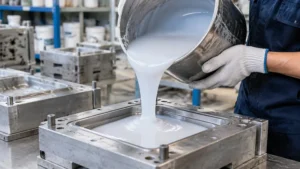
The resin curing process is chemistry you can’t rush. Mixed epoxy goes from liquid through a gel stage to a solid. WEST SYSTEM’s technical guidance on epoxy cure time explains the stages and the key variables: hardener speed and temperature.
The details matter for jewelry quality:
- Mix ratio. Resin and hardener must be measured accurately, often 1:1 or 2:1 by volume. Wrong ratios mean incomplete curing and a tacky or soft result.
- Temperature. Cooler rooms slow curing, sometimes dramatically, and hot rooms speed it up and raise the risk of overheating.
- Exotherm. Curing epoxy generates heat, and larger masses trap more of it. Thin layers shed that heat safely.
- Full cure. Surface hardness arrives early, but internal bonds keep forming for days. Many standard epoxies reach full cure in roughly a week.
For buyers, the takeaway is simple. A resin bangle that feels tacky, smells strongly chemical, or shows clouding may have been rushed or mixed badly. A properly cured one should feel hard, smooth, and odor-free.
Plastic Jewelry Material Comparison: Acrylic, Resin, Acetate and Beyond
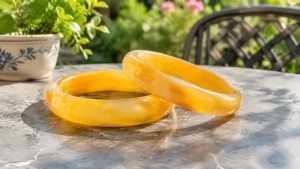
A good plastic jewelry material comparison needs more than two columns, because shoppers meet three or four materials in the same search results.
| Material | How it’s made | Typical look | Key trade-off | Best For |
|---|---|---|---|---|
| Acrylic (PMMA) | Injection-molded or cut from cast sheet | Clear or solid, glossy | Clear surfaces show scratches | Clean, modern styles |
| Epoxy resin | Poured and cured | Depth, inclusions | Quality depends on cure | Artisan statement pieces |
| Polyester resin | Poured, faster cure | Bright costume looks | Lower scratch resistance, per jewelry references | Cheap novelty pieces |
| Acetate | Cellulose-based sheet, shaped | Tortoise, layered patterns | Different care needs than PMMA | Earthy stacks |
The table shows why “acrylic or resin?” is slightly the wrong question. The better question is what you need the piece to do. For rough daily wear, a molded acrylic or acetate band in an opaque color is a pragmatic choice. For a one-off showpiece, a well-cured epoxy resin piece offers visual depth molded plastics rarely match.
Honest caveat: sellers don’t always label these materials precisely, so treat any single-word label with caution.
How to Choose Between an Acrylic Bracelet and a Resin Bracelet
Use this checklist, in order:
- Decide your wear pattern. Daily wear favors thicker, opaque, molded pieces, while occasional wear lets you pick delicate or embellished ones.
- Pick opaque or clear deliberately. Clear looks stunning but shows scratches fastest. Choose patterns or textures if you’re hard on accessories.
- Check wall thickness. Wider, solid bangles tolerate knocks better than hollow ones.
- Measure your hand. Slip-on bangles must pass over your knuckles. Check the inner diameter against your hand width.
- Read between the material words. “Acrylic resin” means little. Look for specifics, return policies, and photos of the edges.
- Match price to purpose. Under-$15 bangles are great trend tests, and mid-range pieces justify themselves with finish or brand.
- Inspect on arrival. Run a finger along the inside edge, smell for strong chemical odor, and look for bubbles or tackiness.
Common Mistakes When Buying Acrylic and Resin Bracelets
Trusting the word “resin” as a quality signal. It names a family, not a standard. A rushed, under-cured pour is still “resin.”
Buying clear and expecting it to stay perfect. Clear acrylic is gorgeous for a month and demanding forever.
Ignoring size. A 66 mm opening, like the one on the EHJRE Resin Bangle Bracelet, suits many wrists but not all hands.
Paying for sparkle you’ll never protect. Embellished pieces like the Halle Joy Acrylic Bangle Bracelet reward careful wearers and punish careless ones.
Skipping the return window. Most defects, such as rough edges, tackiness, and bad seams, show up within days. Use the return period.
Long-Term Cost and Value: What You Really Pay Per Wear
Price tags mislead because durability varies. A cheap bangle worn 40 times is cheaper per wear than a pricey one worn four times.
| Tier | Typical price range | Examples | Value reasoning | Best For |
|---|---|---|---|---|
| Entry | Under ~$15 | EHJRE Resin Bangle Bracelet, Nvzi-c Square Acrylic Resin Bangle Bracelet, FAXHION Chunky Resin Acrylic Bangle Bracelets | Low risk, short lifespan fine | Trends, gifts |
| Mid | ~$15-$35 | WOWORAMA 3pcs Chunky Acrylic Bangle Bracelets Set, Pure Hands Clear Acrylic Square Bangle, Halle Joy Acrylic Bangle Bracelet | Better finishing, sets | Regular wearers |
| Upper | ~$25-$50 | Amrita Singh Resin Etched Design Bangle | Brand and finish premium | Gift-ready buys |
Looking at the table, the FAXHION Chunky Resin Acrylic Bangle Bracelets win on cost per color, while the WOWORAMA 3pcs Chunky Acrylic Bangle Bracelets Set offers the sturdier everyday logic. The upper tier only earns its price if the finish and brand matter to you. If you simply want long wear, a mid-range opaque set is the smartest total-cost play.
Safety, Labeling and Regulations: What to Check
Plastic jewelry isn’t automatically safe just because it isn’t metal. A study of inexpensive plastic jewelry sampled more than 100 items to check lead content, and concluded that plastic pieces deserve regulatory attention too.
In the US, jewelry primarily intended for children 12 and under falls under the Consumer Product Safety Improvement Act. Industry summaries cite a 100 ppm lead limit for accessible components, and cadmium limits for children’s jewelry as well. California adds Proposition 65 rules on top.
For adult jewelry, the FTC’s Jewelry Guides govern how sellers describe materials truthfully, which is another reason vague labels deserve skepticism.
Practical steps: buy from sellers who state materials clearly, avoid giving small decorated pieces to young children, and stop wearing anything that causes skin irritation or sheds paint.
FAQ: Acrylic and Resin Bracelets
❓ Can you wear an acrylic bangle in the shower?
❓ Do resin bracelets turn yellow over time?
❓ Is lucite the same as acrylic?
❓ Can a scratched resin bracelet be repaired?
❓ Are chunky acrylic bangles comfortable for all-day wear?
Conclusion: Which Should You Choose?
The acrylic bracelet vs resin bracelet debate doesn’t have a universal winner, and the sources themselves disagree on key points. What the evidence does support is a practical rule. Acrylic generally gives you consistency, lightness, and dependable everyday wear, especially in opaque, solid colors. Resin gives you depth and handmade charm, with quality hinging on formulation and cure.
If you want a quick shopping shortcut: choose the WOWORAMA 3pcs Chunky Acrylic Bangle Bracelets Set for a practical everyday stack, the FAXHION Chunky Resin Acrylic Bangle Bracelets for color on a tiny budget, and the Amrita Singh Resin Etched Design Bangle when finish and brand matter. The Pure Hands Clear Acrylic Square Bangle is for careful minimalists, and the Halle Joy Acrylic Bangle Bracelet is for dressed-up evenings.
Whatever you choose, inspect it on arrival, clean it gently, and store it separately. Good habits stretch any plastic bangle’s life.
✨ Ready to upgrade your wrist game?
🛍️ Click any highlighted bracelet above to check current pricing and availability, and pick the piece that matches your lifestyle. Your next favorite bangle is one click away!
Recommended for You
- Ceramic Bracelet For Allergy-Prone Skin: 7 Skin-Safe Picks (2026)
- Hypoallergenic Synthetic Bracelet For Sensitive Wrists: 7 Best (2026)
- Waterproof Silicone Bracelet For Swimmers: 7 Best Safe Picks 2026
Disclaimer: This article contains affiliate links. As an Amazon Associate, I earn from qualifying purchases. If you purchase products through these links, we may earn a small commission at no additional cost to you.
✨ Found this helpful? Share it with your friends! 💬🤗
