
In This Article
Picture the sad little ritual at the end of a pool session. You peel off your goggles, wring out your towel, and notice that the silver bracelet you “just forgot to remove” now has a gray, dull film. It’s a small tragedy, and an avoidable one.

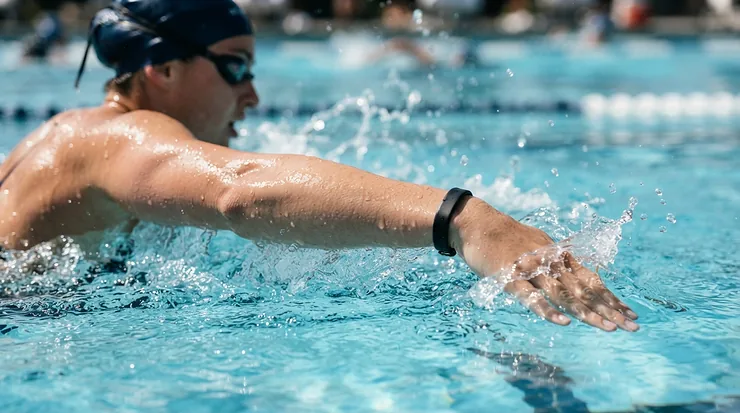
A waterproof silicone bracelet for swimmers fixes the problem at the material level. Silicone doesn’t absorb water, doesn’t tarnish, and doesn’t care about the pool’s chemistry. That’s why lifeguards, lap swimmers, triathletes, and parents of splashy kids keep reaching for it.
Many of the best swim-ready bands do more than look decent. They carry a medical ID, a lap tally, or a quick-read emergency contact. That second job is where silicone earns its place in swim gear accessories.
Pool water isn’t dangerous to you, but it is rough on jewelry. CDC healthy swimming guidance puts typical pool chlorine at 1 to 4 parts per million, which is mild for skin and still enough to punish vulnerable metals over time.
This guide covers seven real, researched options. It also explains the chemistry in plain English and gives you a decision framework so you buy once. Prices below are ranges only, so check current listings before you buy.
Quick Comparison: 7 Swim-Ready Bracelets and Wearables at a Glance
| Product | Type | Best For | Price Range |
|---|---|---|---|
| Universal Medical Data SPORT | Silicone band + steel ID | Everyday swimmers needing a medical ID | Around $30-$45 |
| MedicAlert Sport Silicone | Silicone band + steel emblem | Anyone wanting 24/7 live support | Mid-$30s |
| MyID Hive | Snap-tuck silicone ID band | Style-conscious wearers, many colors | From the mid-$30s |
| ID Band Company Sports Bracelet | Silicone band + removable tag | Kids and swappable colors | Low-$20s |
| Elite II USB | Silicone band + USB pocket | Detailed digital health records | Check current price |
| HEABY | Silicone band + 316L plate | Tight budgets | Under $10 range |
| SportCount LapCounter | Finger-worn lap counter | Lap-counting workouts | Around $30-$40 |
Looking at the table, the MedicAlert Sport Silicone and MyID Hive sit in the same price tier but solve different problems: one offers live support, the other a faster, friendlier fit. Budget buyers should note that HEABY costs a fraction of the rest, so it’s the obvious experiment if you’ve never worn a swim band. The SportCount LapCounter is the odd one out because it’s a training tool, not an ID, so only buy it if counting laps is the headache you actually have.
💬 Just one click — help others make better buying decisions too!😊
Top 7 Waterproof Silicone Bracelets for Swimmers: Expert Analysis
1. Universal Medical Data SPORT — the fitness-band look with a safety job
The Universal Medical Data SPORT wraps a silicone strap around a stainless steel ID plate. The listing describes it as styled like a fitness band, so it blends in at the gym and the lanes alike. Laser engraving, an emergency wallet card, and complimentary personal health record access come with it.
What does that mean in practice? Laser engraving is cut into the metal, so it won’t rub off the way printed text can. And because the plate is steel instead of plated brass, you avoid the flaking-and-green-wrist routine that cheap jewelry delivers after a few chlorinated weeks.
Based on the spec sheet, this suits swimmers who want one band for the pool, the shower, and the office. On a major retailer listing, the buyer rating sat around 4.7 stars from roughly 285 ratings at the time of research. One editorial roundup notes that a latch on a related model can sometimes open, so check the clasp when it arrives.
Pros:
- ✅ Steel plate resists chlorine far better than plated metals
- ✅ Looks like a fitness band, not a medical device
- ✅ Includes wallet card and health record access
Cons:
- ❌ Clasp security is worth checking on arrival
- ❌ Engraving is limited to the plate’s line count
Price range: roughly $30-$45, which is fair value for a band that doubles as everyday wear.

2. MedicAlert Sport Silicone — backed by 24/7 live support
The MedicAlert Sport Silicone is the established-brand pick. The brand describes its silicone IDs as 100% silicone, latex-free, waterproof, and rustproof, with a waterproof stainless steel emblem. It also emphasizes 24/7 live support in emergencies.
That live line matters more than it sounds. A band with engraved text tells a responder what you wrote, while a band tied to a service can point them to a fuller record. Think of the service as the difference between a sticky note and a filing cabinet.
On the brand’s own store, the Sport version showed a rating around 4.9 from a small review pool (17 reviews). It’s a high score but a thin sample, so treat it as encouraging rather than conclusive. A UK product page for a similar silicone model includes one buyer comment about comfort on sensitive skin and use in the shower and pool.
If you swim in lap lanes most days and want the strongest safety backbone, this is where I’d start looking. It’s also a good fit if your health condition is complicated enough that four engraved lines won’t cover it.
Pros:
- ✅ Latex-free silicone suits sensitive skin
- ✅ Live emergency support behind the band
- ✅ Waterproof stainless emblem holds up in chlorine
Cons:
- ❌ Small verified review pool
- ❌ Pricier than generic engraved bands
Price range: mid-$30s, with the service as the main value driver.
3. MyID Hive — snap-tuck comfort in a pile of colors
The MyID Hive uses a snap-tuck fastener, which is the standout here. Instead of a metal buckle that can press into the wrist during long sets, the strap tucks flat. The brand calls its silicone medical-grade and says first responders are trained to look for the Star of Life symbol.
Why does the closure matter for swimmers? Anything that sits proud of the skin catches on lane ropes, towels, and swimsuit straps. A flatter band simply gets bumped less, which means it gets noticed and adjusted less.
The collection offers a long list of colors, including neon shades that stay visible poolside. Neon is a practical touch when you’re hunting for a band you slipped off at the pool deck.
I couldn’t verify a clean aggregate rating for this model, so I won’t invent one. What the specs suggest is a band built for comfort and clarity, aimed at people who’ll wear it all day, not just in the water.
Pros:
- ✅ Flat snap-tuck fastener reduces snagging
- ✅ Star of Life symbol aids responder recognition
- ✅ Wide color range, including high-visibility shades
Cons:
- ❌ Verified review totals weren’t available at research time
- ❌ Fastener sizing needs a careful wrist measurement
Price range: from the mid-$30s, a fair price for the comfort design.
4. ID Band Company Sports Bracelet — the swap-the-tag trick
The ID Band Company Sports Bracelet is built around a clever idea: the metal ID plate is removable. You can move the same engraved tag onto a differently colored silicone band. The company says the bracelet and tag aren’t affected by water and can be worn swimming and showering.
That modularity is a quiet money-saver. Kids outgrow bands and lose them, and teenagers suddenly hate the color. With a swappable tag you replace a cheap strap instead of re-engraving a whole bracelet.
The company advises measuring the wearer’s wrist before buying, which is good advice. Silicone bands that run loose are the ones that vanish into a pool drain.
Reviews weren’t verifiable for this particular listing, so treat sizing guidance and the product description as your main data. The medical version appeared in the low-$20s, which positions it between bargain and premium.
Pros:
- ✅ Removable tag moves between colored bands
- ✅ Water doesn’t affect the band or tag, per the maker
- ✅ Lower entry price than the big-brand IDs
Cons:
- ❌ Review data not verifiable at research time
- ❌ Sizing requires measuring before ordering
Price range: low-$20s, with the swap-ability as the value story.
5. Elite II USB — a waterproof flash drive in a silicone pocket
The Elite II USB takes a different approach. The silicone band hides a pocket holding a waterproof 2GB flash drive, so you can store scans, medication lists, and insurance details. The listing says the band adjusts from 5.5 to 8.5 inches and uses a 316L stainless steel buckle clasp.
Here’s the honest analysis. A USB stick only helps if somebody has a computer handy and takes the time to plug it in. For most emergencies, the engraved text on a band does the heavy lifting, and the drive is a backup for hospital intake or a long-term condition.
So who should consider it? People with complex histories, such as multiple medications or implanted devices, who want everything in one place. The listing also calls the band hypoallergenic and fully waterproof, including submersion.
I couldn’t verify review aggregates or a current price range, so please check the live listing. Treat this one as specialist gear, not a default.
Pros:
- ✅ Stores full health records on a waterproof drive
- ✅ Wide adjustable range suits many wrists
- ✅ Steel buckle resists chlorine better than plated hardware
Cons:
- ❌ Needs a computer to be useful
- ❌ Bulkier pocket than a plain band
Price range: not verified, so check the current listing before deciding.

6. HEABY — the under-$10 experiment
The HEABY pairs a 316L stainless steel plate with a silicone band at a price that borders on impulse-buy. Roundups list it with permanent laser engraving, an adjustable length around 8.46 inches, and waterproof, hypoallergenic construction.
Here’s why 316L matters. Jewelry experts consistently list stainless steel among the metals better able to tolerate chlorine, unlike alloyed gold and silver, which tarnish or weaken. So even at a bargain price, the plate itself is a smart material choice.
Being straight with you, a product this cheap usually trades away polish elsewhere. Expect a simpler clasp and less brand support. That makes it ideal for kids’ swim lessons, a spare for the gym bag, or a trial run before you invest more.
Review depth was thin in my research, so I’m not quoting a rating. What the specs suggest is a perfectly sensible starter band.
Pros:
- ✅ Steel plate with permanent laser engraving
- ✅ Very low price barrier
- ✅ Adjustable length suits several wrist sizes
Cons:
- ❌ Less brand support than established ID services
- ❌ Review depth is limited
Price range: under $10, which is outstanding value for experimenting.
7. SportCount LapCounter — the pool workout accessory for the lap-counting crowd
The SportCount LapCounter is the only non-bracelet pick, and it earns its place as a pool workout accessory. It’s a finger-worn counter you click with your thumb, with a listing rating it for pool use up to six feet deep and an auto-sleep mode after thirty minutes of inactivity.
The problem it solves is mental. Counting laps while your lungs burn is a recipe for losing track around lap eleven. A thumb-click gives your brain a break.
Reviewers describe it as reliable and easy to use, and one praises how it snugs onto a finger. Common gripes include digits that can be hard to read mid-swim, a short adjustment period before clicking feels natural, and pricing that one buyer called steep for a simple gadget.
If you already wear a swim watch, you may not need it. If you don’t, it’s a low-tech fix for a high-frustration habit.
Pros:
- ✅ One-thumb click needs no menus
- ✅ Snug finger fit stays put in the water
- ✅ Simple, dedicated lap counting only
Cons:
- ❌ Non-backlit digits can be hard to read
- ❌ Pricey for a single-function tool
Price range: around $30-$40, best for people who count laps and hate it.
Top 7 Spec and Rating Snapshot
| Product | Material | Function | Rating Snapshot | Best For |
|---|---|---|---|---|
| Universal Medical Data SPORT | Silicone + steel | Engraved ID, card | About 4.7 (retailer listing) | All-round swimmers |
| MedicAlert Sport Silicone | Silicone + steel | ID + live support | About 4.9 (small sample) | Complex medical needs |
| MyID Hive | Silicone | Snap-tuck ID | Not verified | Comfort seekers |
| ID Band Company Sports Bracelet | Silicone + metal tag | Swappable ID | Not verified | Kids, color swappers |
| Elite II USB | Silicone + 316L | USB records | Not verified | Detailed histories |
| HEABY | Silicone + 316L | Engraved ID | Not verified | Budget buyers |
| SportCount LapCounter | Plastic/rubber | Lap counting | Mixed-positive reviews | Lap swimmers |
Reading across the rows, only two products have a rating I could verify, so don’t over-weight the star numbers. The Universal Medical Data SPORT is the safest all-rounder, while the MedicAlert Sport Silicone is the pick if emergency support is your priority. The HEABY and SportCount LapCounter sit at opposite ends of function and price, so decide whether you need safety or training before you compare costs.
What Is a Waterproof Silicone Bracelet for Swimmers?
A waterproof silicone bracelet for swimmers is a flexible wristband made from silicone rubber that tolerates pool water, chlorine, and sweat without corroding or tarnishing. Many include an engraved ID plate or a tracking function, so the band serves safety or training in addition to style.
Silicone earns that reputation from its chemistry. A technical bulletin on silicone rubber chemical resistance describes it as highly hydrophobic, which means it repels water instead of soaking it up. The same source warns that strong acids and bases, and certain solvents, can degrade it, but pool water at a few ppm of chlorine is nowhere near that league.
In practice that gives you three traits worth knowing. First, it won’t rust or tarnish. Second, it stays flexible, so it doesn’t snap or crack in the sun. Third, it dries fast, which keeps skin irritation down on long pool days.
That makes a chlorine-resistant bracelet an easy choice for anyone who swims often. It also makes silicone a natural material for swim-safe silicone jewelry, a category that has grown beyond sports bands into everyday wear.

Chlorine Damage to Jewelry: What Pool Water Really Does
Chlorine damage to jewelry is real, but it’s often overstated. Jewelers explain that chlorine attacks the alloy metals mixed into gold and silver, weakening solder joints and prongs over time. The harm tends to accumulate quietly, so a single swim rarely ruins a piece, though repeated dips add up.
Here’s the context that gets skipped. Some of the scariest experiments soak jewelry in 5% bleach at about 2,500 ppm, while a healthy pool sits at a few ppm. The ANSI/APSP water quality standard puts ideal free chlorine in public pools at roughly 2 to 4 ppm. Real-world damage is slower than those experiments suggest, but it’s still genuine.
Different metals fail in different ways:
- Gold alloys: pitting, discoloration, and weakened settings.
- Sterling silver: black or greenish tarnish.
- Gold plating: the coating can wear off, exposing the base metal.
- Glue-set stones: adhesives can loosen over time.
Hot tubs are harsher because they run warmer and with more chlorine, and CDC guidance calls for at least 3 ppm there. Saltwater adds its own erosion risk to soldered joints.
The simple rule is to leave fine jewelry in your bag. Wear water sports jewelry made from silicone, 316L steel, or titanium instead. You’ll still look put together, and nothing precious pays the price.
How to Choose a Chlorine-Resistant Bracelet
Choosing a chlorine-resistant bracelet comes down to a handful of decisions. Follow these steps in order.
- Decide the job. Is it an ID, a style piece, or a training tool? The answer filters half the list immediately.
- Check the hardware. Stainless steel (316L) or titanium beats plated metals, because plating is exactly what chlorine strips.
- Measure your wrist. A loose band is a lost band, and a tight one irritates skin on long sets.
- Inspect the clasp. Snap-tuck closures sit flatter, while buckles are easier to adjust mid-swim.
- Verify the silicone grade. Look for latex-free, hypoallergenic wording if you have sensitive skin.
- Read the review pool, not just the score. A 4.9 from 17 reviews is less reliable than a 4.7 from hundreds.
One more filter: visibility. If the band holds medical information, a bright color or a recognized symbol helps responders spot it quickly. Aesthetics matter, but a band nobody notices isn’t doing its job.
Swim-Safe Silicone Jewelry vs Metal Alternatives
The honest answer to “why not just wear regular jewelry?” is that silicone is the most forgiving option. But “forgiving” isn’t the same as “best at everything”, so here’s the breakdown.
| Material | Chlorine Behavior | Best For |
|---|---|---|
| Silicone | Stable, doesn’t absorb water | Daily swim wear |
| 316L stainless steel | Withstands occasional exposure | ID plates, clasps |
| Implant-grade titanium | Described as inert to chlorinated water | Sensitive skin, piercings |
| Gold alloys | Alloy metals attacked over time | Leave in the bag |
| Sterling silver | Tarnishes quickly | Leave in the bag |
| Gold-plated pieces | Plating can strip fast | Leave in the bag |
The takeaway is that silicone and steel make a strong pair, with titanium a premium upgrade. Gold, silver, and plated pieces are the ones to retire from pool duty. If you love your precious jewelry, don’t fight chemistry: swap to swim-safe silicone jewelry on pool days and put the good stuff back on afterward.
Features That Actually Matter (And Those That Don’t)
Marketing copy loves buzzwords, so let’s separate signal from noise.
Features worth paying for:
- Steel or titanium hardware. The band is the easy part; the metal bits are where failures hide.
- Laser engraving. It’s cut into the plate, so it outlasts printed text.
- A secure, flat fastener. Fewer snags mean fewer lost bands.
- Latex-free silicone. It matters if your skin reacts to rubber.
Features that matter less:
- Fancy color names. A color is a color.
- Extra pockets or add-ons. Unless you’ll actually use them, they add bulk.
- Brand logos. They add cost without adding protection.
One more thing the spec sheet won’t tell you: comfort over time. Silicone that feels fine for ten minutes can feel sticky after an hour of sweat and sunscreen. That’s why rinsing and drying the band regularly is part of the deal, not an optional extra.
Pool Workout Accessory Ideas for Lap Swimmers
A bracelet is only one piece of a good pool setup. A pool workout accessory should reduce friction, and the best ones solve a specific annoyance.
Lap counting is the classic example. Tracking laps in your head is hard, which is why a thumb-click counter like the SportCount LapCounter exists. If you don’t want gadgets, you can use a silicone band as a visual cue: switch the band to your other wrist every ten laps to mark your count.
Other useful add-ons include:
- A waterproof watch strap. Silicone straps suit any watch with standard spring bars, and sellers note that silicone doesn’t block heart-rate sensors the way NATO nylon can.
- A medical ID band. Lone lap swimmers benefit most, because no one is watching.
- A secure ID tag. Useful for open-water sessions.
The goal isn’t to wear everything. Pick the one accessory that removes your biggest hassle, then stop. A cluttered wrist slows you down.
Swim Gear Accessories and Water Sports Jewelry: Build a Kit
Think of your swim kit as a system, not a pile. The idea is to match each item to a real need, so you don’t buy duplicates.
A sensible starter kit looks like this:
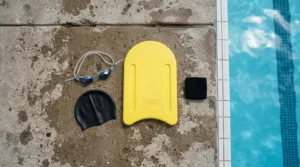
- Core swim gear accessories: a silicone cap, goggles, and a towel you actually like.
- A silicone ID or lap band: your all-day safety and training layer.
- A rinse bottle: fresh water for post-swim cleanup.
- A mesh bag: wet gear needs airflow to dry.
For water sports jewelry beyond the pool, silicone travels well. Surfers, paddlers, and open-water swimmers like it because it handles saltwater without corroding. Keep in mind that saltwater and sand can still dull finishes, so a quick freshwater rinse after every session keeps buildup away.
If you share gear with family, a swappable-tag band like the ID Band Company Sports Bracelet saves money. Kids can pick colors, and you keep one engraved tag in circulation instead of re-buying.
Practical Usage Guide: Your First 30 Days With a Swim Band
Most buyers wear a bracelet and forget about it until something goes wrong. A few habits make it last.
Week 1: fit and break-in. Wear it on dry land first. Check for rubbing, pinching, or slipping when you move your arm in swimming motions. Adjust until it’s snug but not tight.
Week 2: rinse routine. Rinse in fresh water after each swim and let it air dry. Retailers of silicone swim gear commonly recommend rinsing and drying away from heat sources, and the same logic applies here.
Week 3: inspect the hardware. Check the clasp, tag screws, and engraving. Look for loose plates or any change in color near the metal.
Week 4: review the data. If it’s an ID band, confirm that your information is current. If it’s a lap counter, test its click rhythm until it feels automatic.
Common mistakes in the first month include:
- Leaving the band in a hot car, where heat can warp it.
- Skipping rinses after saltwater.
- Wearing it too loose, which risks a slip during a push-off.
- Forgetting to update engraved or stored medical details.
Treat the band like goggles: cheap to replace, but only if you notice problems early.
Real-World Scenarios: Matching Bands to Swimmers
Specs are abstract, so here are three realistic profiles and the logic behind each pick.
The 6 a.m. lap swimmer. Swims four mornings a week in a public pool, often alone. A MedicAlert Sport Silicone or Universal Medical Data SPORT fits, because both pair silicone with a steel ID plate. The budget is around $30-$45, and the priority is a clear, durable ID.
The parent of two swim-lesson kids. Needs bands that survive tantrums and growth spurts. The ID Band Company Sports Bracelet suits this case because the tag moves between colored bands. The HEABY works as an inexpensive spare. Budget is roughly $10-$25.
The triathlete training for open water. Wants minimal drag and one useful tool. A slim band like the MyID Hive keeps the profile flat, and the SportCount LapCounter helps in pool sessions. Budget is $60-$80 for both.
In all three cases the logic is the same: match the job first, then the price. If a pick can’t clearly improve your safety or your training, it’s decoration. Decoration is fine, but it shouldn’t cost premium money.
Problem and Solution Guide for Swim Band Owners
Even the best silicone band hits snags. Here are the five most common, with fixes.
Problem 1: The band feels sticky after swimming. Residue from sweat, sunscreen, and chlorine builds up. Rinse with fresh water, wash gently with mild soap, and air dry.
Problem 2: It slips during flip turns. Fit is the main variable. Re-measure your wrist, and consider a band like the Elite II USB with its wide adjustment range, or a snap-tuck design like the MyID Hive.
Problem 3: The metal plate looks dull. Plated pieces fade quickly in chlorine, while steel generally holds up. If a plate dulls, wipe it and consider upgrading to 316L steel hardware like the HEABY plate.
Problem 4: Skin irritation or redness. Look for latex-free, hypoallergenic silicone. Dry the skin underneath after swims, and rotate wrists.
Problem 5: You’re tempted to wear your good jewelry anyway. Don’t. As jewelers explain, repeated chlorine exposure can lead to discoloration and tiny cracks in alloyed metals. Swapping to chlorine-safe materials is far cheaper than repair.
Long-Term Cost and Value Analysis
Price isn’t the same as value, so let’s think in cost-per-use.
| Tier | Typical Range | Examples | Value Verdict |
|---|---|---|---|
| Budget | Under $10 | HEABY | Great starter, simple features |
| Low-mid | Low-$20s | ID Band Company Sports Bracelet | Best for families |
| Mid | Mid-$30s | MedicAlert Sport Silicone, MyID Hive | Strong comfort and support |
| Upper-mid | Around $30-$45 | Universal Medical Data SPORT | Best all-rounder |
| Specialty | Around $30-$40 | SportCount LapCounter | Only if you count laps |
Here’s the interpretation. If you swim three times a week for a year, a mid-$30s band works out to pennies per swim. A cheap band that fails in six months can cost more over time than a durable one. That’s the math behind buying quality hardware once.
The total cost of ownership also includes replacement. Silicone straps are easy to swap, and a removable-tag design saves you from re-engraving. Maintenance costs almost nothing: water, mild soap, and thirty seconds after each swim.
Prices change often, so check current listings and compare before buying. And please don’t assume that any particular link gets you a better price, because it doesn’t.
FAQ: Waterproof Silicone Bracelets and Pool Use
❓ Can I wear a chlorine-resistant bracelet in a hot tub?
❓ How long does a waterproof silicone bracelet for swimmers usually last?
❓ Are stainless steel ID plates safe in chlorine?
❓ Will a silicone band slip off during flip turns?
❓ Is saltwater harder on silicone than chlorine?
Conclusion: Pick the Job, Then the Band
The pool isn’t going to get gentler on jewelry, but your wrist can get smarter. A waterproof silicone bracelet for swimmers gives you a material that shrugs off chlorine, a design that can carry real safety information, and a price that doesn’t punish you for swimming often.
If you want the safest all-rounder, the Universal Medical Data SPORT is hard to beat. If emergency support matters most, the MedicAlert Sport Silicone is the pick. Families should look at the ID Band Company Sports Bracelet, and tight budgets can start with the HEABY. The MyID Hive and Elite II USB cover comfort and detailed records, while the SportCount LapCounter solves the lap-counting headache.
Whichever you choose, keep the routine simple: measure your wrist, rinse after every swim, and leave fine jewelry at home. Prices and availability change, so check current listings before you buy.
Recommended for You
- Silicone Bracelet For Gym Workouts: 7 Proven Picks In 2026
- Acrylic Bracelet Under $20: 7 Stunning Picks For 2026
- Wood Bracelet For Teen Boys: 7 Best Picks In 2026
Disclaimer: This article contains affiliate links. As an Amazon Associate, I earn from qualifying purchases. If you purchase products through these links, we may earn a small commission at no additional cost to you.
✨ Found this helpful? Share it with your friends! 💬🤗
